We may earn a commission if you buy through links on this page. It never changes a score or a ranking. How we make money
Application security tools range from code and dependency scanners to web application testing, secrets management and firmware analysis. Snyk is our best overall pick for teams that want one platform spanning several scanning areas; Semgrep fits teams that want to write custom rules, while TruffleHog is the open-source pick for secret scanning. The right choice depends on where findings need to land in your workflow, how much triage your team can absorb, and whether you can run the service. Check pricing and integration fit before standardizing.
Quick picksThe shortlist
 SnykSnykBest overall · $25/mo
 SemgrepSemgrepBest for custom rules · $15/mo
 Burp SuiteBurp SuiteBest for manual testing · $41.58/mo
 DopplerDopplerBest for secrets · $8/mo
 TruffleHogTruffleHogBest open source · Free
 GitGuardianGitGuardianBest for credential governance · Free
 HashiCorp VaultHashiCorp VaultBest for dynamic secrets · Custom
 InvictiInvictiBest for DAST programs · Custom
 AcunetixAcunetixBest for authenticated DAST · Custom
 Finite StateFinite StateBest for firmware security · Custom
 CAST HighlightCAST HighlightBest for portfolios · $566.67/mo
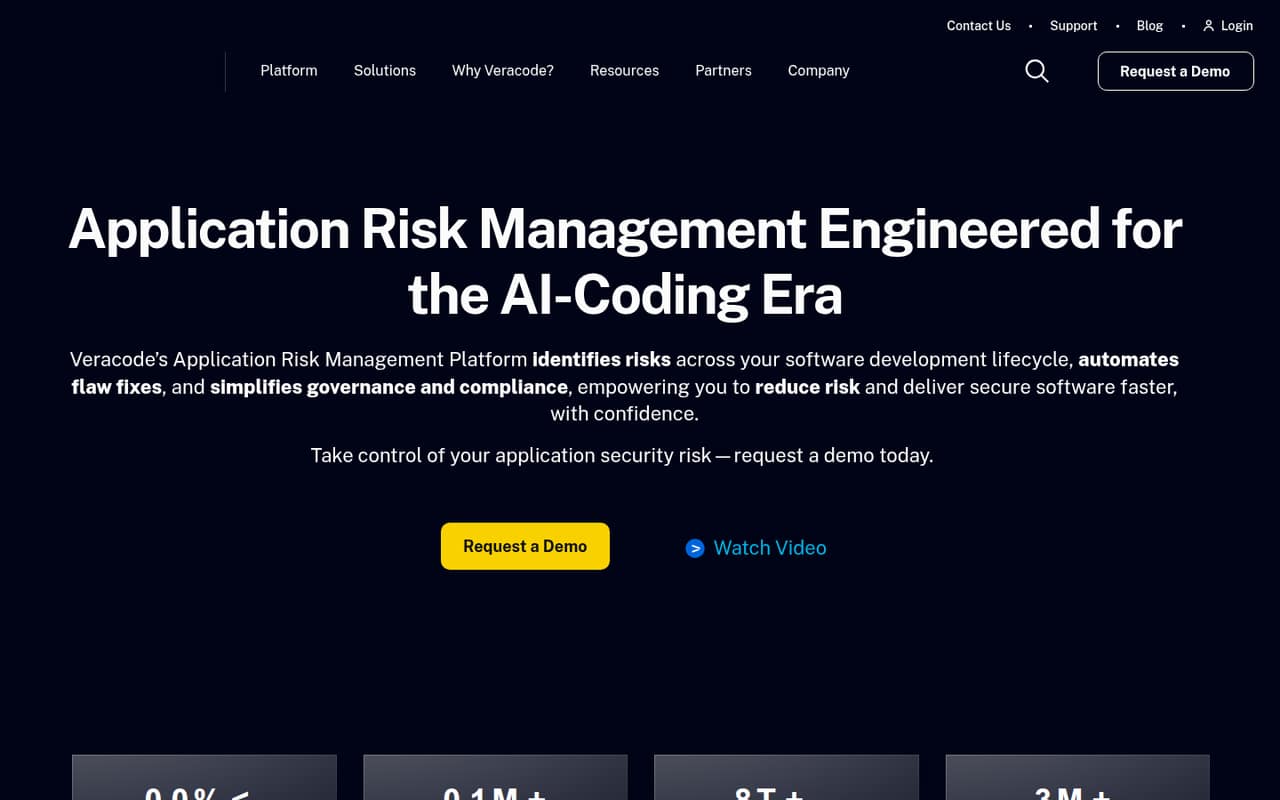
 VeracodeVeracodeBest for governance · Custom
01Compared at a glance
| Tool | Score | From | Free plan | Trial |
|---|---|---|---|---|
| SnykSnyk | 6.7 | $25/mo | Yes | — |
| SemgrepSemgrep | 7.5 | $15/mo | Yes | 30 days |
| Burp SuiteBurp Suite | 7.5 | $41.58/mo | Yes | Yes |
| DopplerDoppler | 7.4 | $8/mo | Yes | 14 days |
| TruffleHogTruffleHog | 7.4 | Free | Yes | — |
| GitGuardianGitGuardian | 6.8 | Free | Yes | — |
| HashiCorp VaultHashiCorp Vault | 7.0 | Custom | No | — |
| InvictiInvicti | 6.3 | Custom | No | — |
| AcunetixAcunetix | 6.0 | Custom | No | — |
| Finite StateFinite State | 6.2 | Custom | No | — |
| CAST HighlightCAST Highlight | 5.2 | $566.67/mo | No | — |
| VeracodeVeracode | 5.2 | Custom | No | — |
02The picks, in detail
- Best overallSnykSnyk
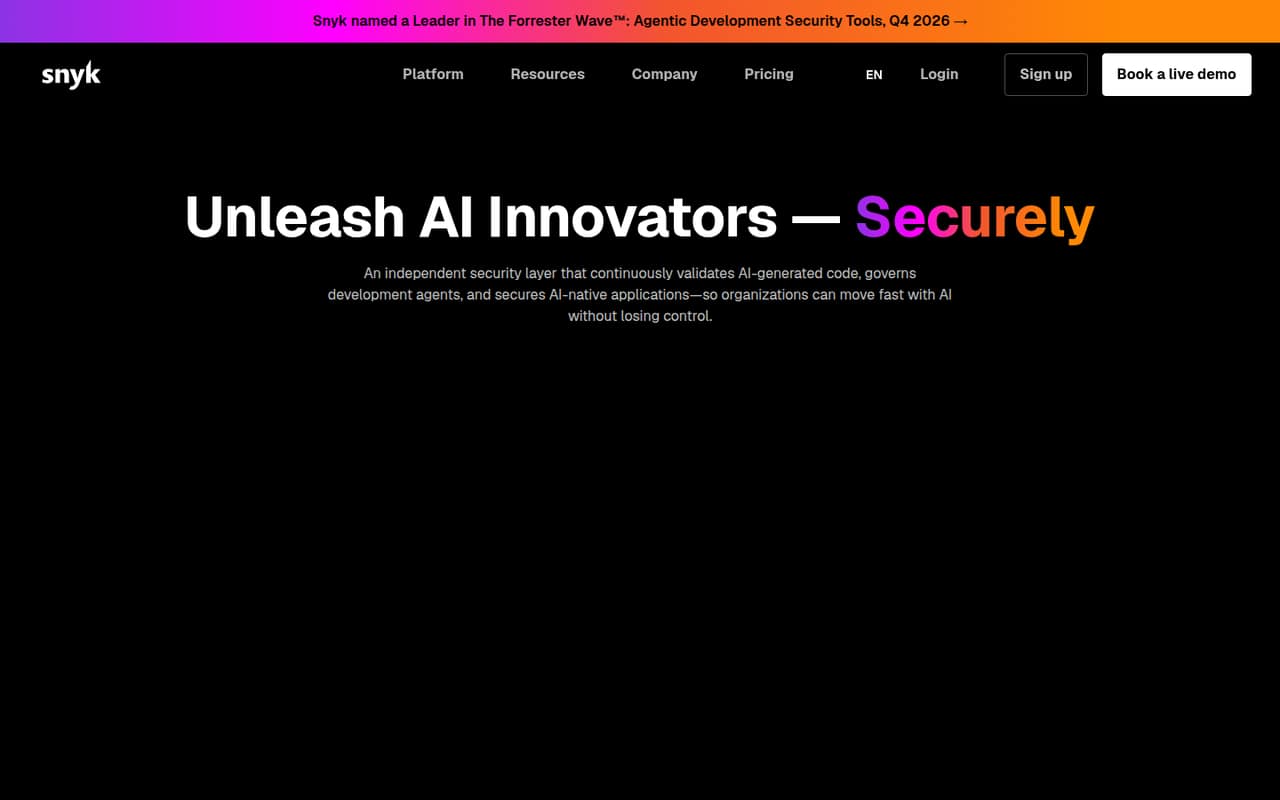
Snyk covers code, dependencies, infrastructure as code, containers and AI security, giving teams a broad starting point for consolidating AppSec scans. Its free plan and listed starting price of $25 make it possible to evaluate before committing to a larger rollout. Plan for alert triage and rising usage costs as more teams and repositories come onto the platform.
What works
- Scans code, open-source dependencies, IaC and containers
- AI security covers code, agents and AI applications
- Integrates with IDEs and CI/CD pipelines
What doesn't
- Free plan limits tests and projects
- Enterprise pricing requires contacting sales
- Enterprise usage can be invoiced beyond prepaid credits
- Best for custom rulesSemgrepSemgrep
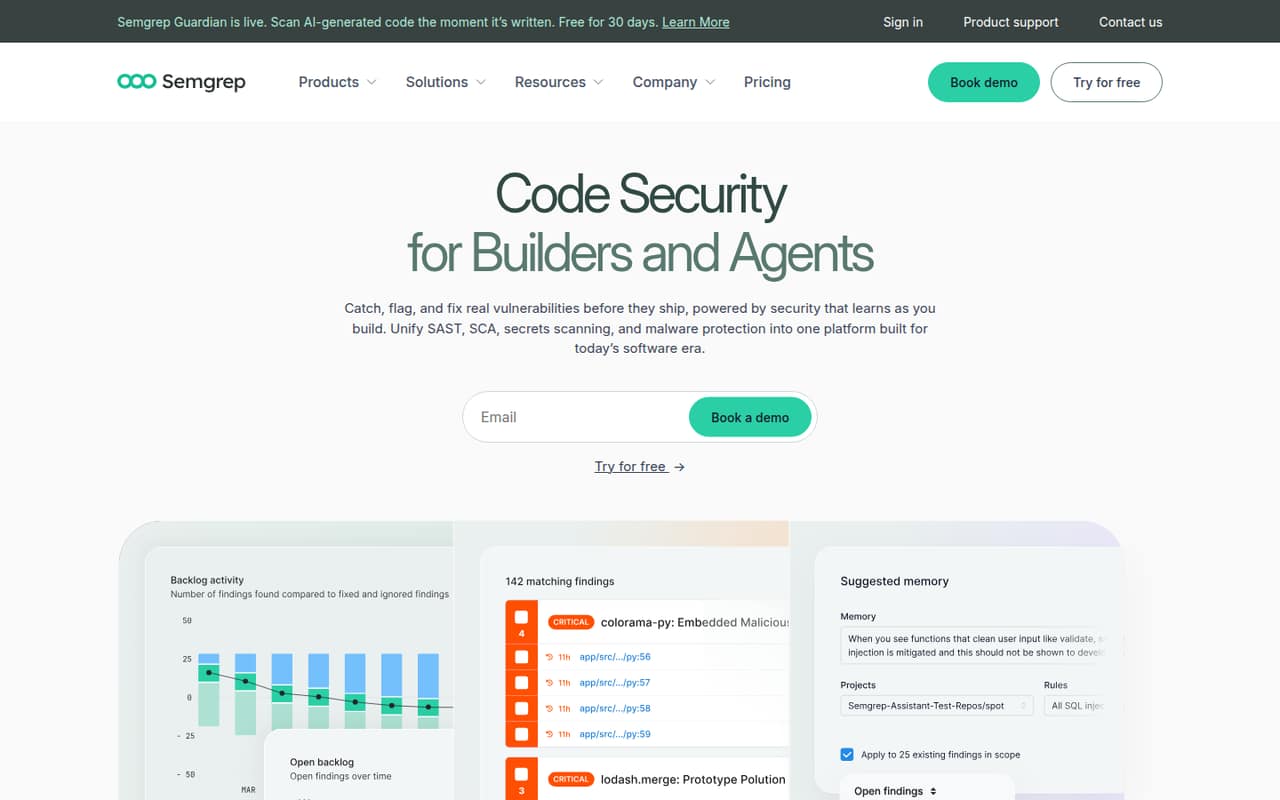
Semgrep is a code-focused AppSec tool suited to teams that want to write security rules, start scanning with a small team or review AI-generated code. The free plan lowers the barrier to evaluation, and the listed starting price is $15. Its fit depends on language and rule coverage, so check for gaps and decide how findings will be triaged.
What works
- Combines SAST, dependency security and secrets scanning
- Custom rules are a strong reason to evaluate it
- Free Edition covers up to 10 contributors
What doesn't
- No DAST capability is listed in the product scope
- AI-credit overages and API rate limits are not published
- Paid add-ons can increase per-contributor costs
- Best for manual testingBurp SuiteBurp Suite
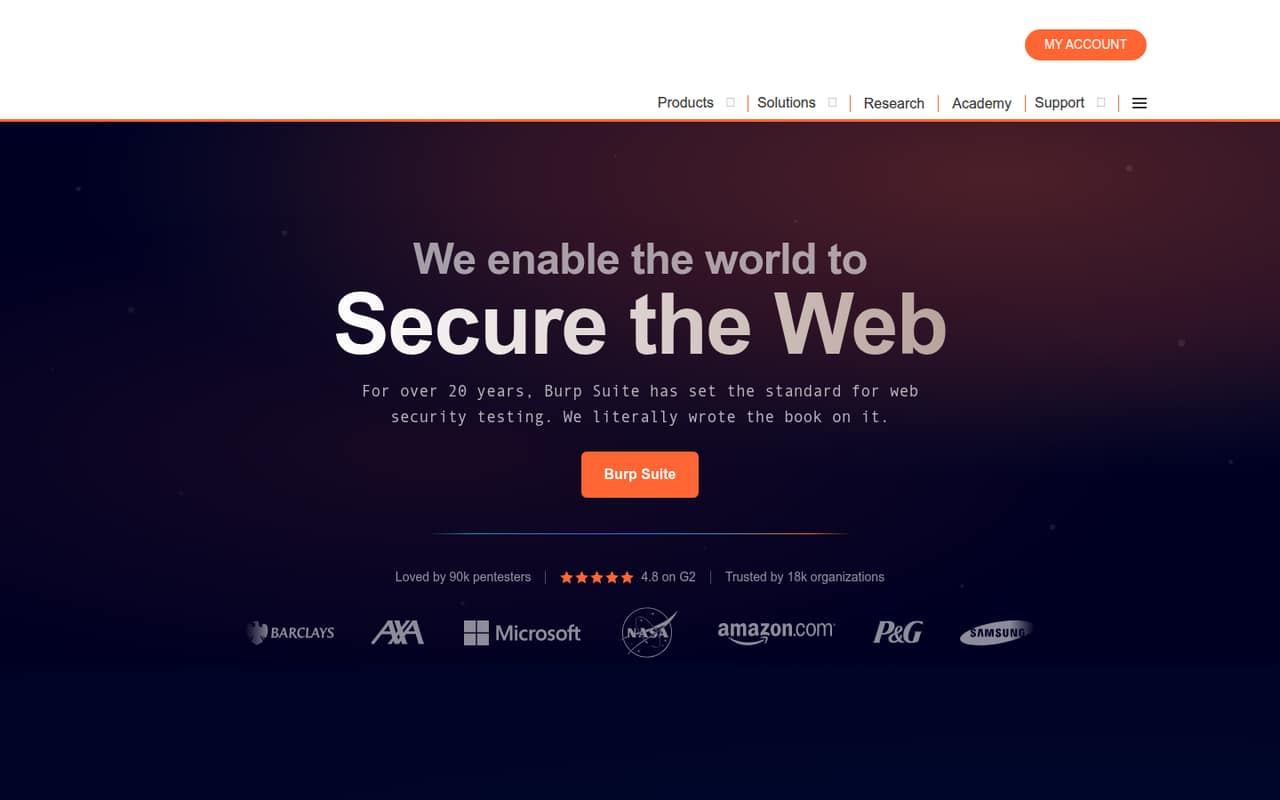
Burp Suite is a web security testing toolkit built around manual work with HTTP traffic. It suits security testers and teams evaluating web application scanning, but standardizing on it requires checking which paid features your workflow needs. The listed starting price is $41.58, with a free plan also available. Confirm deployment fit and how the tool connects to your existing testing process.
What works
- Community Edition includes manual testing tools
- Proxy, Intruder, Repeater and Decoder are available tools
- Professional is priced per named user
What doesn't
- Community Edition cannot save projects
- Community Edition has no automated web vulnerability scanner
- Community Intruder is a rate-throttled demo
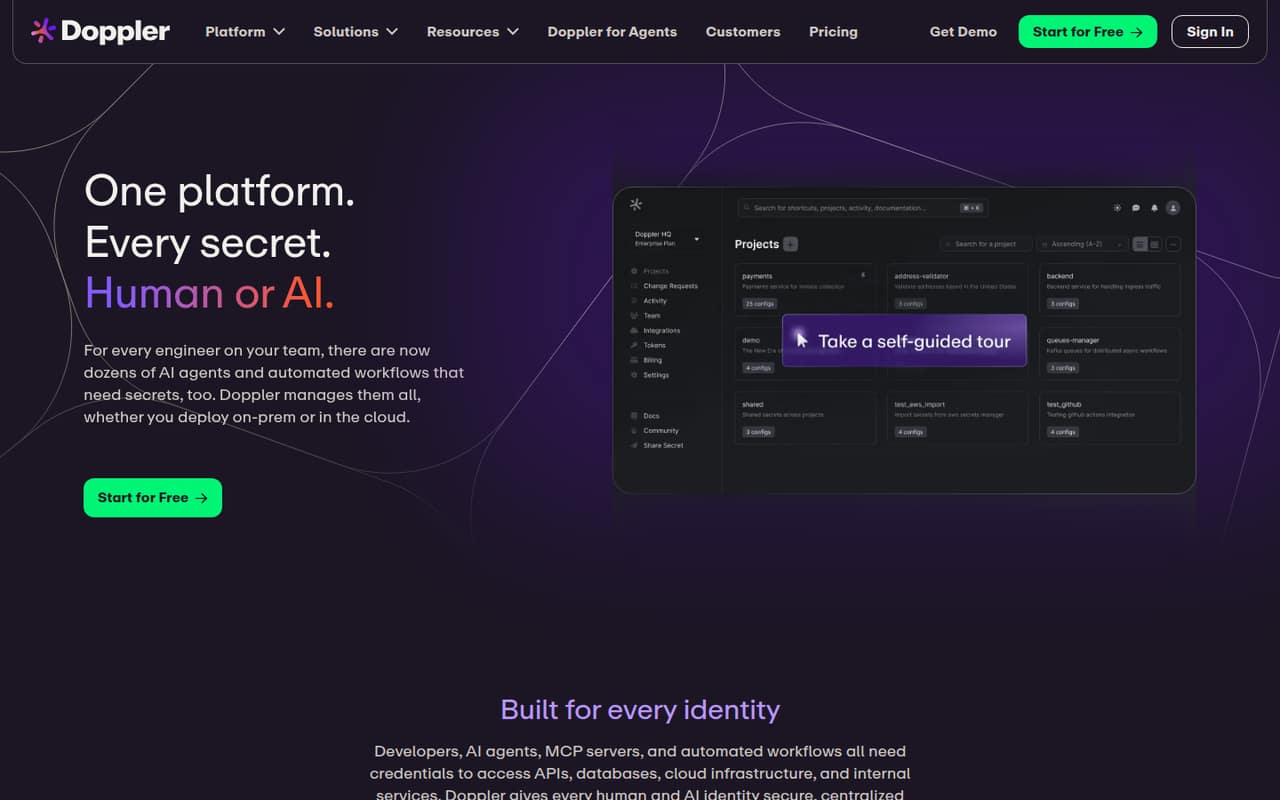
- Best for secretsDopplerDoppler
Doppler centralizes application secrets for teams, workflows and agents, with Kubernetes and CI/CD among its stated use cases. It offers a free plan, lists a starting price of $8, and supports cloud and enterprise on-prem deployment. That combination makes it worth evaluating for teams standardizing credential access. Before adopting it, confirm the deployment model and pricing that apply to your usage.
What works
- Free Developer plan for up to three users
- MCP server supports native agent secret requests
- OIDC-scoped service accounts separate agent access
What doesn't
- Developer plan limits projects, environments and syncs
- Team add-ons can increase per-seat costs
- Enterprise pricing is custom
- Best open sourceTruffleHogTruffleHog
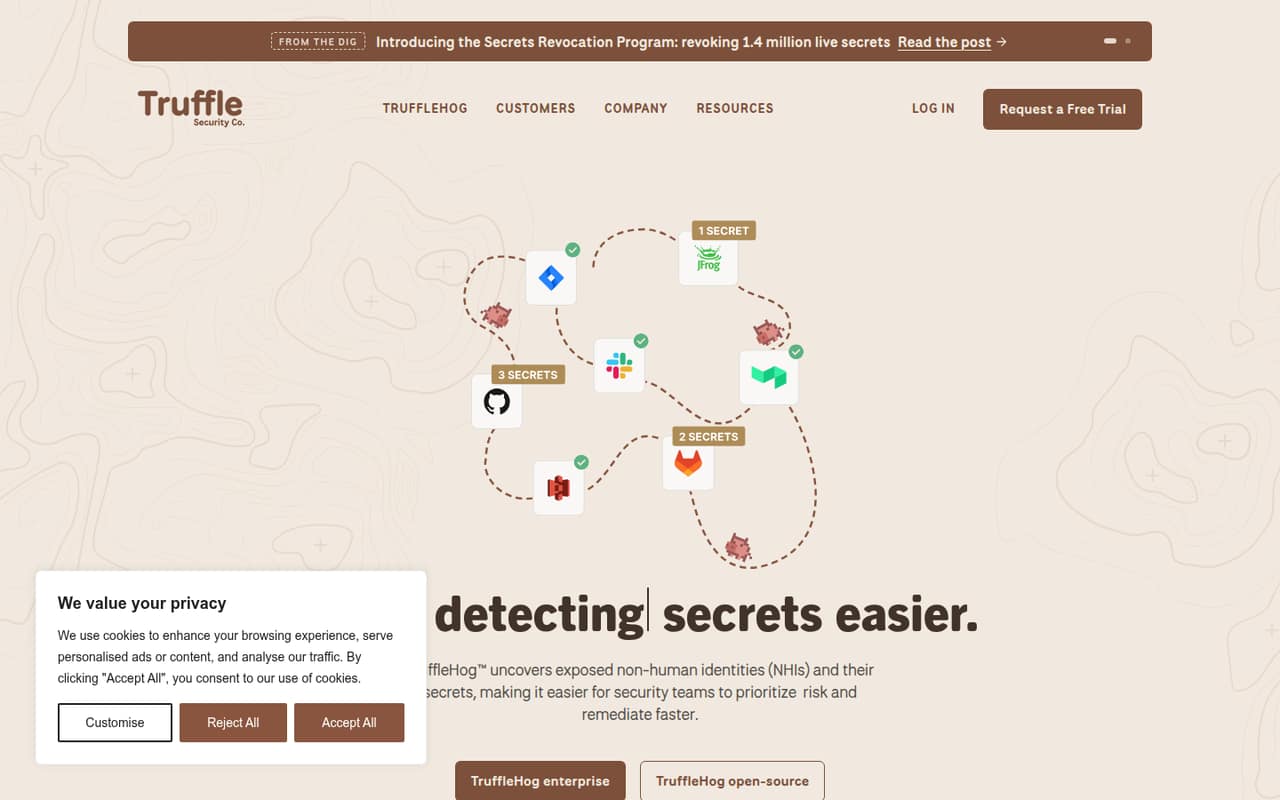
TruffleHog is an open-source option for scanning source and Git history, with credential verification and remediation tracking among its stated use cases. A free plan is available, while Enterprise adds analysis; the listed starting price is not available. It is a fit for teams that want to evaluate secret scanning without starting with a paid plan. Confirm Enterprise deployment and pricing terms with the vendor.
What works
- Free open-source option
- Verifies more than 800 secret types
- Scans comments, pull requests and Git history
What doesn't
- Enterprise pricing and usage limits are unpublished
- API and SDK support details need confirmation
- Deployment options need confirmation
- Best for credential governanceGitGuardianGitGuardian
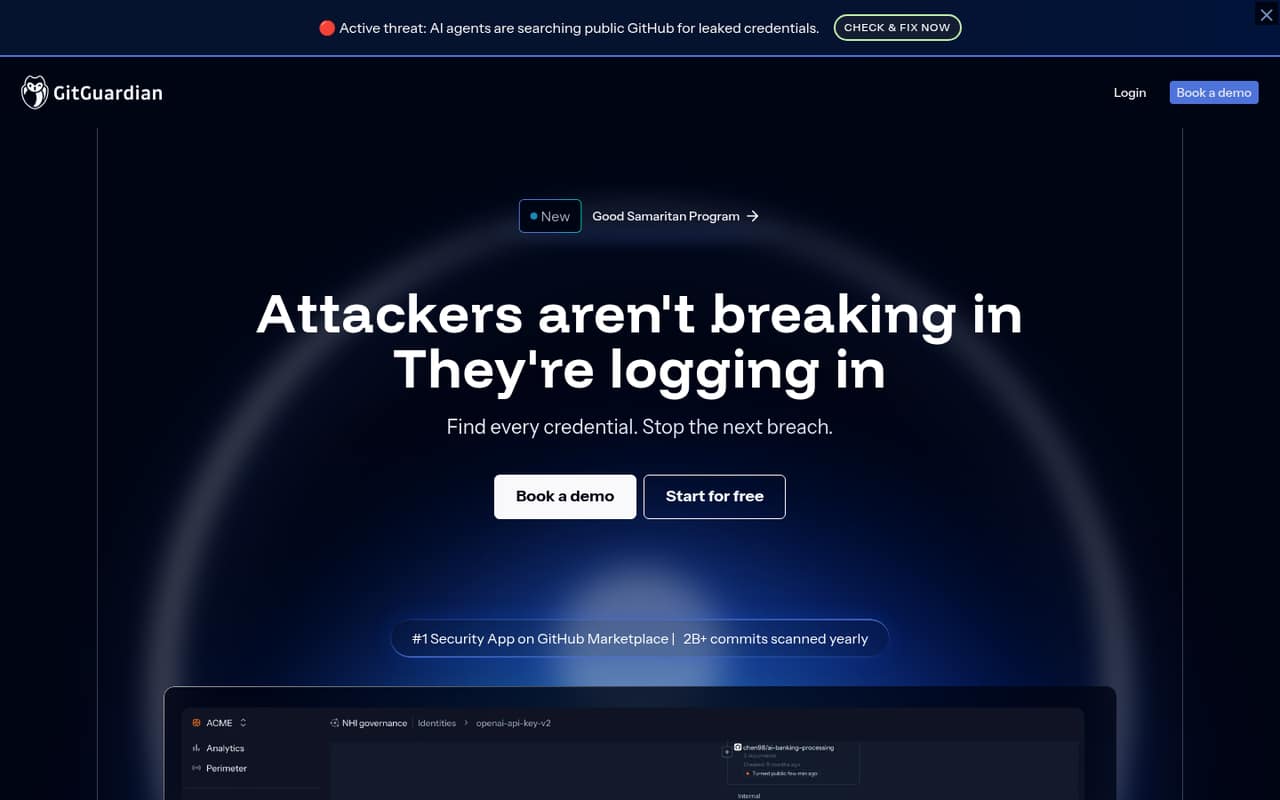
GitGuardian targets teams monitoring secrets across repositories and adding developer guardrails, including governance for machine identities. It offers a free tier and can be self-hosted, giving teams deployment options to assess against their security requirements. Paid plans are priced by sales, so estimate repository and team scope before requesting a quote. Check how its findings and guardrails fit your existing development workflow.
What works
- Covers code, CI/CD, collaboration tools and public GitHub
- ggshield supports pre-commit and pre-push workflows
- Free Starter includes unlimited real-time scanning
What doesn't
- Paid plan prices are not published
- Starter limits historical detections and scan capacity
- SDK languages and API style need confirmation
- Best for dynamic secretsHashiCorp VaultHashiCorp Vault
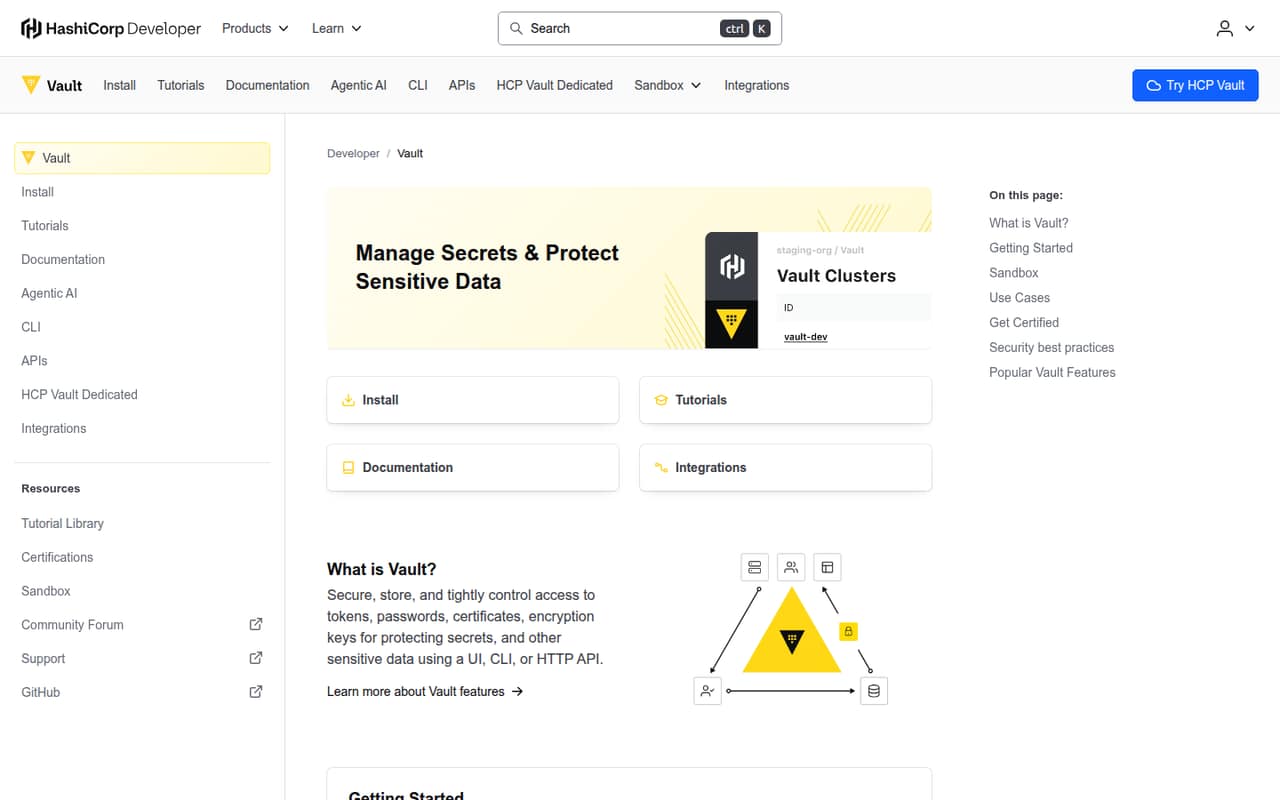
HashiCorp Vault is a secrets-management server for teams centralizing application credentials and issuing dynamic database credentials. It fits infrastructure teams prepared to operate a security service and maintain it over time. The vendor's listed starting price is not available, so ask about pricing and deployment options for your intended setup. Include ongoing operational ownership in the comparison, not just the initial integration.
What works
- UI, CLI, and HTTP API access
- Key-value, database, and transit secrets engines
- Dynamically generates database credentials from roles
What doesn't
- HCP client limits are not published
- HCP pricing grows with cluster hours and clients
- Self-managed Vault needs ongoing maintenance
- Best for DAST programsInvictiInvicti
Invicti combines code and runtime scanning for teams consolidating AppSec findings or running a web application DAST program. It also suits organizations considering on-prem deployment. Its starting price is not listed, so confirm cost alongside deployment requirements before committing. Ask the vendor how API coverage fits your applications, what integrations are available, and where scan results can be sent for triage.
What works
- Combines code, runtime, and supply-chain scanning
- Proof-based DAST validates reported findings
- Connects static issues to runtime context
What doesn't
- Subscription prices are not published
- No free plan or trial is listed
- SDK, CLI, and API integration details need confirmation
- Best for authenticated DASTAcunetixAcunetix
Acunetix targets web apps and APIs, including authenticated, multi-step application flows, and prioritizes validated findings. That makes it a candidate for teams whose tests need to follow application workflows rather than stop at unauthenticated pages. The vendor's listed starting price is not available. Ask about pricing, integration options and how the scanner handles the authentication flows your applications require.
What works
- Tests REST, GraphQL and SOAP APIs
- Covers authenticated, role-based workflows
- Advertises detection of 7,000+ issues
What doesn't
- Web + API pricing is quote-based
- No free plan or trial is listed
- Deployment and self-hosting need confirmation
- Best for firmware securityFinite StateFinite State
Finite State focuses on connected-device product security, including firmware analysis without source code and compliance-focused work for device manufacturers. It is a specialist option rather than a general code scanner, so evaluate it against your device and firmware needs. Pricing and integration details complicate comparison; ask the vendor for a quote and for specifics on how findings connect to your existing product security process.
What works
- Analyzes firmware and mobile app binaries
- Generates enriched SBOMs from product artifacts
- Maps vulnerabilities by reachability
What doesn't
- Pricing requires a custom quote
- No public free plan or trial is listed
- API and SDK details are not published on the homepage
- Best for portfoliosCAST HighlightCAST Highlight
CAST Highlight is aimed at leaders governing large application portfolios, prioritizing technical-debt remediation and assessing cloud and AI readiness. Its listed starting price is $566.67. Before making it a platform dependency, check which integrations your portfolio needs, what deployment options are available and whether you can export the resulting data. Those details matter when the tool informs prioritization across many applications.
What works
- Maps application architecture and dependencies
- Connects code, data access, and portfolio context
- Targets technical-debt prioritization and remediation
What doesn't
- No free plan or published free trial
- API, SDK, and language support need vendor confirmation
- Seat limits are not published
- Best for governanceVeracodeVeracode
Veracode targets enterprise security and governance teams seeking centralized application-risk visibility, with AI-assisted fixes among its stated areas. The vendor uses custom pricing, so ask for a quote based on your teams and intended scope. Confirm the integrations needed to bring findings into developer workflows and how risk is presented across applications. It is a candidate for governance-led evaluations, but check the technical fit before choosing it.
What works
- Covers code, dependencies, containers and runtime signals
- Includes AI-driven remediation and flaw fixes
- Targets governance, reporting and policy control
What doesn't
- Enterprise pricing is custom and not published
- Homepage does not name SDKs, languages or API protocols
- No free plan or trial is listed
03How we chose
We ranked these tools by fit for developers and technical teams: where each sits in the stack, stated coverage, deployment options, open-source availability, and whether a free plan or published starting price gives teams a way to evaluate it. We also weigh API and SDK coverage, documentation, usage pricing and Reddit sentiment as evaluation signals; community reports should prompt questions, not replace vendor confirmation. We did not treat breadth as a substitute for integration fit. For sales-priced or unclear plans, ask vendors for costs at your expected scope.
04Map the tool to your development workflow
Start with the risk you need to find and where the result should go. Code-focused scanners such as Semgrep and Snyk address a different part of the stack from DAST tools such as Invicti, Acunetix and Burp Suite. Secret scanners and services, including TruffleHog, GitGuardian, Doppler and Vault, solve credential-related problems rather than replacing application testing. For any shortlist, verify support for your languages, repositories, build system and deployment model in the vendor's docs. Check whether an API or SDK is documented for the automation you need, how authentication works, and whether findings can flow into your issue tracker or CI/CD process. For DAST, confirm API coverage and support for authenticated, multi-step flows. Ask for examples that match your application architecture before relying on a scanner in a release gate.
05Calculate cost and operational ownership
A starting price is not a total-cost estimate. Snyk, Semgrep, Burp Suite, Doppler and CAST Highlight list starting prices, while several other tools use sales-led or unpublished pricing. Confirm what the quoted plan includes, how usage is counted, and whether costs change with additional developers, repositories, applications or scans. Free plans are useful for evaluation, but check their limits before building a workflow around one. Deployment also changes the work involved: Doppler offers cloud and enterprise on-prem deployment, GitGuardian is self-hostable, and Vault requires ongoing operational ownership. TruffleHog is open source, with Enterprise analysis available. Ask about data export and any limits on moving findings or configuration if you later switch tools. Review the licence and self-hosting terms directly before adopting an open-source or self-hostable product.
Questions people ask
Which application security tool should a small team start with?
Choose based on the risk you need to find first. Semgrep targets code scanning and offers a free plan; TruffleHog is open source for secret scanning. If you need broader coverage, Snyk spans code, dependencies, infrastructure as code and containers. Check plan limits and workflow fit before expanding.
Are free application security tools enough for production?
A free plan can support evaluation or an initial workflow, but confirm its limits before relying on it in production. Check supported repositories and features, usage allowances, alert handling, and whether your required integrations are included. The listed free options differ in scope, so compare them against your actual use case.
What should I ask before buying a DAST tool?
Ask whether it covers your web applications and APIs, supports the authentication and multi-step flows you need, and connects to your CI/CD or issue-tracking process. Confirm deployment options, scan limits and pricing at your expected scope. For Invicti and Acunetix, ask the vendor directly about integration and cost.
Should we self-host an application security tool?
Self-hosting can matter when deployment requirements shape where security data and services run, but it adds operational responsibility. Confirm the vendor's supported deployment options, maintenance requirements and export paths. Doppler offers enterprise on-prem deployment, GitGuardian is self-hostable, and Vault is a server teams need to operate.