We may earn a commission if you buy through links on this page. It never changes a score or a ranking. How we make money
For developer-led teams, Prefect, Airbyte, Artie, and dbt are strong starting points: they cover workflow orchestration, data replication, change data capture, and SQL transformation, with open-source or self-hosting options among them. The right choice depends on which layer you need. A connector service does not replace an orchestrator, and a modeling tool does not move source data by itself. Before committing, verify connector coverage, deployment requirements, usage pricing, and how you can export configurations and data if you switch.
Quick picksThe shortlist
 PrefectPrefectBest overall · $100/mo
 AirbyteAirbyteBest open source · $20/mo
 ArtieArtieBest for CDC · $500/mo
 dbtdbtBest for SQL modeling · $100/mo
 Apache NiFiApache NiFiBest for data routing · Free
 AstroAstroBest for Airflow teams · Custom
 DagsterDagsterBest for asset lineage · $10/mo
 Confluent CloudConfluent CloudBest for streaming · Custom
 FivetranFivetranBest managed ingestion · Free
 RiveryRiveryBest low-code ELT · $0.90/mo
 Hevo DataHevo DataBest for no-code ingestion · $265/mo
 Talend Data IntegrationTalend Data IntegrationBest for governance · Custom
 KNIME Analytics PlatformKNIME Analytics PlatformBest visual workflows · $19/mo
 MatillionMatillionBest visual warehouse ETL · Custom
 SkyviaSkyviaBest no-code app pipelines · Free
 Ab InitioAb InitioBest for enterprise scale · Custom
 FMEFMEBest for spatial data · Free
 HightouchHightouchBest for marketing activation · Free
 Coupler.ioCoupler.ioBest for recurring reports · $24/mo
 AlteryxAlteryxBest for spreadsheet automation · $250/mo
 TabulaTabulaBest for PDF tables · Free
 Transaction Pro ImporterTransaction Pro ImporterBest for QuickBooks CSVs · $10/mo
 MatiaMatiaBest for data operations · $1,250/mo
01Compared at a glance
| Tool | Score | From | Free plan | Trial |
|---|---|---|---|---|
| PrefectPrefect | 8.0 | $100/mo | Yes | — |
| AirbyteAirbyte | 6.2 | $20/mo | Yes | 14 days |
| ArtieArtie | 7.5 | $500/mo | Yes | 14 days |
| dbtdbt | 7.3 | $100/mo | Yes | 30 days |
| Apache NiFiApache NiFi | 6.8 | Free | Yes | — |
| AstroAstro | 8.0 | Custom | No | — |
| DagsterDagster | 6.2 | $10/mo | No | 30 days |
| Confluent CloudConfluent Cloud | 7.0 | Custom | No | — |
| FivetranFivetran | 6.7 | Free | Yes | 14 days |
| RiveryRivery | 6.8 | $0.90/mo | No | 14 days |
| Hevo DataHevo Data | 7.0 | $265/mo | No | 14 days |
| Talend Data IntegrationTalend Data Integration | 6.5 | Custom | No | — |
| KNIME Analytics PlatformKNIME Analytics Platform | 7.3 | $19/mo | Yes | Yes |
| MatillionMatillion | 6.5 | Custom | No | — |
| SkyviaSkyvia | 6.8 | Free | Yes | — |
| Ab InitioAb Initio | 5.8 | Custom | No | — |
| FMEFME | 5.2 | Free | Yes | — |
| HightouchHightouch | 6.5 | Free | Yes | — |
| Coupler.ioCoupler.io | 6.7 | $24/mo | Yes | 7 days |
| AlteryxAlteryx | 5.9 | $250/mo | No | 30 days |
| TabulaTabula | 6.4 | Free | Yes | — |
| Transaction Pro ImporterTransaction Pro Importer | 4.3 | $10/mo | No | 7 days |
| MatiaMatia | 6.0 | $1,250/mo | No | 2 weeks |
02The picks, in detail
- Best overallPrefectPrefect
Prefect suits teams building Python data and ML workflows that need retries, schedules, and a choice of infrastructure. It is open source and self-hostable, with a free plan and pricing starting at $100. Treat that starting price as a baseline, not a production estimate: track run volume and deployment costs, and confirm which features and quotas apply to your chosen plan.
What works
- Python functions become workflows with `@flow`
- Retries, scheduling and recovery are built in
- Run on managed compute or your infrastructure
What doesn't
- Hobby retention is limited to seven days
- Starter and Team pricing differ by billing unit
- Overage rates and add-on prices are unpublished

- Best open sourceAirbyteAirbyte
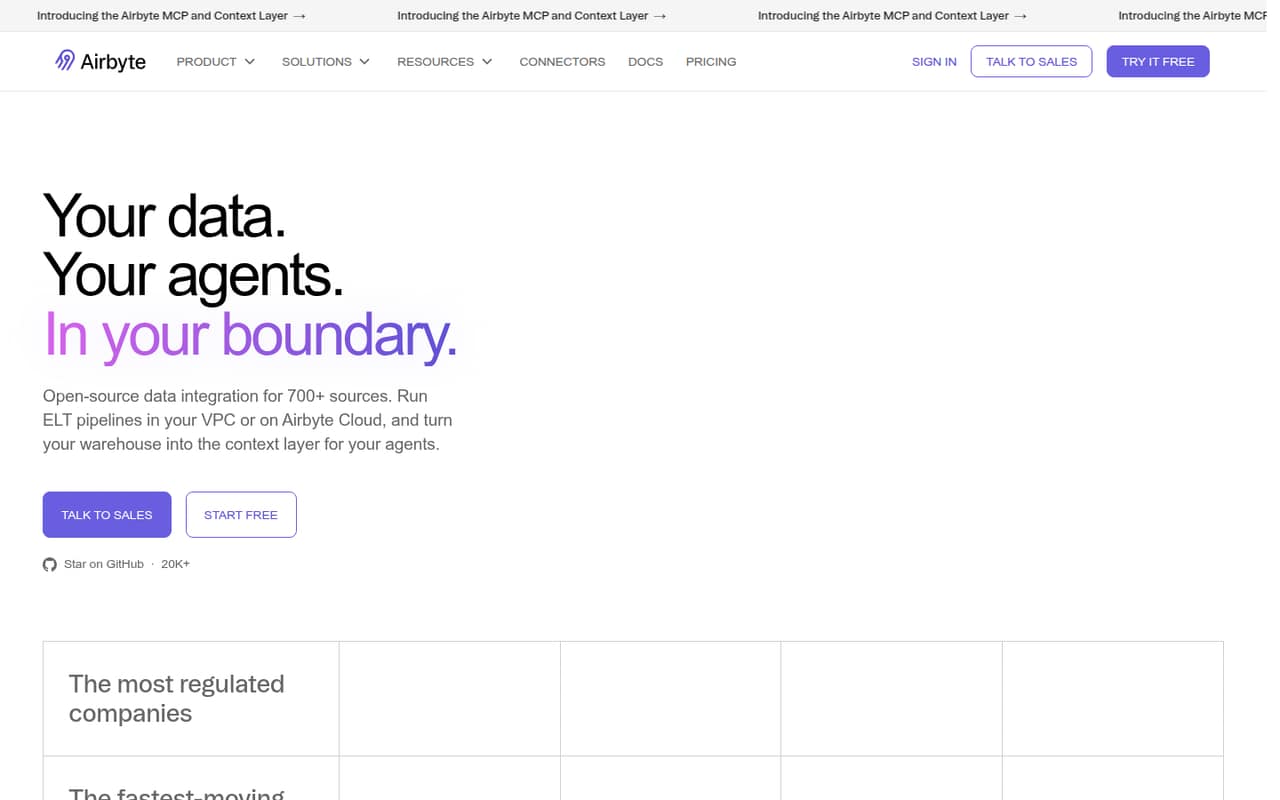
Airbyte is a strong fit when you need broad source coverage and want the option to run pipelines yourself. It is open source and self-hostable, with a free plan and pricing starting at $20. Its connector catalog is a practical advantage, but test the connectors you depend on and investigate operational risks before routing production data through them.
What works
- 700+ connectors for sources and destinations
- Self-hosted, managed cloud and hybrid deployments
- Custom connectors can be built with Connector Builder
What doesn't
- Standard and Plus costs rise with credit use
- Core usage limits are not published
- API and SDK details need verification
- Best for CDCArtieArtie
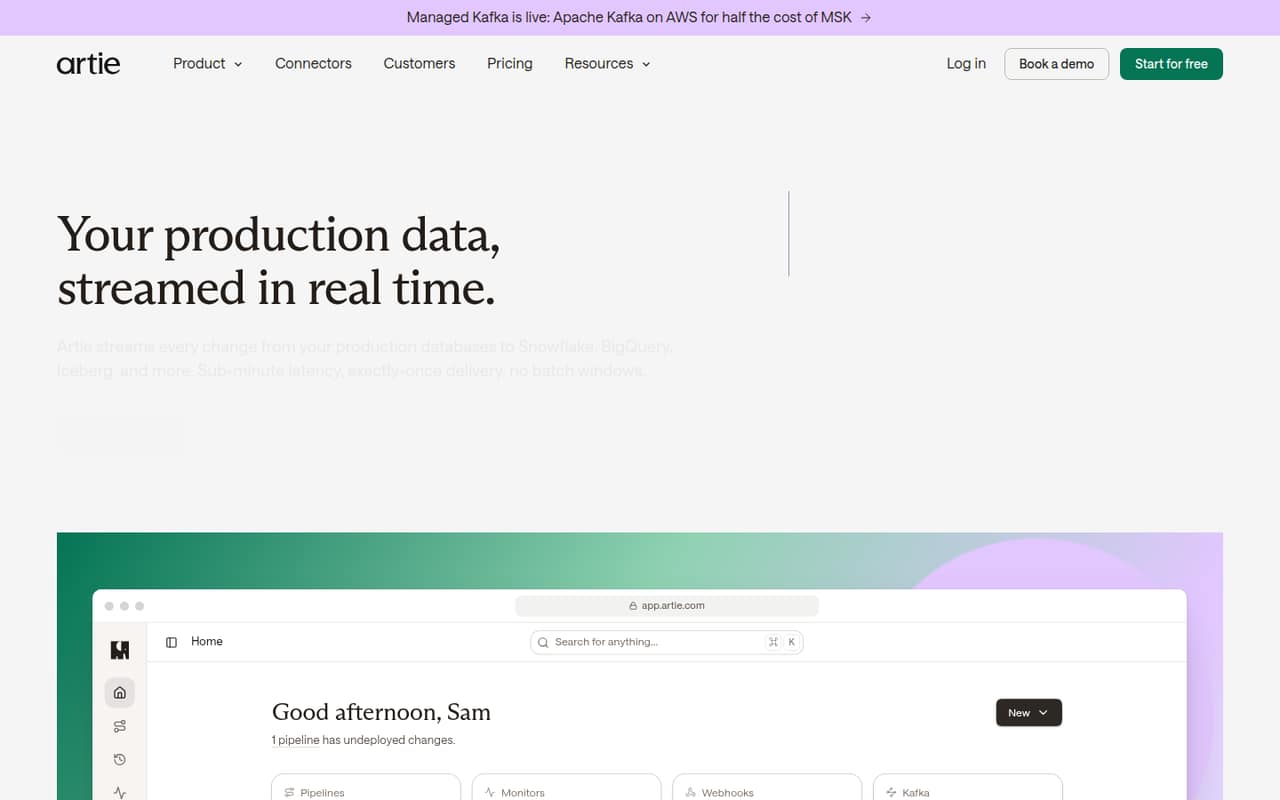
Artie targets database change data capture for analytics, with a free plan and self-hosting available. It also suits teams evaluating managed Kafka on AWS. Pricing starts at $500, so confirm how usage affects the bill before scaling. Check source access requirements and migration terms early; CDC pipelines can become hard to replace once downstream systems depend on their data.
What works
- Streams inserts, updates and deletes from production databases
- Vendor says changes land within a minute
- Exactly-once delivery and automatic schema evolution
What doesn't
- Growth overage rates are not published
- Enterprise pricing is custom
- No published source license or open-source commitment
- Best for SQL modelingdbtdbt
dbt is for teams standardizing SQL transformations and tracking model lineage, rather than a complete ingestion platform. It is open source and self-hostable, with a free plan and pricing starting at $100. Its local and cloud workflows can support different development patterns, but verify quotas and integrations against your warehouse and deployment setup before production.
What works
- Builds modular, tested, version-controlled SQL pipelines
- Interactive lineage includes column-level tracing
- Automatically updates downstream references during refactoring
What doesn't
- Developer plan is limited to 3,000 successful models monthly
- Starter costs $100 per user per month
- SDK, CLI and API details need verification

- Best for data routingApache NiFiApache NiFi
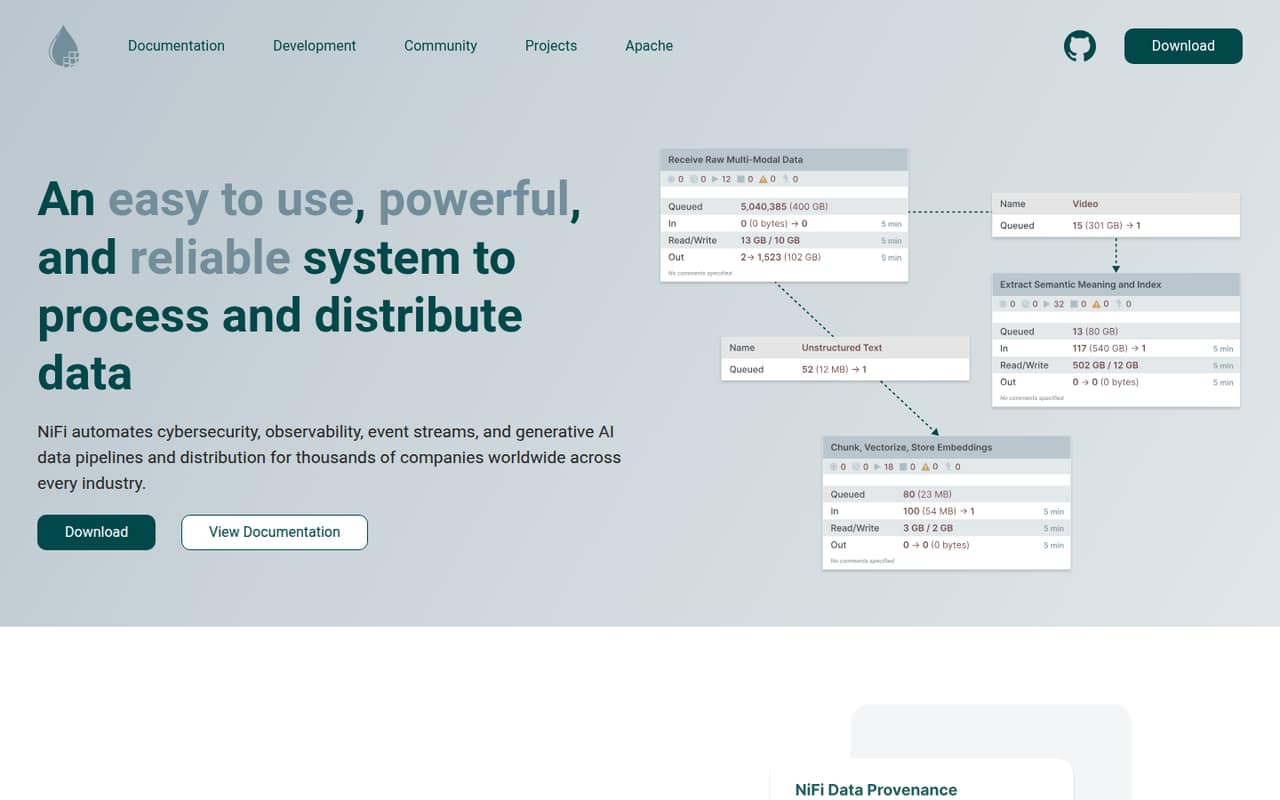
Apache NiFi is an open-source, self-hosted dataflow system for teams that need routing controls, back pressure, lineage, and prioritization. It is free to use as software, but that does not remove the work of operating the infrastructure. Plan for deployment, upgrades, monitoring, and capacity management, especially when flows carry production traffic.
What works
- Free to download and self-host under Apache License 2.0
- Tracks information lineage from beginning to end
- Supports both loss-tolerant and guaranteed delivery
What doesn't
- Teams must operate and maintain their own deployment
- The browser-based interface can encourage manual flow changes
- Reddit users report scaling and debugging challenges
- Best for Airflow teamsAstroAstro
Astro is managed Airflow for teams that already use Airflow and want managed operations, deployment tooling, or event-driven data and AI workflows. It is self-hostable, and pricing is billed by the hour, with production scaling in mind. Confirm the hourly rates and infrastructure costs for your expected workload before estimating a monthly bill.
What works
- DAGs stay compatible with the Airflow model
- CLI and browser IDE support local development
- Configuration can be managed with Terraform
What doesn't
- No free plan or free trial is listed in pricing
- Worker and dedicated-cluster costs are extra
- AI token rates are not published
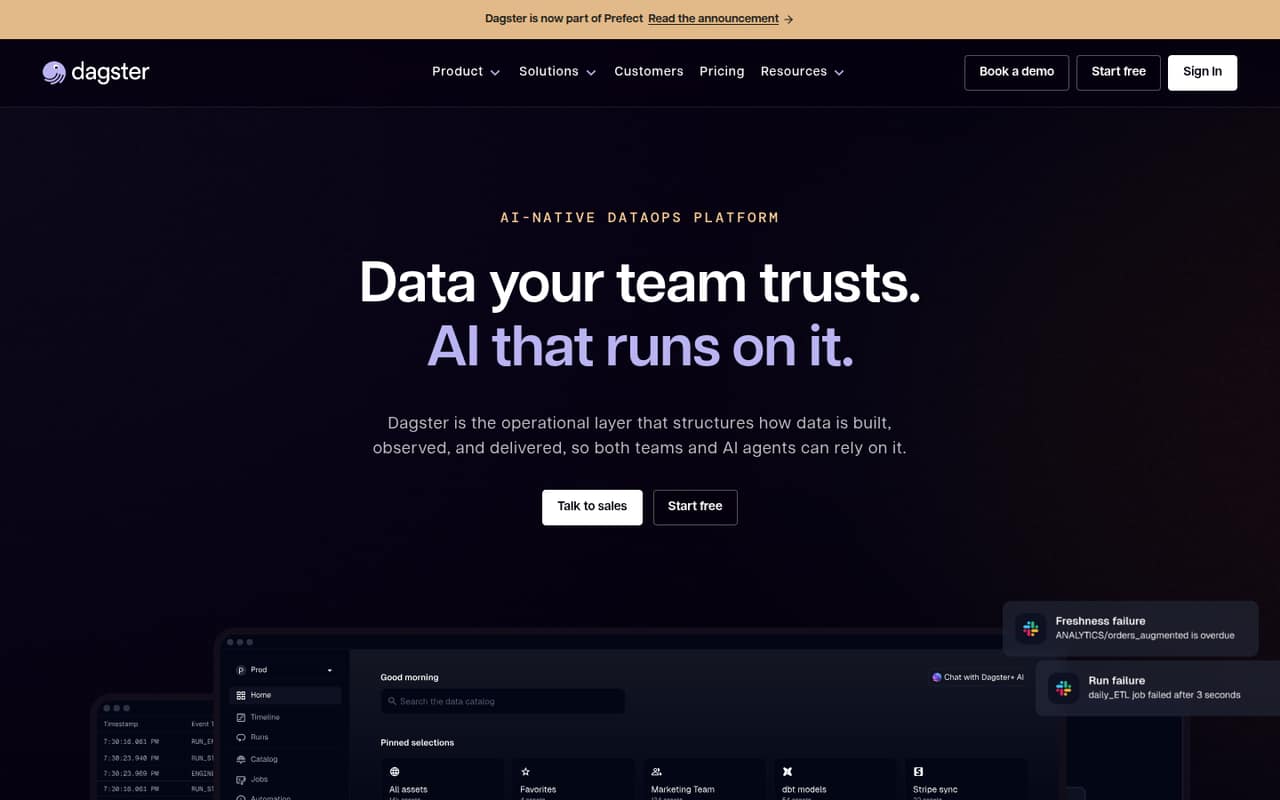
- Best for asset lineageDagsterDagster
Dagster is an open-source, self-hostable orchestrator built around asset-based pipelines. It fits teams standardizing assets and connecting data lineage and health context across workflows, including projects using dbt and Snowflake. Pricing starts at $10. Monitor production costs as usage grows, and check how the deployment model fits your existing infrastructure and operations capacity.
What works
- Asset-centric orchestration links pipelines to their outputs
- Lineage and dependencies are part of the operational model
- Observability includes asset health and failure context
What doesn't
- Solo and Starter bills combine subscription and credit usage
- No free plan; the free trial lasts 30 days
- SDK, API, and CLI details need confirmation in the docs
- Best for streamingConfluent CloudConfluent Cloud
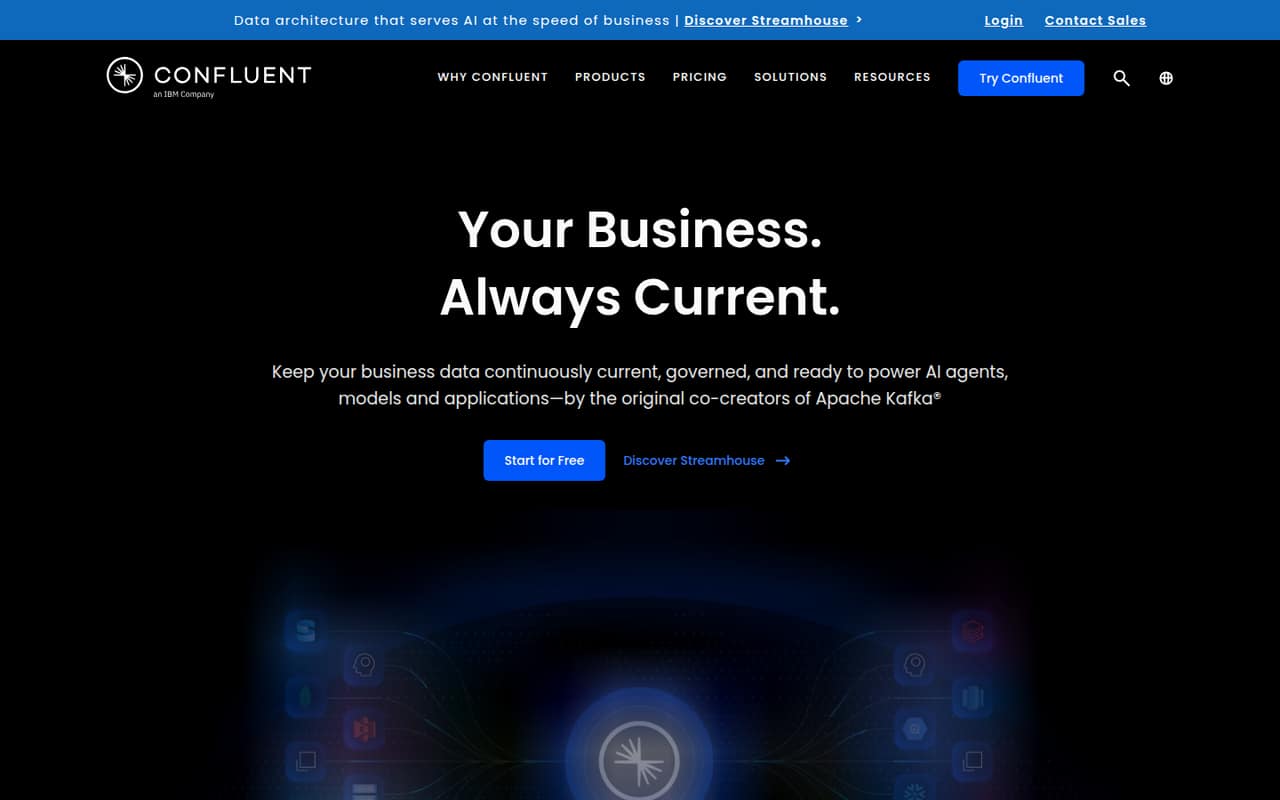
Confluent Cloud is managed Kafka for teams building event-driven applications or needing streaming governance without managing all Kafka infrastructure themselves. Its feature set and usage costs make it a candidate for streaming workloads, not a default choice for scheduled warehouse loads. Pricing is not published; ask for a workload-specific estimate and model ongoing usage.
What works
- Combines streaming, connectivity, processing, governance, and querying
- Kora provides autoscaling
- Pre-built integrations connect databases and SaaS apps
What doesn't
- Throughput is billed at $0.03/GB
- Plan prices and billing periods are not published
- Connector monitoring concerns appear in Reddit reports
- Best managed ingestionFivetranFivetran
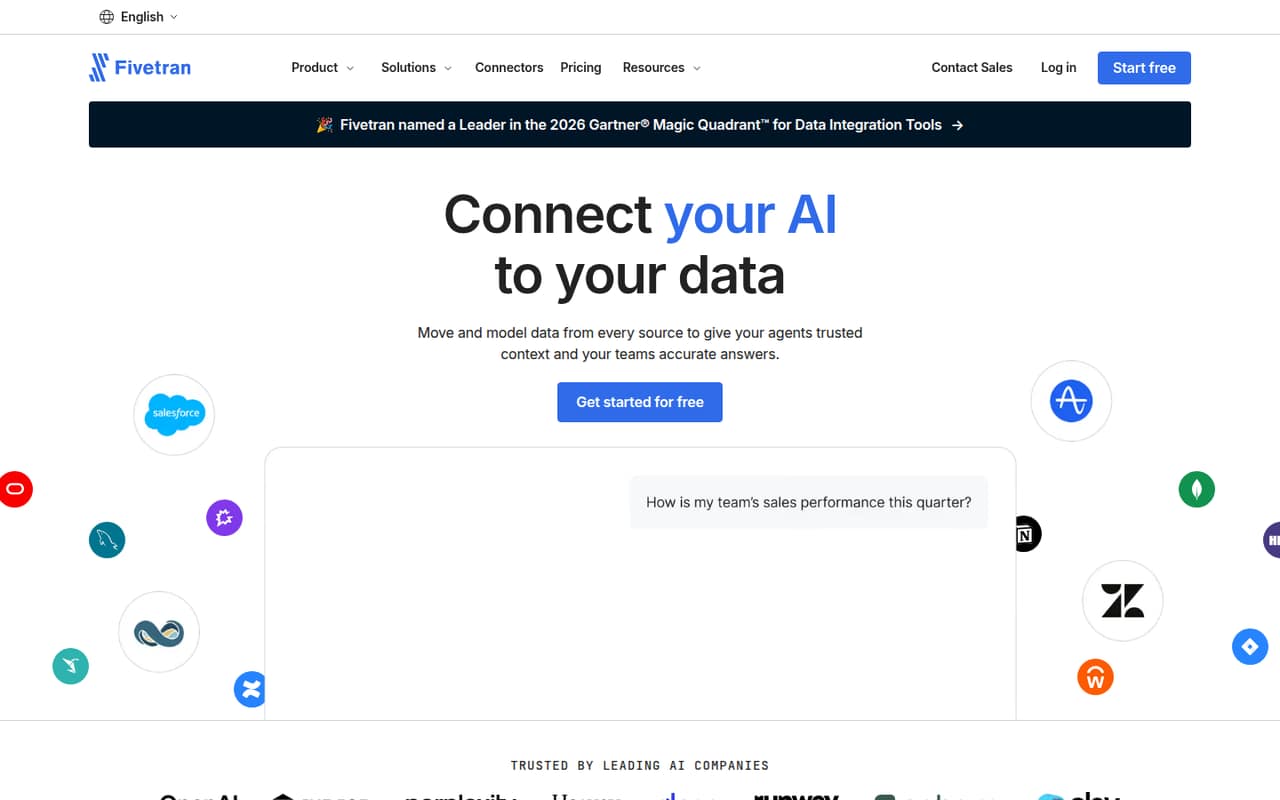
Fivetran is a managed connector service for teams feeding warehouses from many SaaS sources and minimizing connector maintenance. It has a free plan, but a starting price is not published. Estimate costs against your expected usage and validate the connectors your pipelines require. Plan migration and data export before adopting a managed service as a core dependency.
What works
- Fully managed connectors reduce pipeline maintenance
- Free plan includes 500,000 MAR for connections
- Standard lists 700+ managed connectors
What doesn't
- Paid plan prices are usage-based, not published
- Free connection usage stops at 500,000 MAR
- A $5 base charge applies to some Standard connections
- Best low-code ELTRiveryRivery
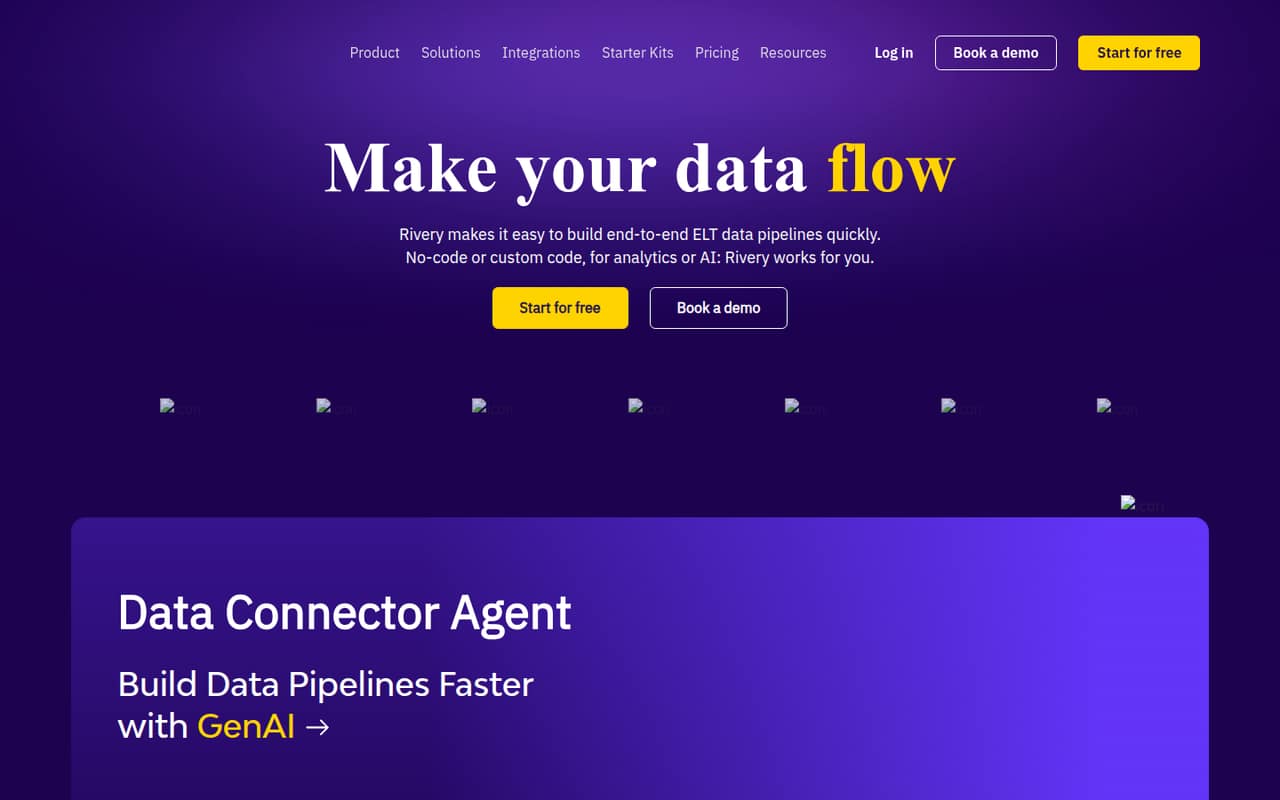
Rivery combines ingestion and orchestration for teams consolidating ELT work, particularly in Snowflake and other cloud warehouse projects. Pricing starts at $0.9, and usage pricing needs close review before you estimate production costs. Check the pricing unit and expected volume with the vendor, and investigate reported pipeline issues against the jobs and connectors you plan to run.
What works
- Combines ingestion, transformations, orchestration and reverse ETL
- Offers SQL and Python for transformations
- Unlimited connections on the Base plan
What doesn't
- Base credits make costs dependent on usage
- Professional, Pro Plus and Enterprise prices are not published
- Base allows only two users and one environment
- Best for no-code ingestionHevo DataHevo Data
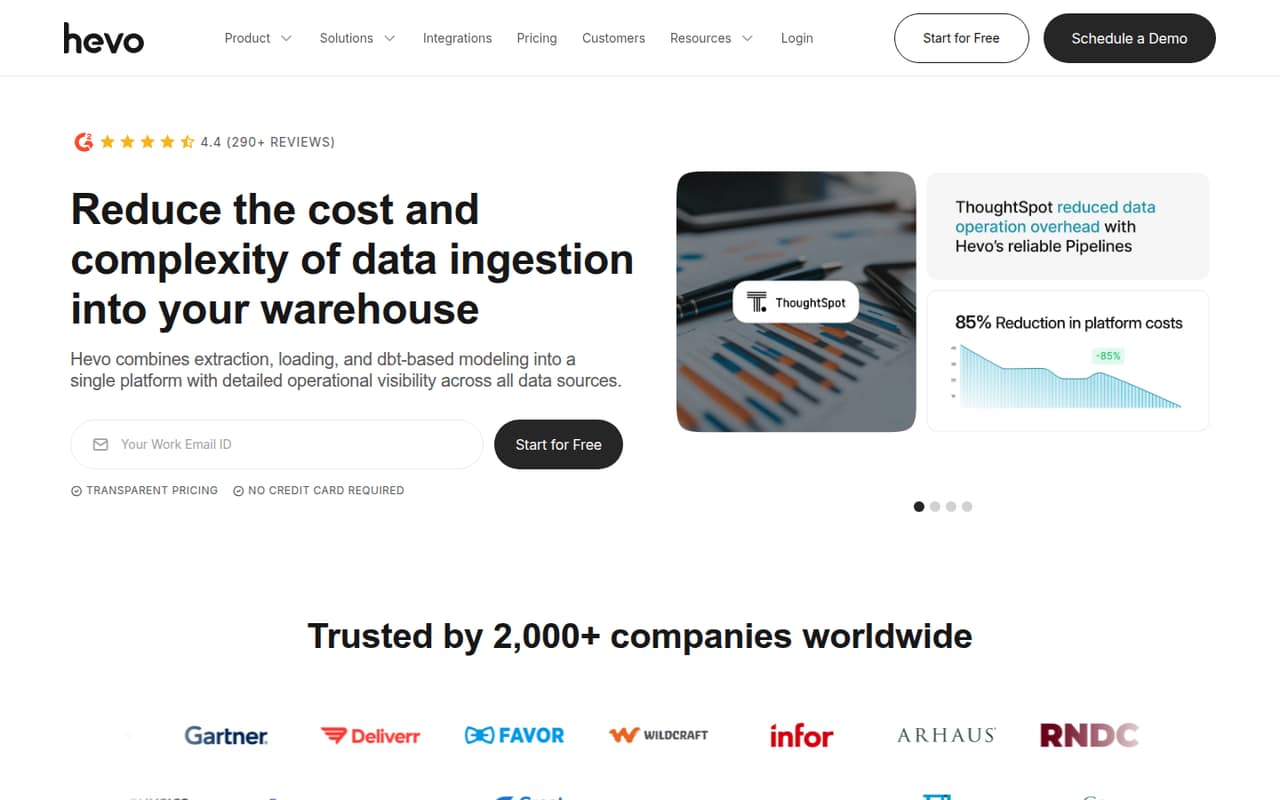
Hevo Data targets warehouse pipelines with no-code ingestion, dbt models, and database replication using CDC. Pricing starts at $265. That makes it important to compare the bill against event volume and the sources you intend to replicate. Confirm your API requirements and connector behavior before committing, particularly if teams need to manage pipelines programmatically.
What works
- 190+ pre-built connectors for source ingestion
- Combines ingestion with dbt, SQL and Hevo Transformer
- Pipeline logs, monitoring and alerts
What doesn't
- No free plan; the free trial lasts 14 days
- Events above plan quotas incur unpublished on-demand rates
- Starter limits teams to 10 users
- Best for governanceTalend Data IntegrationTalend Data Integration
Talend Data Integration fits teams working across deployment environments, data quality, and governance, with both visual and code-oriented control. It is self-hostable, but pricing is quote-based. Before adoption, ask about the deployment options, developer interfaces, and how workflows move between environments. Validate those details with a representative pipeline rather than relying on visual workflow coverage alone.
What works
- Supports batch, real-time, ETL, ELT and API patterns
- Offers cloud, on-premises and hybrid deployment
- Combines data integration, quality and governance
What doesn't
- Plan prices are quote-based, with no published starting price
- Seat caps and overage rates are not published
- API style, SDKs, languages and CLI are not named

- Best visual workflowsKNIME Analytics PlatformKNIME Analytics Platform
KNIME Analytics Platform is an open-source, self-hostable option for teams sharing visual data workflows and combining data sources, including life-sciences teams. It has a free plan, with pricing starting at $19. Check paid runtime and team costs before production use. It is most relevant when visual workflow authoring fits the team, rather than when an API-first integration layer is the main need.
What works
- Free open-source local download
- 300+ connectors for data and AI
- Run workflows node by node or all at once
What doesn't
- Exact open-source licence is not published
- Public API and SDK details need confirmation
- Paid plans meter workflow runtime credits
- Best visual warehouse ETLMatillionMatillion
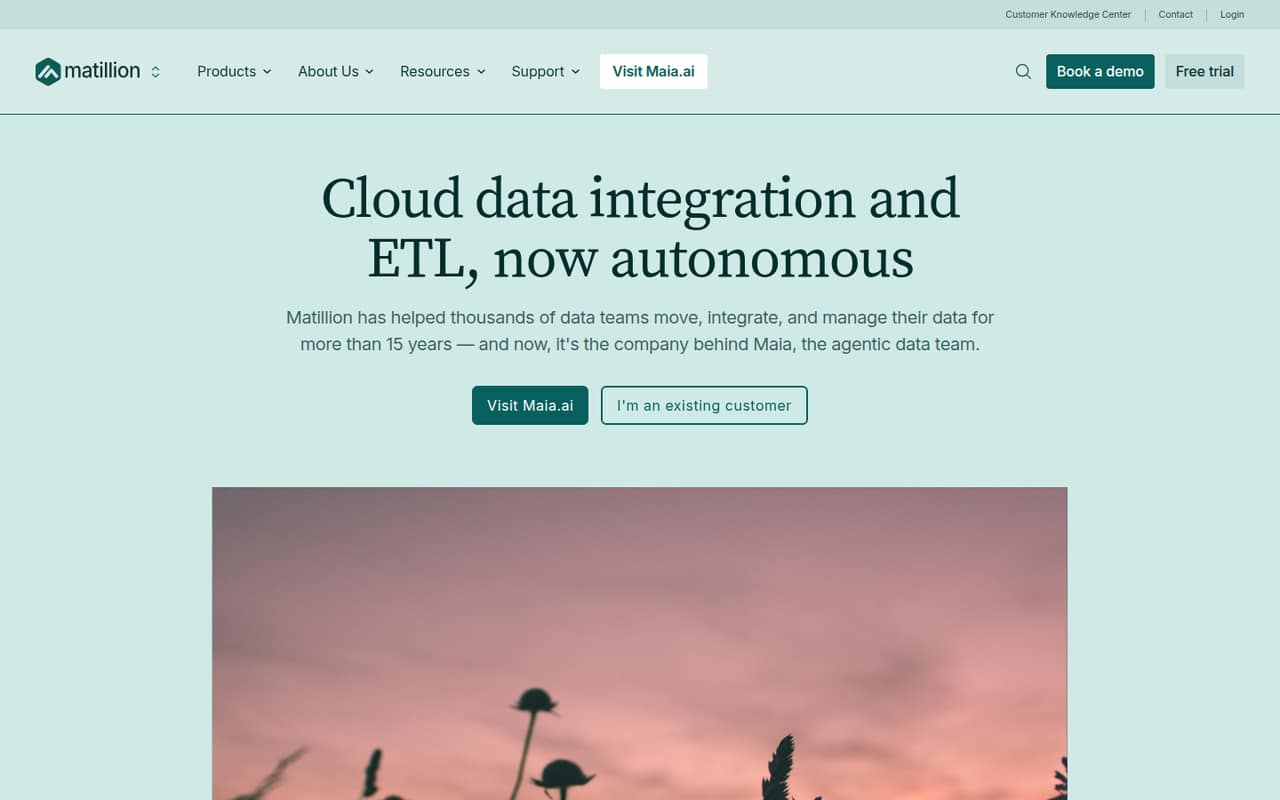
Matillion pairs visual cloud-warehouse ETL with Maia agents and targets governed connectors and orchestration. It is self-hostable, but pricing and integration details need confirmation with the vendor. Ask how its deployment model works with your warehouse, what programmatic interfaces are available, and how orchestration and agent-assisted tasks affect costs before selecting it for production.
What works
- Maia agents plan, build, test, deploy and fix pipelines
- Users review agent plans before execution
- Context Engine supplies business rules and standards
What doesn't
- Plan prices and starting price are not published
- Programming languages and SDKs are not named
- Excel workloads may encounter memory limits, per Reddit reports
- Best no-code app pipelinesSkyviaSkyvia
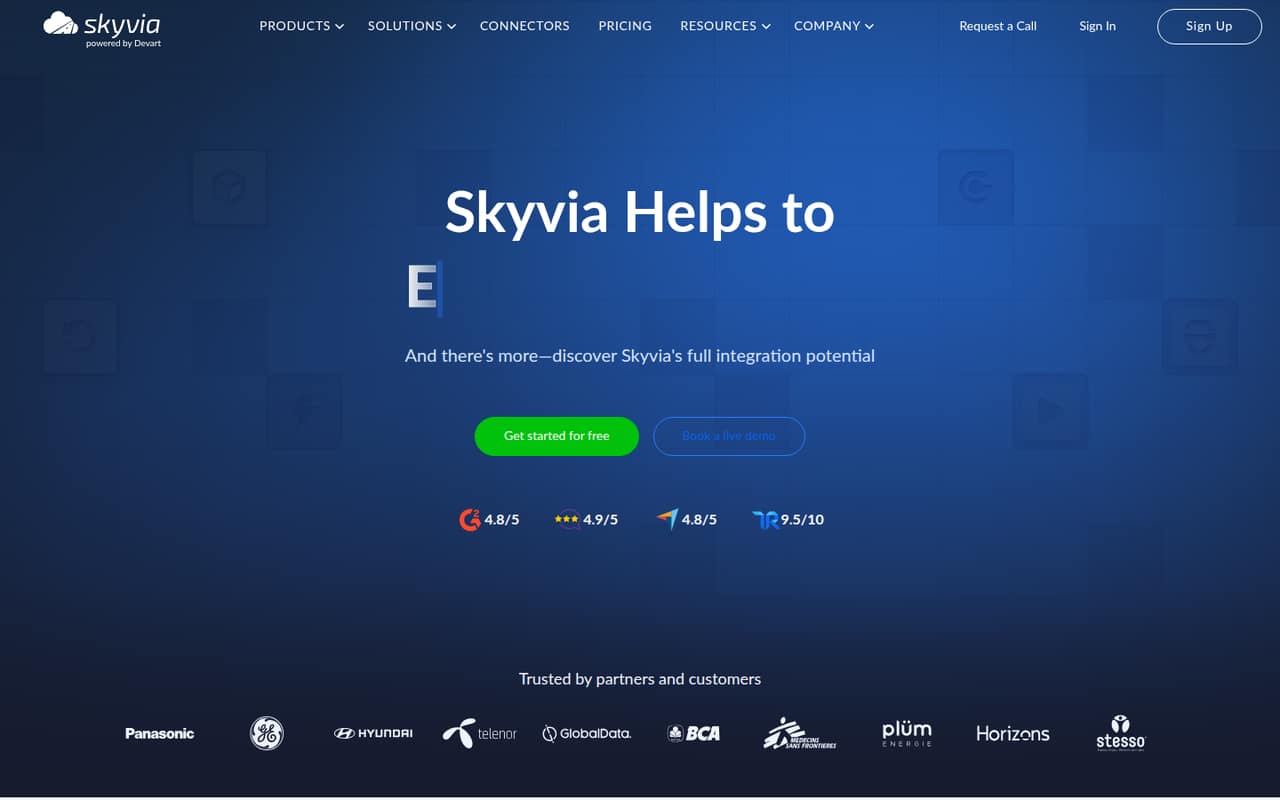
Skyvia covers scheduled app-to-warehouse pipelines, no-code integrations, automation, and live data endpoints. It has a free plan, but a starting price is not published. Check plan limits and developer interfaces against your use case before building around it. It is a better fit for teams prioritizing broad data movement without code than for API-first platform engineering.
What works
- More than 200 data sources
- Supports ELT, Reverse ETL, and CDC
- Visual workflows with triggers and logic
What doesn't
- Subscription prices are not published
- No client SDK or language is named on the homepage
- Free tier has a low monthly record allowance
- Best for enterprise scaleAb InitioAb Initio
Ab Initio is a self-hostable distributed data platform aimed at large-scale processing, batch and streaming workflows, and governed mission-critical applications. Pricing is custom, so request an estimate tied to deployment size and workload. Confirm integration details and operational requirements with the vendor; enterprise scope alone does not establish fit for a particular stack.
What works
- Parallel processing across CPUs, server networks, containers and clouds
- Supports both batch and real-time streaming workflows
- Handles large-scale ETL/ELT workloads
What doesn't
- Pricing is negotiated directly
- Seat and usage limits are not published
- No starting price is published

- Best for spatial dataFMEFME
FME targets organizations integrating varied sources, especially teams working with spatial data and public-sector or education buyers. It has a free plan, but technical fit and pricing need vendor confirmation. Ask about deployment, supported integrations, and the plan limits relevant to your workload before choosing it as a shared data platform.
What works
- Connects databases, real-time sources and business systems
- Includes support for spatial data
- Several subscriptions allow unlimited web users
What doesn't
- Paid subscription prices are quote-based
- Seat and engine limits can vary by deployment
- Public API, SDK and language details are unclear
- Best for marketing activationHightouchHightouch
Hightouch is for activating warehouse data in marketing workflows, including cross-channel customer journeys, campaigns, and audiences. It has a free plan, but paid plans are quote-based. Ask for pricing at your expected scale and verify the developer interfaces and integration details your team needs. It is less compelling when the primary requirement is general-purpose ingestion.
What works
- Free Basic Reverse ETL plan
- Unlimited destinations on the free plan
- No-code audience builder
What doesn't
- Paid plans are quote-based
- API, SDK and CLI details are not named
- No published self-hosting or open-source details

- Best for recurring reportsCoupler.ioCoupler.io
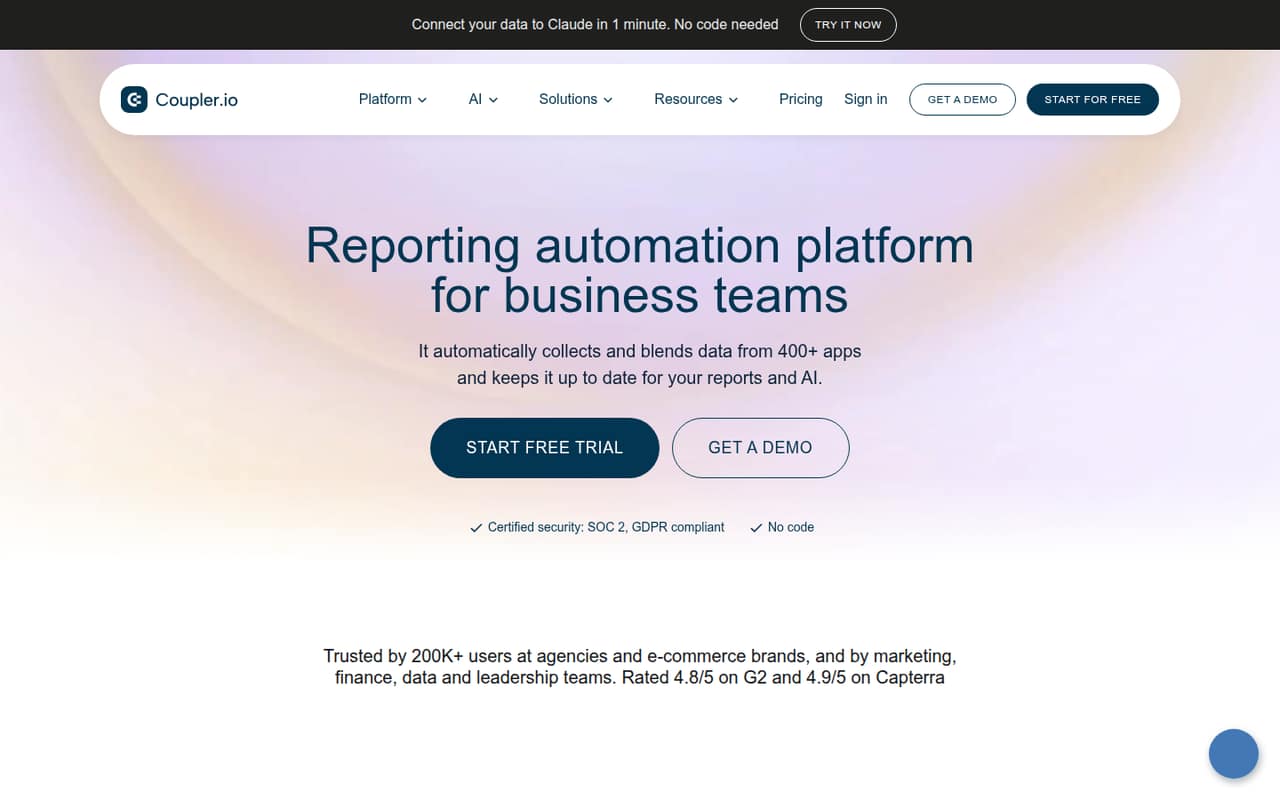
Coupler.io is a hosted pipeline for recurring reports, app-to-spreadsheet connections, and sending business data to BI. It has a free plan and pricing starts at $24. It suits reporting workflows better than teams seeking a developer-first API or self-hosted integration platform. Verify refresh limits and destinations against the reporting schedule you need.
What works
- Connects to more than 400 business data sources
- Blends data with formulas, filters, aggregation, append and join
- Schedules refreshes for data flows
What doesn't
- Free plan allows just 100 rows per run
- Free plan supports manual refresh only
- Published pricing does not list row overage rates
- Best for spreadsheet automationAlteryxAlteryx
Alteryx helps business teams turn spreadsheet processes and analytics workflows into repeatable, governed work, including finance reconciliation. Pricing starts at $250. It can reduce ad hoc business workflows, but costs and handoffs between business-owned and developer-owned processes deserve attention. Check how workflows are deployed, maintained, and handed over before making them operational dependencies.
What works
- Business teams can own and update workflow logic
- Workflow steps, sources and changes are auditable
- Supports repeatable calculations for AI answers
What doesn't
- Starter is $250 per user monthly, billed annually
- Professional and Enterprise prices require sales quotes
- Automation allowances vary by plan
- Best for PDF tablesTabulaTabula
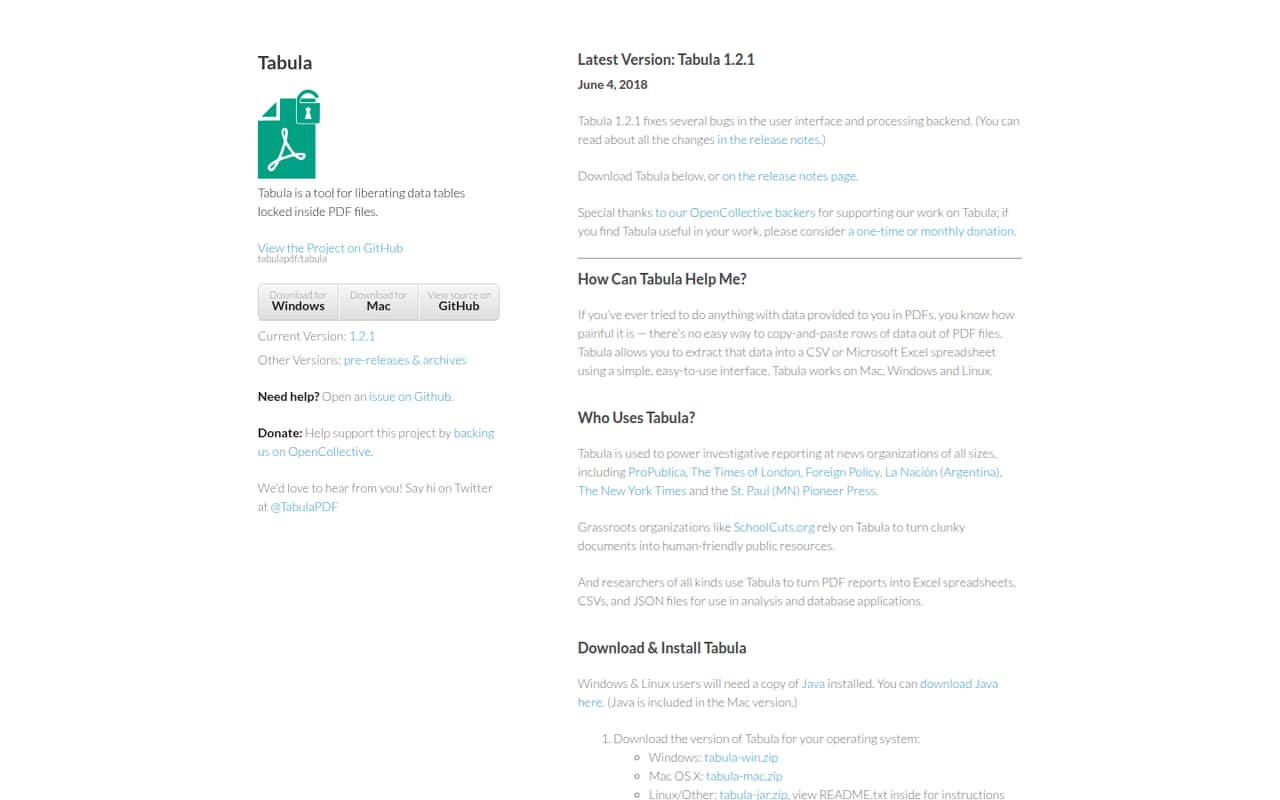
Tabula is a free, open-source, self-hostable desktop utility for extracting tables from text-based PDFs and exporting them to CSV or Excel. It is useful for researchers, journalists, and one-off data work, but it is not an API or automated pipeline. Choose it for manual extraction, not as the foundation for recurring production integrations.
What works
- Free under the MIT license
- Runs locally on Mac, Windows, and Linux
- Exports extracted data to CSV and Excel
What doesn't
- Does not work with scanned documents
- Documented workflow depends on manual table selection
- No documented API, SDK, or CLI integration
- Best for QuickBooks CSVsTransaction Pro ImporterTransaction Pro Importer
Transaction Pro Importer handles spreadsheet-based transfers for QuickBooks users, including firms managing several QuickBooks companies. Pricing starts at $10. It addresses a specific import workflow rather than serving as a programmable integration layer. Confirm that its supported transfers match your accounting process, and use another tool if you need general API-driven synchronization.
What works
- Supports data transfers between QuickBooks and Excel or CSV
- QuickBooks Online plans include unlimited users
- Firm plans cover multiple connected companies
What doesn't
- No API, SDK, or CLI is listed
- Essentials limits imports to 200 rows monthly
- Desktop licenses are one-time per-user purchases
- Best for data operationsMatiaMatia
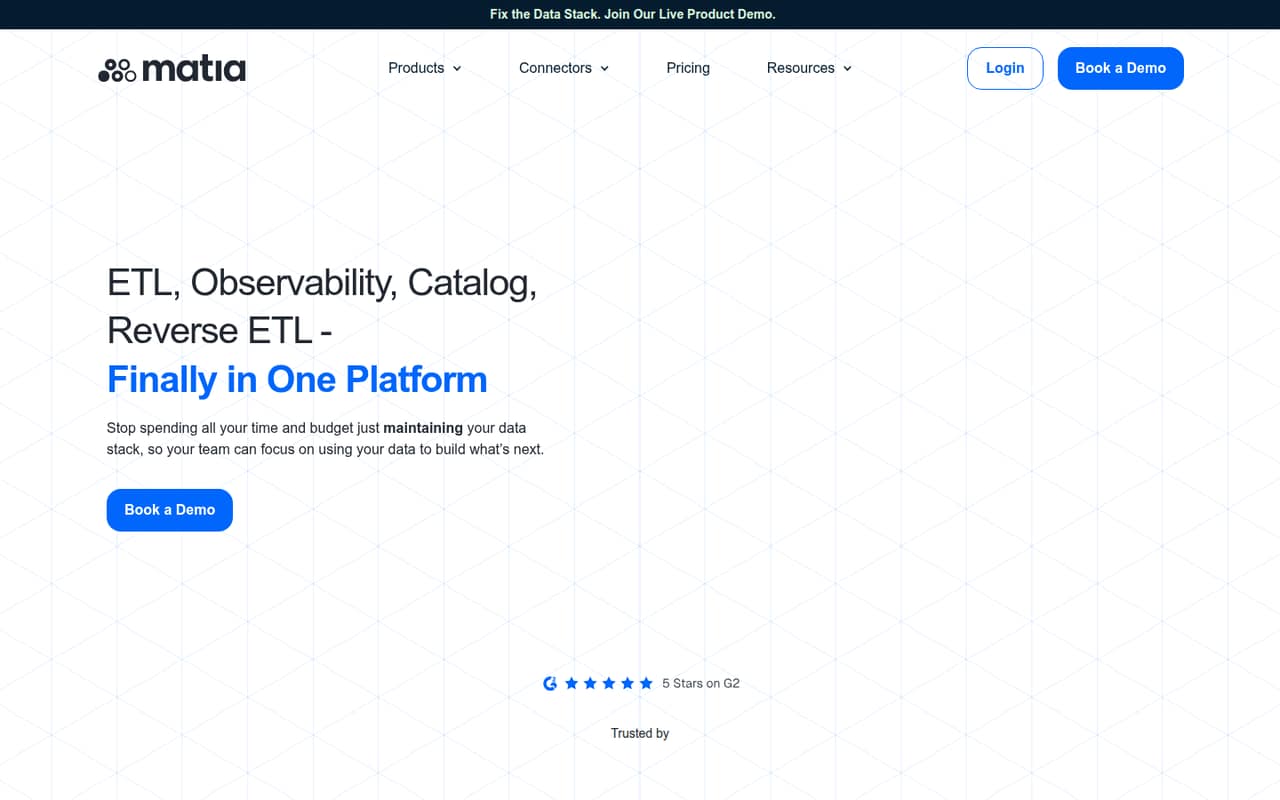
Matia consolidates data operations tools for warehouse teams that need reverse ETL, lineage, and data quality. Pricing starts at $1,250, so compare its scope with the separate tools it might replace and estimate the total cost at your intended scale. Confirm integration details and deployment requirements with the vendor before planning a migration.
What works
- Combines ETL, reverse ETL, observability and cataloging
- Lists more than 100 data sources
- Offers column-level lineage
What doesn't
- Starter costs $1,250 per month
- No free plan
- Standard and Enterprise prices are not published
03How we chose
We ranked these tools for developer and technical-team fit, not for business-user popularity. We weighed architectural role, documented API and SDK coverage, connector and integration needs, published documentation, free tiers, usage-based pricing, open-source licences, and self-hosting options. We also treat community sentiment, including Reddit reports, as a prompt to investigate operational failure modes rather than as proof of performance. A higher rank does not mean every tool is interchangeable: orchestration, CDC, SQL modeling, streaming, and PDF extraction solve different parts of data movement.
04Match the tool to the integration layer
Start by naming the job: extracting data from applications, capturing database changes, transforming warehouse tables, orchestrating jobs, or syncing warehouse data back to business systems. These are different layers. Airbyte and Fivetran focus on managed or self-managed ingestion; Artie focuses on CDC; dbt handles SQL modeling; Prefect, Dagster, and Astro orchestrate workflows. A single product may cover several tasks, but check where it stops and which system owns retries, state, lineage, and alerts. For application code, inspect the documented API, SDK language coverage, authentication, pagination, and rate limits. If the vendor does not publish a limit you need, ask for it in writing. Confirm export formats for configurations and data, and make a small, reversible proof of concept around a representative source and destination before making the tool a dependency.
05Model cost and production operations
A free plan or low starting price is not a production cost estimate. Identify the pricing unit, then estimate it using your expected rows, events, sync frequency, retention, environments, and concurrency. Ask how retries, backfills, CDC logs, and idle resources affect billing. Compare hosted and self-hosted deployments: self-hosting can avoid a vendor runtime charge, but your team owns upgrades, scaling, monitoring, credentials, and incident response. Test failure behavior, not just a successful sync. Determine what happens when a source changes schema, an API throttles requests, a destination is unavailable, or a backfill overlaps with live traffic. Review data residency, access controls, deletion, and export procedures. Before signing, ask how to migrate connections, transformation code, schedules, and historical state to another platform; lock-in often lives in those operational details, not only in the data.
Questions people ask
What are the top 5 data management tools?
For developer-led data integration, five options to compare are Prefect for Python workflow orchestration, Airbyte for replication, dbt for SQL transformations, Artie for CDC, and Apache NiFi for self-hosted data routing. They serve different layers, so the right shortlist depends on whether you need ingestion, transformation, or orchestration.
Is ETL the same as an API?
No. ETL describes a process: extract data, transform it, and load it into a destination. An API is an interface software can use to request or exchange data. An ETL pipeline may call APIs as sources or destinations, but an API alone does not provide the full pipeline.
What are some effective tools for ETL testing?
Choose tests that cover schema changes, row counts, nulls, uniqueness, business rules, retries, and incremental loads. dbt can support SQL model testing, while orchestration tools such as Prefect and Dagster manage workflow execution. Verify how your chosen stack reports failures and prevents bad data from reaching downstream systems.
What is an example of data integration?
A common example is copying sales and customer records from a CRM into a warehouse on a schedule, transforming them into consistent tables, then syncing selected customer segments back to a marketing platform. That flow combines ingestion, transformation, and reverse ETL; different tools may own each step.