We may earn a commission if you buy through links on this page. It never changes a score or a ranking. How we make money
DataForSEO is our top pick for teams building SEO products: its range of data APIs suits custom workflows, and usage-based pricing can fit request-driven systems. SE Ranking and YepAPI are worth comparing if you want a broader hosted platform or one API spanning several data categories. Before committing, check the vendor’s request limits, plan gates, SDKs and data-export terms. Entry prices and free tiers differ, and an API does not by itself guarantee self-hosting, predictable costs or a portable dataset.
Quick picksThe shortlist
 DataForSEODataForSEOBest overall · Custom
 SE RankingSE RankingBest for agencies · $103.20/mo
 YepAPIYepAPIBest for mixed data · Custom
 Ahrefs APIAhrefs APIBest for Ahrefs users · Free
- Semrush APISemrush APIBest for broad coverage · Custom
 Moz APIMoz APIBest free-tier start · $20/mo
 MajesticMajesticBest for backlinks · $41.67/mo
 SerpstatSerpstatBest for research and audits · $50/mo
 SpyFuSpyFuBest for PPC research · $29/mo
 Keywords EverywhereKeywords EverywhereBest for keyword research · $7/mo
 GrepwordsGrepwordsBest for SERP datasets · Custom
01Compared at a glance
| Tool | Score | From | Free plan | Trial |
|---|---|---|---|---|
| DataForSEODataForSEO | 7.8 | Custom | No | Yes |
| SE RankingSE Ranking | 7.3 | $103.20/mo | No | 14 days |
| YepAPIYepAPI | 7.2 | Custom | No | Yes |
| Ahrefs APIAhrefs API | 7.1 | Free | Yes | — |
| Semrush APISemrush API | 6.2 | Custom | No | — |
| Moz APIMoz API | 6.2 | $20/mo | Yes | — |
| MajesticMajestic | 6.8 | $41.67/mo | No | — |
| SerpstatSerpstat | 6.8 | $50/mo | No | 7 days |
| SpyFuSpyFu | 6.4 | $29/mo | No | — |
| Keywords EverywhereKeywords Everywhere | 6.8 | $7/mo | Yes | — |
| GrepwordsGrepwords | 5.8 | Custom | No | — |
02The picks, in detail
- Best overallDataForSEODataForSEO
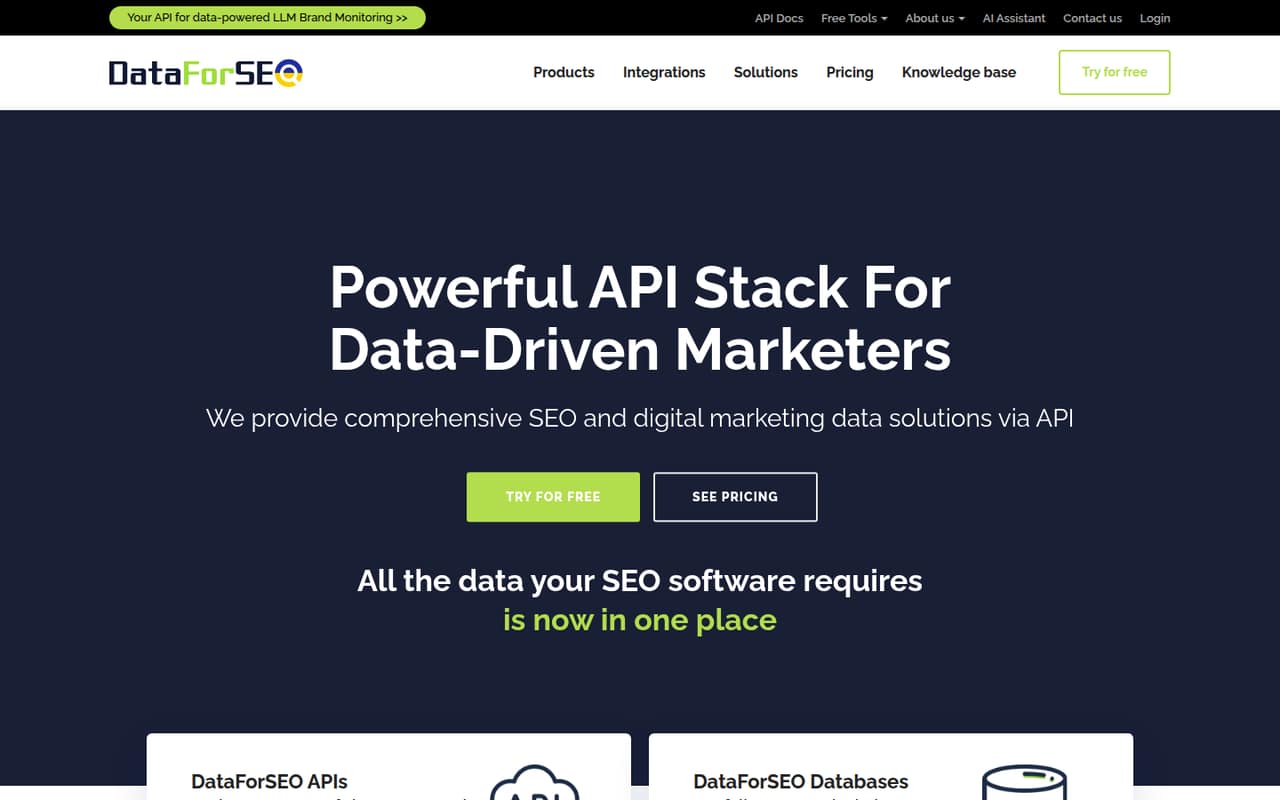
DataForSEO is the strongest fit for teams building SEO software, custom rank-tracking products or usage-based data workflows. Its range of SEO data APIs and low listed entry prices suit applications that need to assemble their own integration. The exact entry price is not stated here, so confirm current request costs, limits and data-retention terms before estimating production spend.
What works
- Broad coverage across search, keywords, backlinks and reviews
- Pay-per-use pricing without recurring fees
- SERP API starts at $0.0006 per SERP
What doesn't
- No free plan; the trial credit is $1
- A $50 minimum account top-up applies
- Costs vary by API, endpoint and result
- Best for agenciesSE RankingSE Ranking
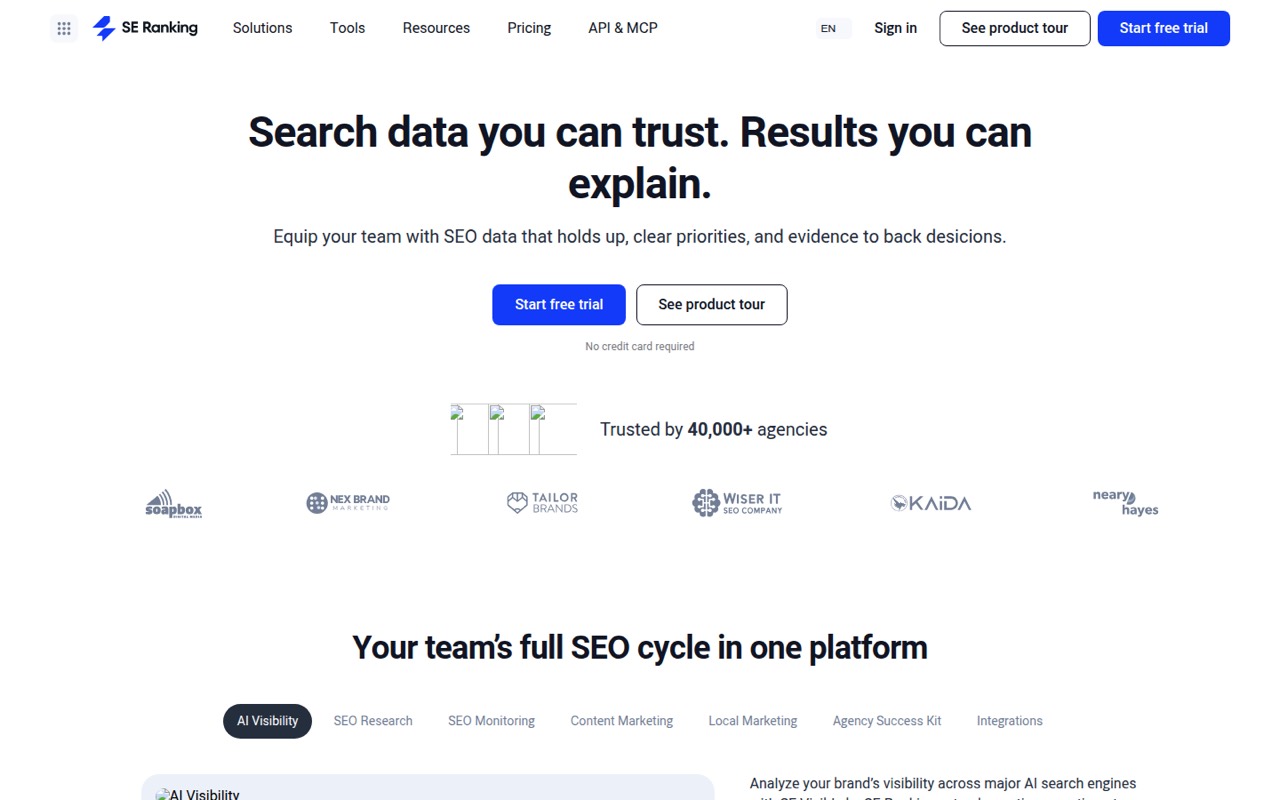
SE Ranking combines API and MCP access with quota-based plans, making it a candidate for client reporting and multi-project automation. The listed starting price is $103.2. Teams should check how quotas apply to their workload and whether the platform’s data and plan structure fit their reporting pipeline before depending on it.
What works
- API access to rankings, keywords, backlinks, and AI visibility data
- MCP connects structured SEO data to AI assistants
- Core and Growth publish specific project and usage quotas
What doesn't
- No permanent free plan; the free offer is a 14-day trial
- API rate limits are not published
- SDKs, programming languages, and CLI support need confirmation
- Best for mixed dataYepAPIYepAPI
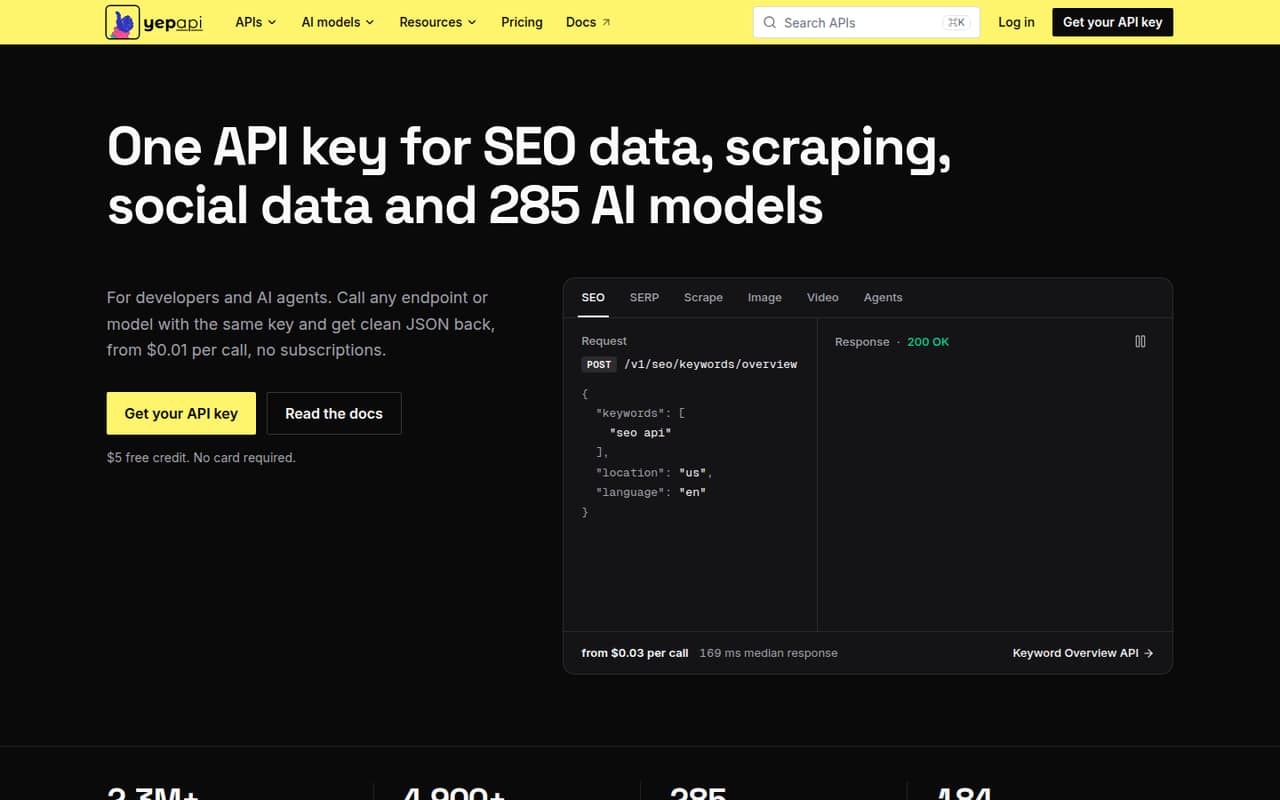
YepAPI puts SEO, scraping, social and e-commerce data behind one usage-billed API, alongside 285 AI models. That breadth may suit prototypes or applications combining SEO data with AI features and HTTP-calling agents. Its listed starting price is not stated, so ask how each call is billed and what limits apply before moving beyond a prototype.
What works
- One key covers SEO, scraping, social data and AI models
- Consistent JSON response envelope across endpoints and models
- $5 signup credit with no card required
What doesn't
- SDKs and supported programming languages are not named
- No published self-hosting option or open-source licence
- Data export and migration tooling are not published
- Best for Ahrefs usersAhrefs APIAhrefs API
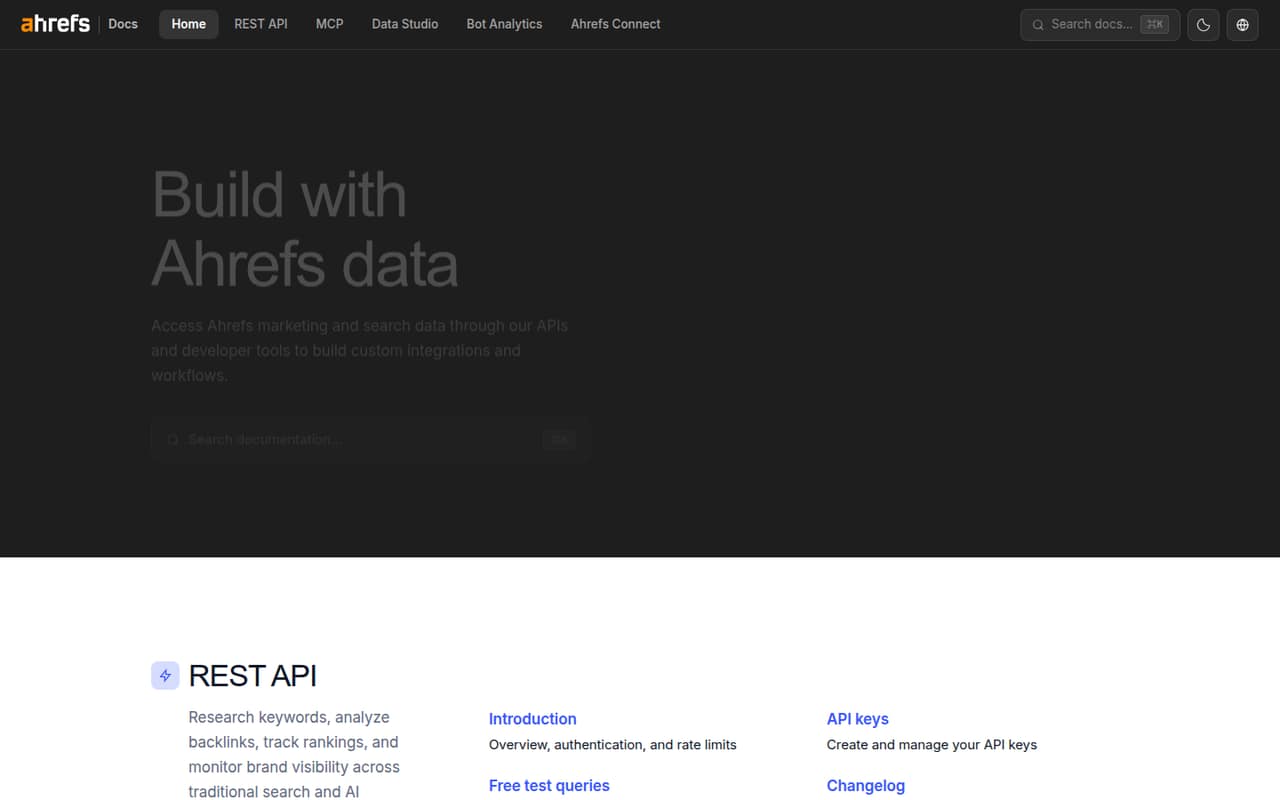
Ahrefs API is a hosted search-data API for teams already using Ahrefs, building SEO dashboards or supplying search data to AI tools. A free plan is listed, but the plan limits and pricing need confirmation before production use. Check which data your intended workflow can access and how its usage maps to the subscription.
What works
- REST API covers keywords, backlinks, rankings and brand visibility
- Free test queries are available without Enterprise
- OpenAPI specification supports machine-readable endpoint discovery
What doesn't
- The pricing page does not publish plan rates
- Maximum rows per request vary by plan
- API access is not listed for Starter or Ahrefs Free
- Best for broad coverage
Semrush APISemrush API
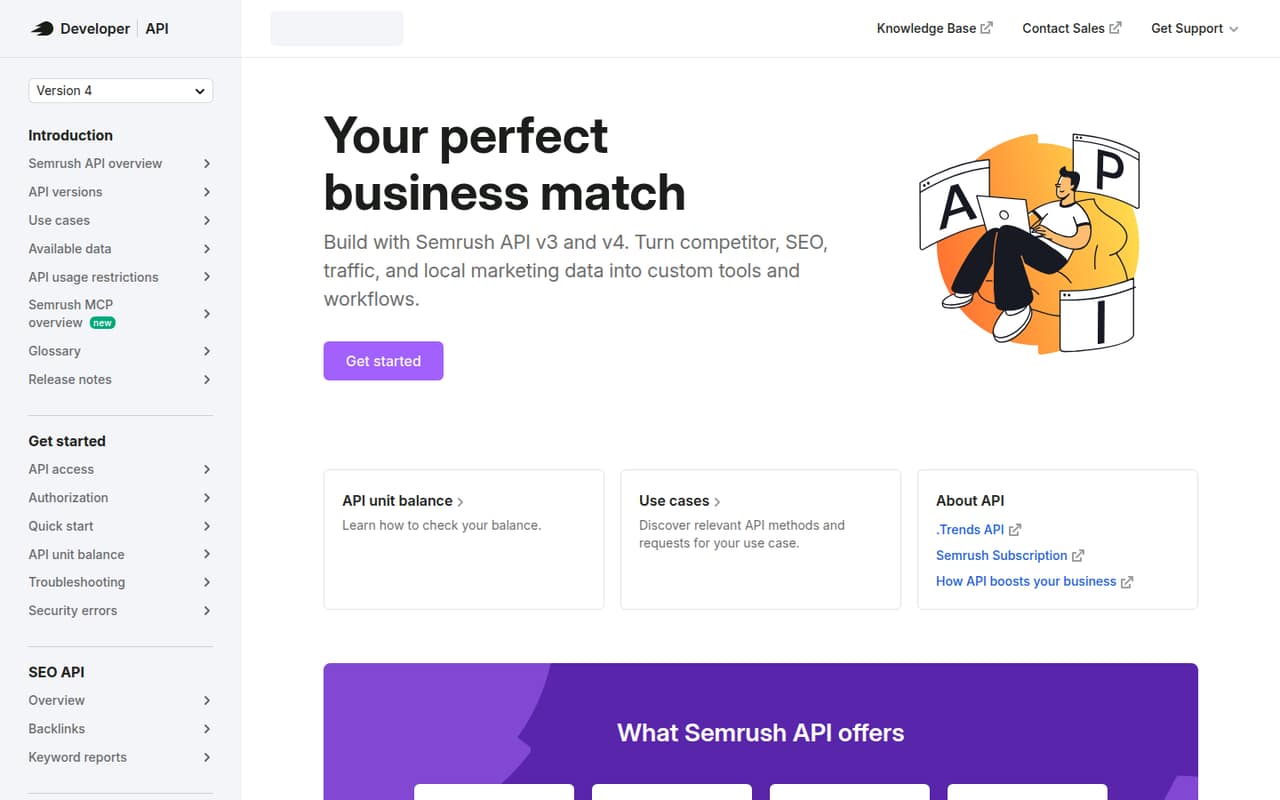
Semrush API offers broad SEO and local data APIs, with potential uses in SEO platforms, local-listing workflows and enterprise brand-visibility reporting. Pricing is not stated, and subscription gates complicate planning. Confirm the required plan, API access conditions and usage limits with Semrush before designing an integration around particular datasets.
What works
- SEO, traffic, project, local and enterprise APIs
- Detailed endpoint references for major workflows
- OAuth 2.0 access tokens and API keys
What doesn't
- Standard API includes zero API units
- API unit package prices are unpublished
- Several APIs require separate subscriptions
- Best free-tier startMoz APIMoz API
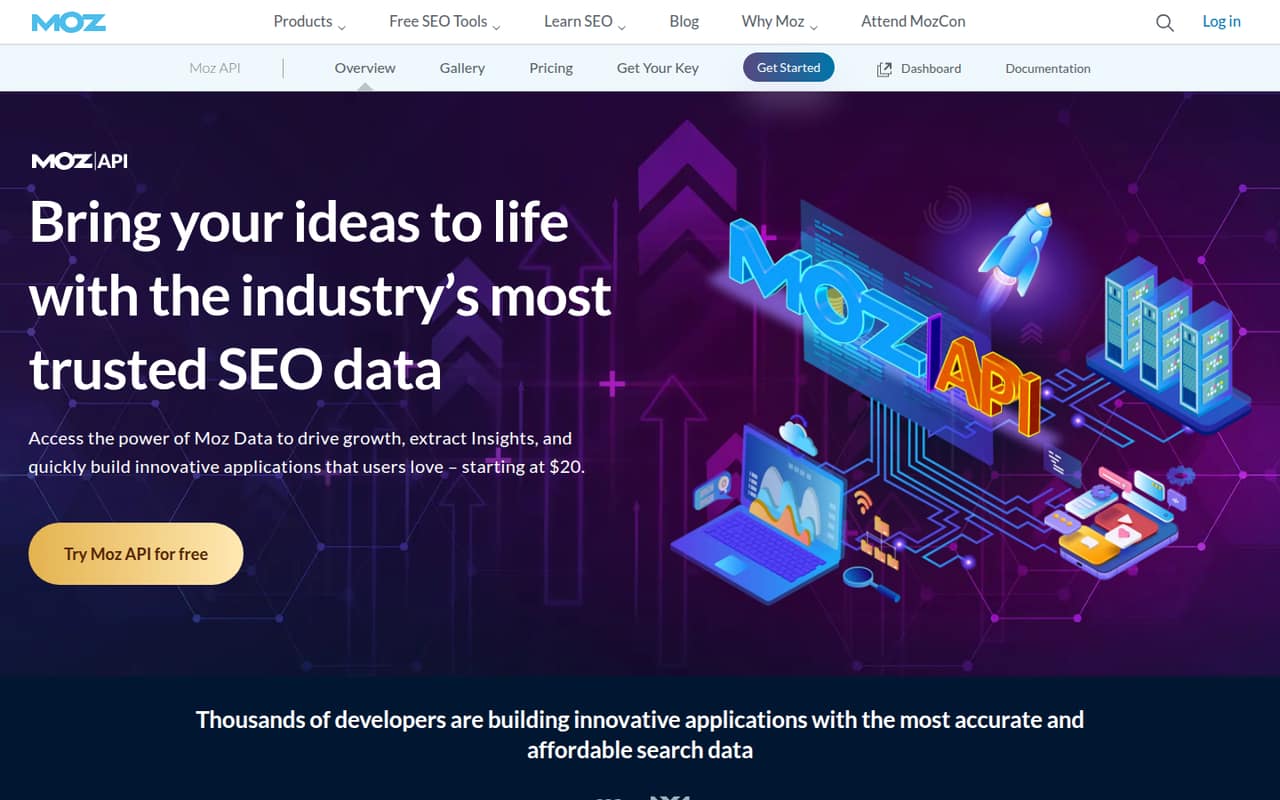
Moz API provides SEO data for custom dashboards, keyword-research integrations and products using link metrics. A free plan with a 50-row tier is listed, and the starting price is $20. That gives teams a defined entry point, but the row allowance and integration details should be checked against the expected volume and workflow.
What works
- Link, keyword and site data in one API
- Includes Domain Authority and Page Authority
- Keyword metrics include volume and difficulty
What doesn't
- Free plan is limited to 50 rows monthly
- Free requests are limited to one every 10 seconds
- SDKs and programming languages are not named
- Best for backlinksMajesticMajestic
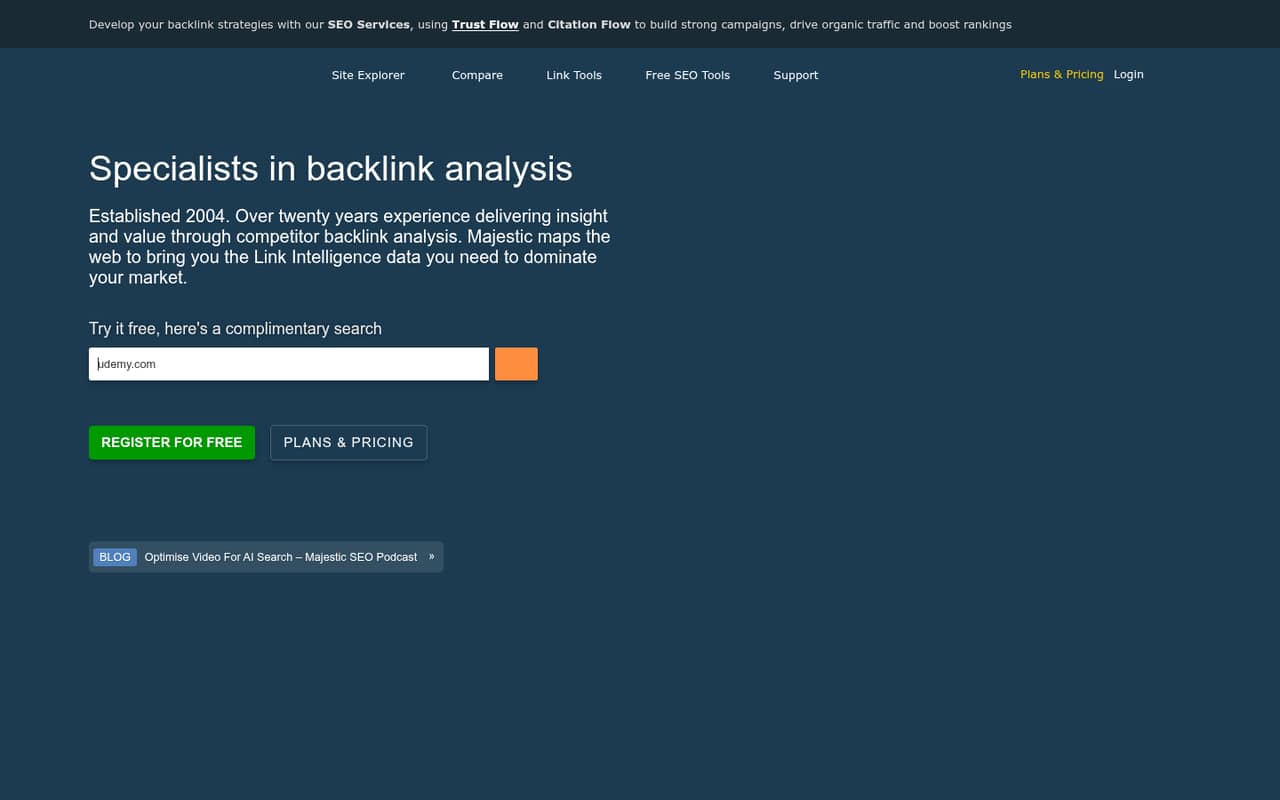
Majestic is focused on link profiles, backlink research and competitor analysis, with distinctive link metrics. Its listed starting price is $41.67, while API access is gated behind higher-priced plans. Confirm which plan grants the API access your application needs and how its backlink data fits alongside other SEO sources.
What works
- Trust Flow and Citation Flow provide distinct link metrics
- Topical Trust Flow covers more than 800 categories
- Historic Index records backlinks back to 2006
What doesn't
- Full API access starts with the API — 100 million plan
- Lite and Pro have no full API access
- API rate limits are not published
- Best for research and auditsSerpstatSerpstat
Serpstat combines SEO research and audits, with API access for teams working with Google keyword data or multiple client sites. The listed starting price is $50. Its breadth may suit an agency workflow, but check integration limits and plan requirements against the number of projects and the volume of data you expect to retrieve.
What works
- Keyword data covers Google in 230 countries
- Combines audits, rankings, keyword and competitor research
- API and data solutions support integration
What doesn't
- Homepage names no SDKs or programming languages
- API rate limits are not published
- No self-hosting or open-source option is described
- Best for PPC researchSpyFuSpyFu
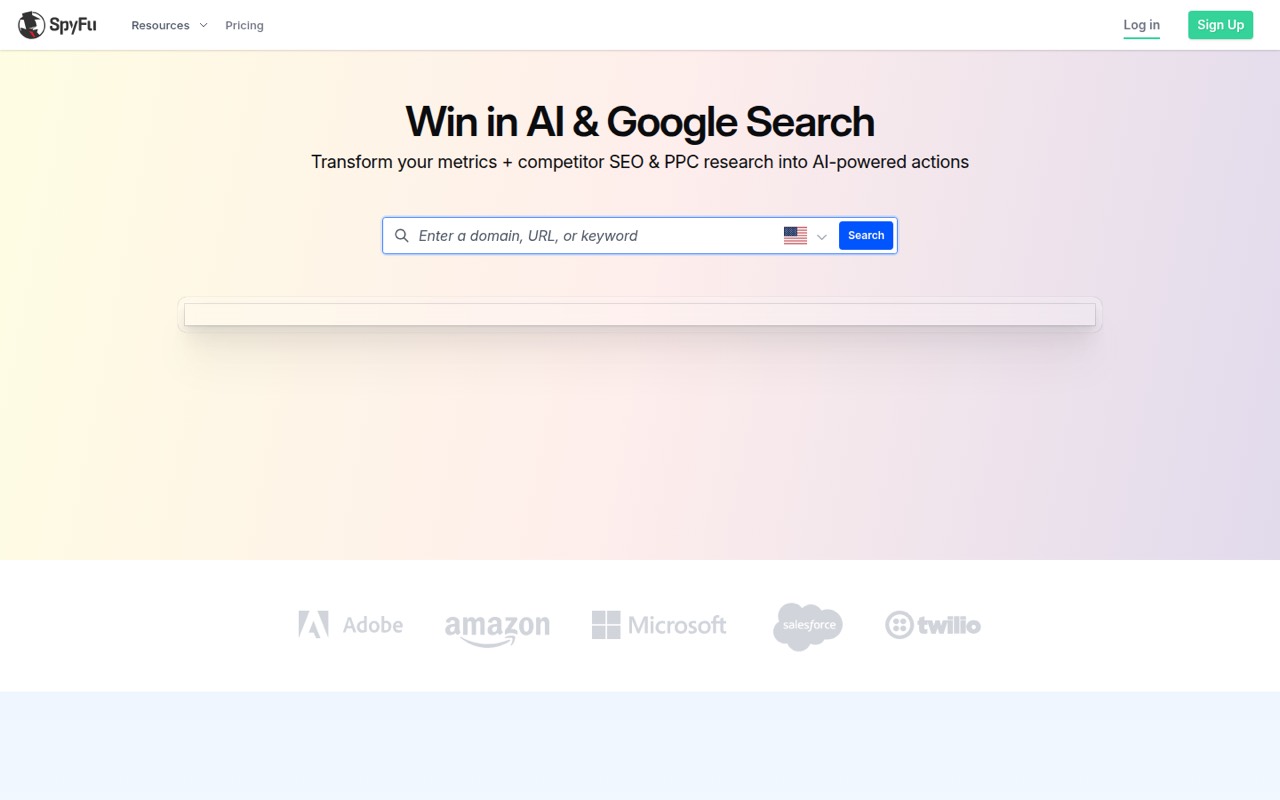
SpyFu targets competitor SEO and Google Ads research, making it relevant to integrations that combine organic and paid-search analysis or use research exports. Its listed starting price is $29. Verify API limits and whether the available data fields match your product’s needs before building a pipeline that depends on it.
What works
- Documented API endpoints support custom integrations and exports
- Basic and Pro + AI include API credits
- Research covers competitors’ SEO and PPC keywords
What doesn't
- No free plan is listed
- Homepage does not name SDKs or programming languages
- API rate limits are not published
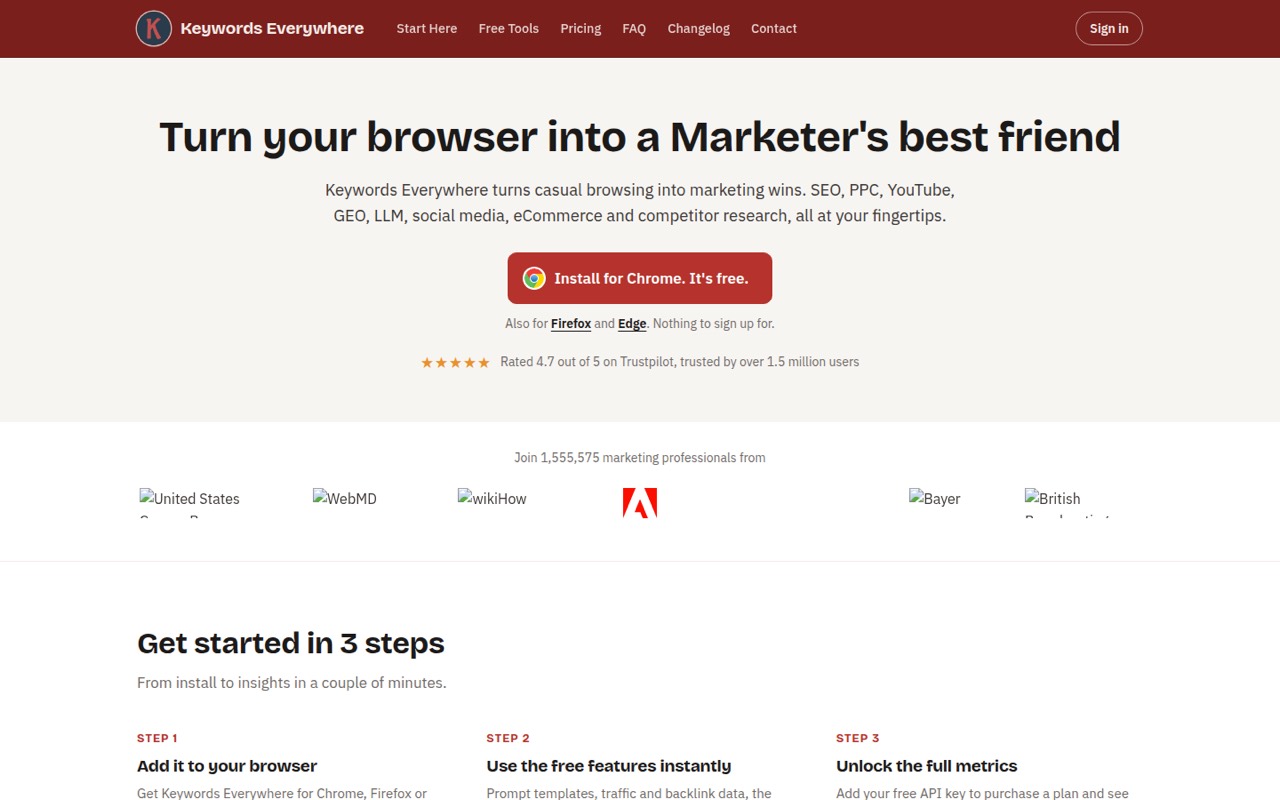
- Best for keyword researchKeywords EverywhereKeywords Everywhere
Keywords Everywhere pairs an SEO browser extension with paid credits and an MCP option for AI workflows using keyword data. A free plan is listed, with a starting price of $7. Its API detail is limited, so clarify how credits are consumed and whether the access model fits a repeatable production integration rather than browser-led research.
What works
- Free browser features work without an API key
- Available for Chrome, Firefox and Edge
- Paid metrics cover 15+ sites
What doesn't
- Free plan includes zero search-volume credits
- Paid plans are billed annually
- Reddit users report confusing credit consumption
- Best for SERP datasetsGrepwordsGrepwords
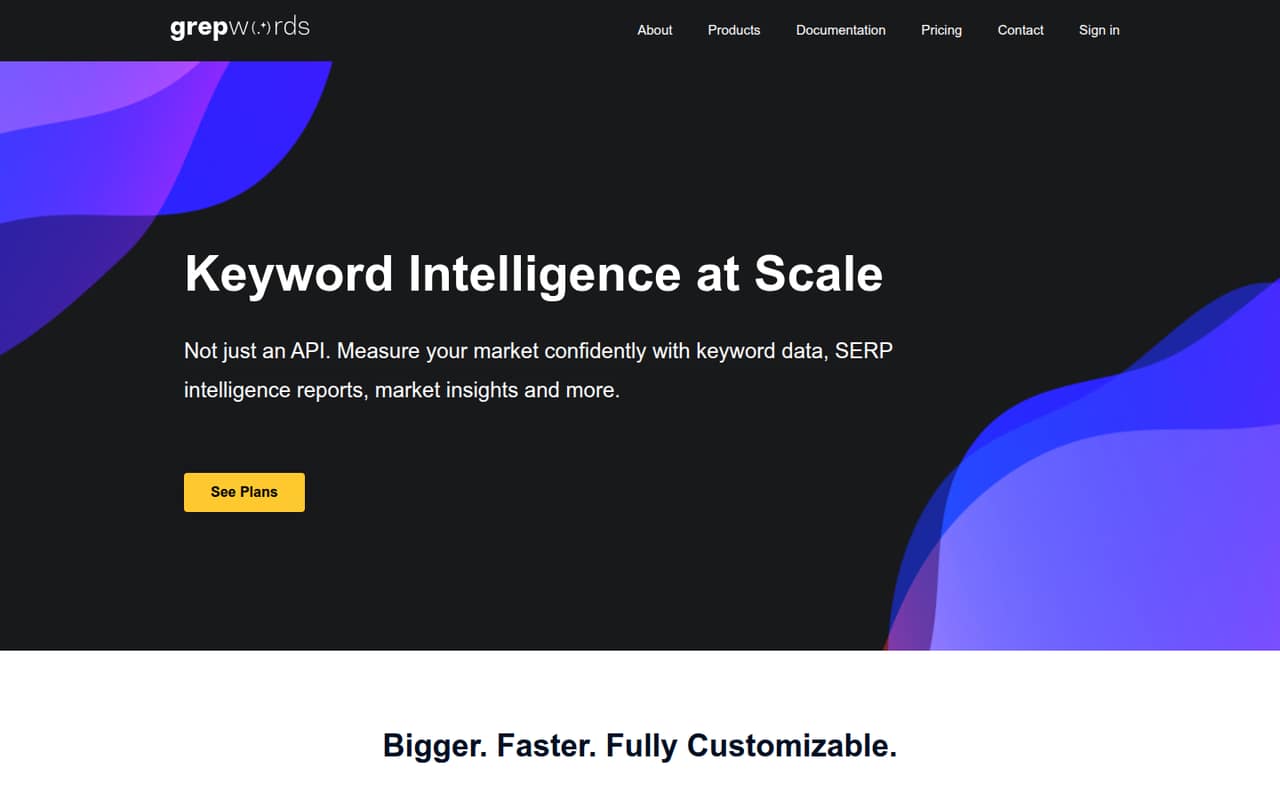
Grepwords offers keyword and SERP data APIs for research pipelines, SEO platforms and custom keyword datasets. Its use case is clear, but pricing and deployment options are not stated. Ask about billing, data coverage, request limits and hosting before treating it as a production dependency or comparing its total cost with metered alternatives.
What works
- Keyword database covers more than 5 billion keywords
- Related-keyword data is available through an API
- SERP results include structured features
What doesn't
- Monthly and annual prices are not published
- Request volumes are customized
- No free plan or trial is listed
03How we chose
We ranked these tools for developer and technical-team fit: API and documentation coverage, available SDK details, free-tier access, usage pricing and plan gates, and how clearly teams can estimate costs. We also considered open-source licensing and self-hosting as selection factors; API access alone is not evidence that either option exists. Reddit sentiment can flag operational concerns, but anecdotal reports should not replace vendor documentation or confirmation of limits. We favored clear integration paths and identifiable use cases, and treated unknown pricing or access conditions as production-planning risks.
04Estimate request costs and limits
Start with the workload, not the headline entry price. Estimate calls per customer, project and refresh cycle, then check whether the vendor bills by request, credits, quota or a subscription tier. DataForSEO is positioned for usage-based workflows; YepAPI is usage-billed; SE Ranking uses quota-based plans. Other tools list a starting price or a free plan, but that alone does not show what a production workload costs.
Ask vendors for the current rate limits, concurrency rules, overage charges, batch behavior and endpoint-specific pricing. Confirm whether retries, failed requests or multiple result pages consume quota. Test your cost model against expected peak usage, not just an average month. If a plan gate controls API access, include that subscription in your estimate. Keep alerts on consumption and define what your application does when it reaches a quota or receives a rate-limit response.
05Check integration and exit options
Treat each API as an external data dependency. Review the documentation for authentication, endpoint coverage, pagination, error responses, versioning and SDK availability in your application’s language. If a vendor offers MCP access, verify which tools and datasets it exposes; MCP does not tell you what the standard API supports. Confirm data freshness and retention rules for the fields your product stores.
Before adopting a service, ask whether the data can be exported and what happens to stored results if you cancel. Check the contract and licence for restrictions on caching, redistribution and customer-facing products. If self-hosting or an open-source licence is a requirement, ask for explicit confirmation rather than inferring it from API access. Put vendor calls behind an internal adapter where practical, so you can change providers without rewriting application logic.
Questions people ask
Which SEO API is best for developers?
DataForSEO is our overall pick for teams building SEO software or custom rank-tracking workflows. SE Ranking and YepAPI are alternatives for teams seeking quota-based access across a hosted platform or a single API spanning several data categories. Compare current limits and plan terms against your workload.
Which SEO API has a free tier?
Moz lists a free plan with a 50-row tier. Ahrefs, Keywords Everywhere and Semrush also have free plans listed, but their included API access or usage limits need confirmation. Check whether the free tier covers API calls specifically, rather than assuming a product-level free plan includes them.
Which SEO API is best for backlink data?
Majestic is the most focused option in this group for link profiles, backlink data and competitor backlink research. Its listed starting price is $41.67, and API access is gated behind higher-priced plans. Confirm the qualifying plan and available data before building a workflow around it.
Can I self-host an SEO data API?
Do not assume that API access means self-hosting is available. Ask each vendor directly about deployment options, licensing, data-export rights, caching and redistribution. If self-hosting is a hard requirement, include it in vendor selection before implementing against a hosted API.