We may earn a commission if you buy through links on this page. It never changes a score or a ranking. How we make money
For teams building rank trackers, research tools or search-backed agents, DataForSEO is our best overall pick: it offers a range of SEO data APIs and usage-based workflows. HasData and SerpApi are strong alternatives for structured web data and multi-engine search, respectively. Most options here are hosted services, so your choice affects more than query cost: it determines the response schema your code depends on, the collection infrastructure you operate, and how much data you can export. Check each vendor’s current quotas, terms and pricing model before routing production traffic.
Quick picksThe shortlist
 DataForSEODataForSEOBest overall · Custom
 HasDataHasDataBest for structured web data · $49/mo
 SerpApiSerpApiBest for multi-engine search · $25/mo
 YepAPIYepAPIBest for AI data workflows · Custom
 SerperSerperBest for Google SERPs · Free
 ValueSERPValueSERPBest for batch delivery · $50/mo
 ZenserpZenserpBest for varied SERP types · $49.99/mo
 Bright DataBright DataBest for web-data infrastructure · $499/mo
 OxylabsOxylabsBest for agent data pipelines · $15/mo
 SearchApiSearchApiBest for simple Google JSON · $40/mo
 serpstackserpstackBest for localized monitoring · $26.99/mo
 SerpWowSerpWowBest for cloud delivery · $125/mo
01Compared at a glance
| Tool | Score | From | Free plan | Trial |
|---|---|---|---|---|
| DataForSEODataForSEO | 7.8 | Custom | No | Yes |
| HasDataHasData | 7.4 | $49/mo | Yes | — |
| SerpApiSerpApi | 7.2 | $25/mo | Yes | — |
| YepAPIYepAPI | 7.2 | Custom | No | Yes |
| SerperSerper | 7.0 | Free | Yes | — |
| ValueSERPValueSERP | 7.0 | $50/mo | No | — |
| ZenserpZenserp | 7.1 | $49.99/mo | Yes | — |
| Bright DataBright Data | 7.0 | $499/mo | Yes | 7 days |
| OxylabsOxylabs | 6.8 | $15/mo | Yes | — |
| SearchApiSearchApi | 6.5 | $40/mo | Yes | — |
| serpstackserpstack | 6.3 | $26.99/mo | Yes | — |
| SerpWowSerpWow | 6.2 | $125/mo | No | — |
02The picks, in detail
- Best overallDataForSEODataForSEO
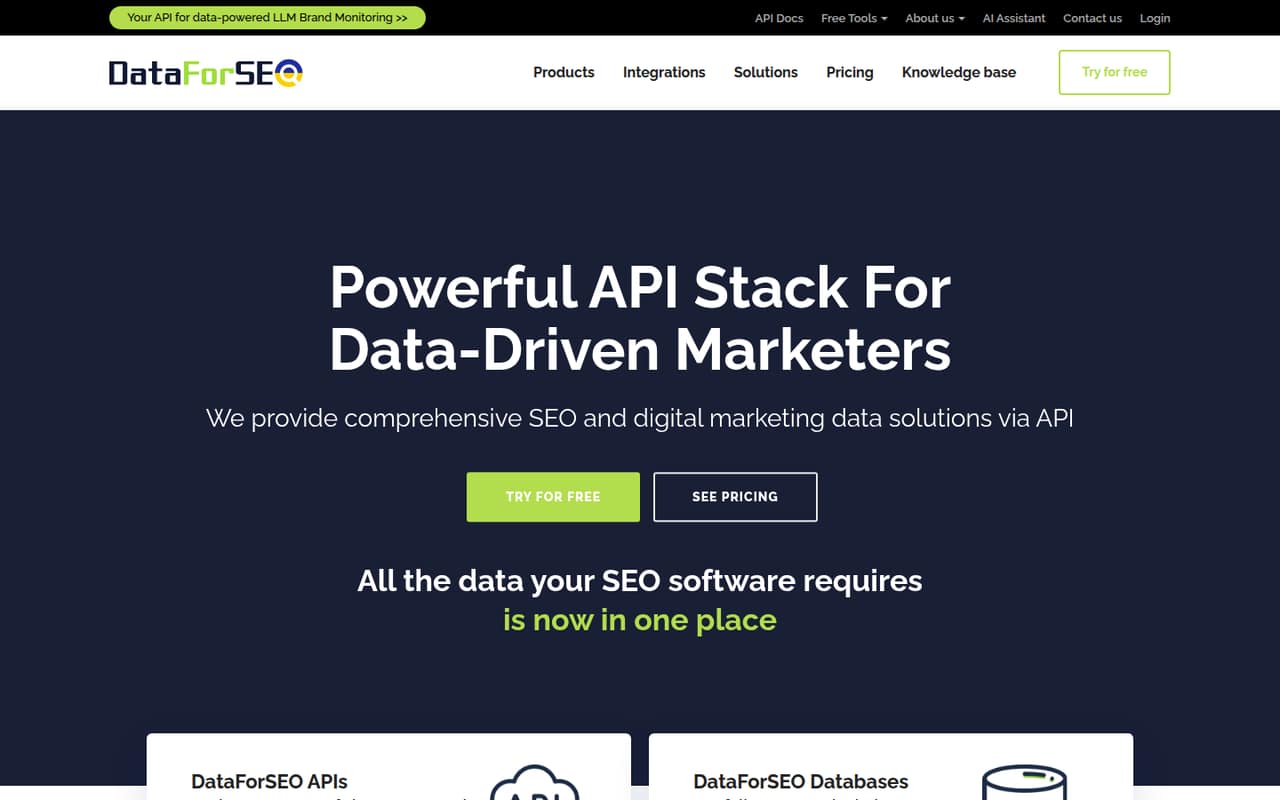
DataForSEO offers a range of SEO data APIs suited to custom rank trackers and other software products. Its usage-based model fits workflows where query volume varies, and the listed entry prices are low. You own the integration, so budget engineering time for mapping responses, handling errors and maintaining your data pipeline. Confirm current endpoint pricing and limits against your expected workload.
What works
- Broad coverage across search, keywords, backlinks and reviews
- Pay-per-use pricing without recurring fees
- SERP API starts at $0.0006 per SERP
What doesn't
- No free plan; the trial credit is $1
- A $50 minimum account top-up applies
- Costs vary by API, endpoint and result
- Best for structured web dataHasDataHasData
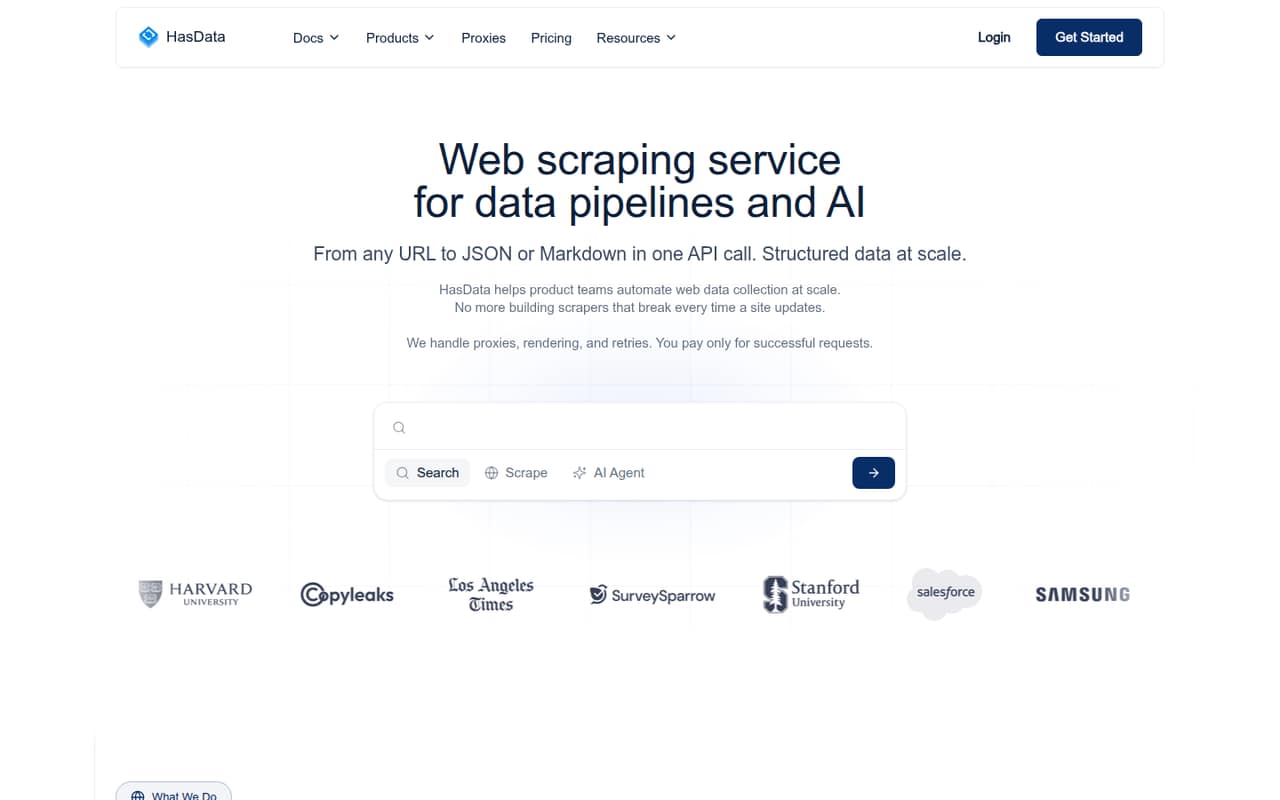
HasData suits teams sourcing structured Google search or Maps data without building collection infrastructure. It offers a free API tier and has a listed starting price of $49. The hosted model moves collection operations to the vendor, but leaves you dependent on its quotas, output schema and terms. Check whether the API covers your locations and query patterns before committing.
What works
- 63 API endpoints and 21 no-code scrapers
- Managed rendering, proxies and retries
- JSON and Markdown API responses
What doesn't
- Hosted service, with no self-hosting option presented
- No SDK or programming language is named
- Endpoint pricing varies by API and settings
- Best for multi-engine searchSerpApiSerpApi
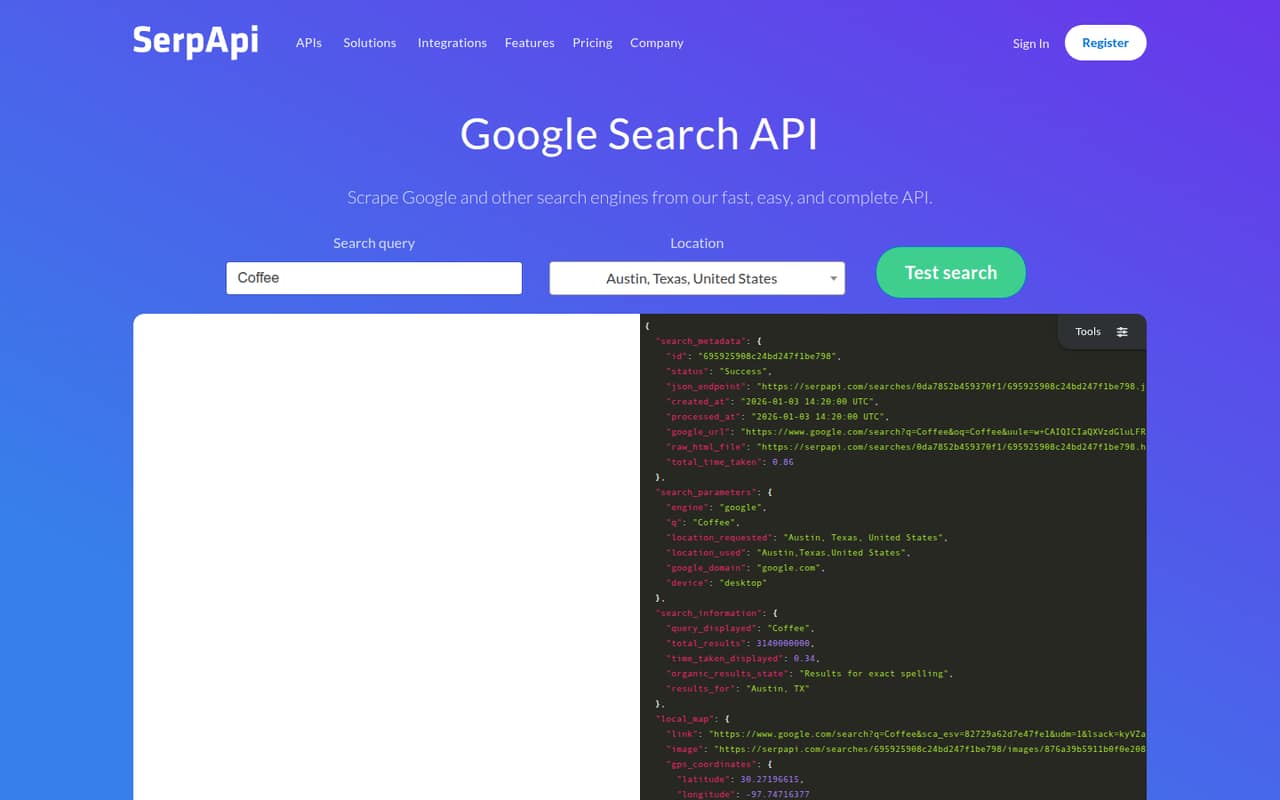
SerpApi is a broad hosted search-data API for applications that need location-aware results or multiple search engines. Its listed starting price is $25, with a free plan. Before adopting its response format across services, check the plan’s request limits, legal terms and data export options. A vendor-specific schema can otherwise become a migration cost.
What works
- Broad catalog of search and data APIs
- JSON and Markdown output
- Real-time requests, per the homepage
What doesn't
- Throughput limits vary by plan
- Overage behavior is not published
- No self-hosted option is offered
- Best for AI data workflowsYepAPIYepAPI
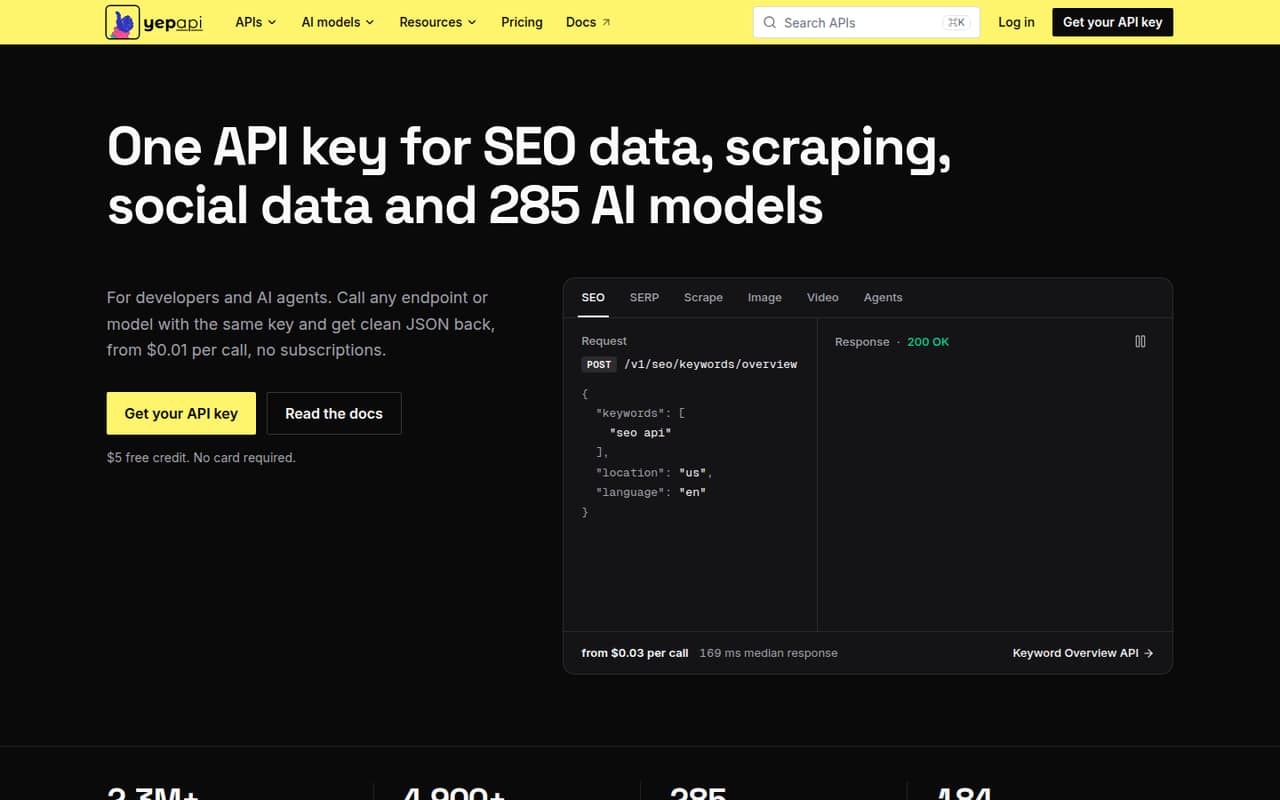
YepAPI combines SEO, scraping, social and e-commerce data behind a usage-billed API, and includes access to 285 AI models. That breadth may fit prototypes or agents that call HTTP APIs across several data types. For a production SERP workload, verify which search endpoints and query limits apply, how usage is billed, and whether the response format matches your application.
What works
- One key covers SEO, scraping, social data and AI models
- Consistent JSON response envelope across endpoints and models
- $5 signup credit with no card required
What doesn't
- SDKs and supported programming languages are not named
- No published self-hosting option or open-source licence
- Data export and migration tooling are not published
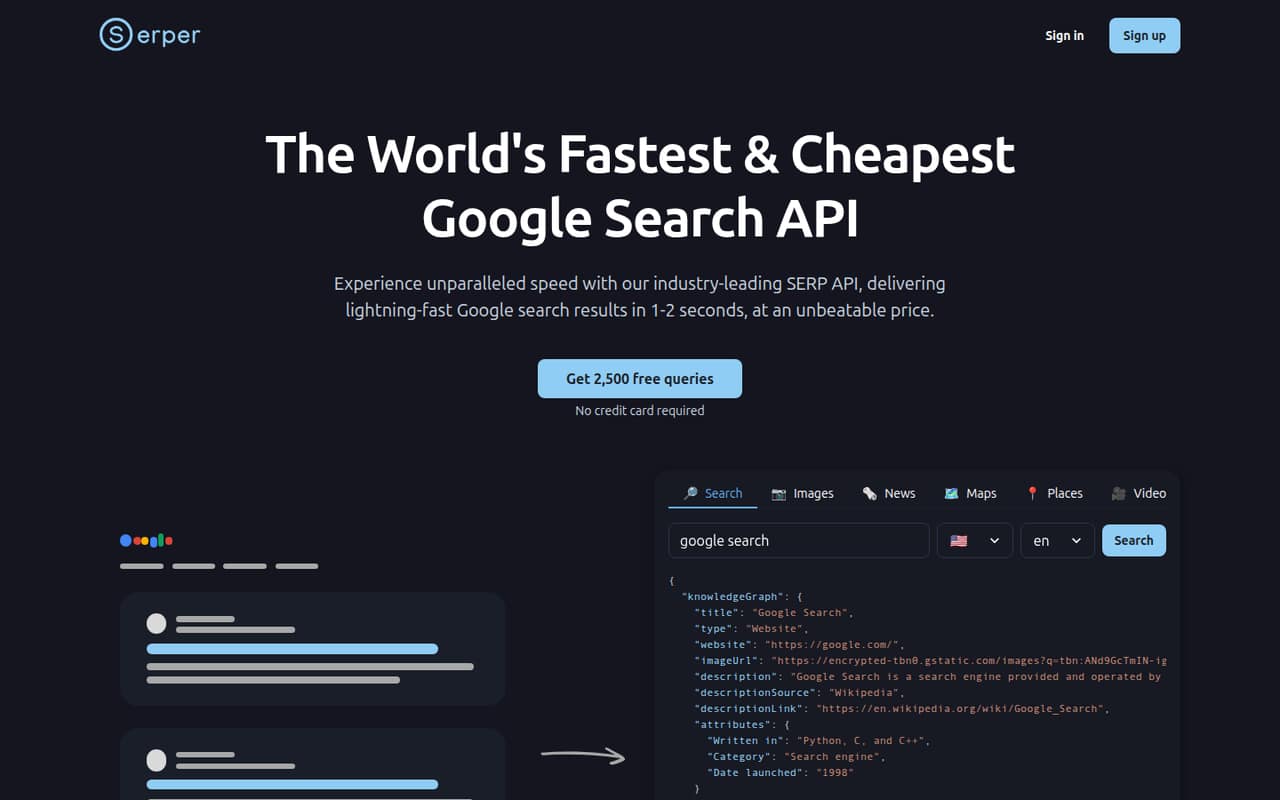
- Best for Google SERPsSerperSerper
Serper focuses on retrieving Google SERP data, making it a straightforward fit for search-driven applications and research automations. It uses prepaid credits and offers a free plan. Model expected query volume against current credit pricing and production limits before launch; predictable per-query economics matter when scheduled jobs or agent loops can increase request volume.
What works
- Free allowance includes 2,500 queries
- Supports ten Google query types
- Structured search-result data is returned
What doesn't
- Paid packages expire after six months
- Overage costs are not published
- Free-tier rate limit is not published
- Best for batch deliveryValueSERPValueSERP
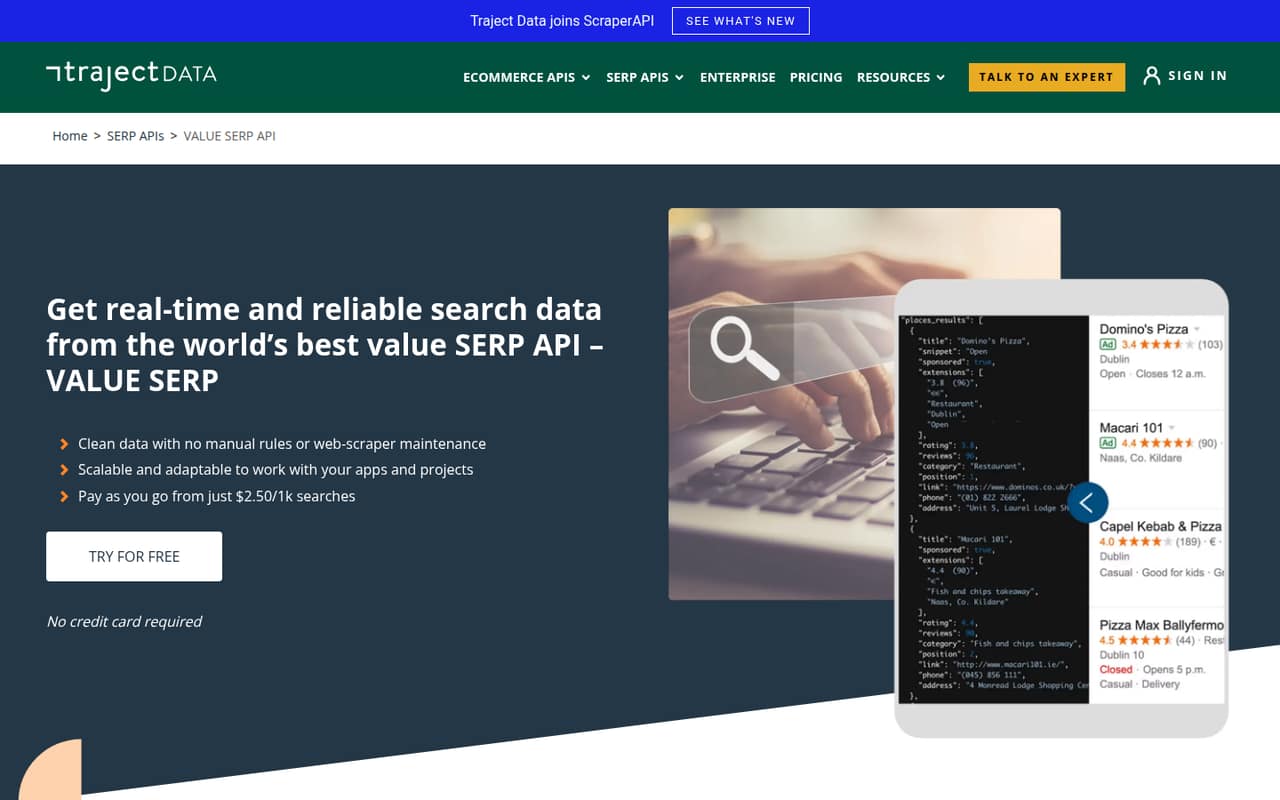
ValueSERP is a hosted API for live Google SERP data, with localized collection and scheduled batches delivered to object storage. Its listed starting price is $50. Batch delivery can suit pipelines that process results asynchronously rather than waiting on each request. Verify the storage destinations, batch limits and pricing for your target regions before scaling.
What works
- GET requests return JSON, HTML, or CSV
- Location and device targeting are supported
- Batches can schedule up to 15,000 requests
What doesn't
- No free plan is listed in pricing
- Monthly prices are shown only with annual billing
- SDKs, languages, and CLI are not named
- Best for varied SERP typesZenserpZenserp
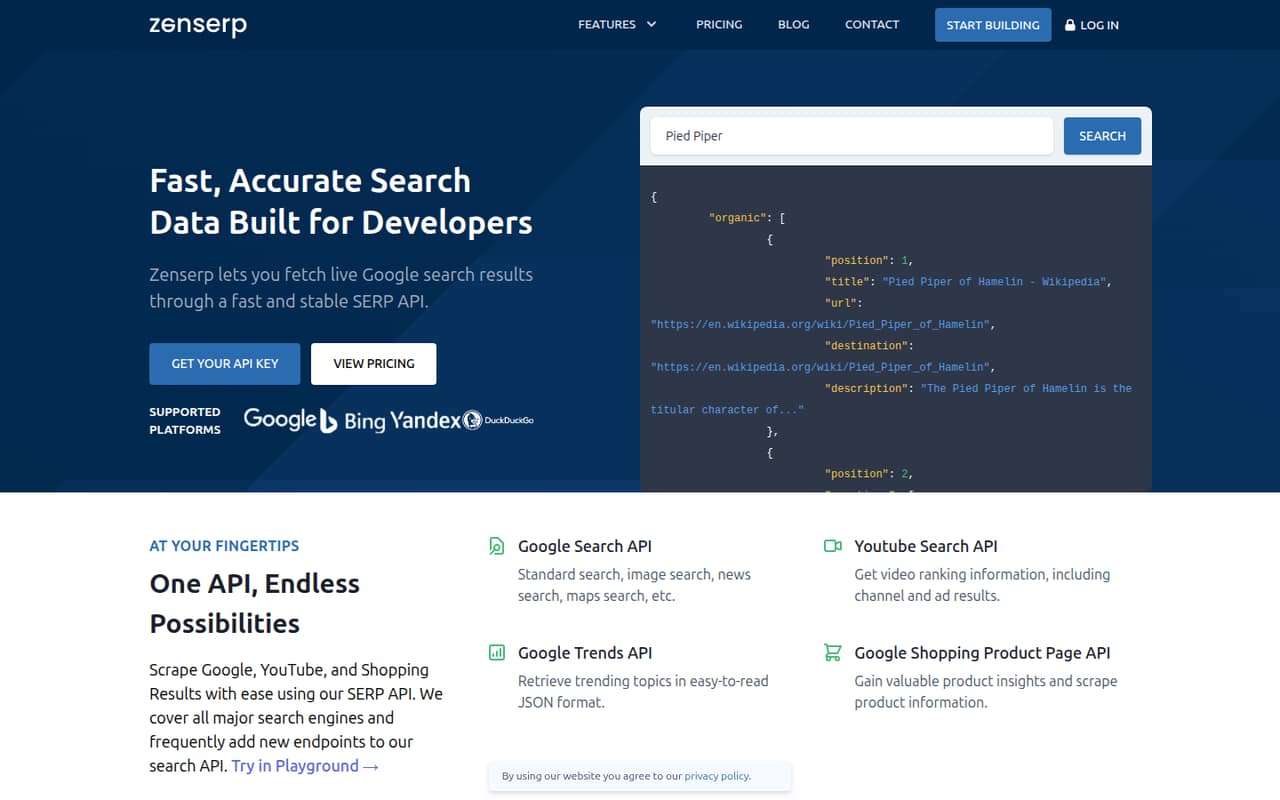
Zenserp provides a JSON SERP API with a free tier and a listed starting price of $49.99. Its range of SERP types may suit applications that need more than one result format. For production, confirm quotas, supported locations and the cost of your expected request mix; a free tier is useful for integration work but does not establish production capacity.
What works
- 50 monthly searches on the free plan
- Google organic, paid and snippet data
- Bing, Yandex and DuckDuckGo on paid plans
What doesn't
- Standard plans are advised to stay below 400 concurrent connections
- Overage pricing is not published
- No source licence or self-hosting option is published
- Best for web-data infrastructureBright DataBright Data
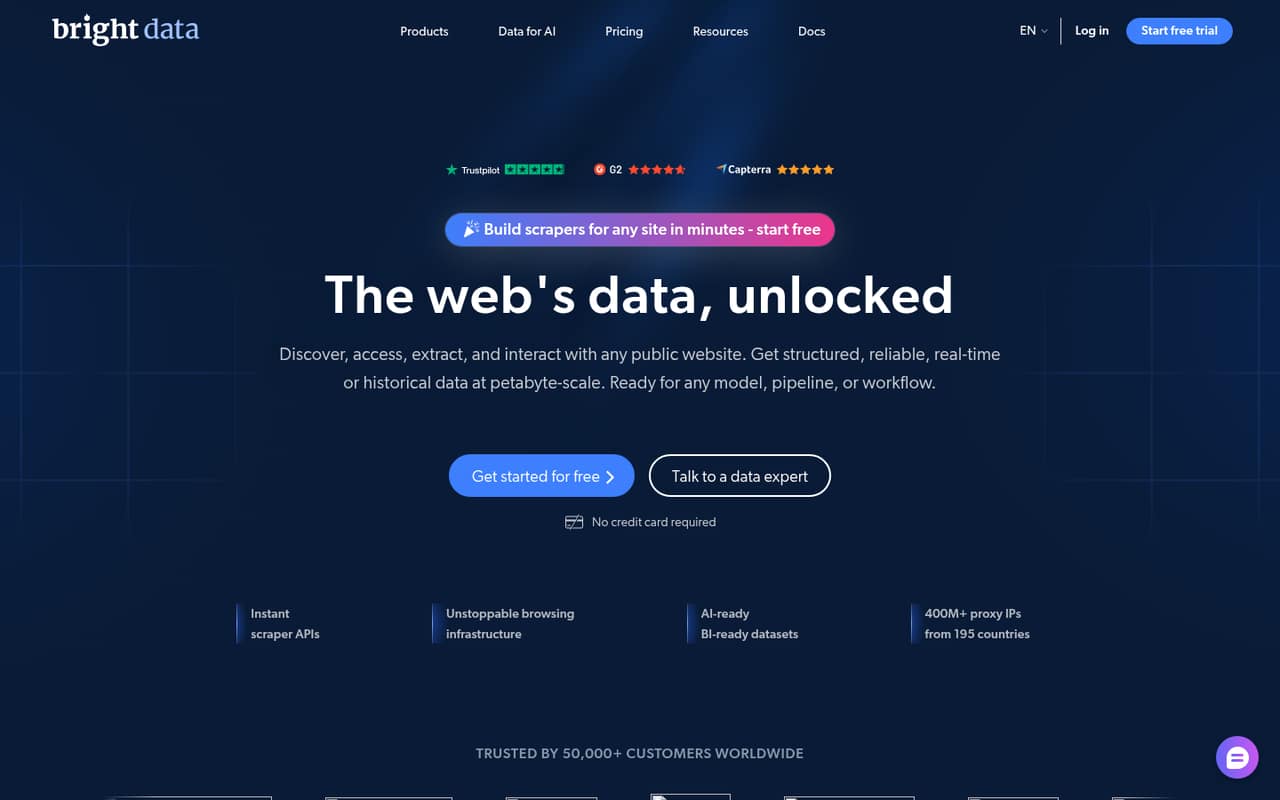
Bright Data is a broader web-data stack with managed proxy infrastructure, aimed at teams collecting public-web data at scale or feeding AI pipelines. A free plan is listed from $0. It may fit teams that need more than SERP responses, but it also means evaluating infrastructure and usage costs alongside API output. Confirm which product and limits apply to your workflow.
What works
- Combines scraper APIs, web-access APIs, proxies, and datasets
- Free Tier includes several API and product allowances
- Pay-as-you-go pricing supports variable request volume
What doesn't
- Per-request and per-GB charges can add up
- Language-specific SDK support needs confirmation
- Self-hosting and open-source licensing are not listed
- Best for agent data pipelinesOxylabsOxylabs
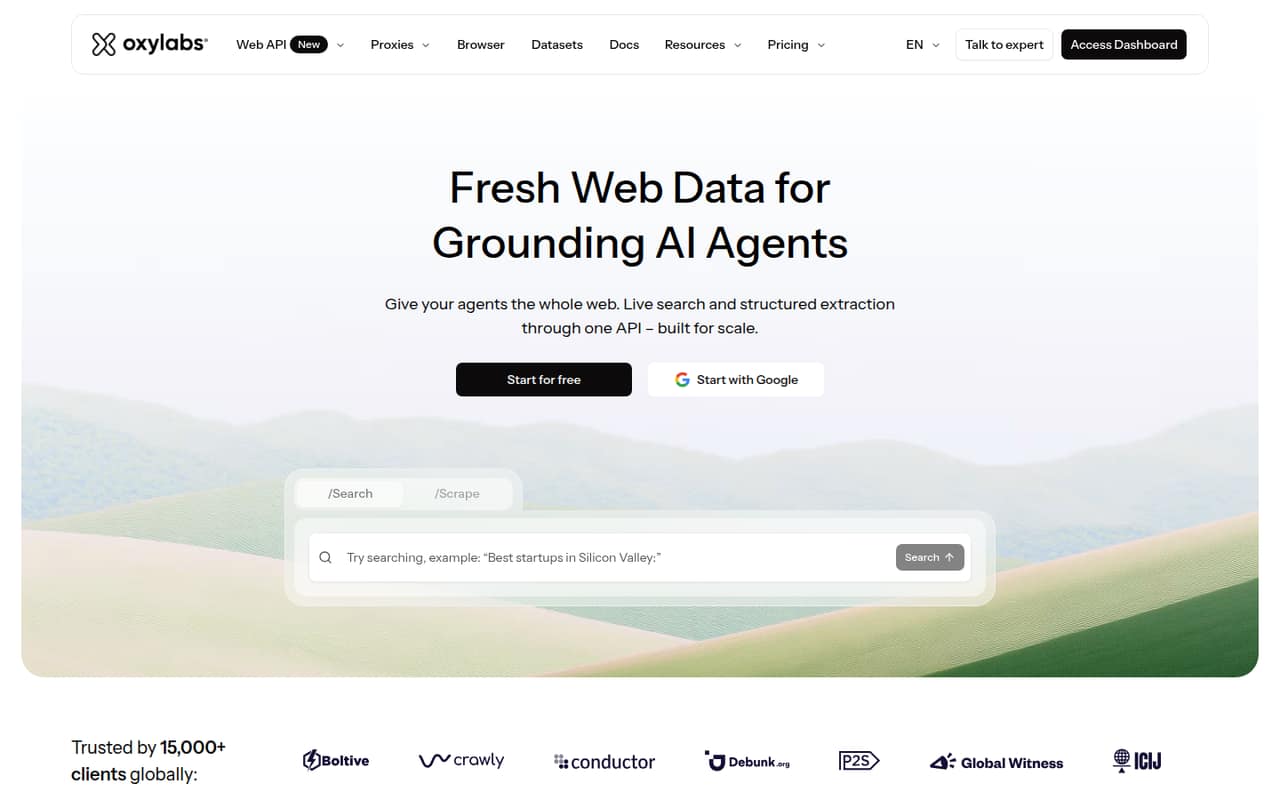
Oxylabs combines hosted APIs and proxy infrastructure, with interfaces aimed at web-grounded AI agents and data collection operations. Its listed starting price is $15, with a free plan. Compare the API and proxy components against your architecture: model usage costs, collection needs and request limits separately rather than treating the entry price as a production estimate.
What works
- Search and structured extraction share one Web API
- Hosted remote MCP Server connects agents to Web API
- Agent Skills provide tool-use instructions
What doesn't
- SDKs and supported languages are not named in the offering
- Rate limits are not published in the reviewed details
- Production overage rates need checking against product rate cards
- Best for simple Google JSONSearchApiSearchApi
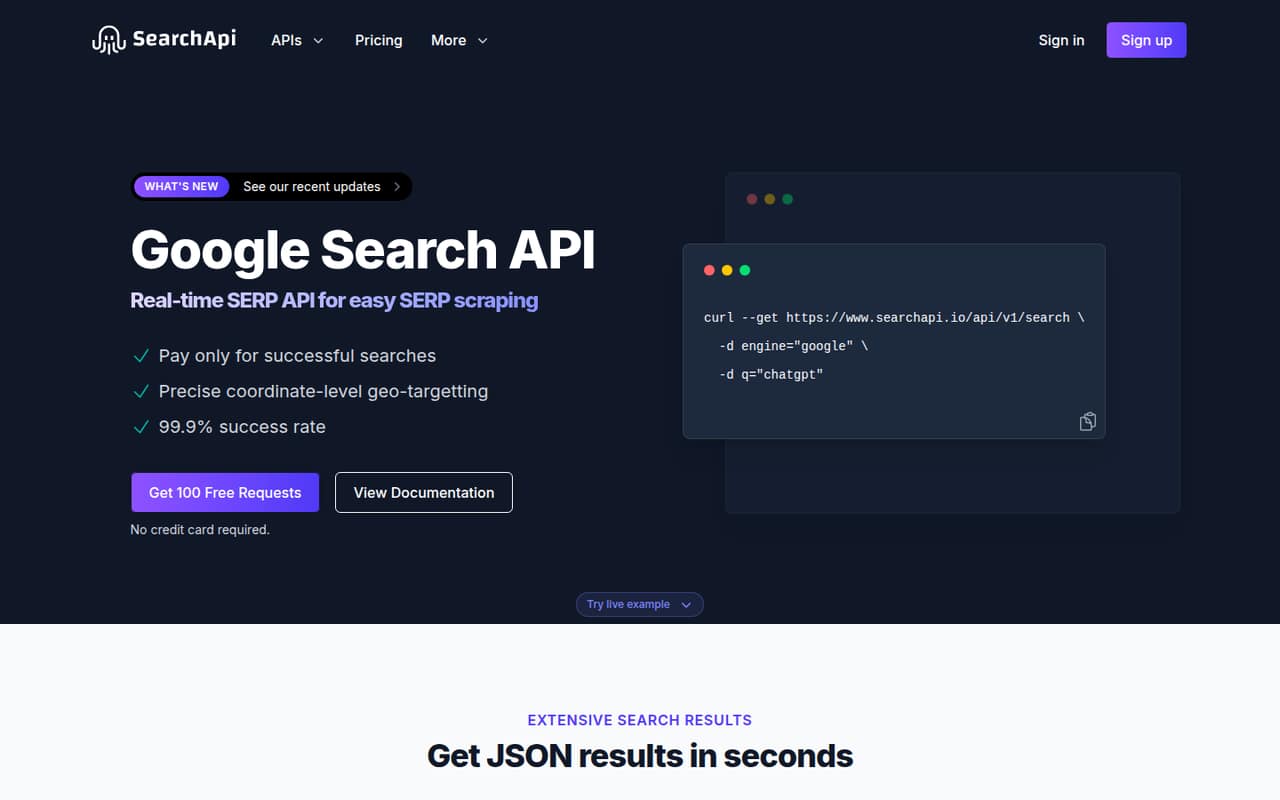
SearchApi is a hosted Google SERP API for teams that want structured results without operating scraper infrastructure. It has a free plan and a listed starting price of $40. Its simple scope may suit prototypes and focused applications. Before production use, confirm request limits and how the paid tiers scale with your expected volume.
What works
- Returns parsed search results as JSON
- Homepage offers 100 free requests
- Bills only for successful searches, per homepage
What doesn't
- Homepage example covers Google search
- Language-specific SDKs are not named
- Rate limits are not published
- Best for localized monitoringserpstackserpstack
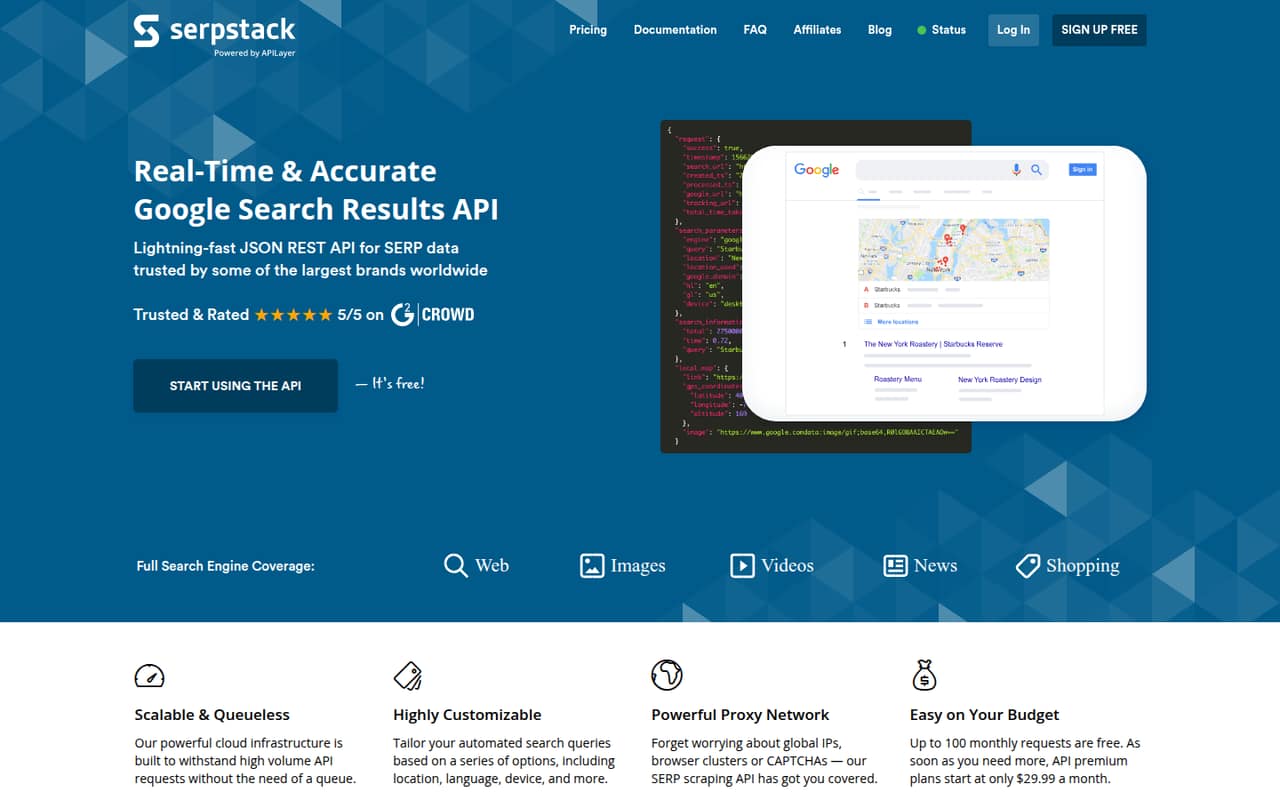
serpstack provides a configurable hosted Google SERP API for localized search monitoring, with published quotas and a free plan. Its listed starting price is $26.99. Check the production limits and location options against your tracking schedule; a quota that works for a prototype may not cover frequent checks across many keywords and markets.
What works
- REST API returns Google SERP data in JSON or CSV
- Location targeting covers cities, regions and countries
- Options include mobile, tablet and desktop devices
What doesn't
- Free tier is limited to 100 monthly searches
- Free access is non-commercial and JSON-only
- No language-specific SDK or CLI is named
- Best for cloud deliverySerpWowSerpWow
SerpWow is a hosted API for structured, real-time SERP data, with local and multi-region monitoring plus webhook or cloud-storage delivery. Annual plans are listed from $125 per month. Those delivery options suit pipelines that need asynchronous handoff, but the higher entry price calls for a volume and feature check. Confirm the plan terms and limits before selecting it.
What works
- Covers Google Search and multiple search verticals
- Captures AI Overview responses across Google domains
- Supports JSON, CSV and HTML output
What doesn't
- No free plan is listed in the pricing
- Monthly billing prices are not published
- Credit-to-search usage is not explained
03How we chose
We ranked these services for developer and technical-team fit, weighing API scope, integration needs, documentation, free tiers, usage pricing and the operational work each product leaves to you. We also considered open-source licensing and self-hosting as architecture questions: these picks are hosted APIs or web-data services, so confirm terms, data retention and export paths before building around a vendor schema. Community sentiment, including Reddit reports, can flag recurring integration or support concerns, but it is a secondary signal, not a substitute for plan terms. We did not run tests or benchmarks.
04Estimate production cost, not the entry price
A starting price or free plan does not tell you what a rank-tracking workload will cost. Estimate requests per keyword, location and schedule, then add retries, refreshes and any agent-driven calls. Compare that volume with the vendor’s current quotas and billing unit. Serper uses prepaid credits; other listed starting prices include SerpApi at $25, SearchApi at $40 and SerpWow annual plans from $125 per month. Those figures are entry points, not a like-for-like cost comparison. Ask vendors how failed requests, batch jobs and location variants are billed. Put a spend ceiling or alert in your application, and keep provider usage separate from your own billable product usage.
05Treat schemas, terms and limits as dependencies
A hosted SERP API returns data in a vendor-defined format. Keep that format behind an adapter in your codebase, normalize fields you rely on, and store raw responses when your retention terms allow it. That reduces the cost of changing providers if fields or plans change. Before production, verify rate limits, concurrency, supported locations, response errors, retry guidance and data retention with the vendor; do not infer them from an entry tier. Check whether results can be exported and what the terms allow you to store or display. These services do not replace an open-source, self-hosted SERP stack, so teams requiring that deployment model should confirm whether any vendor offers it before integrating.
Questions people ask
What is a SERP API?
A SERP API retrieves search engine results and returns them in a structured format, commonly JSON. Applications can use that data for rank tracking, research, localized search analysis or search-backed agents. The exact engines, result types, locations and response fields depend on the vendor and plan.
Which SERP API is best for rank tracking?
DataForSEO is our best overall pick for teams building custom rank-tracking products because it offers a range of SEO data APIs and usage-based workflows. Compare its current endpoint costs and limits with the number of keywords, locations and scheduled checks your tracker will run.
Are these SERP APIs open source or self-hostable?
The picks in this guide are hosted APIs or web-data services, not open-source SERP engines. If self-hosting is a requirement, ask vendors directly about deployment options, licensing and data handling. Also plan for an adapter layer so your application is less coupled to a provider’s response schema.
How should I compare SERP API pricing?
Compare the billing unit and limits against your expected request volume, not just the entry price. Include retries, locations, scheduled refreshes and agent calls in the estimate. Check how prepaid credits, free-tier quotas, batch work and failed requests are treated before choosing a production plan.