We may earn a commission if you buy through links on this page. It never changes a score or a ranking. How we make money
Tavily is our best overall pick for teams building agents that need managed web search and extraction; Firecrawl is the clearest option if open source matters, and Linkup stands out for self-hosting. The right fit depends on whether your agent needs ranked search results, page content, cited research or structured SERP data. Treat starting prices and free plans as a first filter, not a production estimate: check billing units, request limits, response schemas and deployment terms against your expected workload before wiring an API into an agent loop.
Quick picksThe shortlist
 TavilyTavilyBest overall · $30/mo
 Brave Search APIBrave Search APIBest for ranked context · Free
 FirecrawlFirecrawlBest open source · $16/mo
 LinkupLinkupBest for self-hosting · $0.00/mo
 ExaExaBest for research · Free
 Jina AIJina AIBest for URL retrieval · Free
 ParallelParallelBest for monitoring · $833.33/mo
 SerpApiSerpApiBest for multi-engine SERPs · $25/mo
 YepAPIYepAPIBest for mixed data · Custom
 SerperSerperBest for Google SERPs · Free
 Perplexity Sonar APIPerplexity Sonar APIBest for cited answers · Custom
01Compared at a glance
| Tool | Score | From | Free plan | Trial |
|---|---|---|---|---|
| TavilyTavily | 7.6 | $30/mo | Yes | — |
| Brave Search APIBrave Search API | 7.5 | Free | Yes | — |
| FirecrawlFirecrawl | 7.4 | $16/mo | Yes | — |
| LinkupLinkup | 7.3 | $0.00/mo | Yes | — |
| ExaExa | 7.2 | Free | Yes | — |
| Jina AIJina AI | 7.2 | Free | Yes | — |
| ParallelParallel | 7.2 | $833.33/mo | Yes | — |
| SerpApiSerpApi | 7.2 | $25/mo | Yes | — |
| YepAPIYepAPI | 7.2 | Custom | No | Yes |
| SerperSerper | 7.0 | Free | Yes | — |
| Perplexity Sonar APIPerplexity Sonar API | 6.0 | Custom | No | — |
02The picks, in detail
- Best overallTavilyTavily
Tavily is built as a managed search and extraction layer for agents, making it a strong default when an application needs both web context and page content. Its listed starting price is $30, with a free plan and prototypes within 1,000 monthly credits. Before production, confirm how search and extraction consume credits and whether extraction speed meets your agent's latency needs.
What works
- Search, extraction, crawling and research in one API
- Structured, chunked content for model context
- Free tier includes 1,000 monthly API credits
What doesn't
- SDK languages and integration examples need verification in docs
- Credit consumption by operation needs clarification
- Project rate limits are described but not quantified

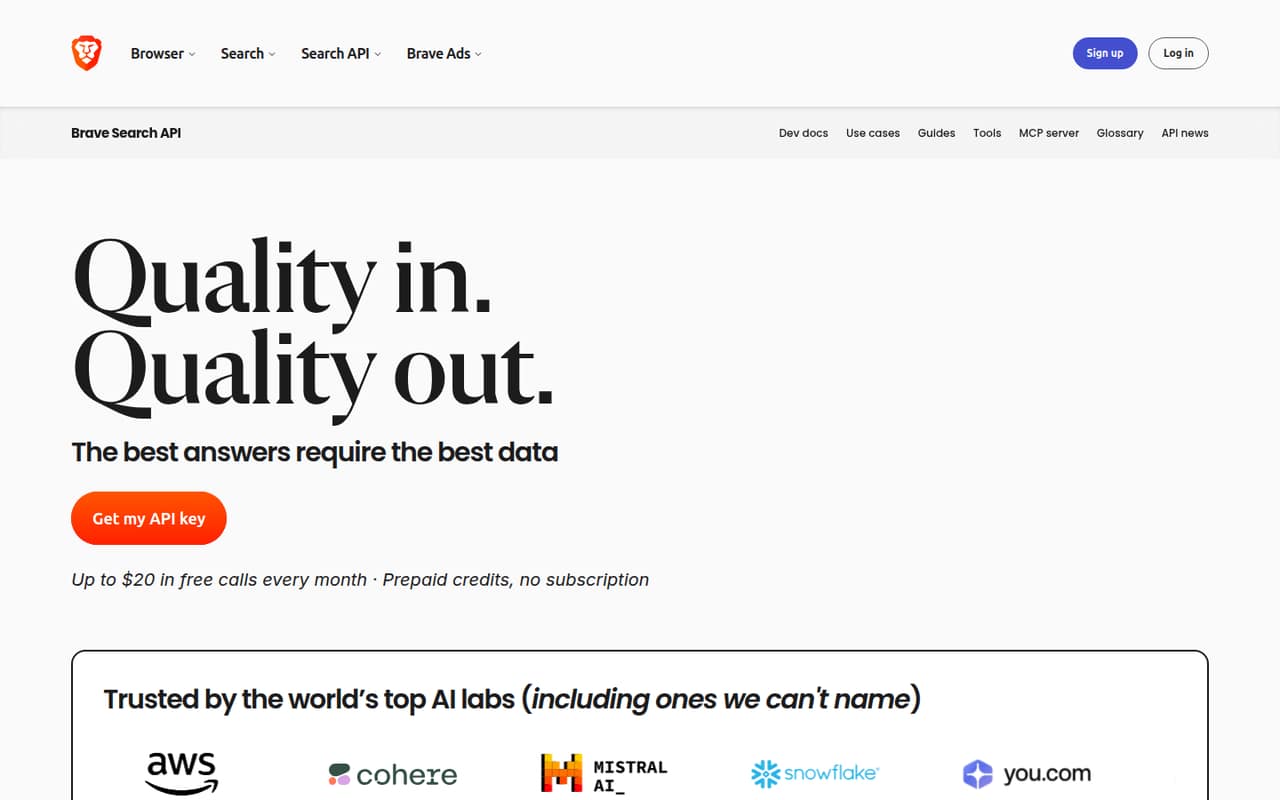
- Best for ranked contextBrave Search APIBrave Search API
Brave Search API is a fit for agents that need ranked context and for teams that want to avoid dependence on Google or Bing. It is a hosted service with usage pricing and a free plan, but the starting price is not published. Ask for the billing unit, production limits and behavior when an agent makes repeated or parallel searches.
What works
- Own search index, with no Google or Bing dependency
- LLM Context returns ranked passages and source metadata
- Context size adjustable from 1k to about 33k tokens
What doesn't
- Monthly request and query ceilings are not published
- Answers has a lower rate limit than Search
- Source code and licence details are not published
- Best open sourceFirecrawlFirecrawl
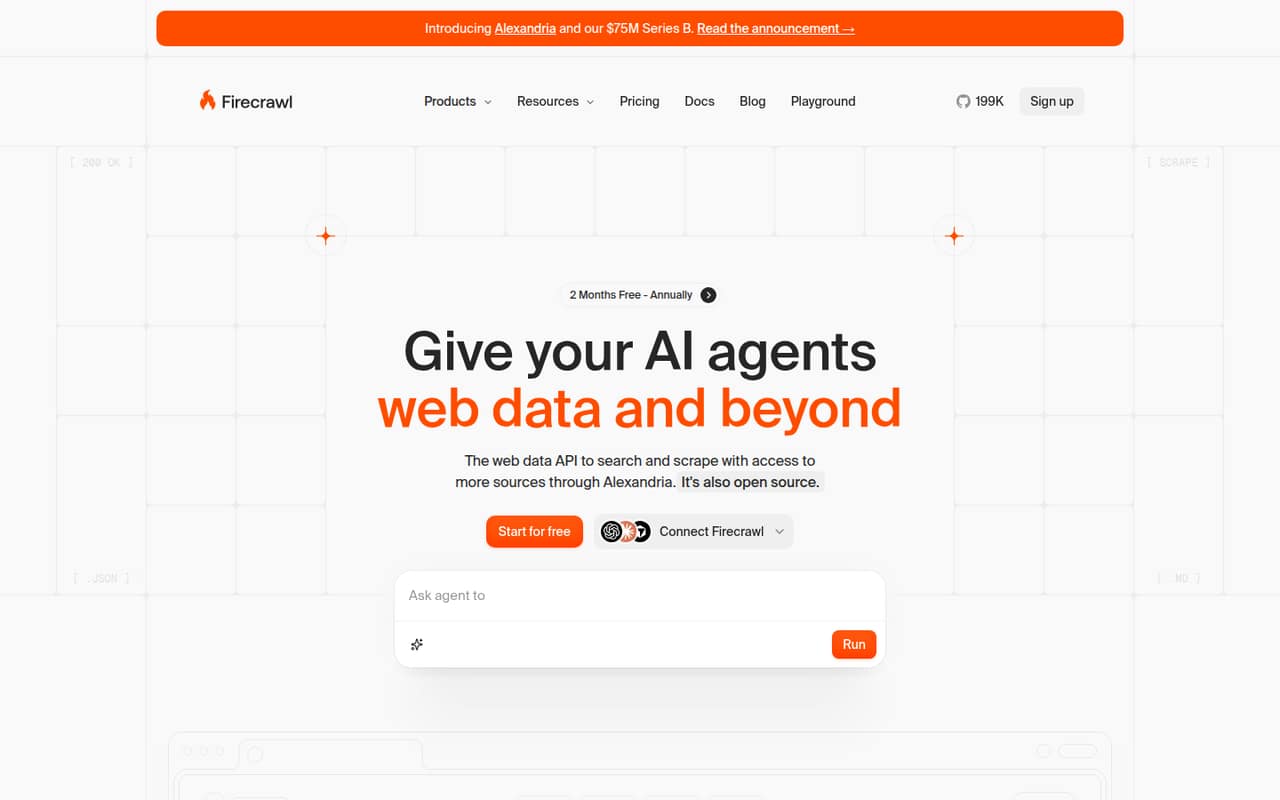
Firecrawl turns live web pages into Markdown or JSON for agents, and it is the pick to examine first when open source is a requirement. The listed starting price is $16, with a free plan. Check the license and deployment options against your self-hosting needs, then validate free-tier fit and operational requirements before scaling page extraction.
What works
- Search, scrape and interact through one product
- Outputs include Markdown, JSON and screenshots
- Python example uses a short integration path
What doesn't
- Free plan has low rate limits
- Concurrency and credits vary by paid plan
- Self-hosting reports include setup and reliability complaints
- Best for self-hostingLinkupLinkup
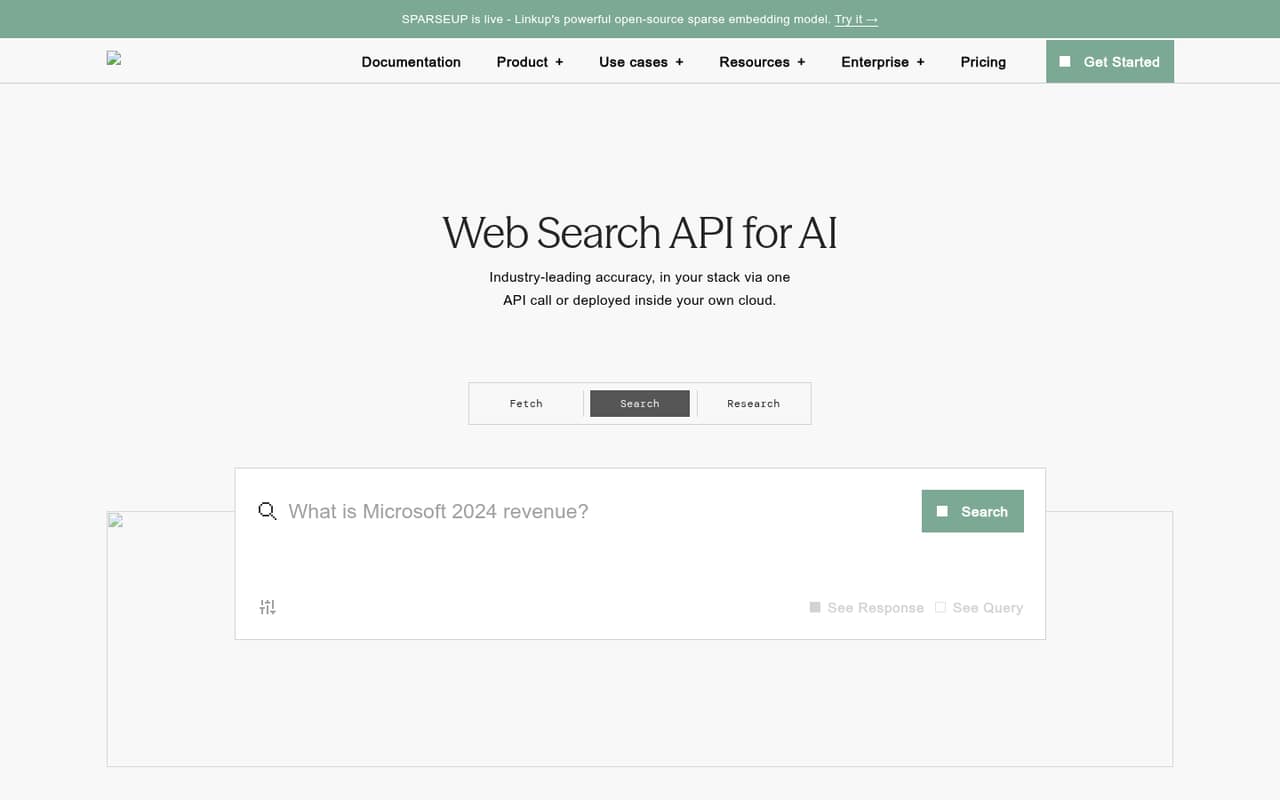
Linkup combines search for AI applications with enterprise deployment options, including self-hosting. That makes it a candidate for teams that need cited web context or want to consider private data indexes alongside web search. Its listed starting price is $0.001 and it has a free plan; confirm the billing unit, deployment scope and limits with the vendor.
What works
- Search, extraction and research share one API
- Python, Node.js and cURL examples
- OpenAI SDK wrapper, LangChain and CrewAI integrations
What doesn't
- Free-plan quota and limits are not published
- Research requests cost $0.25–$2.50 each
- Rate limits are not published
- Best for researchExaExa
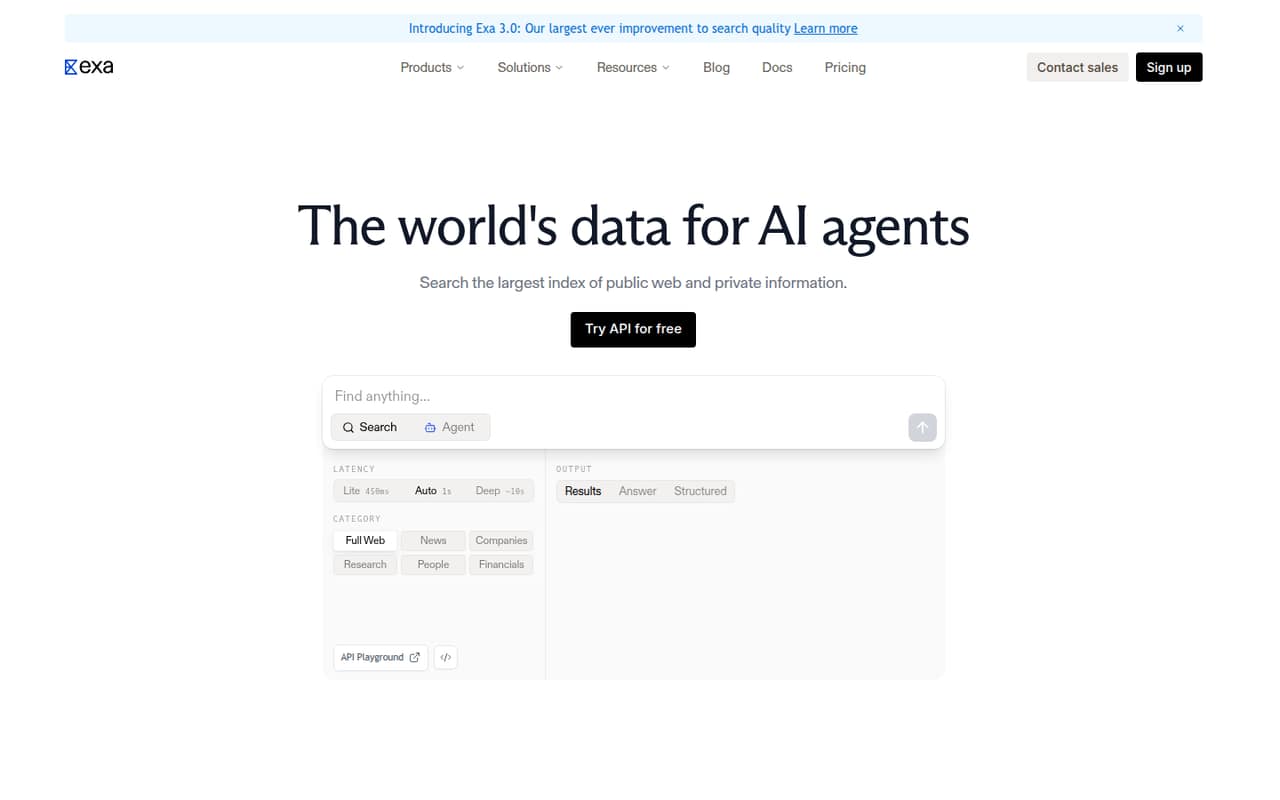
Exa offers search, content and research APIs, with use cases that include citations and recurring web monitoring. That breadth suits agents that need more than a list of search results. Exa has a free plan, but its starting price is not published. Check how each API is billed and how much your design depends on Exa's hosted service.
What works
- Separate APIs cover search, content, research and monitoring
- Search supports web, news, companies, research, people and financials
- Contents returns relevant excerpts and webpage text
What doesn't
- Free plan is limited to 10 Search QPS
- Usage costs vary by search mode and agent effort
- Pay-as-you-go base rates are not listed as a flat subscription
- Best for URL retrievalJina AIJina AI
Jina AI is worth considering when a RAG system needs URL extraction as well as web search, or when token-based workloads suit the application. It offers hosted search and retrieval APIs and a free plan; a starting price is not published. Confirm token package costs, deployment options and how retrieval output fits your existing ingestion and citation pipeline.
What works
- Reader API turns URLs into LLM-friendly input
- Search, embeddings and reranking cover retrieval workflows
- MCP server connects APIs to LLMs
What doesn't
- Toy Experiment is non-commercial only
- Monthly and annual prices are not published
- Auto-recharge pricing is not published

- Best for monitoringParallelParallel
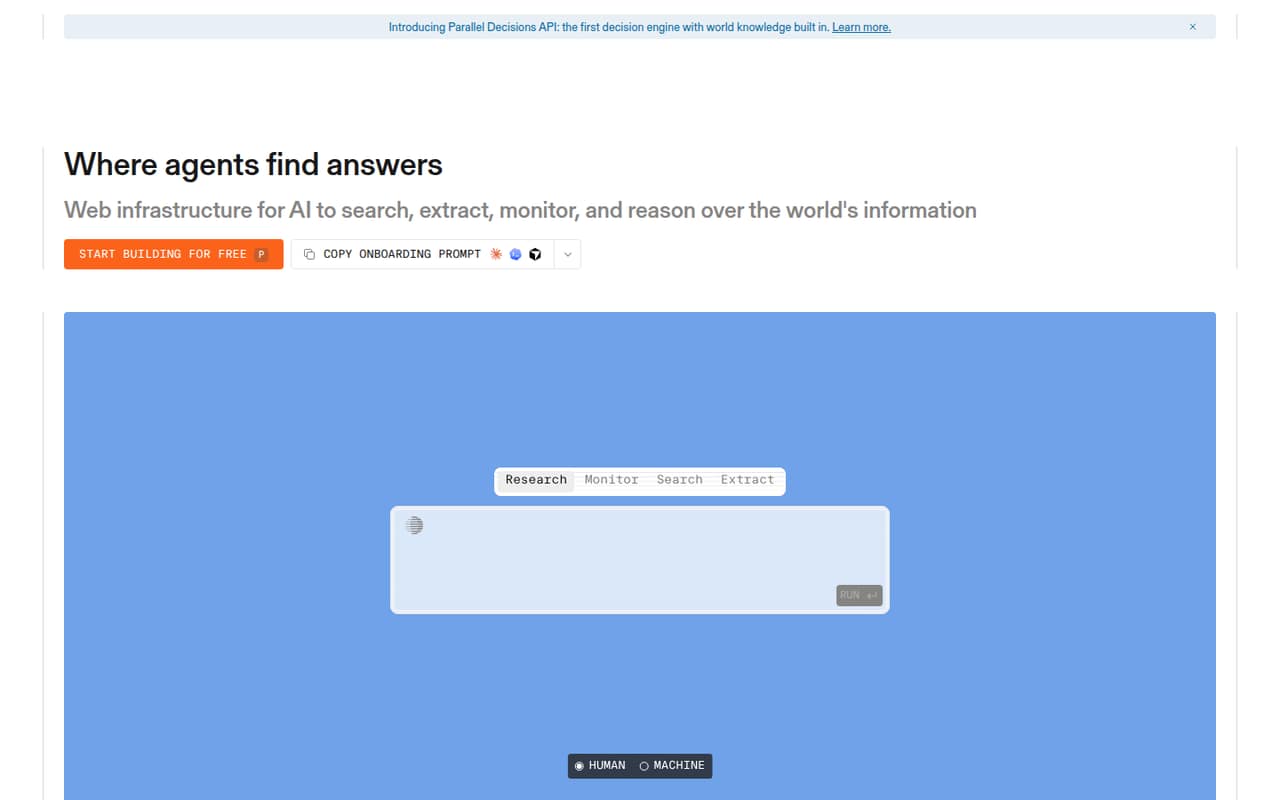
Parallel's hosted web-retrieval API suite targets fresh context, cited research, account briefs and monitoring web changes at scale. That makes it a candidate for agents that need recurring retrieval workflows rather than one-off searches. A free plan is listed, but a starting price is not published. Ask how production usage is metered and what limits apply to monitoring workloads.
What works
- Search, extraction, monitoring and research APIs
- Outputs can include citations and provenance
- Structured enrichment includes confidence scores
What doesn't
- Launch limits vary for personal use
- Homepage names no SDKs or programming languages
- Build usage is charged after credits run out
- Best for multi-engine SERPsSerpApiSerpApi
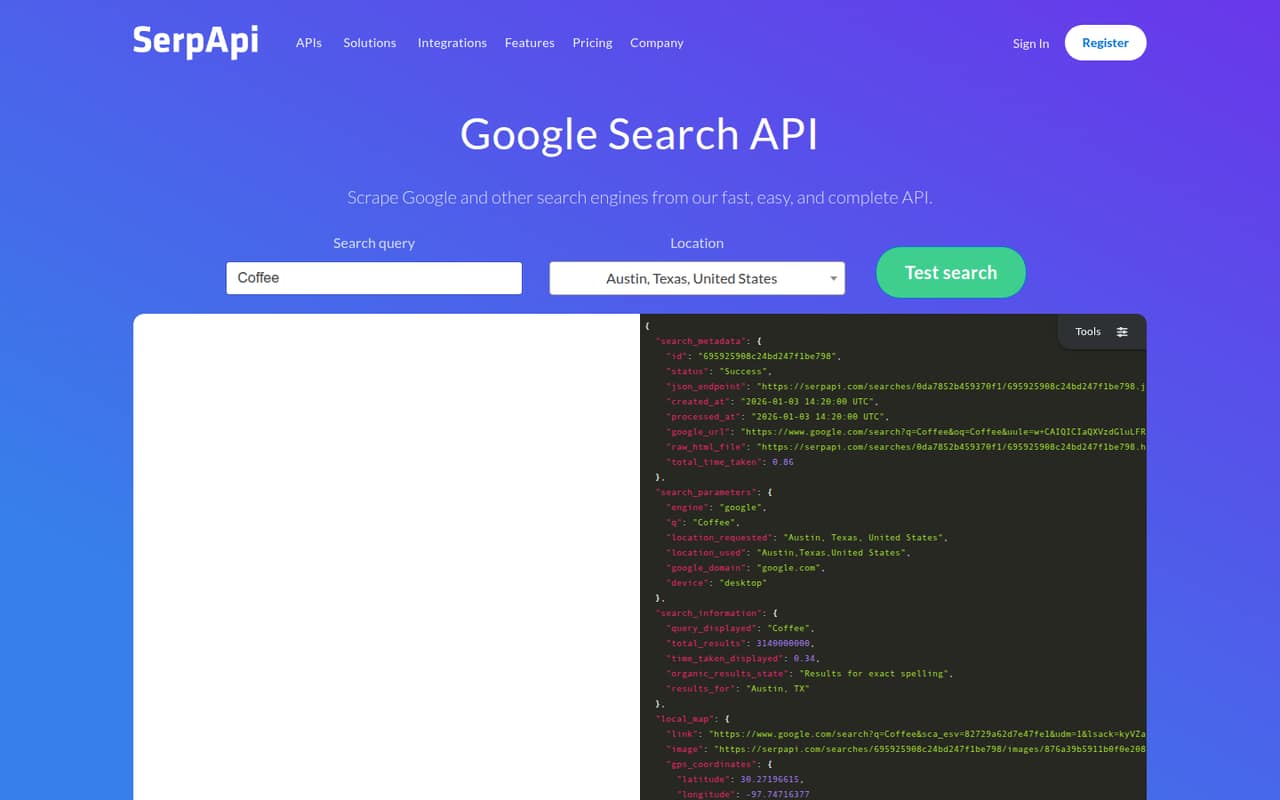
SerpApi is a broad hosted search-data API for search-backed applications, location-aware SERP data and multi-engine pipelines. Its listed starting price is $25, and it has a free plan. Before adopting it, review the plan limits and legal terms, and decide how much your application can tolerate dependence on SerpApi's response schema.
What works
- Broad catalog of search and data APIs
- JSON and Markdown output
- Real-time requests, per the homepage
What doesn't
- Throughput limits vary by plan
- Overage behavior is not published
- No self-hosted option is offered
- Best for mixed dataYepAPIYepAPI
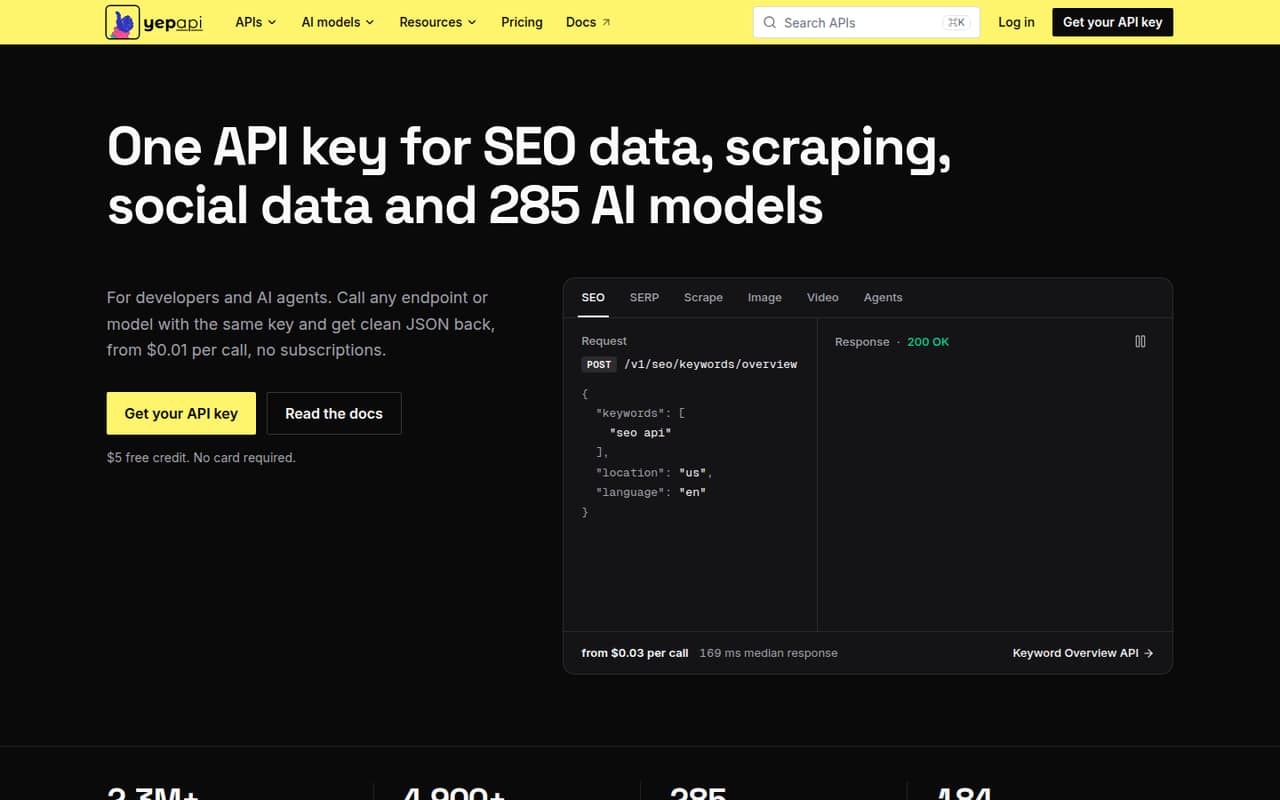
YepAPI combines SEO, scraping, social and e-commerce data with 285 AI models behind one usage-billed API. That breadth may suit applications that combine those data types with agent features and can call HTTP APIs. Its starting price is not published. Confirm metering, endpoint coverage and whether one provider's API shapes fit the separate workflows in your codebase.
What works
- One key covers SEO, scraping, social data and AI models
- Consistent JSON response envelope across endpoints and models
- $5 signup credit with no card required
What doesn't
- SDKs and supported programming languages are not named
- No published self-hosting option or open-source licence
- Data export and migration tooling are not published
- Best for Google SERPsSerperSerper
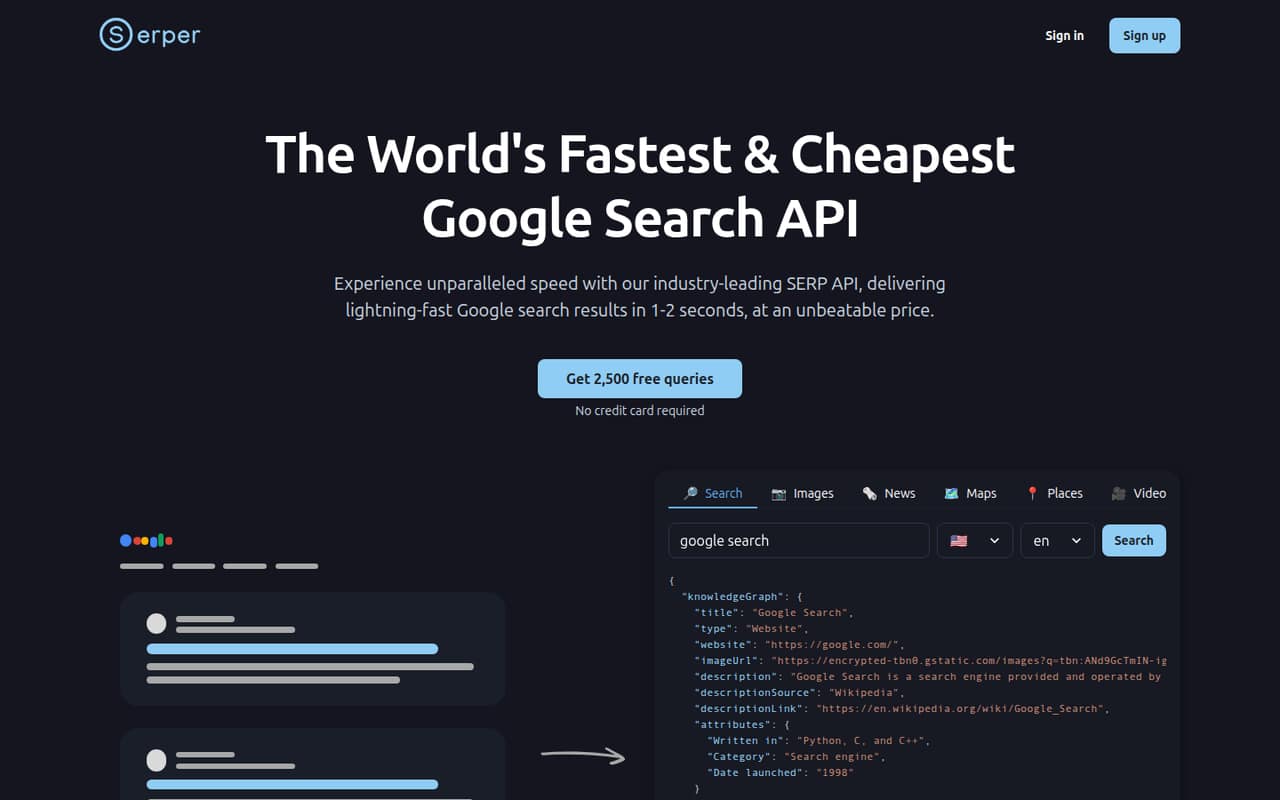
Serper focuses on Google SERP data and is aimed at search-driven automations and teams with predictable query volumes. Its prepaid credits can make query planning more direct, but production limits still need to be checked against agent retries and fan-out. A free plan is listed; the starting price is not published. Confirm credit consumption and the applicable limits before sizing a workload.
What works
- Free allowance includes 2,500 queries
- Supports ten Google query types
- Structured search-result data is returned
What doesn't
- Paid packages expire after six months
- Overage costs are not published
- Free-tier rate limit is not published
- Best for cited answersPerplexity Sonar APIPerplexity Sonar API
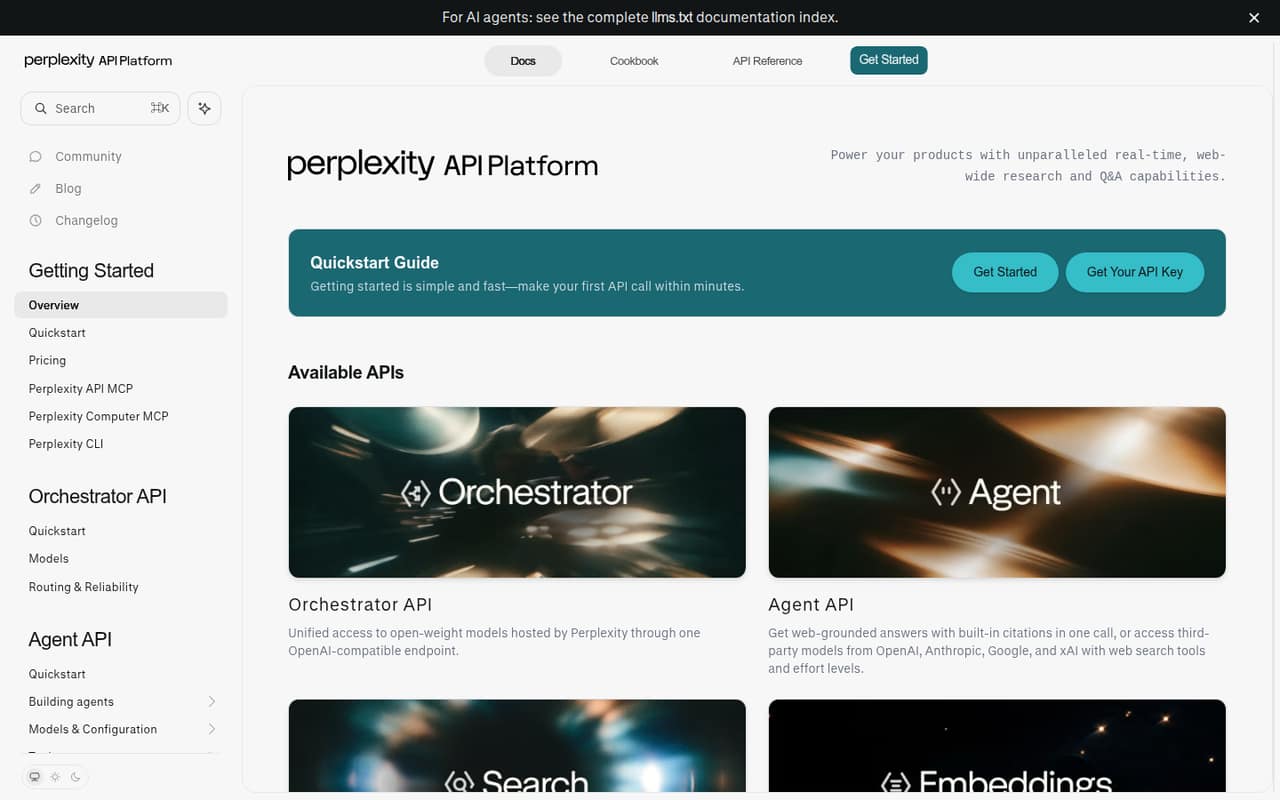
Perplexity Sonar API is a candidate when an application needs cited, web-grounded answers or wants to combine search with model APIs. Its use cases also include agents consuming ranked web results. The starting price is not published, making production cost planning less clear. Ask how search and model usage are billed, and compare that cost with a separate search-and-generation stack.
What works
- Agent API returns web-grounded answers with citations
- Search API returns ranked results and extracted page text
- Includes embeddings and structured decision APIs
What doesn't
- No Sonar-specific starting price is listed
- Agent API model rates vary by token
- Homepage does not present Sonar as a separate product
03How we chose
We ranked these APIs by fit for developers and technical teams: how clearly the product maps to agent search or retrieval, whether it also handles page content, and what its stated pricing, free plan, open-source status or self-hosting options imply for adoption. API and SDK coverage, documentation, rate limits, response stability, licensing and data export are due-diligence checks, not assumed features. Reddit sentiment is a secondary signal for spotting operational concerns; it should not outweigh vendor documentation or a team's own workload requirements. We make no hands-on testing claims.
04Choose the API shape your agent needs
Start with the data your agent must consume. A SERP API returns search-engine results; a web-retrieval or search-and-extraction API can also supply page content. Those are different integration contracts. If you need Google SERP data, Serper is specifically positioned for it; if you need Markdown or JSON from live pages, Firecrawl is aimed at that extraction workflow. For research with citations, compare options such as Exa, Linkup and Parallel. Before implementation, read the API docs for authentication, request and response schemas, language SDKs, pagination, error handling and citation fields. Do not assume an SDK exists because an HTTP API does. Keep provider-specific response parsing behind an internal interface so a schema change or provider switch does not ripple through agent logic.
05Model cost and failure modes before launch
A free plan is useful for prototypes, but it does not establish production capacity. Estimate searches, extraction calls, retries and agent fan-out for a typical task, then map them to the provider's billing unit and plan limits. The listed starting prices are not enough to compare costs when units or included usage differ; ask vendors to clarify those details. Also check rate limits, concurrency, timeout behavior and what happens when a quota is exhausted. For hosted APIs, review data handling, legal terms, export options and how tightly your code depends on provider-specific ranking or response schemas. If self-hosting or an open-source license matters, verify the exact license and which components can be deployed under your control. Keep a fallback path for failed retrievals.
Questions people ask
Which search API is best for AI agents?
Tavily is our overall pick for managed search and extraction, while the best fit depends on the required output. Consider Firecrawl for page-to-Markdown or JSON extraction, Serper for Google SERP data, and Linkup if self-hosting is part of the deployment requirement.
Can I self-host a web search API?
Linkup lists self-hosting and enterprise deployment options, and Firecrawl is listed as open source. Open source does not by itself establish which components can be self-hosted or under what terms; check the current license and deployment documentation before choosing.
How much do AI search APIs cost?
Listed starting prices range from $16 for Firecrawl to $30 for Tavily among products with a published starting figure. Other vendors list a free plan or a starting price that is not published. Compare billing units, included usage and production limits rather than relying on starting prices alone.
Should I use a SERP API or a web-retrieval API?
Choose a SERP API when your agent needs search-engine results, such as Google SERP data from Serper. Choose a retrieval or extraction API when it needs page content or research context. Confirm the response schema and citation fields in the docs before connecting results to an agent.