We may earn a commission if you buy through links on this page. It never changes a score or a ranking. How we make money
For most application teams, start by comparing Postmark, Mailtrap, Mailgun and Resend: each is positioned for transactional sending, but the right choice depends on your integration path, volume and operational requirements. SMTP2GO is worth a look if you are replacing a relay; Amazon SES suits AWS teams that can verify its integration and production limits. Starting prices are not directly comparable unit costs, and a listed free plan does not establish its sending limits. Before committing, check current rates, account rules, sending caps, event handling and how you would move templates and sending configuration later.
Quick picksThe shortlist
 PostmarkPostmarkBest for transactional apps · $15/mo
 MailtrapMailtrapBest for sending and QA · $12/mo
 MailgunMailgunBest for validation tools · $15/mo
 ResendResendBest for React Email · Free
 SMTP2GOSMTP2GOBest for replacing SMTP · $10/mo
 MailerSendMailerSendBest for extra channels · $5.60/mo
- SendPostSendPostBest for email operations · $7/mo
 EmailJSEmailJSBest for client-side apps · $7.20/mo
 SparkPostSparkPostBest for reply workflows · $15/mo
 Twilio SendGridTwilio SendGridBest for API and SMTP · $19.95/mo
 Mailchimp Transactional EmailMailchimp Transactional EmailBest for Mailchimp teams · $20/mo
 Amazon Simple Email Service (SES)Amazon Simple Email Service (SES)Best for AWS teams · Free
 ZeptoMailZeptoMailBest for Zoho CPaaS · Custom
01Compared at a glance
| Tool | Score | From | Free plan | Trial |
|---|---|---|---|---|
| PostmarkPostmark | 7.8 | $15/mo | Yes | — |
| MailtrapMailtrap | 7.7 | $12/mo | Yes | — |
| MailgunMailgun | 7.1 | $15/mo | Yes | 30 days |
| ResendResend | 7.2 | Free | Yes | — |
| SMTP2GOSMTP2GO | 7.4 | $10/mo | Yes | — |
| MailerSendMailerSend | 7.2 | $5.60/mo | Yes | 14 days |
| SendPostSendPost | 7.2 | $7/mo | No | — |
| EmailJSEmailJS | 7.3 | $7.20/mo | Yes | — |
| SparkPostSparkPost | 6.8 | $15/mo | Yes | — |
| Twilio SendGridTwilio SendGrid | 6.4 | $19.95/mo | No | 60 days |
| Mailchimp Transactional EmailMailchimp Transactional Email | 6.5 | $20/mo | No | Yes |
| Amazon Simple Email Service (SES)Amazon Simple Email Service (SES) | 4.0 | Free | Yes | — |
| ZeptoMailZeptoMail | 5.8 | Custom | No | Yes |
02The picks, in detail
- Best for transactional appsPostmarkPostmark
Postmark is a hosted email API with API and SMTP integration, and its stated fit includes inbound email webhooks. That combination makes it a strong starting point for applications that need to send and process email. The listed starting price is $15, with a free plan. Check volume-based costs and the details of inbound events before choosing it.
What works
- Email API and SMTP sending
- Separate transactional and promotional streams
- Inbound email converts to JSON for webhooks
What doesn't
- Free plan stops at 100 emails monthly
- Paid plans start at $15 monthly
- Paid usage overages add to the bill
- Best for sending and QAMailtrapMailtrap
Mailtrap combines email sending with a QA sandbox and campaign service, making it a fit for teams that want sending and testing under one service. Its listed integration options are REST API and SMTP. Pricing starts at $12, with a free plan; check what each plan permits for sending and QA before building around it.
What works
- RESTful API and SMTP for transactional and promotional mail
- Email Sandbox separates testing from real recipient delivery
- Free plans cover sending, testing and marketing
What doesn't
- Free API plan caps sending at 4,000 emails monthly
- Email API/SMTP Free has a 150-email daily limit
- Numeric API rate limits and uptime SLA are not published
- Best for validation toolsMailgunMailgun
Mailgun is a hosted email API with API and SMTP options, and its stated use cases include validation tools. That makes it a candidate when validation is part of the email workflow, not just delivery. The listed starting price is $15, with a free plan. Verify sending limits, account rules and migration options before production.
What works
- Send, receive and track email through API and SMTP
- Real-time API and bulk email validation
- Email previews and accessibility checks
What doesn't
- Free plan has a daily sending cap
- Rate limits are not published on the vendor's site
- Open-source licensing and self-hosting are not published
- Best for React EmailResendResend
Resend is a hosted email API positioned for transactional applications, React Email teams and developers using a REST API. Its listed entry point is a free plan, but the starting paid price is not published. Confirm paid rates, plan limits and operational fit before you commit, particularly if your sending volume will grow beyond the free tier.
What works
- SDKs listed for nine programming languages
- REST API, SMTP and CLI integration surfaces
- Test mode simulates events without real sends
What doesn't
- Pro and Scale monthly prices are not published
- Transactional overage rates are not published
- API rate limits need confirmation before launch

- Best for replacing SMTPSMTP2GOSMTP2GO
SMTP2GO is a managed email relay, positioned for teams replacing local SMTP relays and for low-volume senders that need reporting. Its listed starting price is $10, with a free plan. Check API availability and sending limits against your application’s needs before production; a relay fit alone does not establish the integration contract you need.
What works
- Hosted delivery avoids maintaining mail infrastructure
- Automatic SPF and DKIM handling
- Reports cover bounces and spam complaints
What doesn't
- API protocol and SDK support need confirmation
- Rate limits are not published on the homepage
- Free plan quota is not listed in the plan details
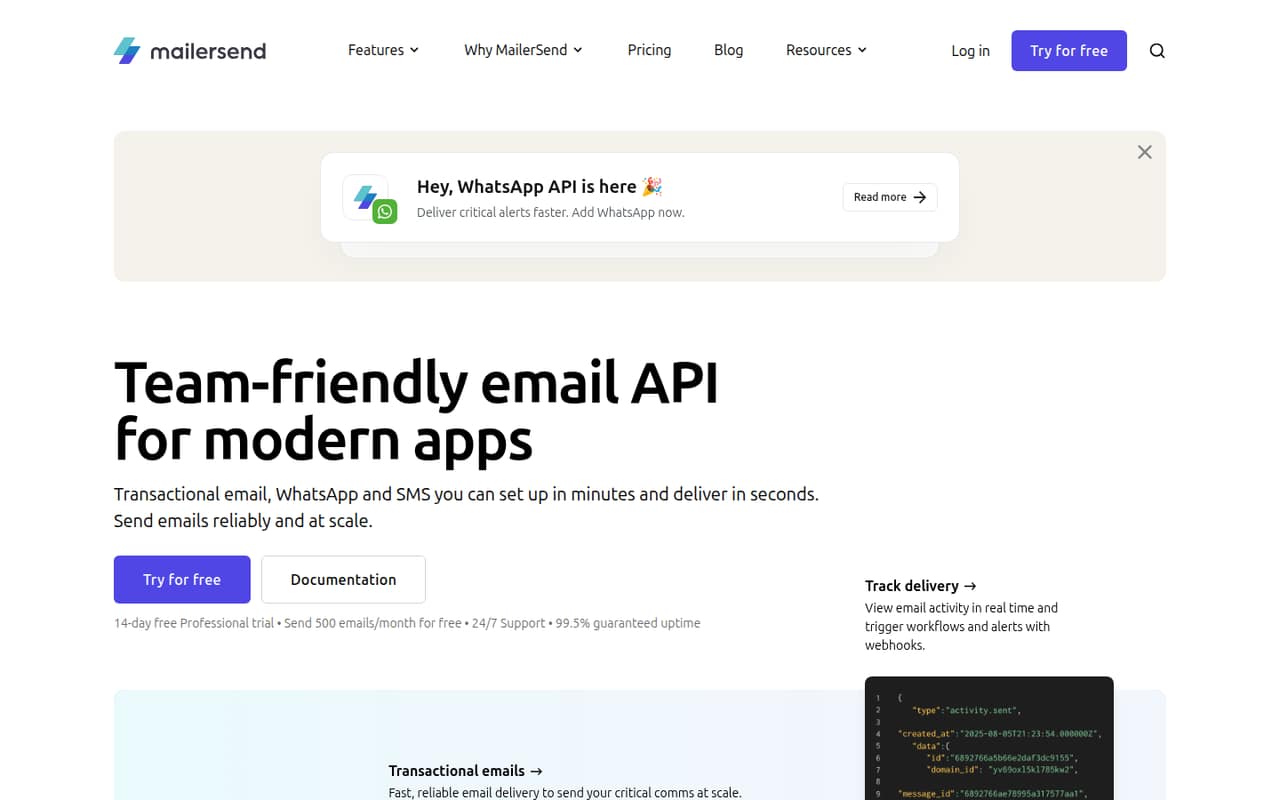
- Best for extra channelsMailerSendMailerSend
MailerSend is a hosted transactional email API that also offers SMS and WhatsApp, according to its stated positioning. It may fit teams that expect to add those channels alongside email. The listed starting price is $5.60, with a free plan. Check plan costs and suppression workflows before routing application notifications through it.
What works
- Send through an API or SMTP relay
- SDK examples cover seven languages and frameworks
- Includes SMS and WhatsApp messaging
What doesn't
- Professional and Starter prices are not listed
- Daily API-request limits vary by plan
- WhatsApp and verification prices are unpublished
- Best for email operations
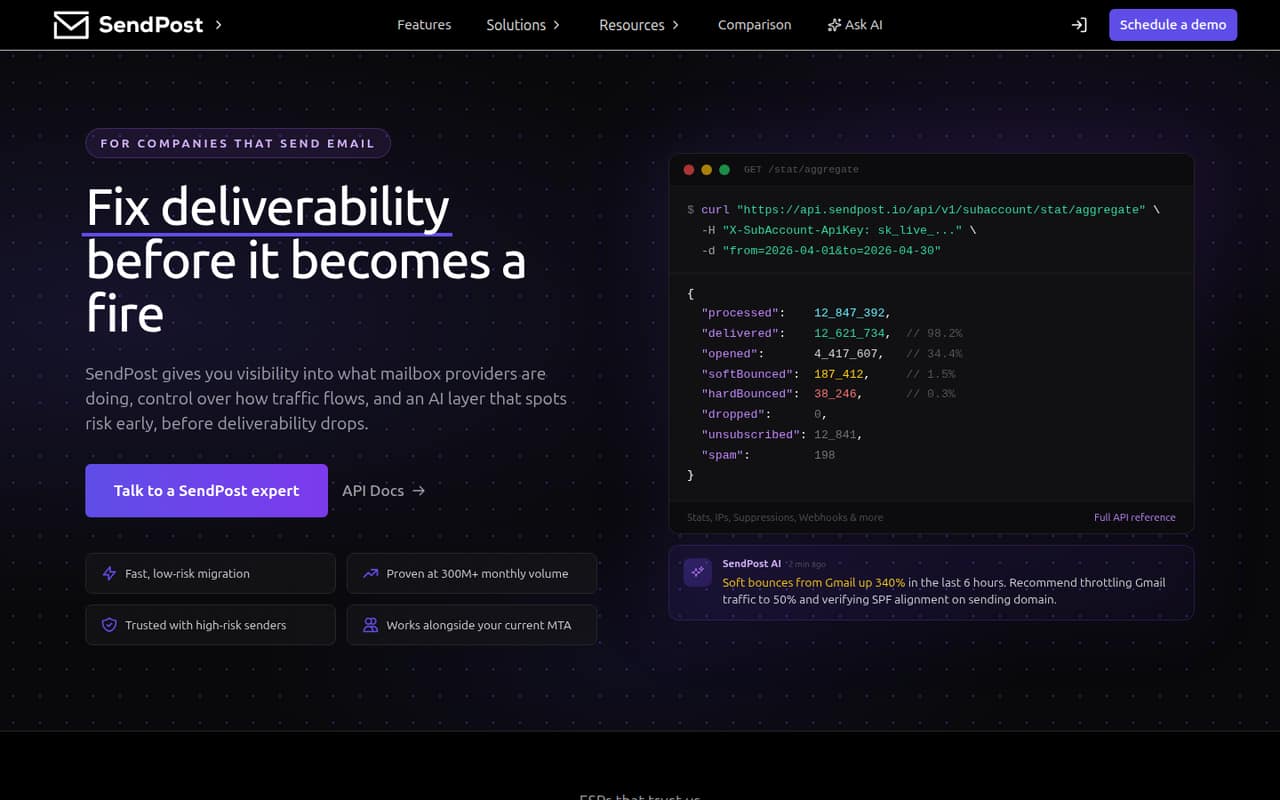
SendPostSendPost
SendPost is positioned for ESPs managing many senders and high-volume email operations, with deliverability controls and tools for investigating delivery problems. Its listed starting price is $7. Confirm the sending limits and full pricing with the vendor before committing; the starting price alone does not establish costs at your volume.
What works
- Email API and SMTP relay integration
- Per-ISP throttling and sender queues
- Tracks ISP responses and reputation
What doesn't
- No free plan is listed
- Overage rates are not published
- SDK language names are not listed
- Best for client-side appsEmailJSEmailJS
EmailJS is a hosted API layer for triggering templated email through existing delivery providers. Its stated fit includes client-side apps, small projects and teams that may switch providers. The listed starting price is $7.20, with a free plan. Check request limits and how provider changes affect templates and application code before adopting it.
What works
- Provider credentials stay on EmailJS servers
- Connects to native APIs or standard SMTP
- Official SDKs cover several common runtimes
What doesn't
- Monthly request limits vary by plan
- Attachment ceilings range by plan
- Overage terms are not published
- Best for reply workflowsSparkPostSparkPost
SparkPost is a hosted email API positioned for transactional and marketing email, with inbound replies routed into applications and delivery event workflows. That combination may suit teams connecting sending to application-side event handling. The listed starting price is $15, with a free plan. Verify plan limits and the inbound and event workflows your application requires.
What works
- One platform for transactional, campaign and inbound email
- Bird SDKs, CLI and MCP are available
- Sandbox supports delivery, bounce and complaint simulations
What doesn't
- Free plan caps sending at 1,000 emails monthly
- Free Send API limit is 10 requests per minute
- Dedicated IP add-on prices are not published
- Best for API and SMTPTwilio SendGridTwilio SendGrid
Twilio SendGrid is a hosted email delivery API and campaign platform, with stated use cases spanning transactional applications, API and SMTP teams, and campaigns. Its listed starting price is $19.95. Account signup and support risks are worth investigating before you depend on it; also compare the campaign features with the transactional needs of your application.
What works
- Email API and SMTP service
- Separate tools for marketing campaigns
- 60-day free trial
What doesn't
- Trial is limited to 100 emails per day
- No self-hosted edition is described
- API rate limits need confirmation

- Best for Mailchimp teamsMailchimp Transactional EmailMailchimp Transactional Email
Mailchimp Transactional Email is positioned for teams already using Mailchimp, event-triggered application email and shared template ownership. The listed starting price is $20, and a paid-account prerequisite applies. If your team already manages templates in Mailchimp, compare that workflow with the integration and account requirements before making it part of your application stack.
What works
- Send through REST API or SMTP
- Official Node.js, Python, PHP, and Ruby libraries
- Supports Handlebars and Mailchimp merge tags
What doesn't
- Requires an active Standard or Premium account
- Production sends are billed in 25,000-email blocks
- Unused email blocks do not roll over

- Best for AWS teamsAmazon Simple Email Service (SES)Amazon Simple Email Service (SES)
Amazon Simple Email Service is positioned for AWS teams with variable email volume, and its listed usage rates are clear. The listed starting price is $0. The integration contract and production limits need verification, so check the relevant SES documentation and confirm the limits that apply to your account before relying on it for application email.
What works
- Listed plan has no base subscription fee
- Outbound email rate is stated per 1,000 messages
- Inbound email has a separate stated rate
What doesn't
- AWS homepage does not explain SES integration details
- No SES SDKs, languages or CLI are named there
- Sending and receiving quotas are not established
- Best for Zoho CPaaSZeptoMailZeptoMail
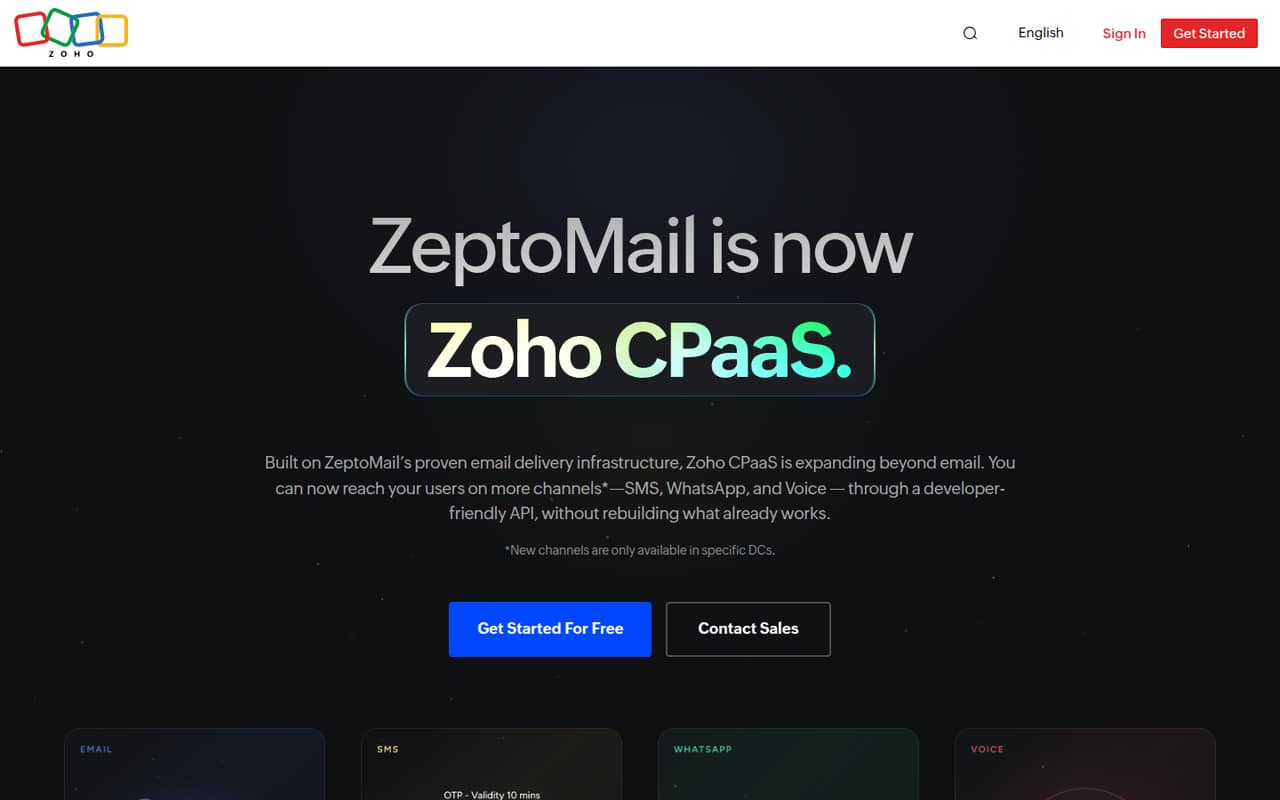
ZeptoMail is a transactional email API positioned within Zoho CPaaS, with HTTP APIs and multiple messaging channels in its stated fit. Its starting price is not published. Before launch, verify the channels you need and the service’s delivery reputation for your use case; do not assume that an API alone settles production readiness.
What works
- Email supports SMTP and API delivery
- Examples cover Node.js, C#, Python, PHP and Java
- One console manages four communication channels
What doesn't
- New channels are restricted to specific data centers
- Reddit users report Outlook and Hotmail delivery problems
- API rate limits are not published on the homepage
03How we chose
We ranked these services for developer and technical-team fit, weighing API and SMTP integration paths where stated, documentation and integration clarity, free tiers, listed starting prices and expected production checks. We also considered whether a service is positioned for transactional sending, and whether it adds QA, inbound email, validation or other channels. We treated Reddit sentiment as a secondary, anecdotal signal rather than proof of deliverability; it cannot replace checking current plan terms, account requirements or limits. Starting prices are not equivalent measures of per-message cost. We did not label a service open source or self-hostable without evidence for that claim.
04Check the integration contract and production limits
Start with the interface your application can support: REST API, SMTP, or both. Confirm the vendor’s SDK coverage and documentation for your language, including authentication, retries, error responses, idempotency and event webhooks. The service descriptions here identify API or SMTP options only where stated, so verify the exact implementation details in current vendor docs.
Then ask what changes between signup and production. Check account approval or sending restrictions, rate limits, daily caps, domain verification, bounce and complaint handling, and whether inbound email or delivery events are available on your plan. Twilio SendGrid’s account signup and support risks, and SES’s production limits, deserve particular scrutiny. Do not treat a free plan or a low starting price as evidence that a service can carry production traffic.
05Model cost, portability and ownership
Compare expected monthly cost at your own message volume, not just the listed starting price. The prices here are entry points, not a common per-message rate; several services list a free plan, while Resend and ZeptoMail have no published starting price in this comparison. Check what each tier includes, how overages are charged, and whether validation, inbound processing or additional channels change the bill.
Before implementation, decide where templates, suppression data and sending configuration will live. Ask how to export them and what migration requires if you change providers. Confirm whether the service is hosted or can be self-hosted, and check its licence before assuming you can run it yourself; do not infer open-source availability from an API. Keep provider calls behind an application boundary so templates, credentials and delivery events are not scattered across services.
Questions people ask
What is a transactional email API?
It is a service an application calls to send event-triggered messages, such as account or order email. Some providers also accept SMTP, process inbound replies, or offer campaign and QA tools. Confirm the exact integration methods and features in the provider’s current documentation.
Are these services free to use?
Several list a free plan, including Resend, Mailgun, SMTP2GO, Postmark, Mailtrap, EmailJS, MailerSend and SparkPost. The listed information does not establish their free-tier limits. Check current sending caps, features and overage charges before relying on a free plan.
Which transactional email API is cheapest?
The listed starting prices range from $5.60 for MailerSend to $20 for Mailchimp Transactional Email, while SES is listed from $0. Those figures are not comparable per-message rates. Calculate costs using your expected volume and each vendor’s current plan and usage terms.
Can I self-host a transactional email API?
The services ranked here are described as hosted APIs or managed services; the stated information does not establish an open-source, self-hosted option. Ask vendors about deployment and data export, and check the licence and operating requirements before choosing a self-hosted alternative.