
We may earn a commission if you buy through links on this page. It never changes a score or a ranking. How we make money
The bottom line
A capable hosted email API; confirm sending limits, account rules and migration options before committing.
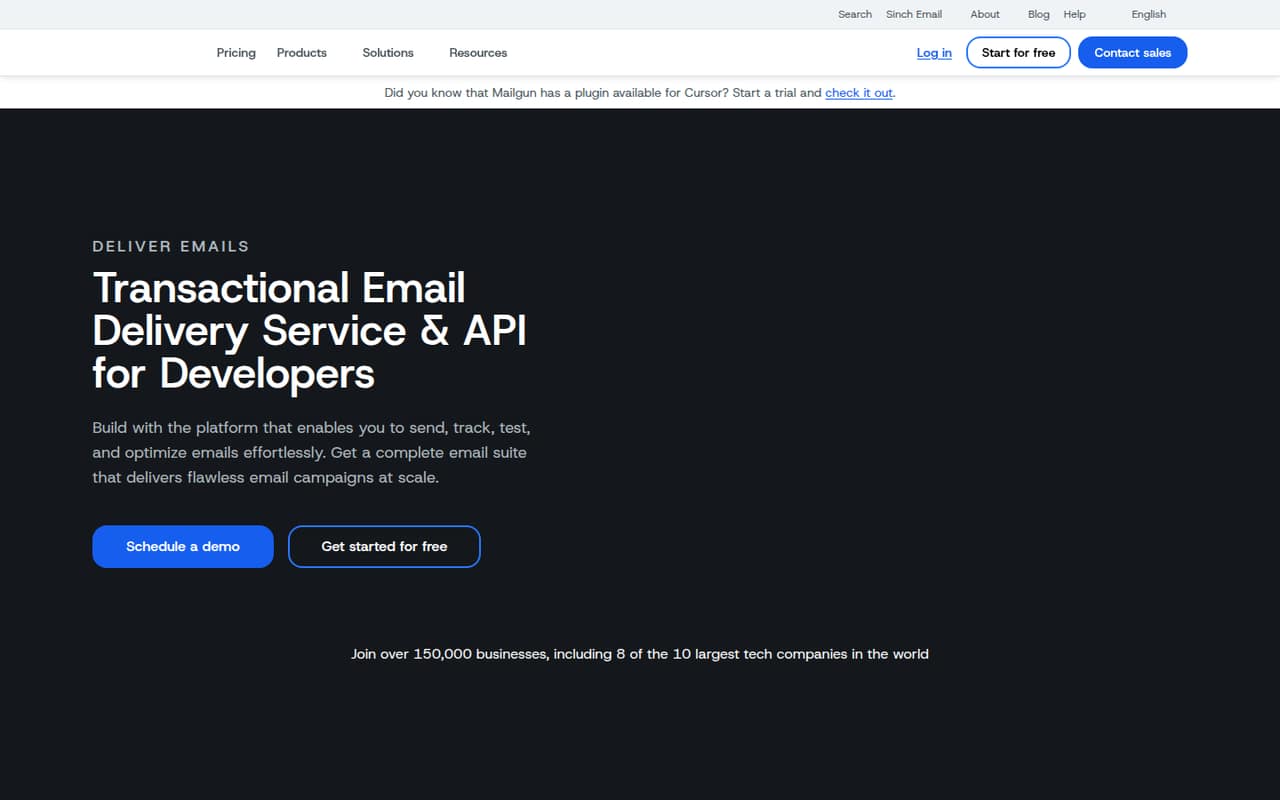
Mailgun is a hosted email delivery service for sending, receiving and tracking email through an API or SMTP. It also offers validation, previews, deliverability tools and inbound message parsing, so it covers more than basic transactional sending.
The free plan is capped at 100 emails per day, and paid plans start at $15 per month. Reddit comments include reports of account closures and unexpected plan changes, so review the current terms and support process before routing critical mail through it.
Good fit if
- Apps sending transactional email
- Teams needing validation tools
- Developers using API or SMTP
Skip it if
- Teams requiring self-hosted delivery
- Senders needing published rate limits
- Projects avoiding hosted-provider lock-in
ScoresHow it rates
What works
- Send, receive and track email through API and SMTP
- Real-time API and bulk email validation
- Email previews and accessibility checks
- Inbound message parsing is supported
- Free tier supports 100 emails per day
What doesn't
- Free plan has a daily sending cap
- Rate limits are not published on the vendor's site
- Open-source licensing and self-hosting are not published
- Data export details are not published
- Reddit users report account closures and plan changes
01What Mailgun is, technically
Mailgun is a hosted email delivery service and API, not a library or self-hosted mail server. It sits between an application and recipients’ mail systems: your code sends messages through Mailgun’s API or SMTP service, and the platform provides tools to track and manage delivery. It can also receive and parse incoming messages.
The service targets transactional email and other application-driven sending, with the homepage describing volume ranging from thousands to millions of emails. Its product set extends beyond sending: developers can use email validation through an API or bulk upload, preview messages before sending, and access deliverability tools. The homepage also describes connecting email data to a CRM. That makes Mailgun a broader hosted email suite rather than a minimal send-only endpoint. The trade-off is architectural: delivery depends on a third-party service, and applications that use Mailgun-specific validation, inspection or routing features may need additional work to move those workflows elsewhere.
02Mailgun API, SDKs and docs
The integration surface is an email API plus SMTP services for sending, receiving and tracking messages. Mailgun’s site links to API documentation and an SDKs page, and lists integrations among its resources. It also advertises a plugin for Cursor. The homepage does not name SDK languages or describe a CLI, so confirm supported languages and current SDK maintenance in the vendor’s documentation before choosing a stack. Do not assume a particular client library is available for your runtime.
The same platform offers a real-time Email Validation API, bulk list validation, incoming-message parsing and email previews. These services can reduce the number of separate vendors in an email workflow, but each feature adds another integration to account for if you later migrate. The homepage does not describe a specific API style or webhook protocol. Review the API docs for authentication, request and response formats, retry behavior, event delivery, and versioning. Mailgun also links to a Help Center, status page and release notes, which are useful places to check during implementation and operations.
03Mailgun pricing for developers
The Free plan costs $0 per month and includes 100 emails per day, one custom sending domain, two API keys, one day of log retention and one inbound route. The daily cap makes it suitable for low-volume testing, not a production workload that may burst above that limit. A 30-day free trial is also listed.
Basic costs $15 per month for 10,000 emails, with no daily email limit. Foundation is $35 for 50,000 emails; Scale is $90 for 100,000 emails and includes 5,000 validations, SAML SSO, 30 days of log retention and dedicated IP pools. Enterprise pricing is custom. The pricing page lists monthly billing and no annual prices.
Usage can add to the base plan: extra emails start at $1.80 per 1,000 on Basic, $1.30 on Foundation and $1.10 on Scale. Extra validations start at $1.20 per 100 on Basic and Foundation, or $0.80 per 100 on Scale. Additional dedicated IPs cost $59 per month each. Model volume and validation needs together before selecting a tier.
04Mailgun: open source, self-hosting and lock-in
Mailgun is presented as a hosted email delivery service. The vendor does not publish an open-source license or a self-hosting option on the vendor's site, so teams requiring either should ask Mailgun directly rather than plan around running the service themselves. Data export details are also not published; ask what message, event, suppression and configuration data can be exported, in what format, and for how long it remains available.
SMTP is a standard integration surface that can make basic sending easier to redirect, but it does not guarantee a drop-in migration. Applications using Mailgun’s API, validation, inbound parsing or deliverability tools may need to replace those functions and adjust their message handling. Keep sending logic behind an internal adapter and retain copies of the data your application needs. Before signing up, confirm termination procedures, export access and any retention period that affects your records.
05Mailgun in production
The pricing details specify email allowances and several retention limits, but they do not publish API rate limits. Check the vendor’s documentation or ask support about request limits, burst behavior, retries, queueing and delivery-event retention for your expected traffic. The homepage promotes reliability, compliance and scale, and links to a status page and Security Portal; those are starting points, not a substitute for reviewing service commitments and security terms.
Reddit reports are mixed and anecdotal. In one web development thread, a user said a free plan became a $35-per-month plan after an email may have been missed. Another poster described a legitimate ecommerce account being permanently disabled after its first newsletter campaign. These accounts do not establish how often such events occur, but they make account review and acceptable-use rules worth checking before sending critical mail. Keep a fallback provider or migration plan, and verify that your sending use case is approved.
From the threadsWhat users say
Reddit comments show that some developers value Mailgun’s integration experience, while others raise concerns about plan changes and account access. The small sample is mixed and includes serious but unverified complaints.
Mailgun used to be the default choice for many web developers as it is easy to integrate and they are very reliable
Last year my free plan was turned into a $35 / month plan
Despite that, they replied saying the account had been permanently disabled, without providing any specific reason
I got asked to submit additional information about my intended use the first time
Questions people ask
Is Mailgun trustworthy for production email?
Mailgun offers API and SMTP sending, tracking, a status page and a Security Portal. Its homepage makes reliability claims, but teams should review the service terms and ask about rate limits, delivery commitments, account reviews and data retention. Reddit users have reported account closures and plan changes; those reports are anecdotal, but justify keeping a fallback plan.
How much does Mailgun cost?
Mailgun lists a free plan with 100 emails per day. Paid plans start with Basic at $15 per month for 10,000 emails, followed by Foundation at $35 for 50,000 and Scale at $90 for 100,000. Enterprise pricing is custom. Usage over plan allowances and add-ons can increase the monthly bill.
What is Mailgun used for?
Mailgun provides hosted email sending, receiving and tracking through an API and SMTP. Its tools also cover email validation, previews, deliverability optimization and incoming-message parsing. Developers can use it to add application email delivery and related workflows without operating their own email delivery service.
Does Mailgun support SMTP and an API?
Yes. Mailgun’s homepage lists Email API and SMTP services for sending, receiving and tracking emails. It also offers an Email Validation API. The homepage links to documentation and an SDKs page, but does not name supported SDK languages, so confirm runtime support in the vendor’s current docs.
Can Mailgun validate email addresses?
Yes. Mailgun lists a real-time Email Validation API and bulk list uploads. The pricing details also include validation allowances and paid validation add-ons for Basic, Foundation and Scale. Check the current plan terms for the amount included and the cost of validation beyond that allowance.