We may earn a commission if you buy through links on this page. It never changes a score or a ranking. How we make money
Scrapy and Crawlee are the strongest starting points for teams that want to own crawler code and infrastructure. Apify, Zyte and Firecrawl fit teams that want hosted services or ready-made extraction workflows; proxy-focused services such as Bright Data and Oxylabs suit stacks that need managed network access. The right choice depends on whether you need a crawler framework, an API, or a no-code tool. Compare the listed starting prices with expected usage, and check deployment, limits and data portability before committing.
Quick picksThe shortlist
 ScrapyScrapyBest open source · $9/mo
 CrawleeCrawleeBest crawler toolkit · Free
 ApifyApifyBest hosted platform · $19/mo
 ZyteZyteBest Scrapy hosting · $0.06/mo
 FirecrawlFirecrawlBest for AI agents · $16/mo
 Crawl4AICrawl4AIBest for RAG pipelines · $10/mo
 ZenRowsZenRowsBest for protected pages · $16/mo
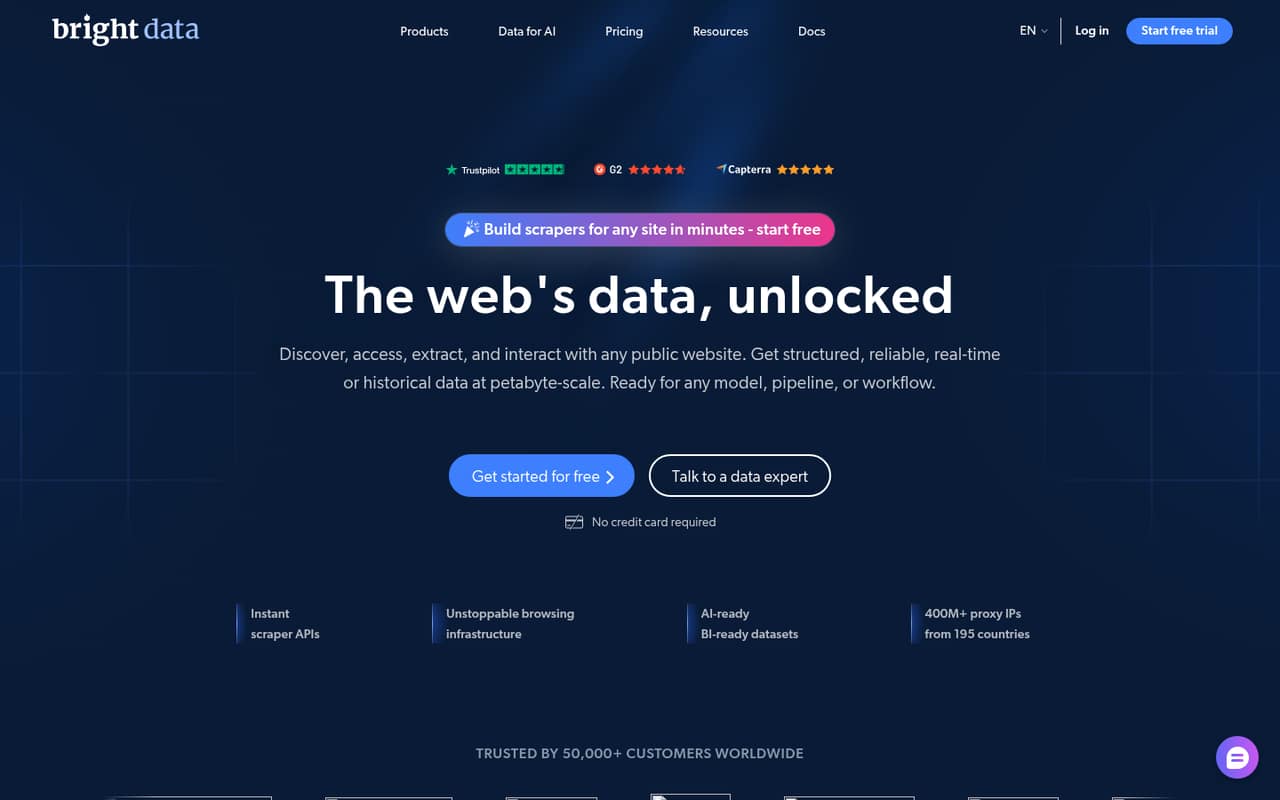
 Bright DataBright DataBest managed data stack · $499/mo
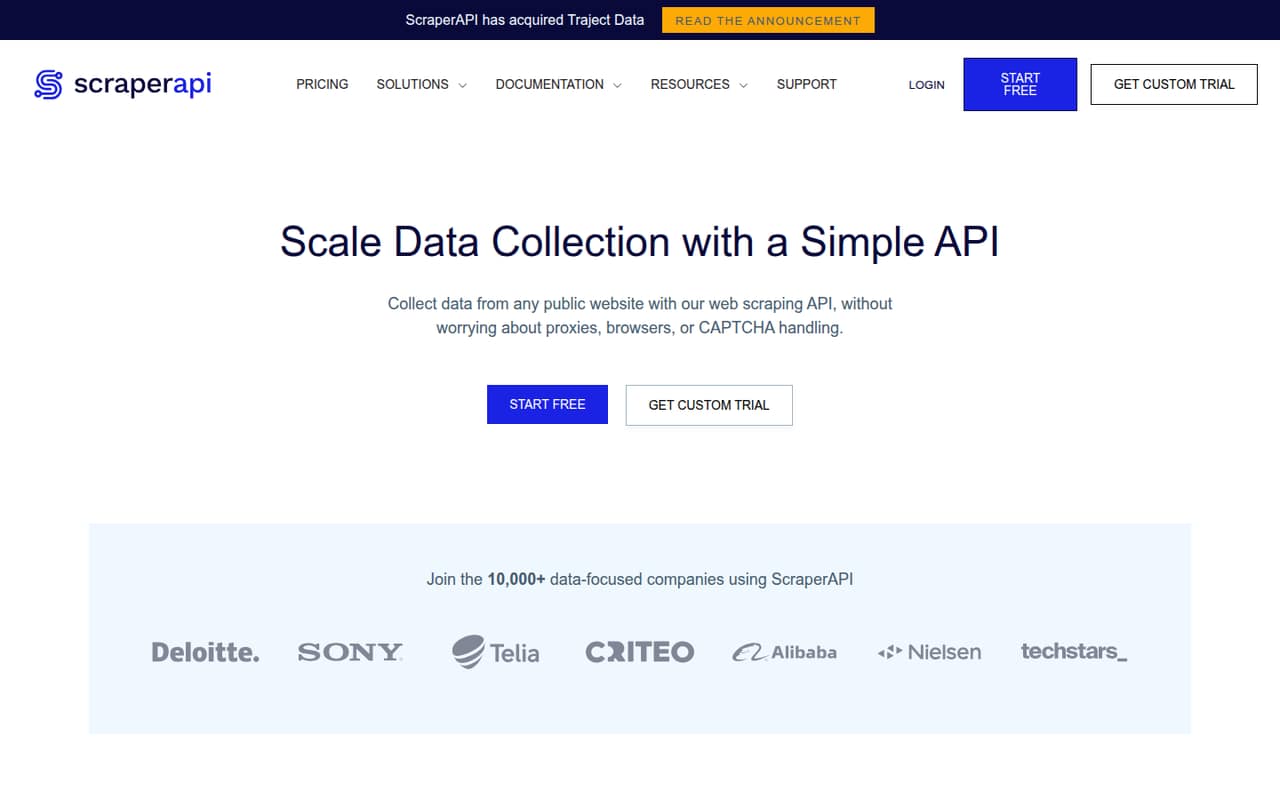
 ScraperAPIScraperAPIBest structured endpoints · $44.10/mo
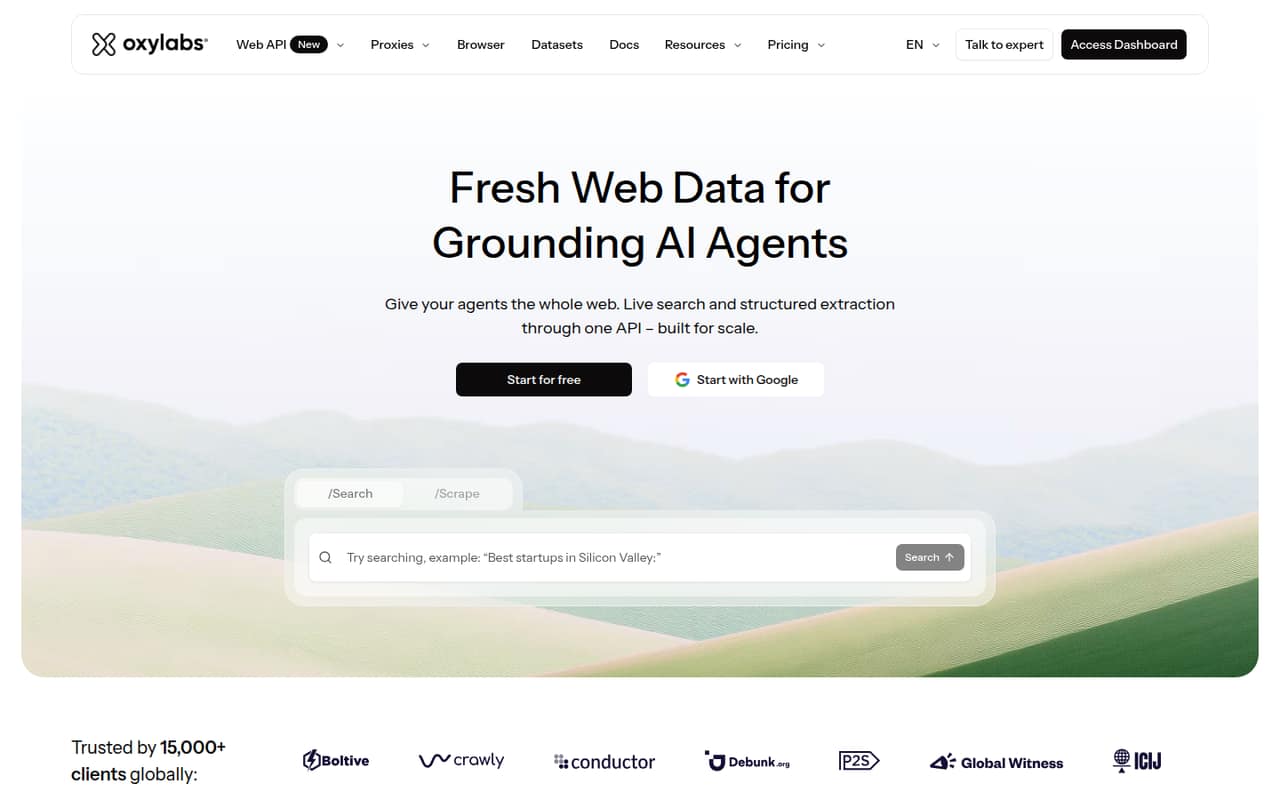
 OxylabsOxylabsBest for enterprise collection · $15/mo
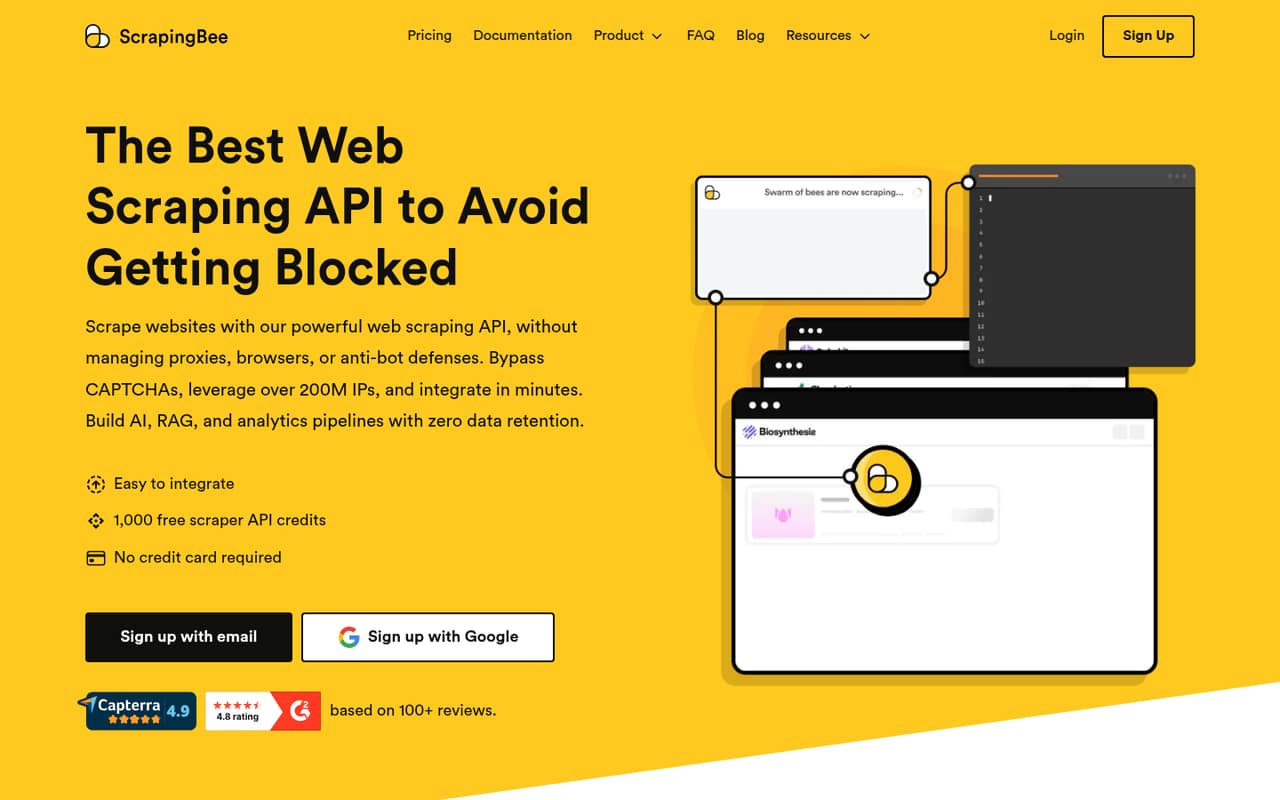
 ScrapingBeeScrapingBeeBest without proxy ops · $19/mo
 SOAXSOAXBest proxy routing · $200/mo
 Browse AIBrowse AIBest page monitoring · $19/mo
 OutscraperOutscraperBest local-business data · $1/mo
- OctoparseOctoparseBest visual scraping · $69/mo
 Captain DataCaptain DataBest B2B enrichment API · Custom
 PhantomBusterPhantomBusterBest no-code prospecting · $56/mo
 Data MinerData MinerBest browser extraction · $19.99/mo
 ThunderbitThunderbitBest one-off extraction · $9/mo
01Compared at a glance
| Tool | Score | From | Free plan | Trial |
|---|---|---|---|---|
| ScrapyScrapy | 8.1 | $9/mo | Yes | — |
| CrawleeCrawlee | 8.0 | Free | Yes | — |
| ApifyApify | 7.7 | $19/mo | Yes | — |
| ZyteZyte | 7.7 | $0.06/mo | No | 30 days |
| FirecrawlFirecrawl | 7.4 | $16/mo | Yes | — |
| Crawl4AICrawl4AI | 7.5 | $10/mo | Yes | Yes |
| ZenRowsZenRows | 7.5 | $16/mo | Yes | — |
| Bright DataBright Data | 7.0 | $499/mo | Yes | 7 days |
| ScraperAPIScraperAPI | 7.4 | $44.10/mo | Yes | 7 days |
| OxylabsOxylabs | 6.8 | $15/mo | Yes | — |
| ScrapingBeeScrapingBee | 6.8 | $19/mo | Yes | — |
| SOAXSOAX | 6.8 | $200/mo | Yes | — |
| Browse AIBrowse AI | 7.0 | $19/mo | Yes | — |
| OutscraperOutscraper | 6.8 | $1/mo | Yes | — |
| OctoparseOctoparse | 6.7 | $69/mo | Yes | — |
| Captain DataCaptain Data | 5.8 | Custom | No | — |
| PhantomBusterPhantomBuster | 6.5 | $56/mo | Yes | 14 days |
| Data MinerData Miner | 6.5 | $19.99/mo | Yes | — |
| ThunderbitThunderbit | 6.2 | $9/mo | Yes | — |
02The picks, in detail
- Best open sourceScrapyScrapy
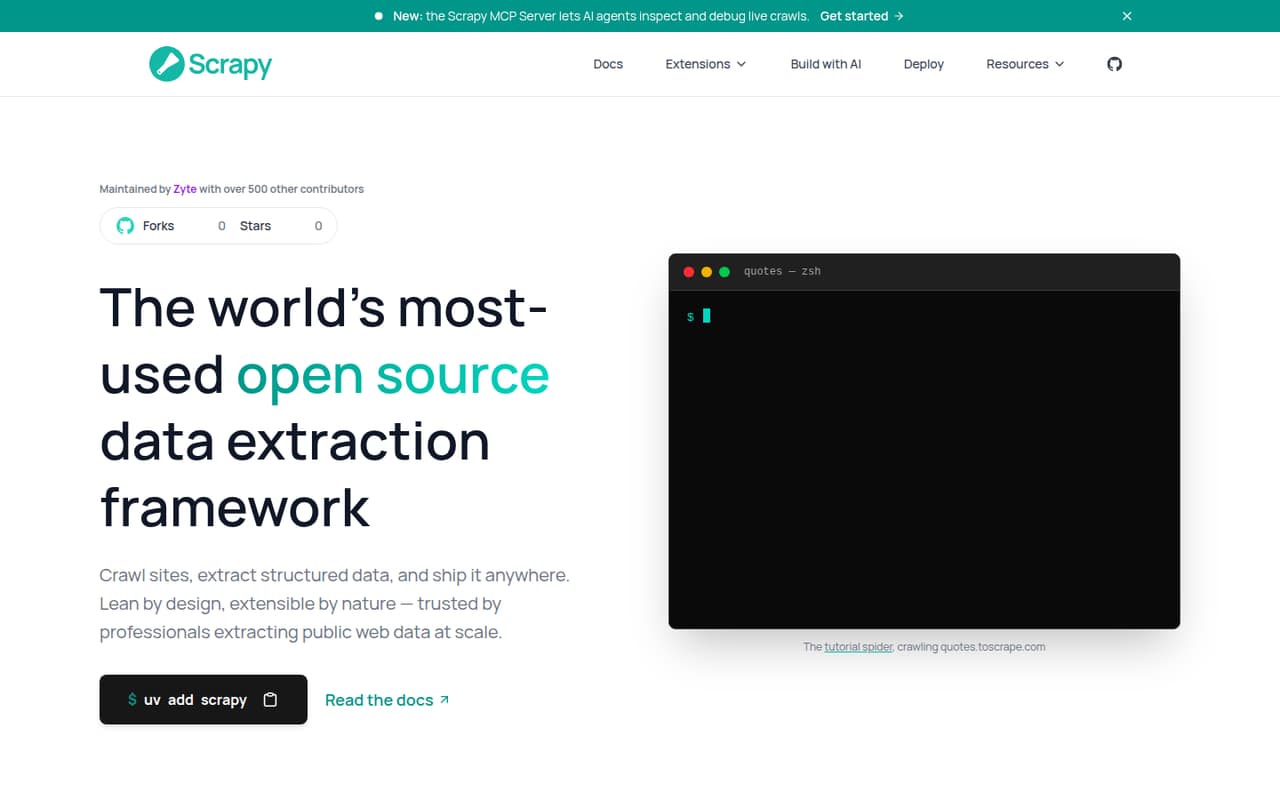
Scrapy ranks first for Python teams that want an extensible crawler they can self-host. It is aimed at custom crawling, especially on mostly static pages; browser rendering and hosted scaling require extra setup. The listing marks it open source and self-hostable, with a free plan and a listed starting price of $9. Choose it when owning crawler behavior matters more than outsourcing operations.
What works
- Free framework under the BSD-3-Clause license
- Asynchronous, pluggable crawling architecture
- CSS and XPath selectors with an interactive shell
What doesn't
- JavaScript rendering requires an extension
- Scrapy Cloud free jobs stop at one hour
- Free Cloud tier allows one concurrent crawl
- Best crawler toolkitCrawleeCrawlee
Crawlee provides crawler building blocks for JavaScript and Python projects, and the listing marks it open source and self-hostable. That makes it a fit for teams that want to build and operate their own collection system rather than buy a finished data feed. Production infrastructure and proxy costs remain your responsibility. A free plan is listed; the starting price is n/a.
What works
- JavaScript and Python support
- Apache 2.0 open-source licence
- CLI scaffolds projects from templates
What doesn't
- No published rate or usage limits
- Runtime and proxy infrastructure are separate costs
- Cloudflare handling can fail on some configurations

- Best hosted platformApifyApify
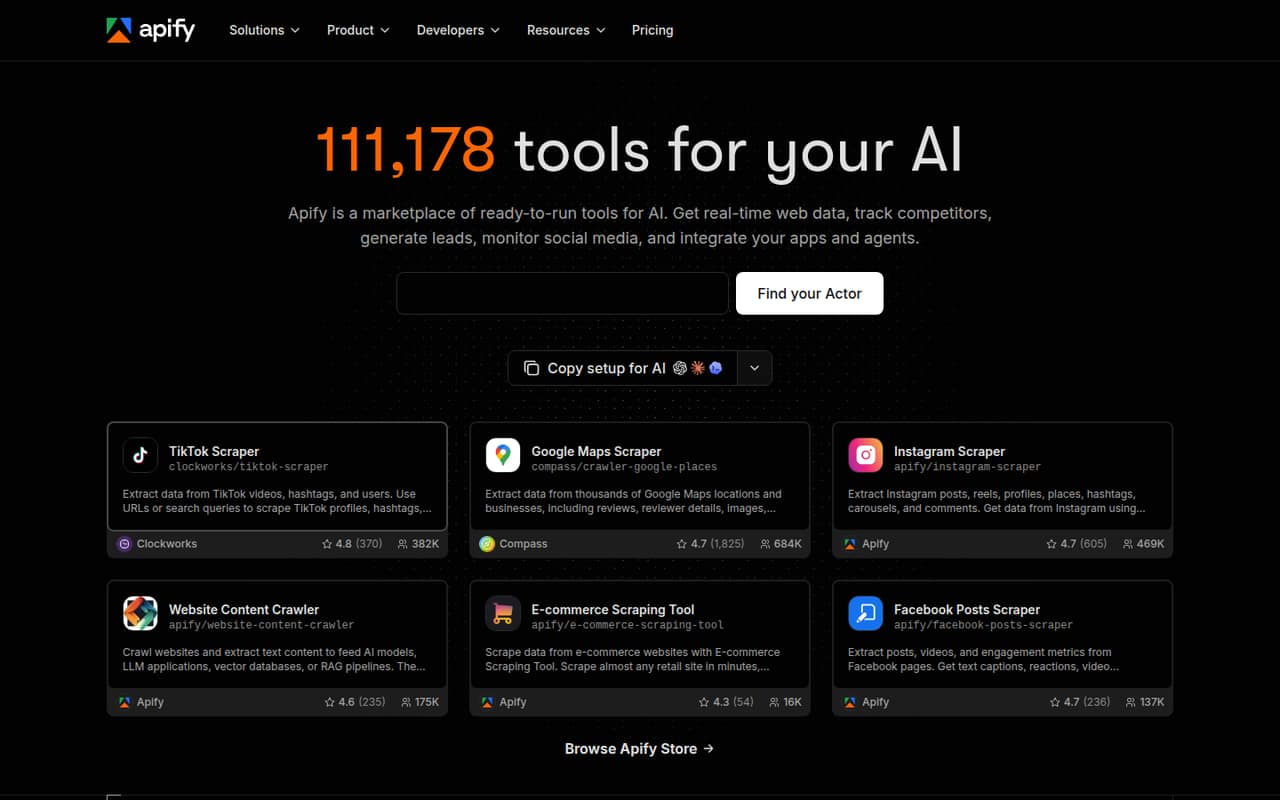
Apify combines ready-made web scrapers with custom Actors and workflows for AI teams that need web data. It suits developers who want a hosted platform rather than only a crawler library, but usage costs and concurrency limits need to be part of capacity planning. The listing includes a free plan and a starting price of $19.
What works
- Marketplace of ready-to-run Actors
- Build and deploy custom Actors
- Run Actors and export data via API
What doesn't
- Compute and proxy usage can add up
- Free plan has five concurrent runs
- Extra concurrent runs cost $5 each
- Best Scrapy hostingZyteZyte
Zyte fits teams that scrape varied website types, use Scrapy and want cloud hosting, or prefer managed collection and delivery. Its hosted stack offers flexible access and structured extraction, according to the listing, but usage costs need modeling before workloads grow. The listing marks it open source and gives a starting price of $0.06; confirm what that price applies to.
What works
- One API selects an access strategy for each target site
- Structured extraction includes product fields such as price and availability
- HTTP and browser request pricing is published by website tier
What doesn't
- No free API plan; the trial credit is limited to $5
- Per-request rates vary by website tier and access method
- Advanced features may add unpublished usage costs
- Best for AI agentsFirecrawlFirecrawl
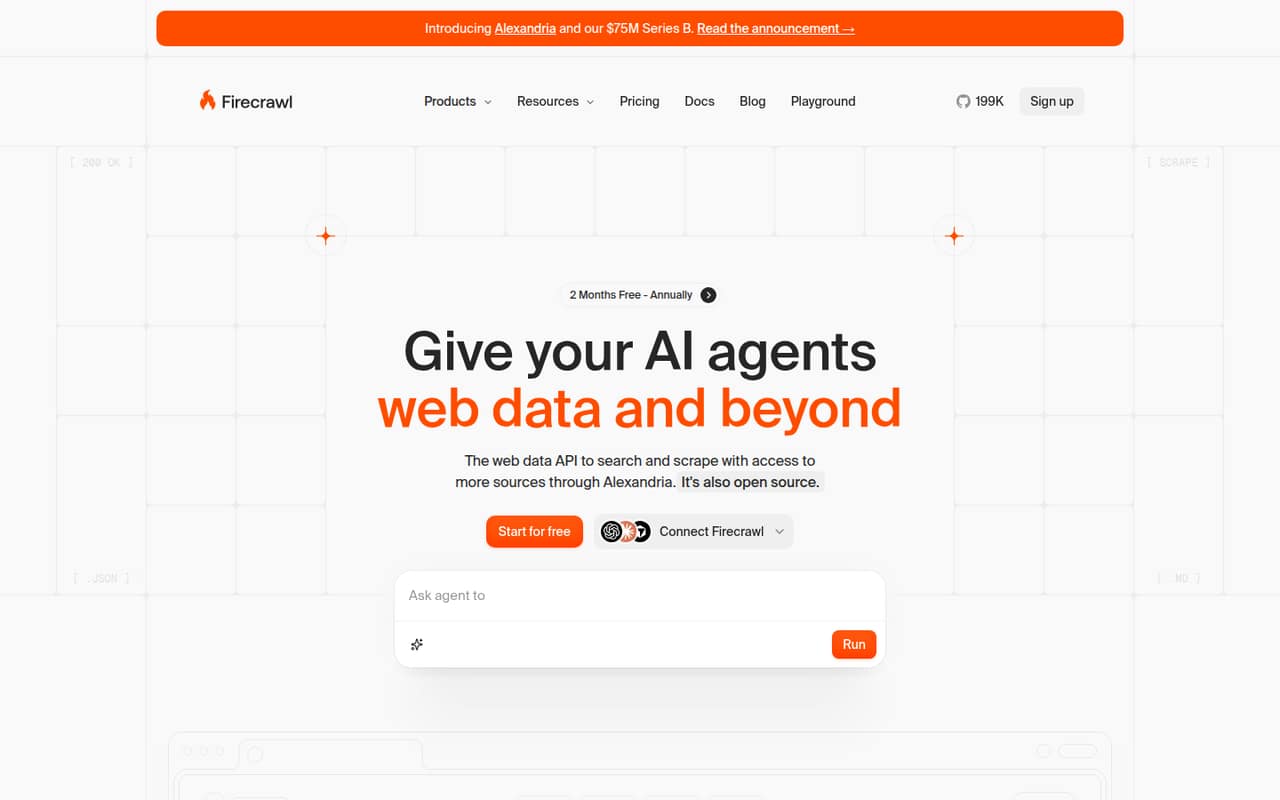
Firecrawl is an API for turning live web pages into Markdown or JSON, aimed at AI agents and teams building web-data workflows. It also has an open-source option, which gives teams a path to self-hosting; check the project’s terms and operational needs before choosing that route. The listing includes a free plan and a starting price of $16. Validate scaling caveats before production.
What works
- Search, scrape and interact through one product
- Outputs include Markdown, JSON and screenshots
- Python example uses a short integration path
What doesn't
- Free plan has low rate limits
- Concurrency and credits vary by paid plan
- Self-hosting reports include setup and reliability complaints
- Best for RAG pipelinesCrawl4AICrawl4AI
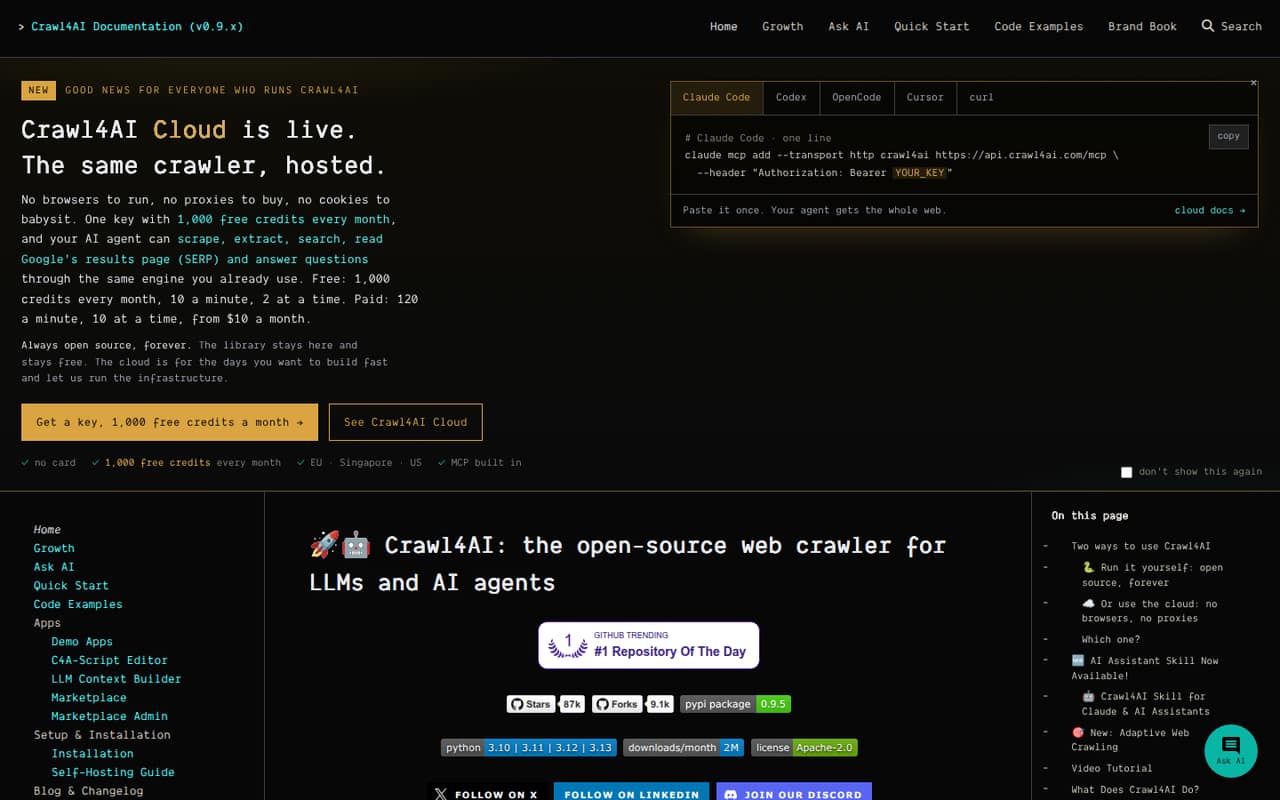
Crawl4AI targets Python teams building RAG pipelines, agents that need scraping and web search, and developers who want self-hosting. The listing marks it open source and offers a choice between a Python crawler you control and a hosted API that avoids running browsers yourself. A free plan is listed, with a starting price of $10. Compare operating effort against hosted-service costs.
What works
- Free, Apache 2.0 self-hosted library
- Python package, CLI and Docker server
- Cloud API covers scraping, extraction and search
What doesn't
- Cloud usage is metered in credits
- Free cloud tier caps requests and concurrency
- Credit cost by endpoint is not published
- Best for protected pagesZenRowsZenRows
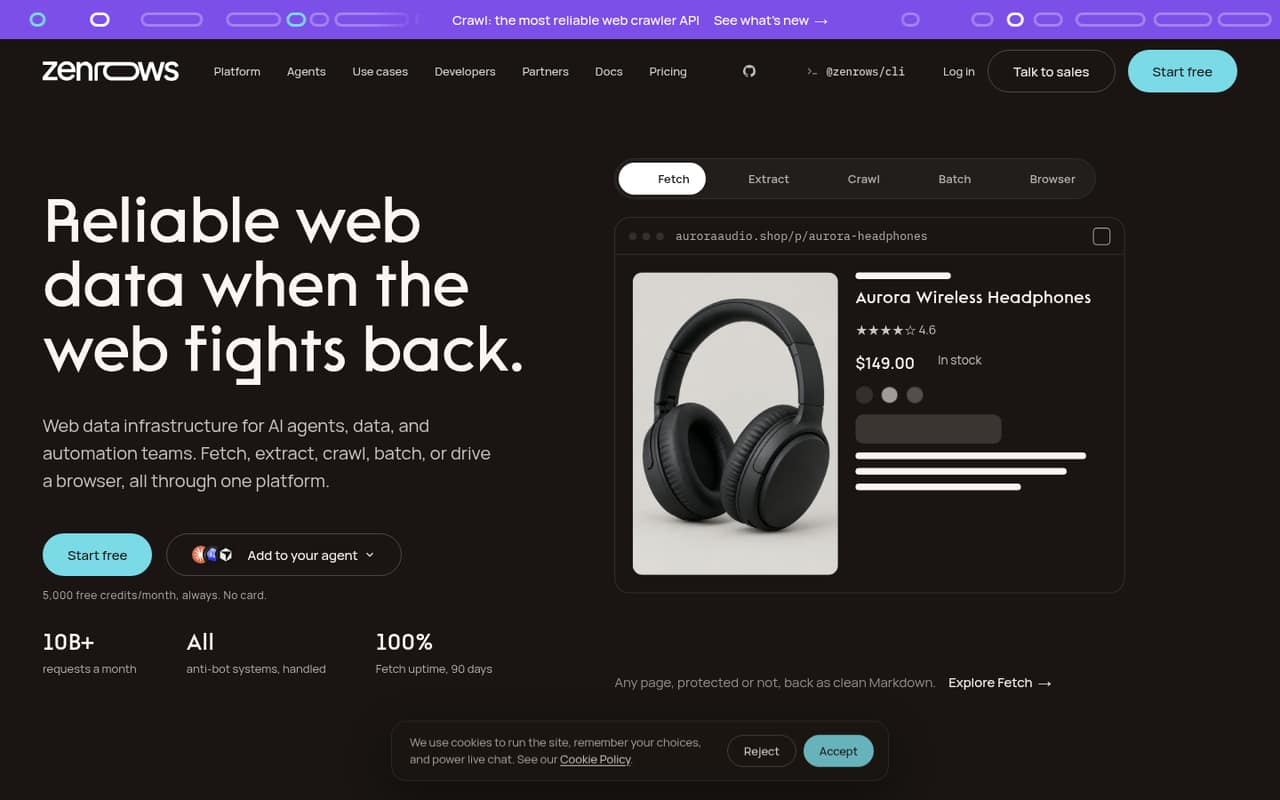
ZenRows is a hosted scraping API aimed at agents needing live web access, teams processing protected pages, and batch extraction workflows. It offers broad hosted tooling, but the listing flags limited public detail on portability and usage costs. Ask how credits are consumed by your target sites and what export or migration options are available. A free plan is listed; pricing starts at $16.
What works
- Combines fetch, extraction, crawling, batch jobs and browser operations
- Offers Python, Node.js and Go SDKs
- CLI and MCP server support agent workflows
What doesn't
- Credit costs vary by feature and are not fully itemized
- Paid top-up pricing is not published
- Source availability and self-hosting options are not published
- Best managed data stackBright DataBright Data
Bright Data is suited to teams collecting public-web data at scale, projects that need managed proxy infrastructure, and AI pipelines consuming web data. It is a broader hosted web-data stack, so budget for both usage and managed infrastructure rather than treating the starting price as a workload estimate. The listing includes a free plan and a starting price of $0.
What works
- Combines scraper APIs, web-access APIs, proxies, and datasets
- Free Tier includes several API and product allowances
- Pay-as-you-go pricing supports variable request volume
What doesn't
- Per-request and per-GB charges can add up
- Language-specific SDK support needs confirmation
- Self-hosting and open-source licensing are not listed
- Best structured endpointsScraperAPIScraperAPI
ScraperAPI is a hosted scraping layer for teams replacing proxy infrastructure, e-commerce and SERP pipelines, and developers who need structured JSON endpoints. Its credit costs and success rates depend on the target sites, so estimate against representative URLs before setting a production budget. The listing includes a free plan and a starting price of $44.1.
What works
- API handles proxy rotation, CAPTCHA and browser handling
- Structured JSON endpoints for Amazon, Google and Walmart
- Async Scraper supports millions of asynchronous requests
What doesn't
- SDK and language support needs confirmation with the vendor
- No published source licence or self-hosted deployment
- Credit use can vary across target domains
- Best for enterprise collectionOxylabsOxylabs
Oxylabs combines hosted API and proxy services for teams building web-grounded AI agents, scraping projects needing managed proxies, and enterprise data collection operations. The listing also points to agent interfaces, but teams should model usage before committing to a workload. It includes a free plan and lists a starting price of $15. Check which interface and costs match your deployment.
What works
- Search and structured extraction share one Web API
- Hosted remote MCP Server connects agents to Web API
- Agent Skills provide tool-use instructions
What doesn't
- SDKs and supported languages are not named in the offering
- Rate limits are not published in the reviewed details
- Production overage rates need checking against product rate cards
- Best without proxy opsScrapingBeeScrapingBee
ScrapingBee is a hosted scraping API for teams that want to avoid operating proxy infrastructure, scrape JavaScript-heavy public websites, or supply structured data to AI workflows. Credit use varies by target, so calculate costs using the pages and extraction behavior you expect in production. The listing includes a free plan and gives a starting price of $19.
What works
- Automatic proxy rotation and country-level geotargeting
- Headless Chrome rendering with waits and scenarios
- Structured JSON or Markdown extraction
What doesn't
- JavaScript rendering consumes five credits per success
- Premium proxies consume 10 or 25 credits per success
- Credits expire monthly without rollover
- Best proxy routingSOAXSOAX
SOAX is aimed at teams needing targeted proxy routing for HTTP or SOCKS5 scraping workloads, or managed data pipelines. Its listing highlights global targeting and proxy controls, but advises checking SDK support, limits and migration options first. That makes it a stronger fit when network routing is a core requirement than when you want a complete crawler framework. A free plan is listed; pricing starts at $200.
What works
- HTTP, HTTPS and SOCKS5 over TCP and UDP
- Rotation by request, count, time or error
- Sticky sessions and configurable request rules
What doesn't
- Sandbox includes no proxy credits
- Paid self-service plans start at $200 monthly
- Homepage does not explain proxy SDK integration
- Best page monitoringBrowse AIBrowse AI
Browse AI is a hosted scraper for no-code data collection, scheduled page-change monitoring, and spreadsheet or webhook workflows. It can fit teams that want integrations without building a crawler, but check credit limits and data portability before using it as a production dependency. The listing includes a free plan and starts at $19. Confirm that its workflow model matches your required extraction and delivery paths.
What works
- No-code agent setup for webpage extraction
- Scheduled hourly, daily, weekly or monthly checks
- Exports to Google Sheets and Airtable
What doesn't
- Credit consumption can constrain recurring workloads
- Free plan covers only two websites
- SDKs, languages and CLI are not named
- Best local-business dataOutscraperOutscraper
Outscraper suits local-business data collection, small pay-as-you-go pulls, and CSV-first research workflows. The listing describes it as a hosted data source with useful free tiers, while flagging production reliability for closer review. That makes it a practical option for bounded data jobs, but teams should validate reliability and delivery requirements before depending on it for recurring pipelines. A free plan is listed; pricing starts at $1.
What works
- Collects public Google Maps business data
- Covers Google Maps and 50+ sources
- Includes free allowances for several scrapers
What doesn't
- Reddit users report slowdowns and outages
- Supported SDKs and languages are not named
- API rate limits are not stated on the homepage
- Best visual scraping
OctoparseOctoparse
Octoparse is for teams that want to scrape without writing code, use ready-made templates for recurring jobs, or run browser tasks locally or in managed cloud environments. Its visual approach trades code-level control for templates and managed runs, so check how well workflows can be maintained as sites change. The listing includes a free plan and starts at $69.
What works
- Ready-made templates cover common websites and data types
- Visual task building avoids writing scraper code
- Can run tasks locally or on managed cloud infrastructure
What doesn't
- No open-source licence or self-hosted server option is published
- SDK languages and CLI support need confirmation
- Monthly-billing prices for paid plans are not listed
- Best B2B enrichment APICaptain DataCaptain Data
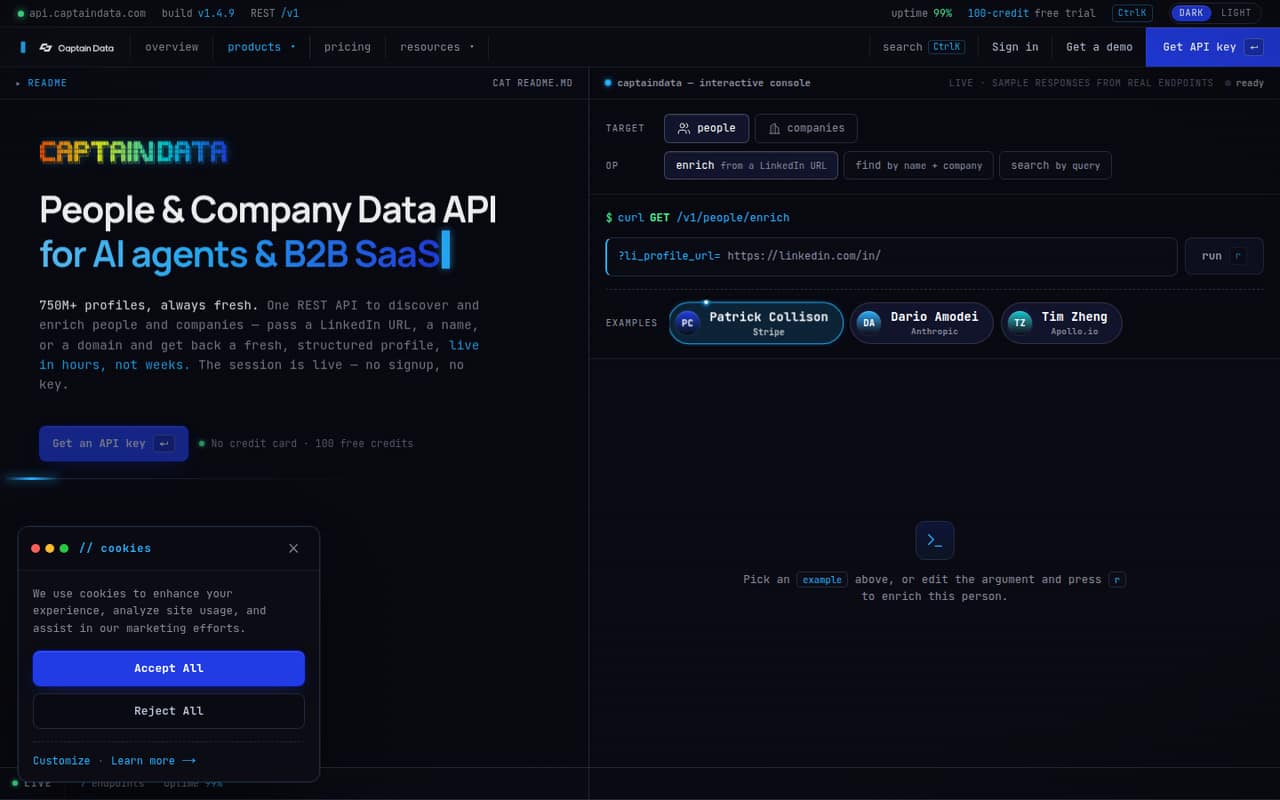
Captain Data focuses on people-and-company data for B2B SaaS enrichment, AI agents needing profile data, and teams integrating over REST. Its straightforward API focus may suit targeted enrichment more than general-purpose crawling. The vendor does not publish a starting price. One Reddit thread raises license complaints, so review permitted use, data rights and contract terms before adopting it.
What works
- Seven focused people and company endpoints
- REST API uses a standard API-key header
- 100 free credits; no credit card required
What doesn't
- USD plan prices and annual equivalents are unpublished
- Rate limits are not published on the homepage
- No self-hosting or open-source option is described
- Best no-code prospectingPhantomBusterPhantomBuster
PhantomBuster targets no-code prospecting, sales and recruiting workflows, and CRM enrichment or syncing. It is less compelling for teams that require self-hosting or deep developer tooling, so check whether its workflow model and integrations fit your stack before building dependencies around it. The listing includes a free plan and gives a starting price of $56.
What works
- Prebuilt Phantoms cover common extraction and outreach tasks
- Flows chain tasks into multi-step workflows
- Runs on remote cloud infrastructure with scheduling
What doesn't
- Closed-source SaaS with no self-hosted option
- Execution time and automation slots are capped by plan
- Free downloads are capped at 10 rows

- Best browser extractionData MinerData Miner
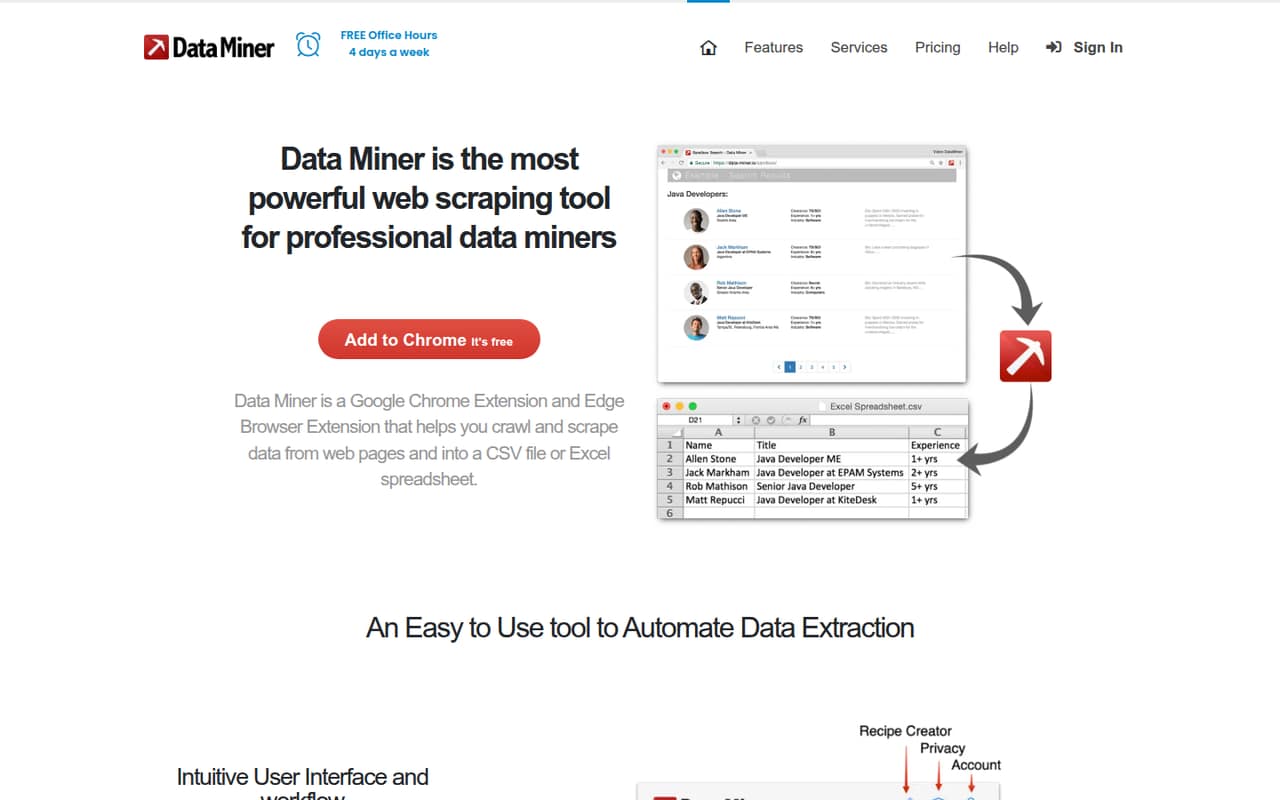
Data Miner is a browser-based option for one-off scraping, CSV or Excel exports, and small URL-list crawls. Its low-friction workflow suits users who need quick extracts, but the listing notes limited published developer interfaces. Teams building scheduled pipelines should confirm how extraction, automation and data handoff would work before choosing it. A free plan is listed; pricing starts at $19.99.
What works
- Works as a Chrome and Edge extension
- Public recipes and custom extraction rules
- Handles pagination and URL-list crawls
What doesn't
- Free plan restricts some domains
- Paid plans also have monthly page caps
- API and SDK support are not described
- Best one-off extractionThunderbitThunderbit
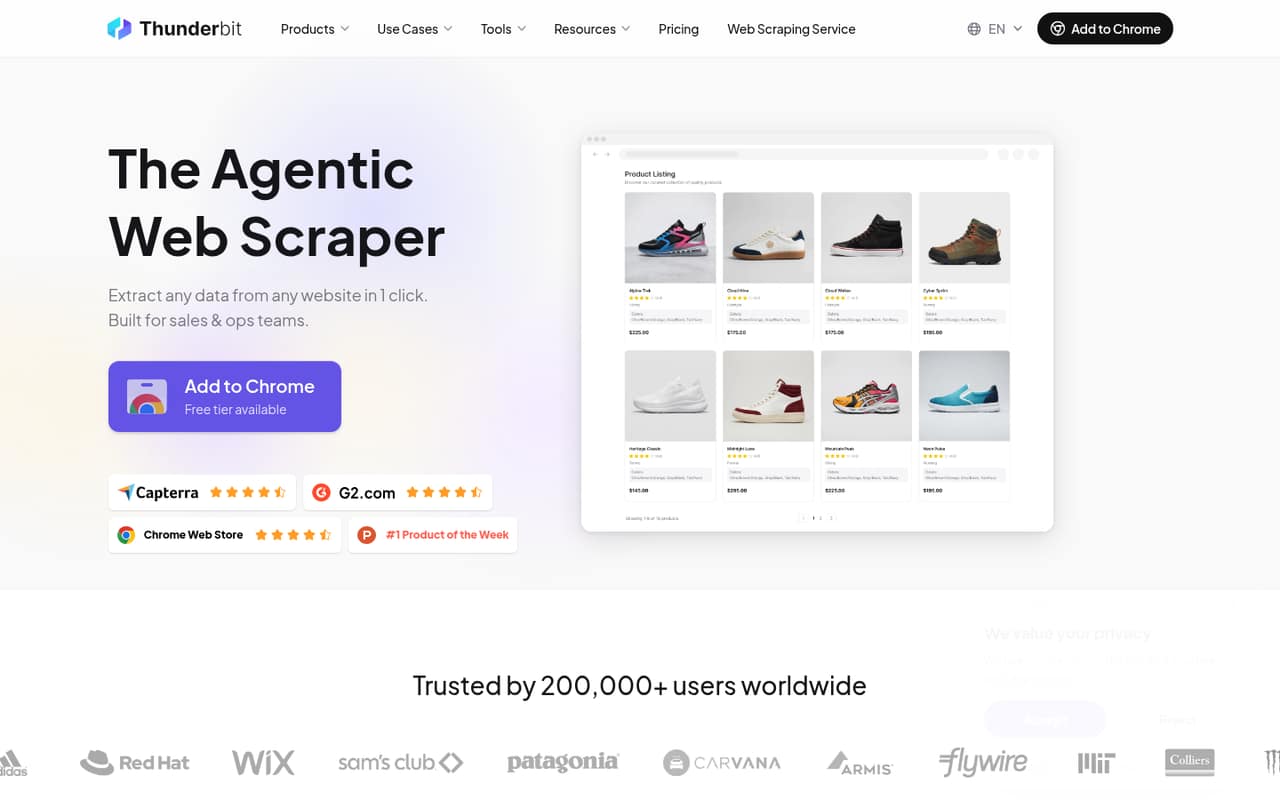
Thunderbit is a browser scraper for one-off website extraction, spreadsheet workflows in sales and operations, and templates for popular sites. The listing points to limited evidence for code-first production use, so it is a better fit for lightweight tasks than a core developer-owned collection system. Check how results move into your existing stack. A free plan is listed, with a starting price of $9.
What works
- AI field suggestions extract structured data without code
- Templates for popular sites use no AI credits
- Schedules scrapers and monitors sites at intervals
What doesn't
- No API, SDK, or programming language is named on the homepage
- Free tier allows only 6 pages per month
- Annual credits are provided upfront
03How we chose
We ranked these tools for developer and technical-team fit, weighing whether each is a crawler framework, hosted API, proxy service or visual workflow; how the stated use cases map to code-first work; and whether self-hosting or open-source use is listed. We also considered listed free plans and starting prices, while treating them as entry points rather than workload estimates. API and SDK coverage, documentation, rate limits and production behavior matter when evaluating a vendor; confirm the details for your target workload. Reddit sentiment is a caution signal, not a substitute for contract review.
04Choose the architecture before the vendor
Start by deciding what you want to own. Scrapy, Crawlee and Crawl4AI are self-hostable, open-source choices in this list; they give teams a code-first route but leave infrastructure and operations to the team. A hosted API or platform such as Firecrawl, Apify, Zyte or ScraperAPI shifts more of the collection workflow to a vendor. Proxy services such as Bright Data, Oxylabs and SOAX address managed network access, not necessarily the whole crawler lifecycle. Visual tools including Octoparse and Data Miner trade code-level control for browser workflows. Check the documented API, SDKs, language support, authentication, output formats and error handling before integration. Ask whether your team can export collected data and migrate workflows if the service changes or no longer fits.
05Model cost and failure modes at workload scale
A listed starting price is not a production estimate. Estimate request volume, target-site mix, extraction complexity and retry behavior, then ask how each affects credits or usage charges. Apify calls out usage costs and concurrency limits; ScraperAPI notes that credit costs and success rates depend on target sites. For other services, confirm what the quoted price includes and whether rate limits, concurrency, retention or overages apply. Test your own representative URLs and define what counts as a successful extraction; vendor-wide success claims are not a substitute for your target sites. Plan for pages that change, jobs that fail and downstream data that needs correction. Before rollout, confirm data export, retention and migration options, plus who operates browsers, proxies and retries.
Questions people ask
Which web scraping tool is best for developers?
Scrapy is the strongest fit for Python teams building and self-hosting custom crawlers, while Crawlee offers building blocks for JavaScript and Python. Teams that prefer a hosted platform can consider Apify. Choose based on whether your team wants to operate the crawler or pay a vendor to handle more of the workflow.
Which web scraping tools are open source?
The listed open-source tools are Scrapy, Crawlee, Crawl4AI, Firecrawl and Zyte. Scrapy, Crawlee and Crawl4AI are also marked self-hostable in this guide. Check each project's current license and deployment requirements before building on it; open-source status alone does not establish that every use is permitted.
How much does web scraping software cost?
Listed starting prices range from $0 for Bright Data and Zyte to $200 for SOAX, with several services offering a free plan. These entry prices are not comparable workload estimates. Calculate costs using expected volume, target websites, credit rules, concurrency and any infrastructure your team must operate.
Should I use a scraping API or self-host a crawler?
Self-host a crawler when you need control over code and operations and can maintain infrastructure. Choose a hosted API when reducing operational work is more important, and a proxy service when managed routing is the main need. Compare limits, export options, costs and how you will handle failures before committing.