We may earn a commission if you buy through links on this page. It never changes a score or a ranking. How we make money
Terraform is our best overall starting point for teams managing cloud infrastructure as code: it has a CLI, versioned infrastructure workflows, and hosted collaboration through HCP Terraform. Choose Scalr if you want a Terraform Cloud alternative billed by run, or Pulumi if your team wants programmatic infrastructure and policy governance. Salt and Puppet are better fits for configuration automation than a general IaC workflow. Before committing, compare the price at your expected usage and verify the API, SDK, deployment, and export details your stack depends on.
Quick picksThe shortlist
 TerraformTerraformBest overall · $0.10/mo
 ScalrScalrBest for Terraform teams · $0.99/mo
 PulumiPulumiBest for software teams · $40/mo
 SpaceliftSpaceliftBest for platform teams · $399/mo
 SaltSaltBest open source · Free
 QualiQualiBest for self-service · $19/mo
 PuppetPuppetBest for configuration drift · Free
 Red Hat Ansible Automation PlatformRed Hat Ansible Automation PlatformBest for enterprise Ansible · Custom
 FacetsFacetsBest for agent workflows · $799/mo
01Compared at a glance
| Tool | Score | From | Free plan | Trial |
|---|---|---|---|---|
| TerraformTerraform | 7.6 | $0.10/mo | Yes | — |
| ScalrScalr | 8.0 | $0.99/mo | Yes | — |
| PulumiPulumi | 7.3 | $40/mo | Yes | — |
| SpaceliftSpacelift | 7.6 | $399/mo | Yes | — |
| SaltSalt | 6.8 | Free | Yes | — |
| QualiQuali | 7.0 | $19/mo | Yes | — |
| PuppetPuppet | 6.2 | Free | Yes | — |
| Red Hat Ansible Automation PlatformRed Hat Ansible Automation Platform | 6.2 | Custom | No | 60 days |
| FacetsFacets | 6.5 | $799/mo | No | 14 days |
02The picks, in detail
- Best overallTerraformTerraform
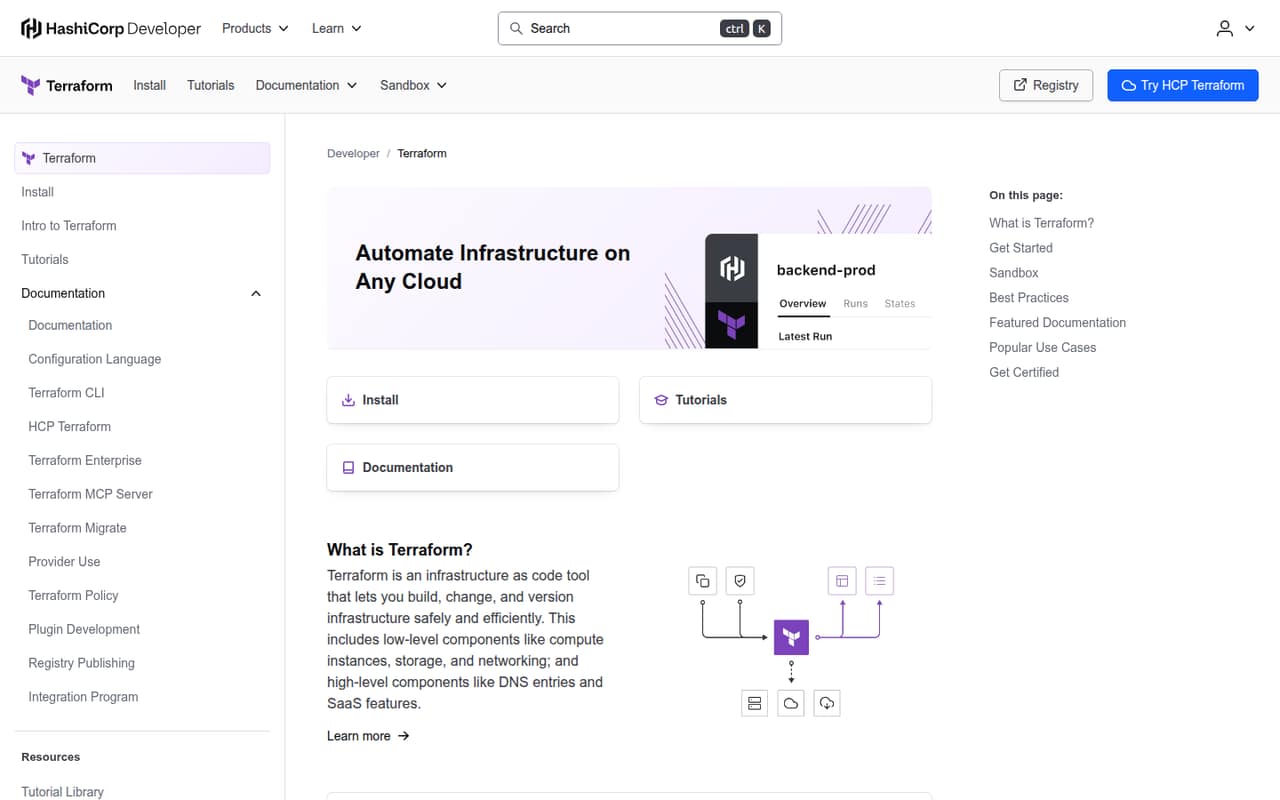
Terraform is the broadest starting point in this group for teams managing cloud infrastructure as code. Its CLI handles infrastructure definitions, while HCP Terraform adds hosted team workflows. The listed starting figure is $0.10 and a free plan is listed; confirm the billing unit and expected cost at your run volume before planning a budget.
What works
- Defines compute, storage, networking, DNS and SaaS infrastructure
- CLI supports configuration-based infrastructure workflows
- HCP Terraform supports team collaboration
What doesn't
- Free HCP plan caps usage at 500 managed resources
- Free plan permits one concurrent run
- Paid plans bill by hourly peak managed resources
- Best for Terraform teamsScalrScalr
Scalr is aimed at teams replacing Terraform Cloud, running GitOps workflows with Terraform, or tracking drift across workspaces. Its per-run pricing avoids charging by users, resources, or concurrency, which may suit teams whose usage varies. Pricing starts at $0.99, with a free plan listed; model your run volume and verify which workflows are included.
What works
- Free plan includes up to 50 monthly runs
- No charge for users, resources or concurrency
- Self-hosted agents included at no extra cost
What doesn't
- Business run charges grow with usage
- Annual Business prices are not published
- Enterprise pricing is custom
- Best for software teamsPulumiPulumi
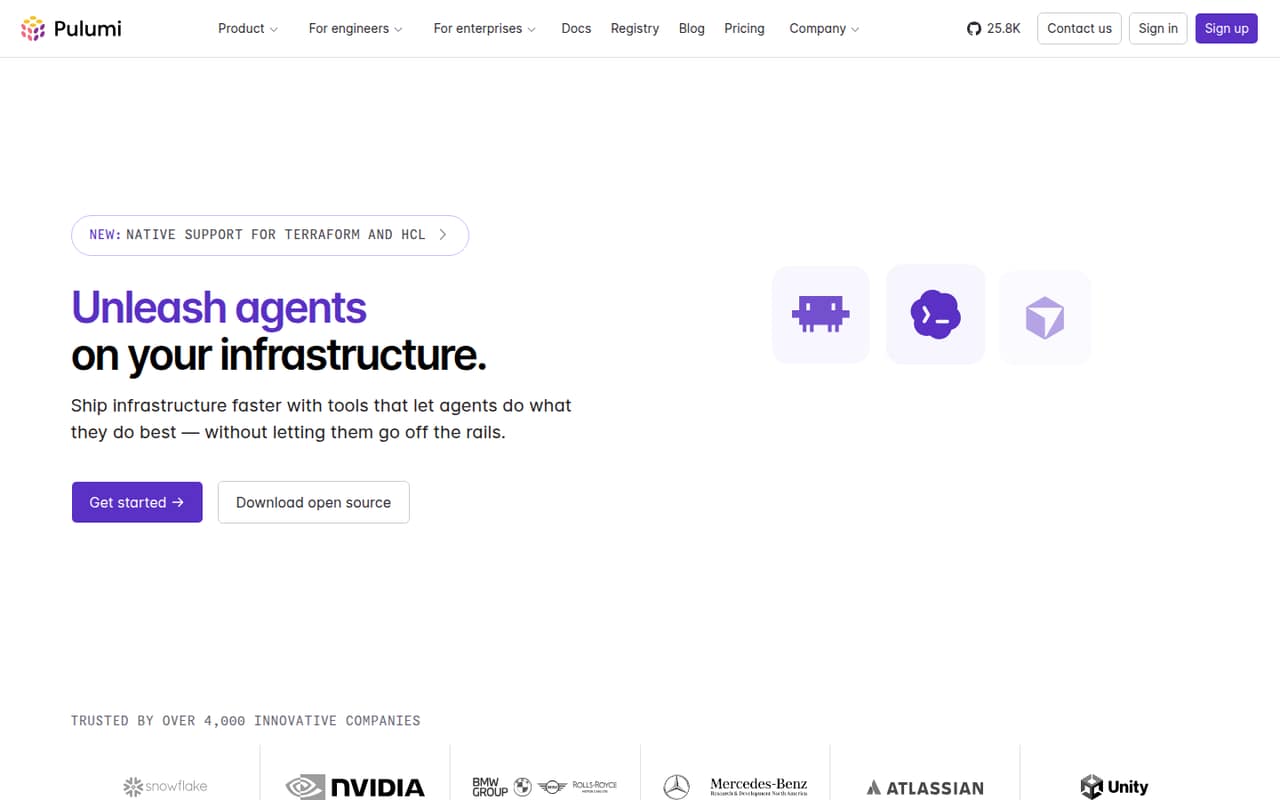
Pulumi fits teams with software engineering skills that want reusable, programmatic infrastructure and policy governance. It is open source, and the listed starting price is $40 with a free plan. Set language standards across teams before adopting it, then check how pricing scales with your usage and what the vendor's API, SDK, and deployment options cover.
What works
- Supports TypeScript, Python, Go, .NET, Java, YAML and HCL
- Reusable components can be shared through package managers
- Governance includes policy as code and audit trails
What doesn't
- Programming-language flexibility can invite over-engineering
- Code dependencies add supply-chain review work
- Usage charges can extend beyond plan prices
- Best for platform teamsSpaceliftSpacelift
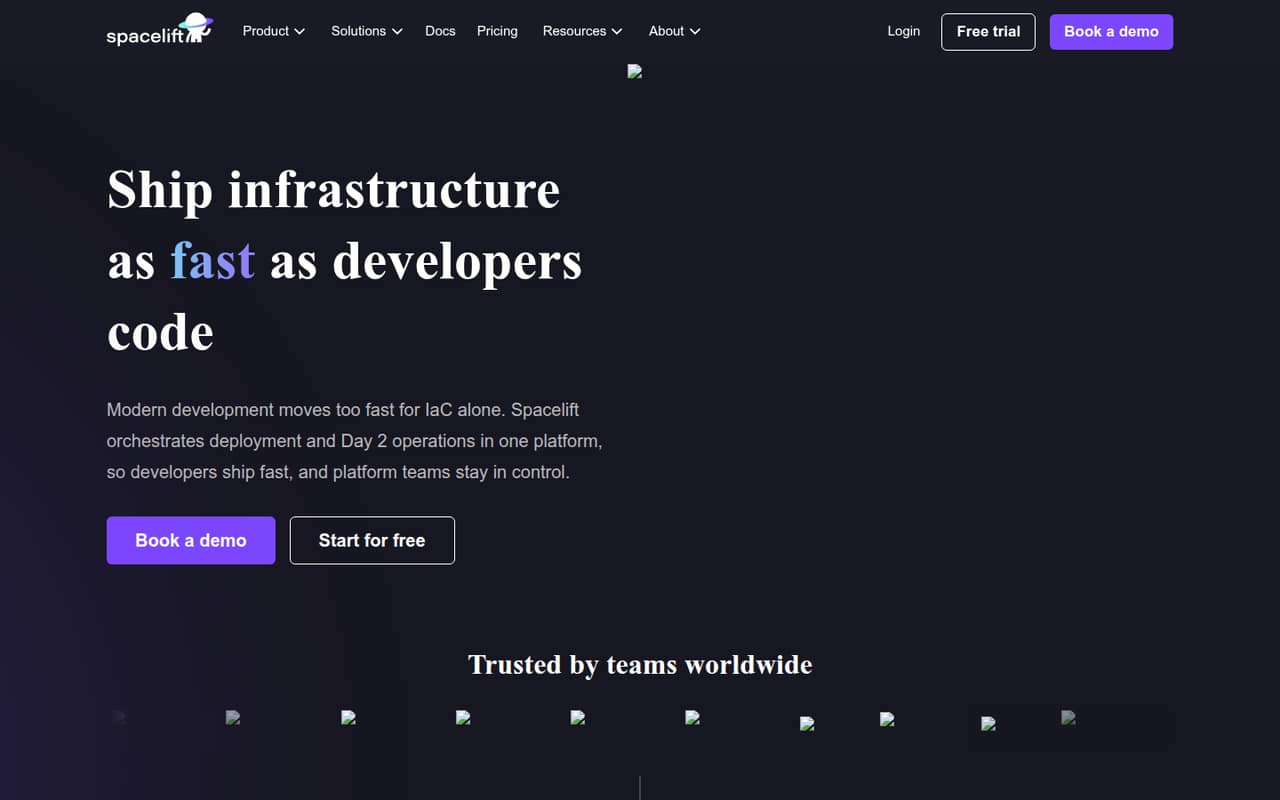
Spacelift coordinates IaC and Day 2 work, with a fit for platform teams standardizing many stacks and applying policy guardrails. It is listed as self-hostable. Pricing starts at $399, and a free plan is also listed, so confirm plan eligibility, deployment costs, and the integrations your teams need before scaling.
What works
- Orchestrates Terraform, OpenTofu, CloudFormation, Pulumi, Kubernetes and Ansible
- Combines deployment workflows with Day 2 automation
- OPA-based policies cover plans, approvals and notifications
What doesn't
- The vendor doesn't publish a clear API or SDK overview on its homepage
- Starter is the only paid plan with a published price
- Free is limited to two users and one API key
- Best open sourceSaltSalt
Salt is an open-source automation framework for teams managing remote systems with states, grains, and pillars. It is a fit when system management and automation are central requirements. Confirm deployment details and any commercial costs before rollout, and check that its operating model matches your infrastructure workflow rather than assuming it replaces every IaC platform.
What works
- Open-source automation framework
- Combines remote execution and configuration management
- Supports infrastructure orchestration
What doesn't
- Commercial plans and starting price are unclear
- No published usage or overage rates
- Language and SDK support require verification
- Best for self-serviceQualiQuali
Quali's Torque brings hybrid-cloud asset discovery, governed self-service provisioning, and operations together for platform teams. It is listed as self-hostable, with pricing from $19 and a free plan. Verify which integrations and deployment options your environment requires, and calculate the price for your provisioning and operations workload before standardizing on it.
What works
- Discovers cloud and on-premises assets
- Generates blueprints and normalizes Terraform and Helm
- Adds governance, RBAC and quotas to provisioning
What doesn't
- API protocol and SDK support are not published
- Free-plan limits are not published
- Enterprise pricing requires a sales quote
- Best for configuration driftPuppetPuppet
Puppet is an open-source, self-hostable option for enforcing node configuration, supporting audit requirements, and correcting configuration drift. That makes it a candidate for persistent configuration management rather than only provisioning new resources. Check the learning curve and deployment model, and request custom pricing before treating it as a low-cost choice.
What works
- Automatically restores nodes to desired configuration
- Distinguishes planned changes from configuration drift
- Run reports show detected changes and actions
What doesn't
- Custom pricing applies at 25 or more nodes
- Monthly prices are not published
- Public API, SDK, and CLI details are sparse
- Best for enterprise AnsibleRed Hat Ansible Automation PlatformRed Hat Ansible Automation Platform
Red Hat Ansible Automation Platform suits teams standardizing enterprise Ansible, curating private collections and execution environments, or centralizing automation controls. Pricing is not listed here, so request a quote and clarify the deployment and operating requirements. Factor in that complexity alongside the controls your organization needs before choosing it over a simpler automation setup.
What works
- Designed to manage automation across the enterprise
- Reddit users cite an API for job templates
- Automation Hub can curate private collections
What doesn't
- Red Hat does not publish a starting price
- Seat and usage limits are not published
- Reddit users report substantial complexity
- Best for agent workflowsFacetsFacets
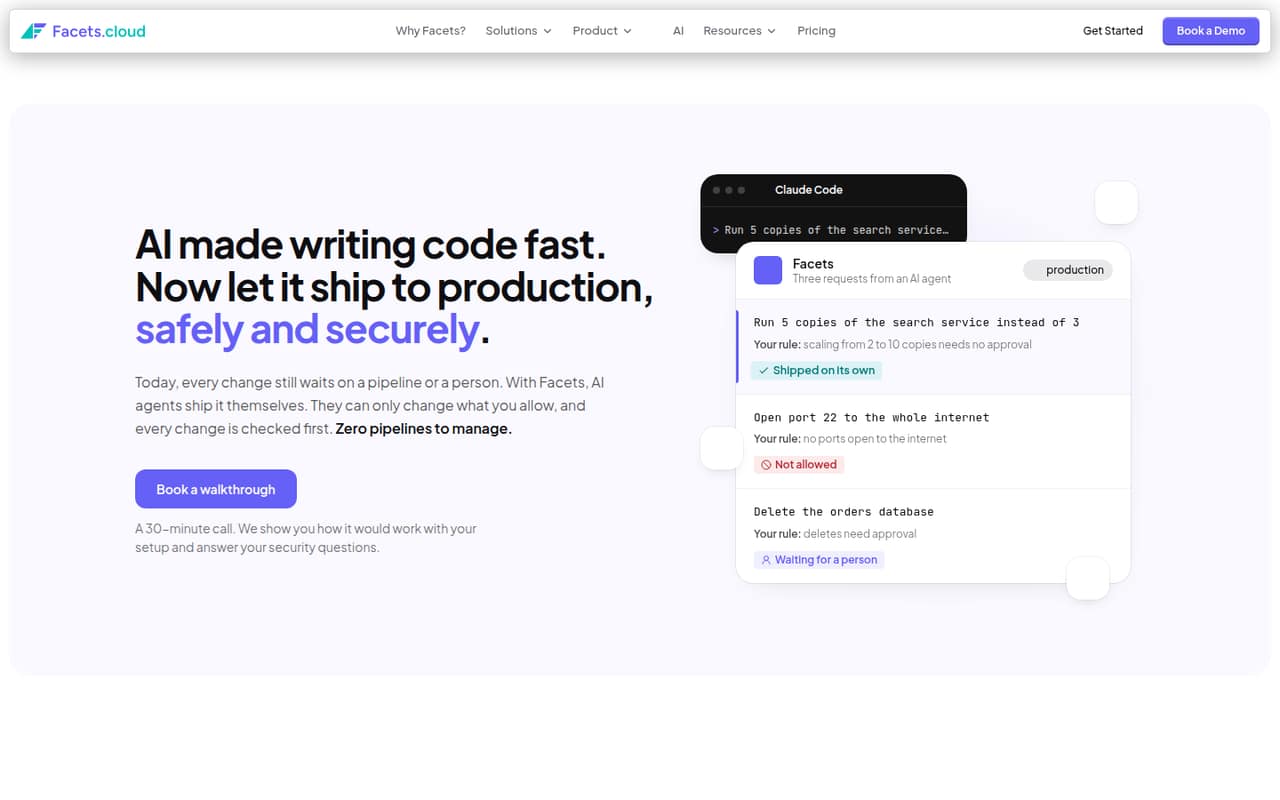
Facets is positioned for platform teams governing AI agents, standardizing infrastructure contracts, and automating release handoffs. Its contract-checked infrastructure changes may fit teams building that workflow, but the $799 monthly entry price sets a high bar. It is listed as self-hostable; verify what the price includes and whether the deployment model fits your stack.
What works
- Checks agent requests against reusable contracts
- Supports human approval for selected actions
- Coordinates infrastructure through monitoring in one release
What doesn't
- SaaS starts at $799/month
- No free plan; trial lasts 14 days
- Additional Resource Instances add monthly costs
03How we chose
We ranked tools by fit for developers and technical teams: how they map to infrastructure workflows, the API and SDK coverage and documentation teams should verify, and whether pricing is understandable at expected usage. We also considered listed free plans, open-source status, and self-hosting options, since those affect adoption and operating costs. Reddit sentiment is a secondary signal for identifying operational concerns, not a substitute for vendor documentation. We did not run tests or benchmarks; check current vendor terms and ask for details where your architecture depends on them.
04Check the integration and operating model
Start with the job you need the tool to do. Terraform and Pulumi target infrastructure defined through code; Salt and Puppet focus on system or node configuration automation. Spacelift and Scalr add hosted coordination or workflow management around IaC, while Quali and Facets target governed provisioning and platform workflows. Those categories overlap, but they are not interchangeable.
Map the product to your existing code review, CI/CD, cloud, and identity setup. Confirm the API and SDKs you need, along with documentation for authentication, state, policy, and error handling. For self-hosted products, ask what you must operate and maintain. For hosted services, clarify data export, recovery, and what happens to state and workflows if you leave. Get these answers before making the tool a dependency in deployment pipelines.
05Model the bill and lock-in before rollout
Compare costs against your workload, not just a starting price. Run-based pricing, per-team or per-stack terms, and usage charges can produce different bills as infrastructure and automation volume change. The listed entry figures range from $0.99 for Scalr to $799 per month for Facets, but confirm each product's billing unit, included usage, and overage terms. A listed free plan does not establish that every feature or team size is included.
Check open-source licensing and self-hosting separately: open-source status does not automatically mean every hosted feature is free, and self-hosting still carries operating costs. Before adoption, test the exit path on paper: can you export infrastructure definitions, state, policies, and run history in usable formats? Ask vendors what remains accessible after cancellation, and include migration work in the cost comparison.
Questions people ask
Which infrastructure as code tool is best overall?
Terraform is our overall pick for teams managing cloud infrastructure as code. It has a CLI, with hosted team workflows available through HCP Terraform. Teams replacing Terraform Cloud may prefer Scalr; teams wanting reusable, programmatic infrastructure may prefer Pulumi.
Which infrastructure as code tools are open source?
Salt, Pulumi, and Puppet are listed as open source. Their roles differ: Salt and Puppet focus on automation and configuration management, while Pulumi targets programmatic infrastructure. Check the applicable license and whether any required hosted features have separate terms.
How much do infrastructure as code tools cost?
Listed starting figures range from $0.99 for Scalr to $799 per month for Facets. Terraform, Pulumi, Spacelift, Quali, and Salt also list free plans. Confirm billing units, included usage, and overages with each vendor before estimating total cost.
Can infrastructure as code tools be self-hosted?
Spacelift, Facets, Quali, and Puppet are listed as self-hostable. Self-hosting adds operational responsibility, so ask about deployment requirements, upgrades, support, and what features differ from hosted plans before choosing that route.