We may earn a commission if you buy through links on this page. It never changes a score or a ranking. How we make money
Twilio is our best overall pick for teams that need messaging, voice, email and identity APIs in one platform. For real-time products, LiveKit and Daily are stronger fits: both are listed as open source, while Daily adds hosted WebRTC infrastructure and Pipecat support. Telnyx suits teams combining communications with voice AI; Bird is worth considering for multi-channel messaging and self-hosting. Starting prices are not a production cost estimate: usage, channel mix and carrier charges can change the bill. Confirm SDK coverage, limits and data portability before committing.
Quick picksThe shortlist
 TwilioTwilioBest overall · $15/mo
 LiveKitLiveKitBest open source · $50/mo
 DailyDailyBest for WebRTC · Free
 TelnyxTelnyxBest for voice AI · $5,000/mo
 BirdBirdBest for messaging · $15/mo
 SignalWireSignalWireBest for call flows · Custom
 Vonage Communications APIsVonage Communications APIsBest for voice and video · $10.49/mo
 AblyAblyBest for realtime delivery · $29/mo
 AgoraAgoraBest for embedded media · Free
01Compared at a glance
| Tool | Score | From | Free plan | Trial |
|---|---|---|---|---|
| TwilioTwilio | 7.3 | $15/mo | Yes | 14 days |
| LiveKitLiveKit | 8.1 | $50/mo | Yes | — |
| DailyDaily | 7.7 | Free | Yes | — |
| TelnyxTelnyx | 7.8 | $5,000/mo | Yes | — |
| BirdBird | 7.2 | $15/mo | Yes | — |
| SignalWireSignalWire | 7.0 | Custom | No | — |
| Vonage Communications APIsVonage Communications APIs | 5.0 | $10.49/mo | No | — |
| AblyAbly | 7.4 | $29/mo | Yes | — |
| AgoraAgora | 6.7 | Free | Yes | — |
02The picks, in detail
- Best overallTwilioTwilio
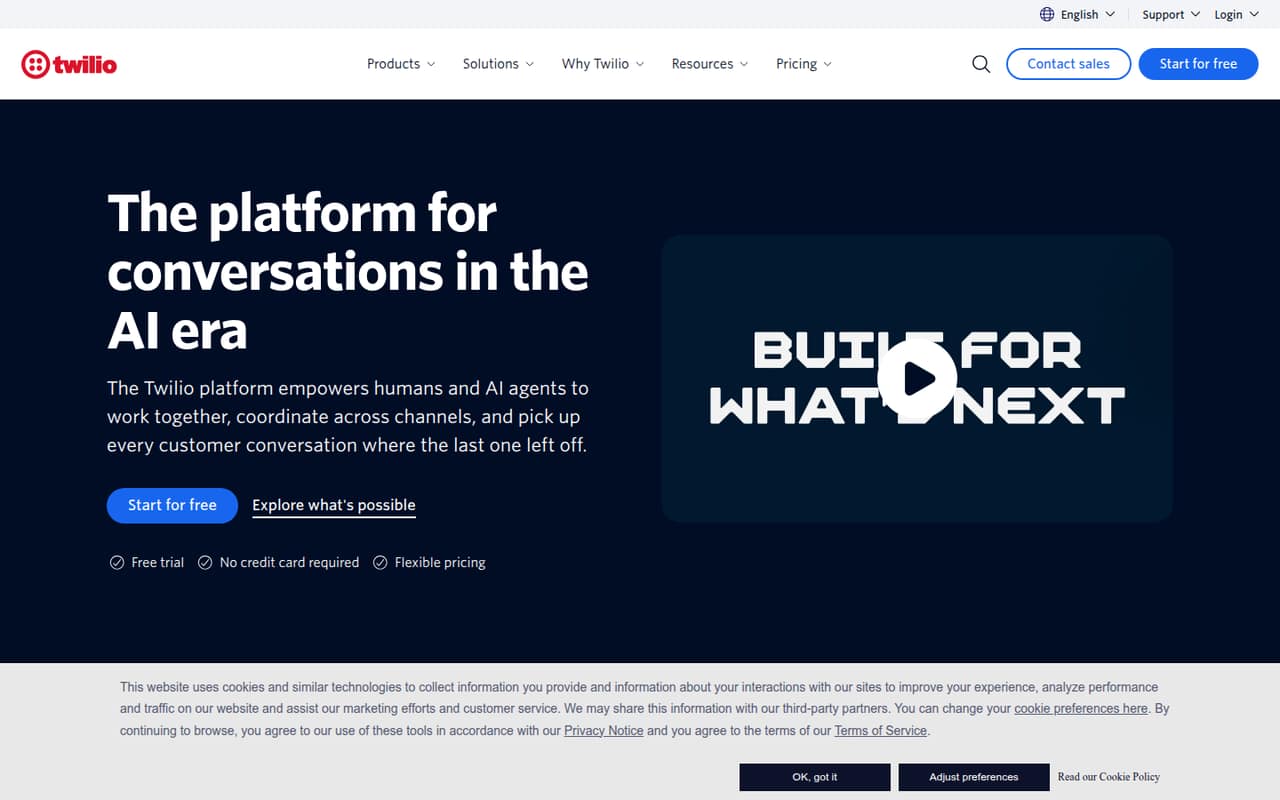
Twilio covers messaging, voice, email and identity APIs, making it a practical starting point for teams building several communication workflows. The listed starting price is $15, with a free plan. Production costs and carrier rules need attention, so model each channel and verification flow separately before estimating spend.
What works
- Messaging, voice, email and verification APIs
- Official server-side SDKs for six languages
- cURL example for direct API requests
What doesn't
- No general free allowance across all products
- Costs vary by product and usage
- Rate limits are not published on the homepage
- Best open sourceLiveKitLiveKit
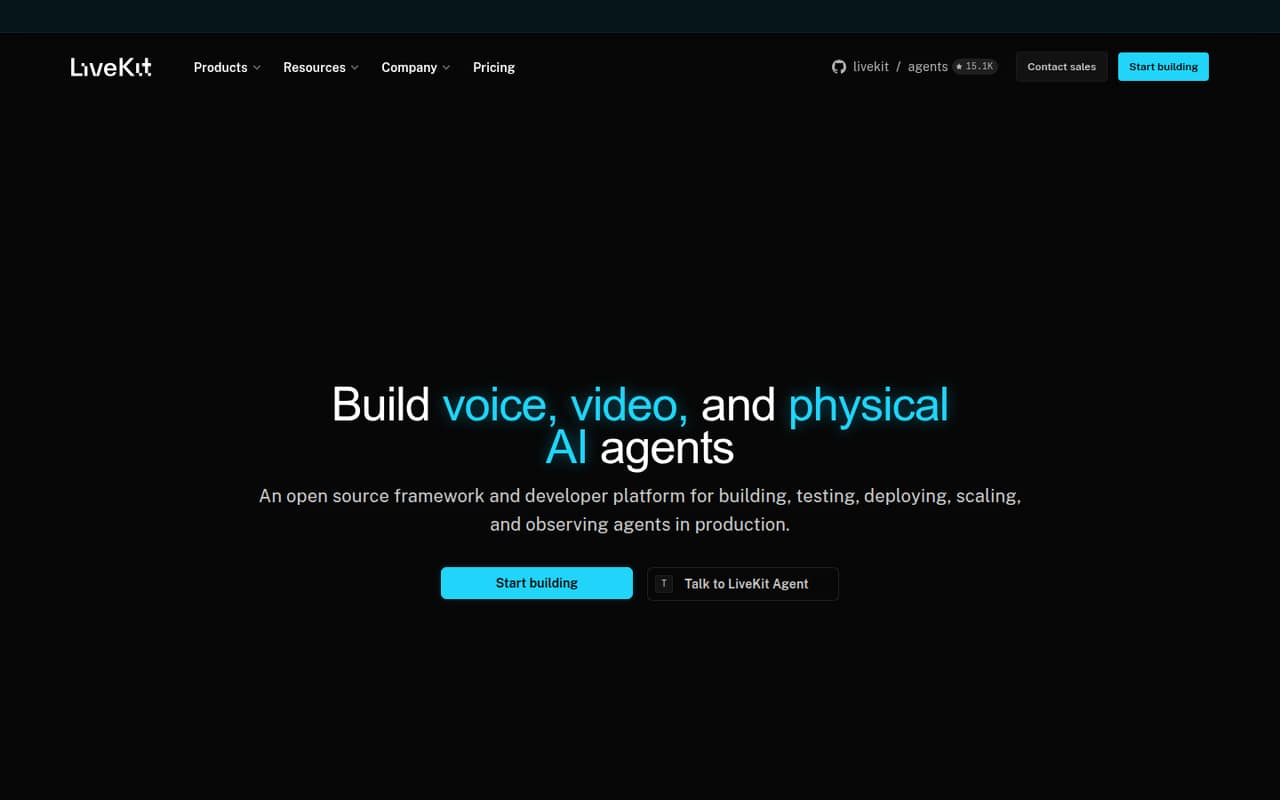
LiveKit is listed as open source and fits teams building real-time AI agents, voice and telephony products. Its model flexibility is useful when you want control over the agent stack. The listed starting price is $50 with a free plan; account for costs beyond session minutes when estimating production usage.
What works
- Open-source agent framework with customizable behavior
- Supports voice, video and physical AI agents
- Model gateway covers TTS, LLM and STT
What doesn't
- Production costs can span many usage categories
- Ship includes only 20 concurrent agent sessions
- Model prices vary by model and plan
- Best for WebRTCDailyDaily
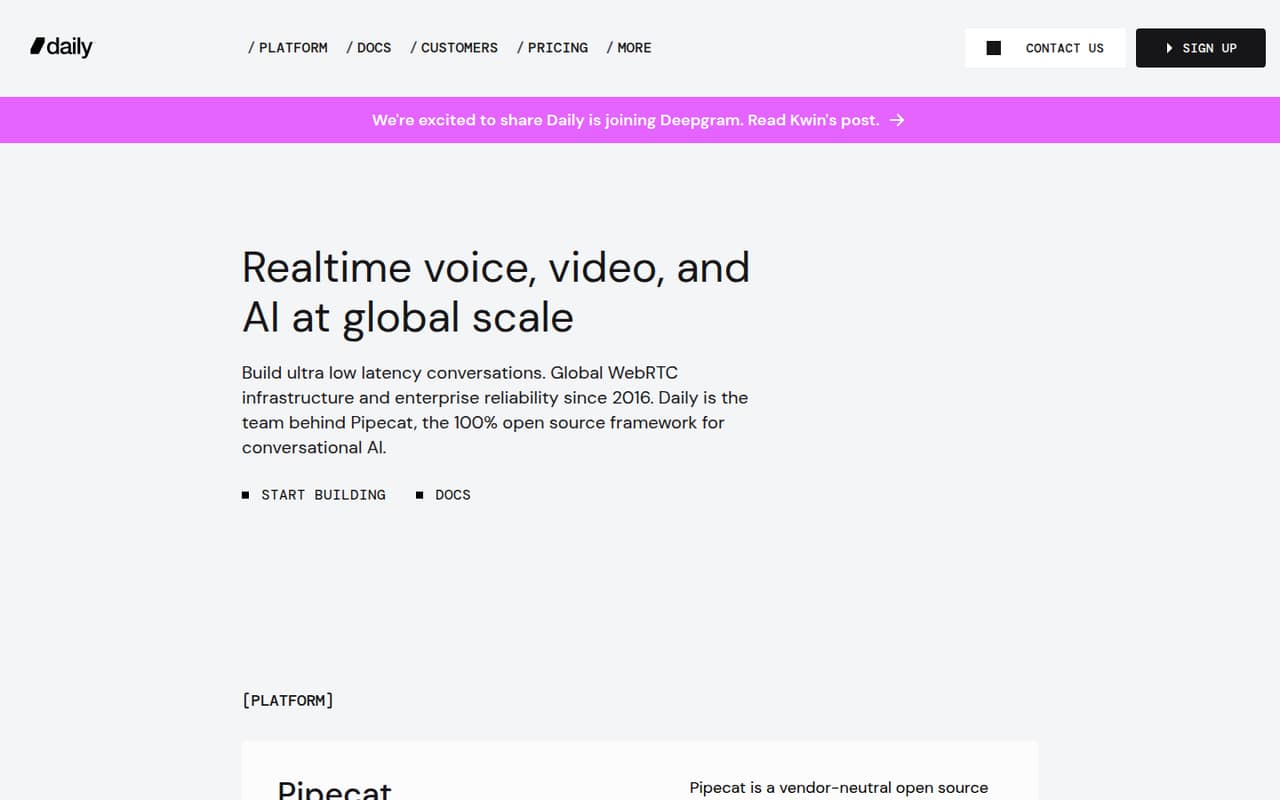
Daily combines hosted WebRTC infrastructure with Pipecat, making it a fit for real-time calls and deployed agents. It is listed as open source, with a free plan and a $0 starting price. Production costs scale by participant-minutes, so estimate call duration and concurrency rather than relying on the free tier.
What works
- WebRTC-native SDKs for realtime calls
- Pipecat is vendor-neutral and open source
- 10,000 free participant minutes each month
What doesn't
- Homepage does not name SDK languages
- Pipecat's license is not named on the homepage
- Self-hosting and data export details need confirmation
- Best for voice AITelnyxTelnyx
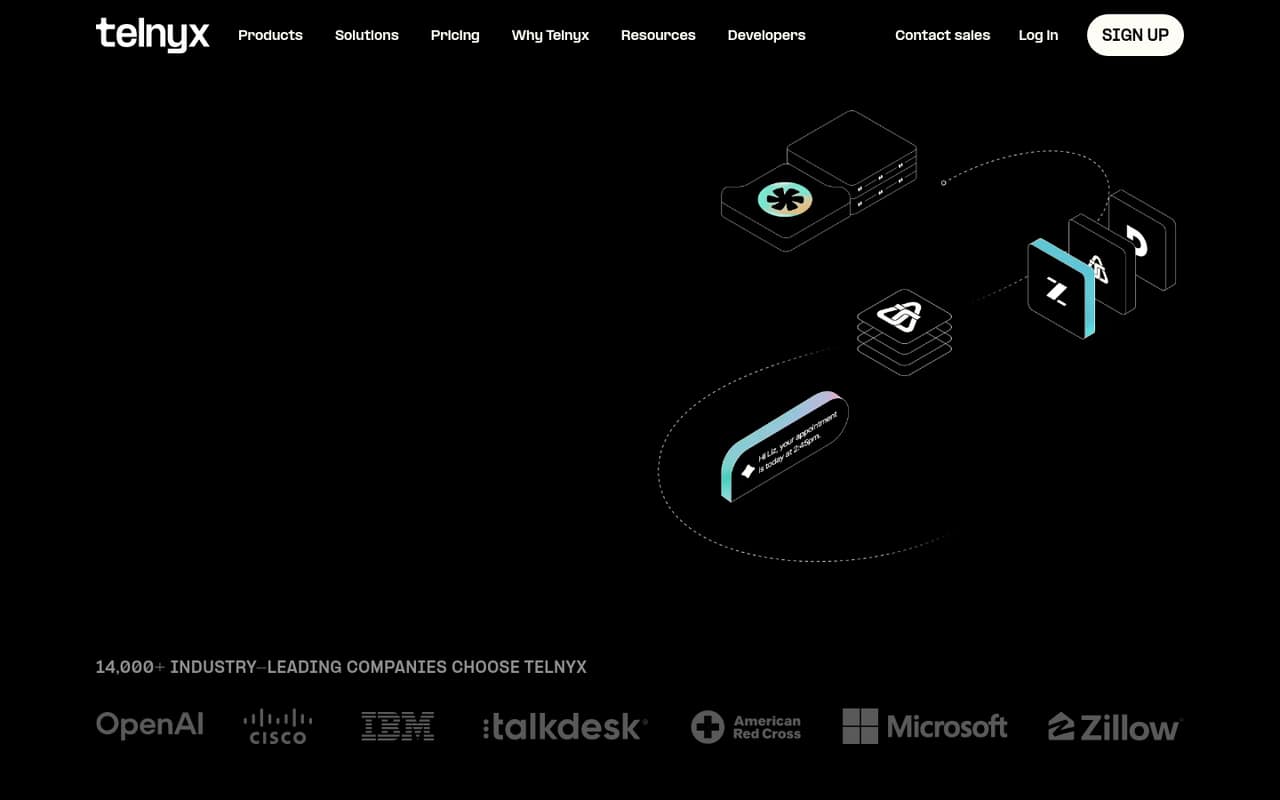
Telnyx combines carrier APIs, an edge runtime and hosted inference for teams building voice AI agents or pairing communications with inference. It is listed from $0. Usage affects costs, so map the full call and inference path before projecting spend. Consider it when deploying at Telnyx PoPs is relevant to your architecture.
What works
- OpenAI-compatible inference works with an existing SDK client
- Streaming, tool calling and structured outputs are supported on models
- Communications APIs run on a licensed carrier network
What doesn't
- There is no free plan or free trial
- The platform is not offered as self-hosted software
- Standard inference rate limits are not published
- Best for messagingBirdBird
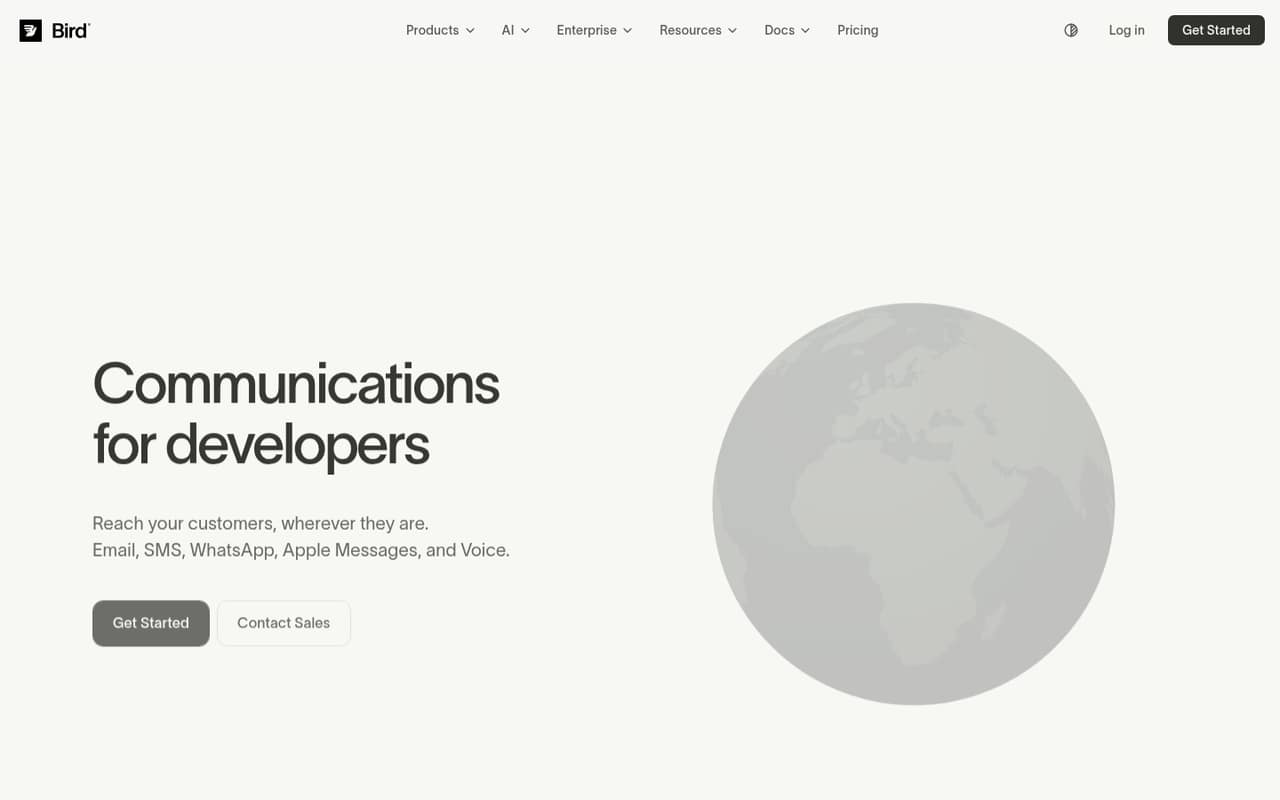
Bird brings multiple messaging channels into a hosted API and is listed as self-hostable. Its developer surfaces include REST, CLI and MCP, plus delivery-event handling. The listed starting price is $15 with a free plan. Review channel-specific budgets and limits before routing production traffic through it.
What works
- One workspace covers email, SMS, WhatsApp, Apple Messages and voice
- SDKs listed for Node.js, Python, Go and PHP
- CLI, MCP and REST integration surfaces
What doesn't
- Rate limits and free-tier limits are not published
- SMS carrier and WhatsApp Meta fees are separate
- Usage pricing varies by channel and destination
- Best for call flowsSignalWireSignalWire
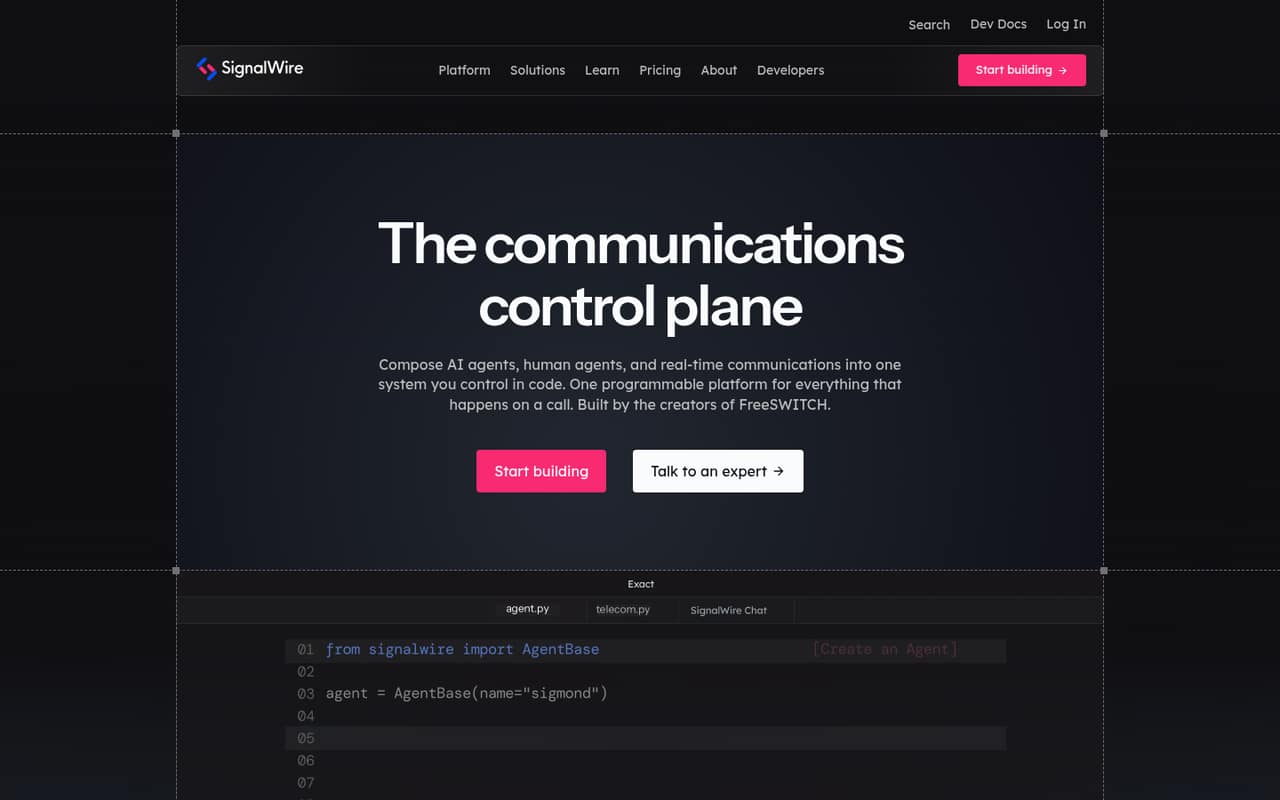
SignalWire is a programmable voice, messaging and AI control plane for teams coding call-routing flows or building voice agents. Its listed pricing is usage-based, with transport costs on top; a starting price is not listed. Include both platform usage and transport in your cost model, and confirm production limits before rollout.
What works
- Voice, video, messaging and AI share one control plane
- SWML defines flows in JSON or YAML
- REST APIs cover calls, SMS and number provisioning
What doesn't
- No free plan is listed
- Voice transport is billed separately from AI runtime
- SDK languages and specific SDKs need confirmation
- Best for voice and videoVonage Communications APIsVonage Communications APIs
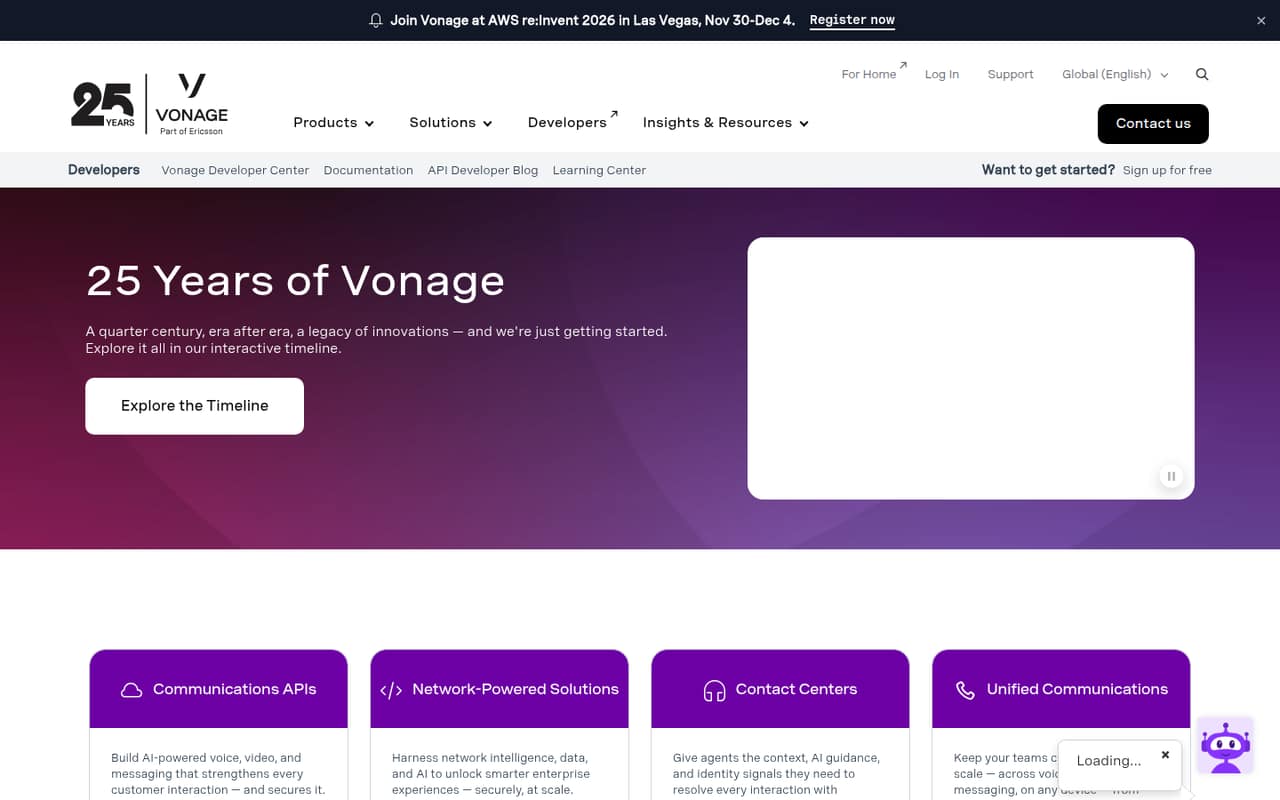
Vonage Communications APIs are a fit for products adding voice, video and messaging to customer workflows, with network-powered security also among its use cases. The listed starting price is $10.49. Confirm API pricing and production limits with Vonage before choosing it for a workload where call volume or channel mix drives cost.
What works
- Voice, video and messaging APIs cover core communications channels
- Branded communications are positioned across channels
- Network intelligence is part of the product proposition
What doesn't
- Published prices are for Business Communications, not APIs
- API free-tier availability and limits are not established
- Homepage does not name SDK languages or API protocols
- Best for realtime deliveryAblyAbly
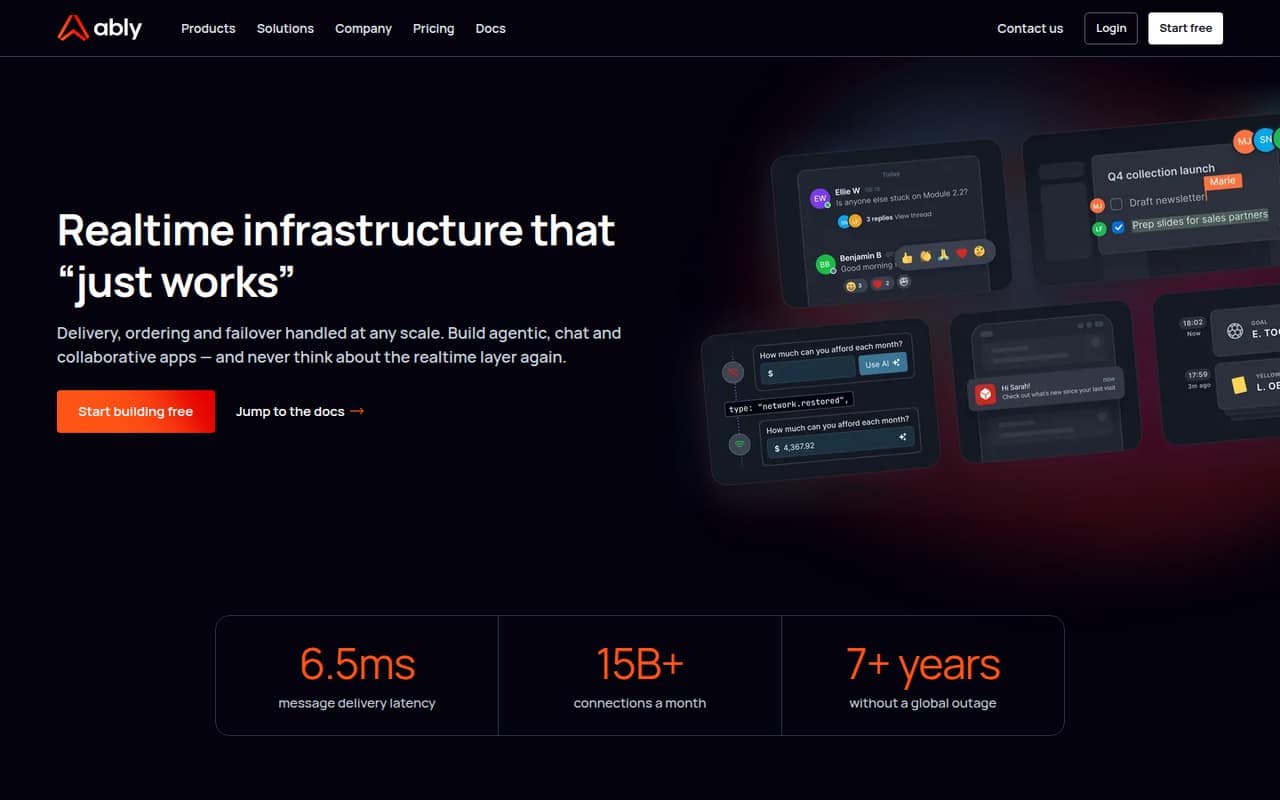
Ably is a hosted realtime API for apps that need managed delivery and sync, including chat, collaboration and live AI sessions. It suits teams that would rather use managed infrastructure than operate realtime delivery themselves. The listed starting price is $29 with a free plan; check usage costs and the hosted-service dependency.
What works
- Products cover Pub/Sub, chat, AI transport and state sync
- SDKs span JavaScript, Python, Java, Go and more
- Integrations include Kafka, AMQP and cloud functions
What doesn't
- MAU overage pricing is not published
- Paid plans require annual billing
- No self-hosting option is described
- Best for embedded mediaAgoraAgora
Agora fits apps embedding voice and video, as well as teams adding conversational AI features, analytics or recording. A free plan is listed, but no starting price is provided. Review usage costs and hosting terms for your expected session pattern, and verify the deployment model against your data and operational requirements.
What works
- RTC, chat, signaling and conversational AI products
- SDK quickstarts and API Reference
- 10,000 monthly Standard minutes on the free RTC plan
What doesn't
- Paid RTC rates aren't published in the pricing details
- Cloud audio recording costs $1.49 per 1,000 minutes
- Free RTC usage is capped at 10,000 Standard minutes monthly
03How we chose
We ranked platforms by fit for engineering teams: the communication surfaces they cover, developer interfaces such as APIs, SDKs, CLI or protocols, and whether the product can fit an existing stack. We considered documentation and SDK coverage as questions to resolve before adoption, not as a substitute for verifying implementation details. Listed starting prices and free plans are not equivalent to production cost; usage pricing, carrier charges and channel limits matter. We also treat Reddit sentiment as a supporting due-diligence signal, not proof of reliability. Open-source status and self-hosting options count where listed.
04Model the production bill, not the entry price
A listed starting price or free plan tells you little about the cost of a live communications workload. Estimate usage by channel: message volume, call duration, video participant-minutes, verification events and any inference or transport charges. Daily’s production costs scale by participant-minutes; SignalWire lists usage-based billing with transport costs on top; Telnyx ties costs to usage. Those models need different estimates. Ask vendors for the rate card that matches your destination countries, message types, number needs and expected concurrency. Include carrier fees, number rental, recording, support and overage rules where applicable. Then test the estimate against a low-volume launch and a traffic spike. Free tiers can help with evaluation, but do not assume they cover production volumes or the same features as a paid deployment.
05Check deployment, limits and exit paths
Before adding a provider to your application, map its role in the stack: does it carry messages, provide hosted WebRTC, route calls, or manage realtime delivery? Confirm the API and SDKs for your languages, authentication and webhook behavior, retry and idempotency guidance, rate limits, and what happens during provider or carrier failures. Ask for documented limits and escalation paths rather than designing around assumptions. Deployment options also affect ownership: LiveKit and Daily are listed as open source, while Bird and EnableX are listed as self-hostable. Verify the applicable licence, which components can run outside the vendor’s cloud, and whether you can export numbers, message records and configuration. Keep channel adapters and provider-specific identifiers behind an internal interface so a later migration does not require rewriting product logic.
Questions people ask
Which communications API platform is best overall?
We rank Twilio best overall because it covers messaging, voice, email and identity APIs. It is a reasonable fit for products spanning several communication workflows. Compare its channel-specific production costs and carrier requirements with your expected usage before choosing it.
Which options are listed as open source?
LiveKit and Daily are listed as open source. That label alone does not establish which components you can self-host or the licence terms for each part. Check the relevant repository and deployment documentation before making an architecture decision.
Can I estimate production cost from the starting price?
Not reliably. Starting prices and free plans are entry points, not a complete usage estimate. Costs can depend on channel, call or participant time, volume, carrier charges and transport. Ask for the rate card that matches your traffic pattern and countries.
What should I verify before using a provider in production?
Confirm supported languages and SDKs, API and webhook behavior, rate limits, failure handling, support terms and channel-specific pricing. Also check deployment choices, data export and number portability. Keep provider-specific details behind an adapter so you can change vendors with less application rework.