We may earn a commission if you buy through links on this page. It never changes a score or a ranking. How we make money
An AI observability platform sits between your application and the models or agents it calls, capturing traces and helping teams evaluate production behavior. For developers already using OpenTelemetry or running their own AI infrastructure, OpenLIT is our first pick: it has a free, Apache 2.0 self-hosted edition. HoneyHive is a strong fit for teams focused on multi-step agent debugging and evaluation. Agenta, Helicone, and Coval address narrower needs, from self-hosting and model routing to voice-agent QA. Check pricing units, SDK coverage, and data export with vendors before committing.
Quick picksThe shortlist
01Compared at a glance
02The picks, in detail
- Best overall
 OpenLITOpenLIT
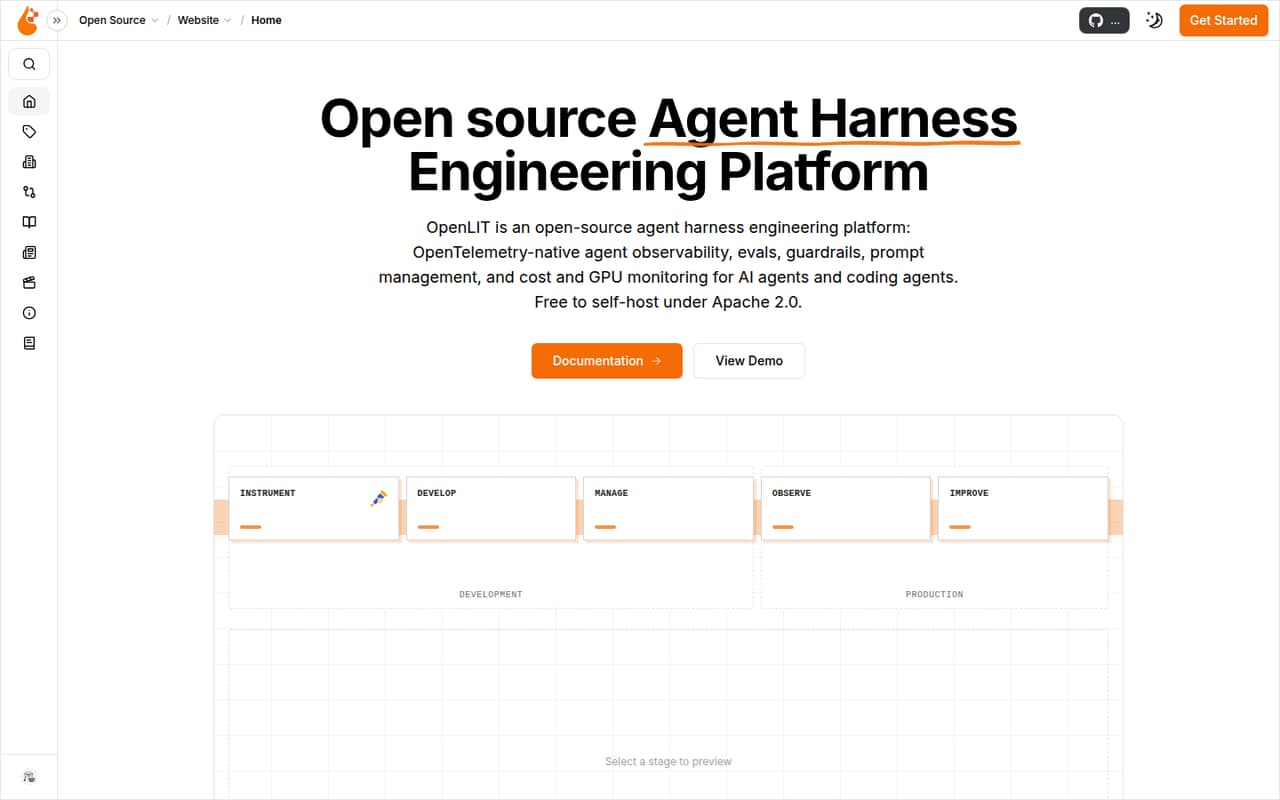
OpenLIT is the strongest fit for teams that want AI observability within an existing OpenTelemetry setup. Its free, Apache 2.0 self-hosted edition suits teams running their own infrastructure, including GPU-backed LLM deployments. Before adopting it, confirm that its current SDKs and integrations cover your application stack and that your team is prepared to operate the self-hosted service.
What works
- Apache 2.0 self-hosting is listed at $0
- No per-trace fee for self-hosted usage
- OTLP traces can go to other backends
What doesn't
- Cloud pricing is not published
- Enterprise pricing requires contacting the vendor
- Rate limits and usage caps are not published
- Best for agent evaluation
 HoneyHiveHoneyHive
HoneyHive is built for debugging multi-step agents, evaluating changes against datasets, and monitoring quality across live traffic. That makes it a good candidate when agent behavior—not just request latency or token cost—is the main problem. It has a free plan, but confirm integration details, production pricing, and how evaluation usage is billed before moving production traffic.
What works
- Step-by-step traces include prompts, tools, decisions and handoffs
- Combines production monitoring with offline experiments
- Evaluations can use LLMs, custom code or composite evaluators
What doesn't
- Language-specific SDKs and API details need confirmation
- Free-plan retention is limited to 30 days
- Enterprise pricing and usage limits are custom

- Best self-hosted coworker
 AgentaAgenta
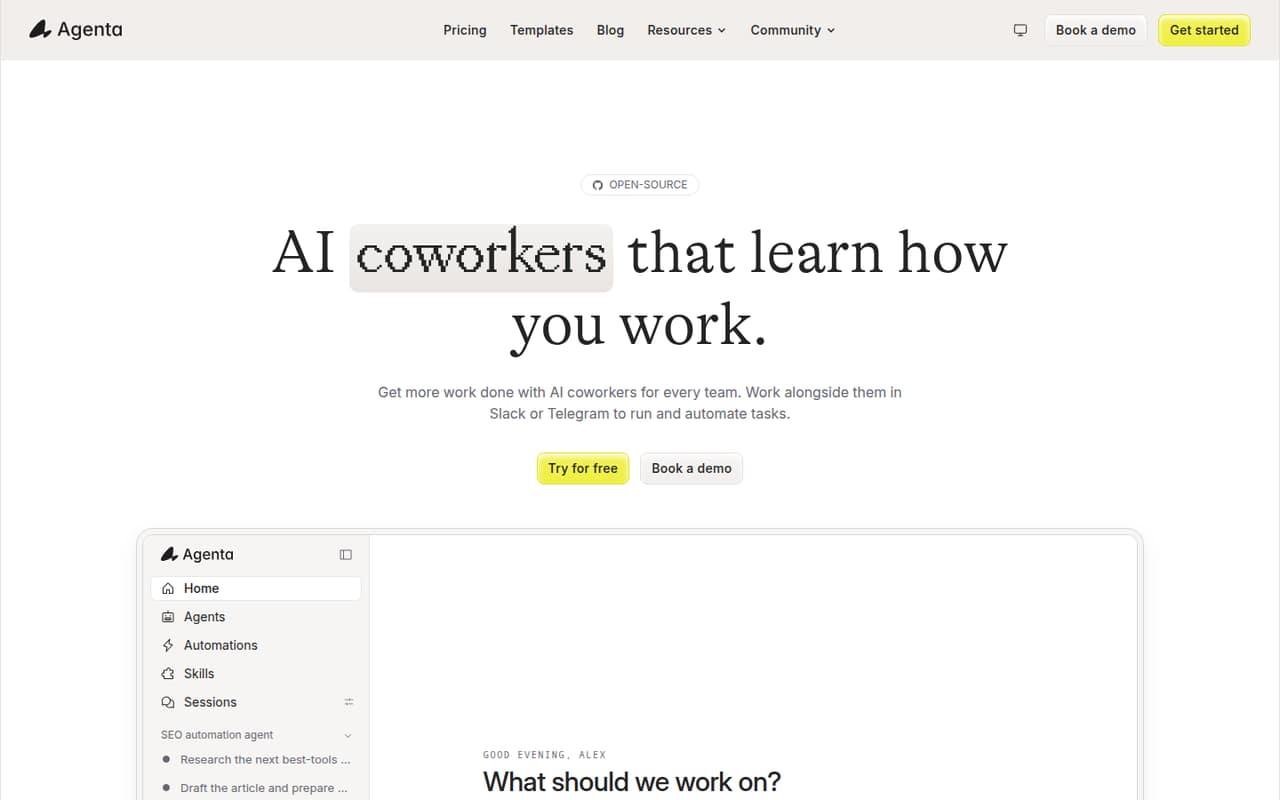
Agenta is a self-hostable AI coworker platform for teams connecting agents to tools or automating work from Slack. It offers a free plan and pricing from $29. The trade-off for a developer-led rollout is limited published detail about its developer interfaces, so verify the API, SDKs, deployment options, and support for your preferred agent framework before building around it.
What works
- MIT-licensed self-hosted option with Docker Compose
- Agents can work in Slack or Telegram
- More than 1,000 integrations are listed
What doesn't
- API, SDK, language and CLI details aren't published
- Cloud credits and concurrency limit usage
- Annual pricing isn't published
- Best for model routing
 HeliconeHelicone
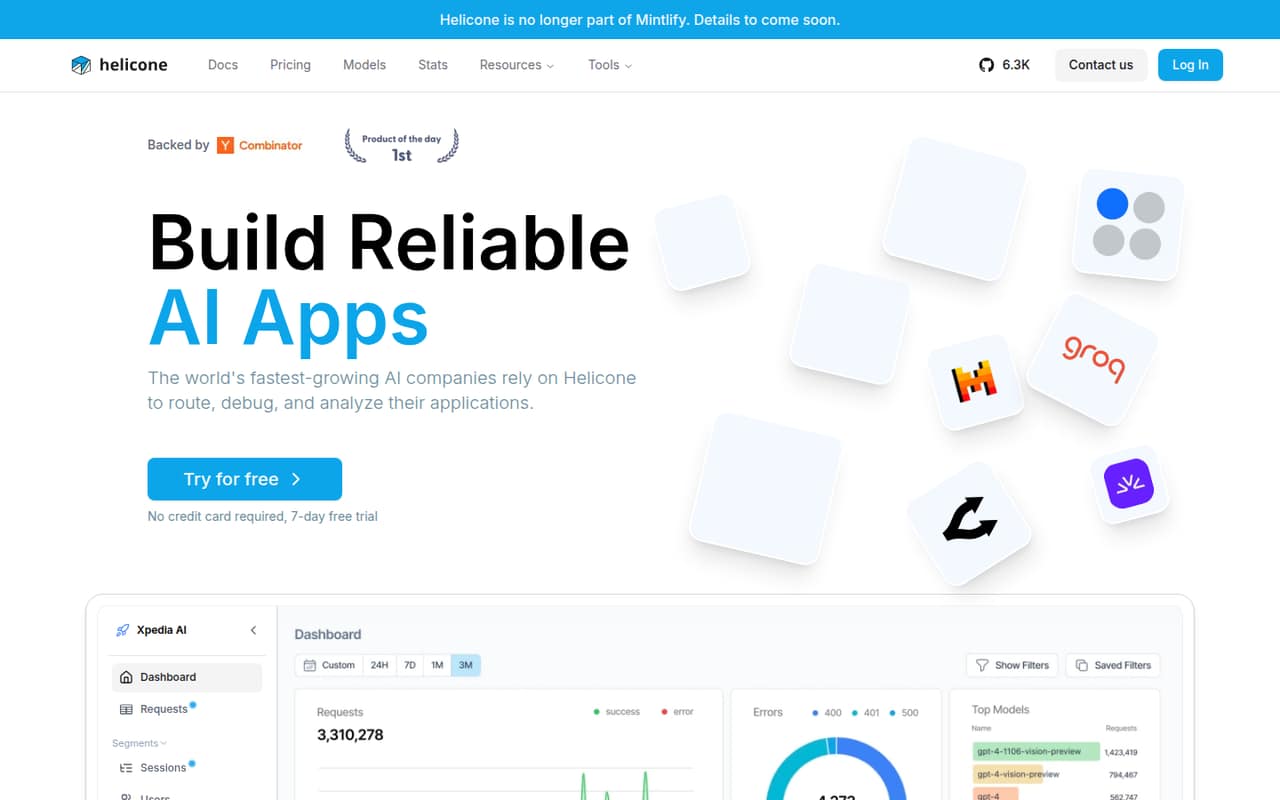
Helicone combines LLM routing with request-level cost visibility, which can help teams that need to switch between model providers and track application spend. It is open source and self-hostable, with a free plan and pricing from $79. The reported maintenance-mode risk is a reason to confirm project status and support expectations before making it a shared production dependency.
What works
- OpenAI-compatible proxy and asynchronous logging
- One API key for access to 100+ models
- Tracks latency, tokens, errors and costs
What doesn't
- Reddit users report a move toward maintenance mode
- Usage and storage overage rates are not published
- Hobby ingestion is limited to 10 logs per minute
- Best for voice agents
 CovalCoval
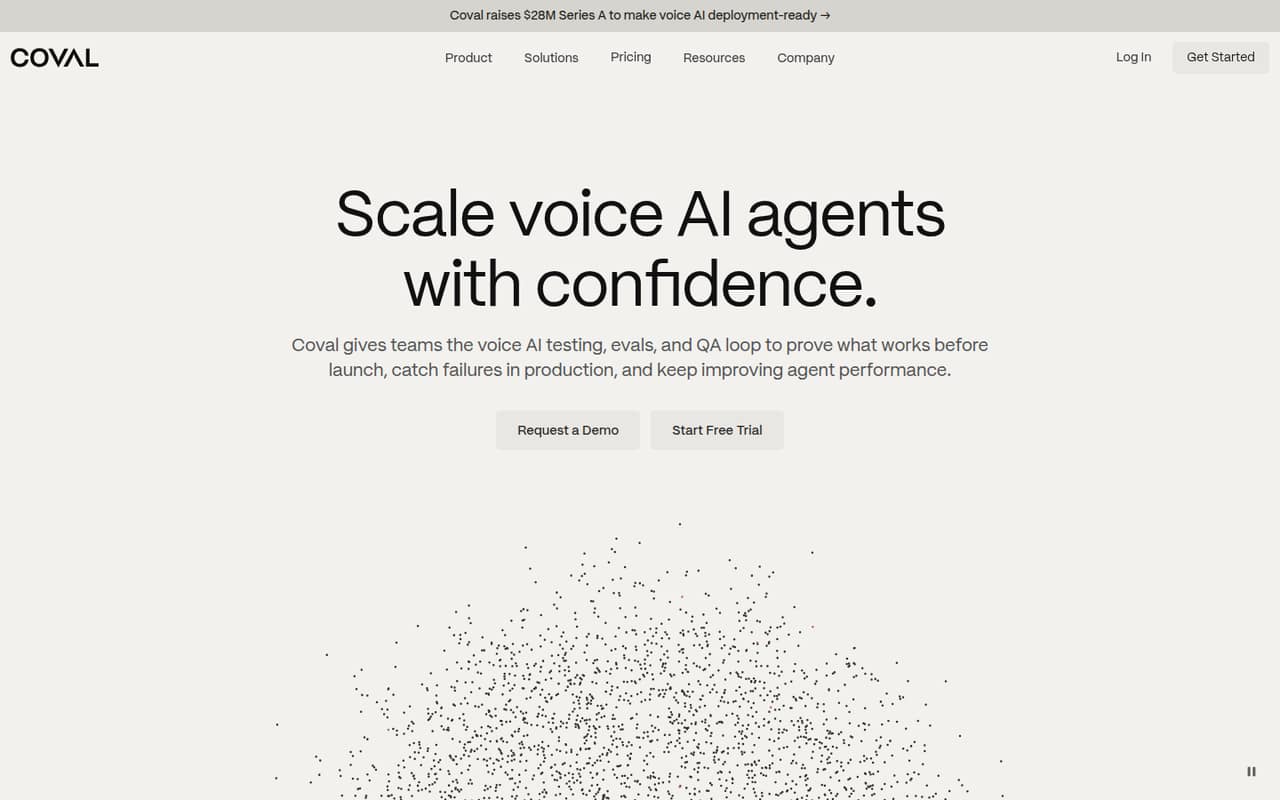
Coval focuses on testing and monitoring voice agents, including QA for policy cases and edge conditions and comparisons across voice-agent vendors. Pricing starts at $80, and teams should budget for usage overages. Before adopting it, check how tests and results can be exported and whether the platform fits your voice stack; portability is a specific point to verify.
What works
- Combines simulation, live evaluation, and human QA
- Supports regression testing across agent changes
- Can compare vendors with the same tests
What doesn't
- No free plan; trial lasts 7 days
- Simulation and upload overages add usage charges
- SDK languages and API details need verification
03How we chose
We ranked these platforms for developer and technical-team fit, weighing their role in an application stack, stated tracing and evaluation capabilities, integration detail, and pricing. We gave additional weight to free access, open-source licensing, and self-hosting where those are stated. Starting prices are not directly comparable without knowing each vendor’s billing units, so we call out where production costs need confirmation. Community reports are a secondary risk signal, not proof of current product status; Helicone’s reported maintenance-mode risk warrants a direct check with the vendor.
04Check the integration path before instrumenting
Start with the data you need to capture: model requests, tool calls, agent steps, evaluations, or voice interactions. Then map that to your application’s languages, frameworks, and deployment model. OpenLIT’s OpenTelemetry-native approach is relevant if your stack already emits OpenTelemetry data; verify the exact instrumentation and export path for your services. HoneyHive is aimed at multi-step agent tracing and dataset-based evaluation, while Coval targets voice-agent testing and monitoring. For Agenta and Helicone, confirm the developer interfaces and integrations that matter to your codebase. Ask each vendor which SDKs, APIs, and protocols are supported, how traces are correlated across services, and whether you can export raw data in a usable format. A dashboard is not a replacement for a clear ingestion and egress path.
05Model the bill and the exit plan
A listed starting price does not tell you what production traffic will cost. OpenLIT has a free Apache 2.0 self-hosted edition; Agenta and Helicone list free plans, with pricing from $29 and $79 respectively. HoneyHive has a free plan, but its production costs need confirmation. Coval starts at $80 and calls for planning around usage overages. Ask what each billable unit is, whether evaluation runs or retained traces add cost, and how volume affects the bill. Also decide who operates self-hosted software, what upgrades require, and how you will export traces, datasets, and evaluation results if you leave. For hosted services, clarify retention, deletion, and data portability. Check support and project status before making any platform a production dependency.
Questions people ask
What is an AI observability platform?
It helps teams inspect and evaluate AI application behavior in production. Depending on the product, that can include traces through multi-step agents, quality monitoring, model-request cost visibility, or tests for voice-agent behavior. Confirm which signals the platform captures for your particular stack.
Which platform is best for self-hosting?
OpenLIT is a strong starting point if you want a free, Apache 2.0 self-hosted edition and already use OpenTelemetry. Agenta and Helicone are also listed as open source and self-hostable. Compare their deployment requirements, maintenance needs, and data-export options before choosing.
How much do AI observability platforms cost?
The listed starting prices are $29 for Agenta, $79 for Helicone, and $80 for Coval. OpenLIT has a free self-hosted edition, and HoneyHive has a free plan. Ask vendors about billing units, usage overages, and production costs before estimating a monthly bill.
What should teams verify before adopting one?
Check SDK and API coverage for your languages and agent framework, the data captured in traces, and whether you can export it. Confirm how evaluation and retention are billed, what self-hosting entails, and what vendor support or project maintenance you can rely on.