We may earn a commission if you buy through links on this page. It never changes a score or a ranking. How we make money
For teams building around Postgres, Supabase is our best overall pick: it pairs a Postgres-backed backend with built-in Auth, while leaving usage costs and service coupling to plan for. Appwrite is the strongest open-source alternative if you need Cloud or self-hosting. Firebase fits teams already oriented around Google Cloud; Convex suits TypeScript apps with live data. PlayFab is purpose-built for games, and Xano targets teams that want managed backend operations. Compare each platform’s API, billing model and exit path against your workload before choosing.
Quick picksThe shortlist
01Compared at a glance
02The picks, in detail
- Best overall
 SupabaseSupabase
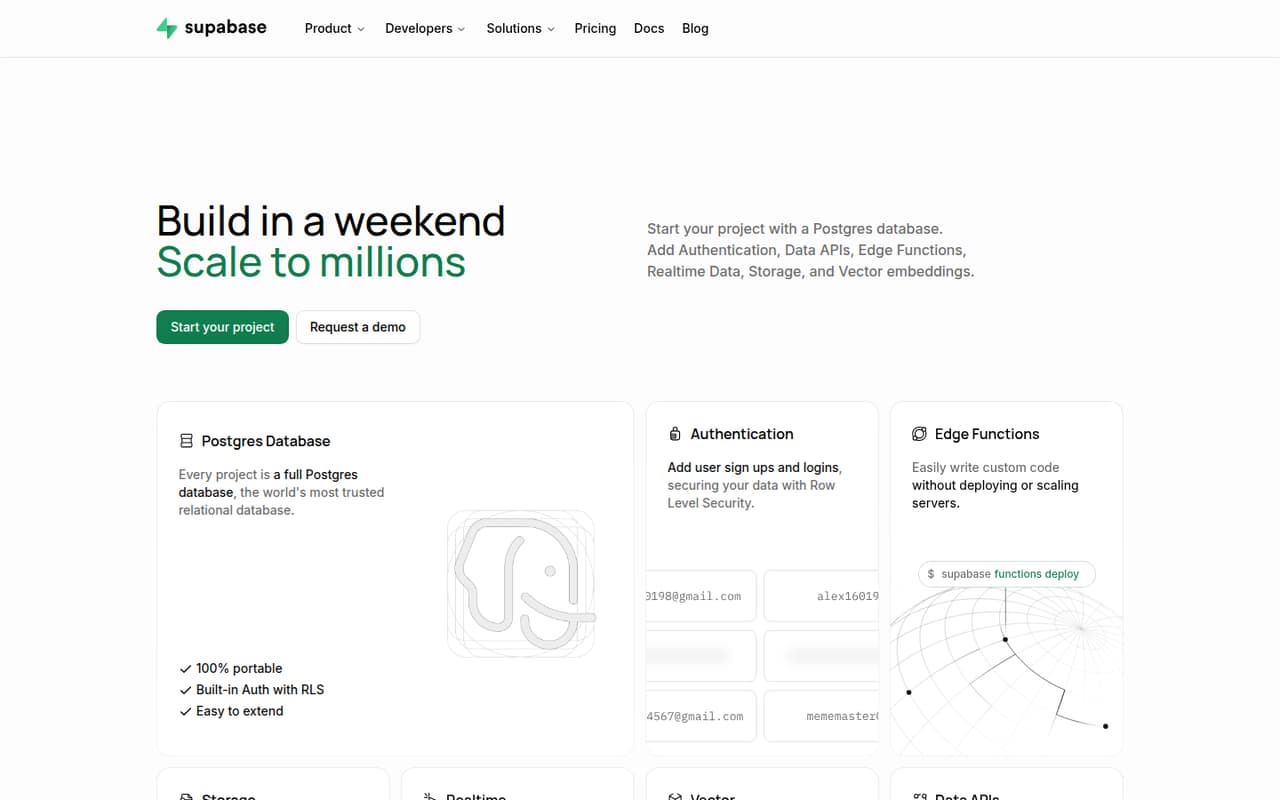
Supabase is a practical default for teams building around Postgres, and built-in Auth can cover small apps without a separate authentication service. The platform is open source and self-hostable, with a listed starting price of $25 and a free plan. Plan for usage costs and coupling to Supabase services; check the API and SDK documentation against your stack before moving production data.
What works
- Full Postgres database at the center
- Built-in Auth with Row Level Security
- REST APIs are ready to use
What doesn't
- Free projects pause after one inactive week
- Egress and storage add to production bills
- Auth migration can involve password-reset constraints
- Best open source
 AppwriteAppwrite
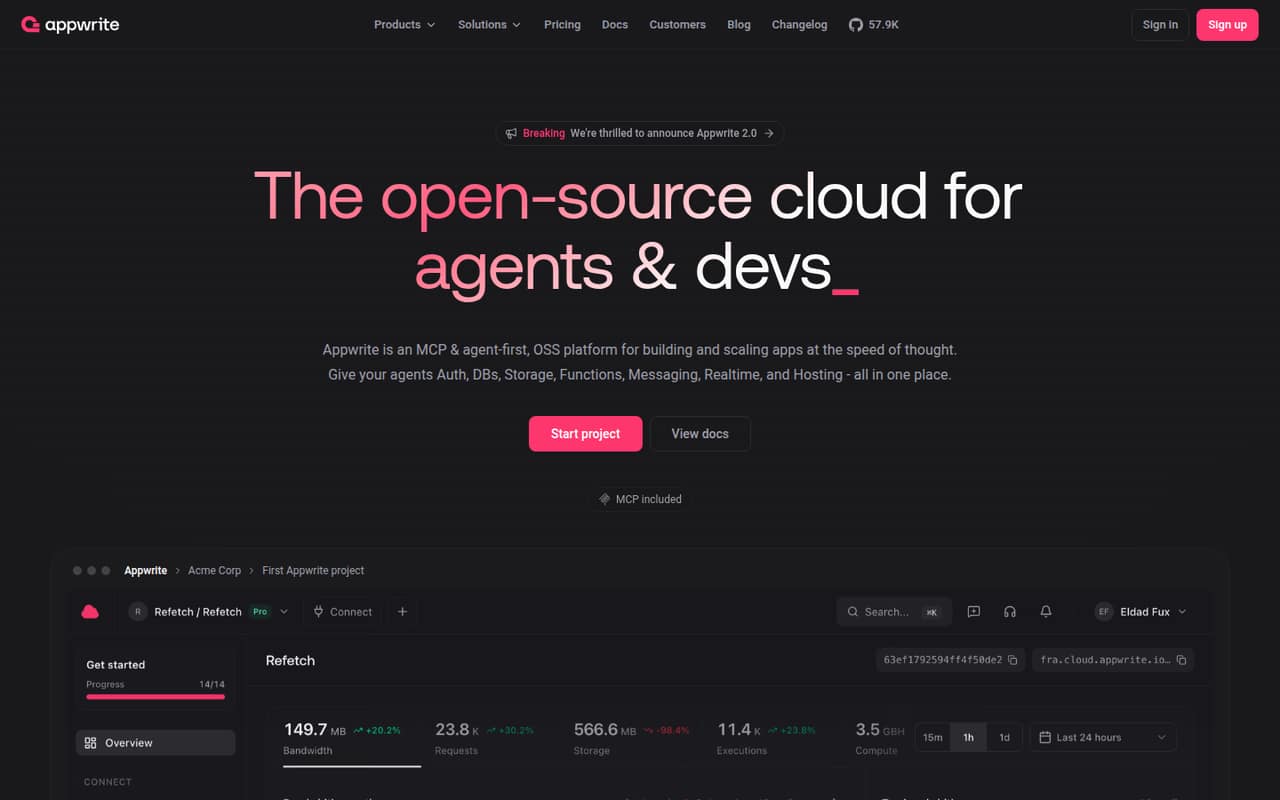
Appwrite combines a broad backend stack with Cloud and self-hosting options, making it a fit for teams that want an open-source path and control over deployment. It also targets agent workflows using MCP. The listed starting price is n/a with a free plan, so confirm resource limits and function behavior for your workload, and include the operational cost of self-hosting in your comparison.
What works
- Auth, databases, storage and functions in one platform
- Offers Cloud and self-hosted environments
- Supports managed PostgreSQL and MySQL
What doesn't
- Free projects freeze at resource limits
- Pro subscription price is not published
- Database read, write and storage rates are not shown
- Best for Google Cloud
 FirebaseFirebase
Firebase suits small teams shipping web or mobile apps that need managed auth and notifications, particularly when the engineering stack already centers on Google Cloud. The listed starting price is $0 with a free plan. Usage-based bills and proprietary services affect both cost forecasting and exit planning, so model expected usage and identify which services you would need to replace if you migrate.
What works
- Combines databases, auth, functions and hosting
- Free Spark plan has useful daily quotas
- Client SDKs span mobile, web and Flutter
What doesn't
- Production backend is proprietary and hosted
- Blaze usage can grow beyond free quotas
- No monthly hard billing cap is listed
- Best for reactive TypeScript
 ConvexConvex
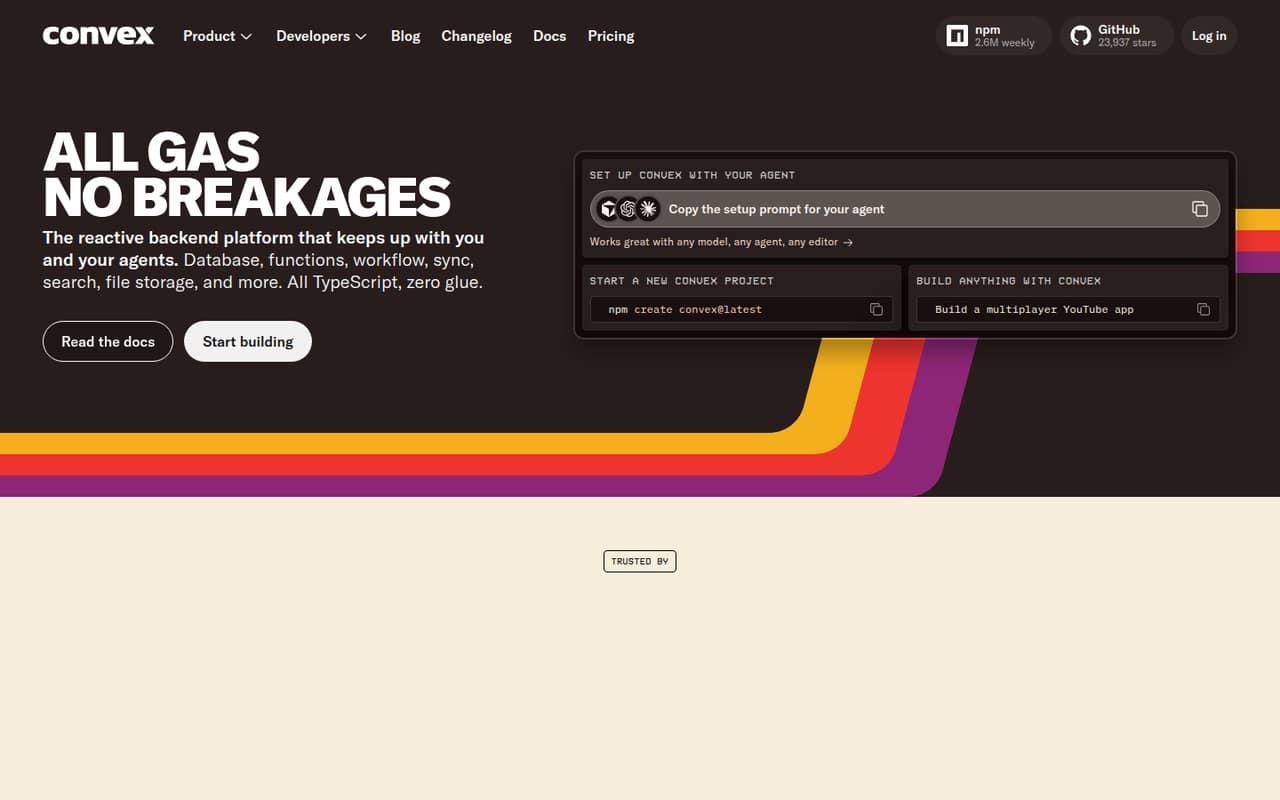
Convex is built for TypeScript apps with live data and teams consolidating backend services; it is also positioned for AI agents with multi-step workflows. Its listed starting price is $25 with a free plan. Weigh usage costs and hosted-service lock-in against the benefits of consolidating services, and check that the documented API and SDK fit your app’s runtime and deployment setup.
What works
- Reactive database with ACID transactions
- Backend functions written in TypeScript
- Real-time synchronization for current data
What doesn't
- A hosted platform creates vendor dependency
- Self-hosting and VPC availability need confirmation
- Usage overages add to plan costs
- Best for governed APIs
 XanoXano
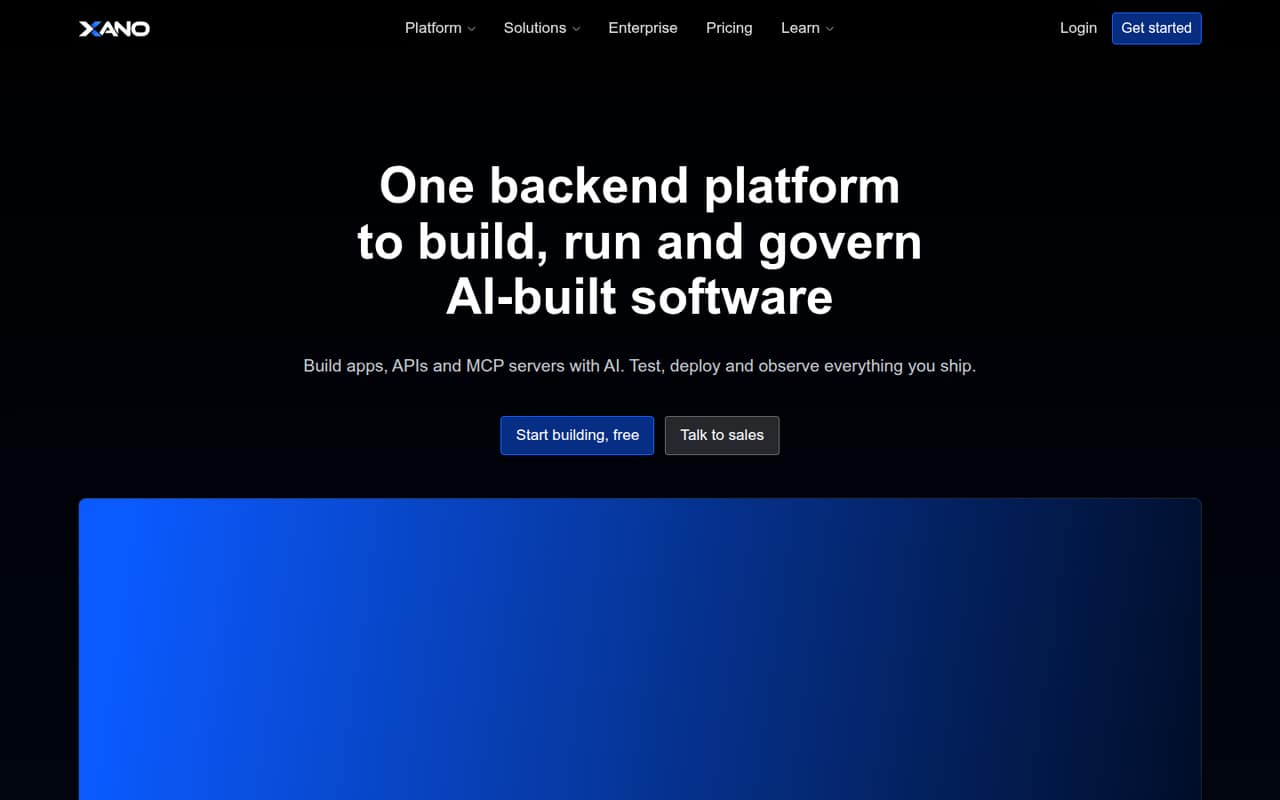
Xano fits teams building APIs with AI agents or business apps that need workflow tests, and it offers managed backend operations for teams that do not want to manage servers. It is listed from $85 with a free plan and is self-hostable. Before adopting it, verify how its build and release process fits your deployment controls, and price the plan against expected production usage.
What works
- Build with AI, XanoScript or the editor
- Create APIs and MCP servers
- Test workflows in the UI or CLI
What doesn't
- Free plan allows 10 API requests per 20 seconds
- Paid API request allowances are not published
- Source availability and licence are not published
- Best for live games
 PlayFabPlayFab
PlayFab is aimed at studios building cross-platform live games, especially teams adopting Azure-backed game services or needing built-in LiveOps and analytics. It is listed from $0 with a free plan. Costs are metered, and there is no self-hosting path for its core services, so forecast game activity and decide whether a hosted-only backend fits your long-term operations and exit requirements.
What works
- Combines identity, progression, multiplayer and LiveOps
- Supports Unity, Unreal Engine and custom REST clients
- Includes cloud logic through CloudScript and Azure Functions
What doesn't
- Core backend is proprietary and Azure-hosted only
- Production usage can incur separate meter charges
- Multiplayer Servers and Party are billed separately

03How we chose
We ranked these platforms by fit for developers and technical teams: how clearly the API and SDKs fit a codebase, the quality and coverage of the documentation, free-plan availability, and what the stated starting price says about entry cost. We also weighed open-source licensing, self-hosting options, service lock-in and usage-cost warnings. Reddit sentiment can help identify recurring production concerns, but it is anecdotal rather than a substitute for vendor documentation. These rankings are editorial recommendations, not claims of hands-on testing or benchmarks.
04Map the backend to your application
Start with the data model and runtime, not a feature checklist. If Postgres is central to your app, Supabase is explicitly Postgres-backed. For TypeScript apps with live data, Convex is positioned around reactive use. Firebase targets web and mobile apps, while PlayFab is designed for cross-platform live games. Appwrite offers a broad backend stack, and Xano focuses on API building and managed operations.
Then trace the API and SDK path through your codebase: authentication, data access, functions or workflows, and deployment. Read the vendor docs for the languages and runtimes you plan to ship; do not assume an SDK covers every environment equally. Test how your application handles service failures, retries and migrations before production. For any backend that bundles multiple services, list which ones your app depends on and what would replace them if you later move.
05Model cost, control and exit options
A free plan is an entry point, not a production cost estimate. The listed starting prices range from $0 for Firebase and PlayFab to $85 for Xano; Supabase and Convex list $25, while Appwrite lists n/a. Those figures do not establish what your specific workload will cost. Forecast usage against the vendor’s billing model, including the traffic and background work your application expects, and ask the vendor how overages are handled.
Check the boundary between hosted and self-managed infrastructure. Supabase and Appwrite are open source and self-hostable; Xano is listed as self-hostable. PlayFab has no self-hosting path for its core services, and Convex’s hosted-service lock-in is a stated consideration. For any option, document how you export data, replace authentication and migrate application logic. Confirm backup, restore and deletion behavior with the vendor before making the backend a hard dependency.
Questions people ask
What is a backend as a service platform?
A backend as a service provides backend capabilities through a managed platform, commonly including APIs, databases, authentication and app infrastructure. The six options here vary in emphasis: Supabase is Postgres-backed, PlayFab targets game services, and Convex focuses on TypeScript apps with live data.
Which backend as a service is open source?
Supabase and Appwrite are listed as open source. Both are also listed as self-hostable. Xano is listed as self-hostable, but not as open source. Check each project’s licence and the terms for hosted services before deciding what you can modify, deploy or redistribute.
Which BaaS has the cheapest plan?
Firebase and PlayFab list a starting price of $0, each with a free plan. That does not mean production use will remain free: Firebase has usage-based bills, and PlayFab has metered costs. Compare projected usage and plan limits rather than choosing by starting price alone.
Can I self-host a backend as a service?
Supabase, Appwrite and Xano are listed as self-hostable. PlayFab has no self-hosting path for its core services. Self-hosting changes who operates the infrastructure, so account for deployment, upgrades, backups and incident response alongside any reduction in hosted-service dependence.