We may earn a commission if you buy through links on this page. It never changes a score or a ranking. How we make money
The best authentication API depends on what you need to add: Logto is our top pick for teams that want OIDC and a self-hosting option; WorkOS fits B2B products adding enterprise SSO and directory provisioning. Clerk is a hosted user layer for supported frameworks, while Twilio Verify handles pay-as-you-go verification rather than full identity management. For KYC, crypto wallets or agent identity, specialist products such as Deepvue, Privy and Stytch target narrower flows. Check production pricing, deployment constraints and migration options before committing.
Quick picksThe shortlist
 LogtoLogtoBest overall · $24/mo
 WorkOSWorkOSBest for B2B SSO · $65/mo
 FusionAuthFusionAuthBest self-hosted · $162/mo
 ClerkClerkBest for framework apps · $20/mo
 PrivyPrivyBest for crypto wallets · $299/mo
 Ory NetworkOry NetworkBest API-first IAM · $64.17/mo
 DescopeDescopeBest for agent identity · $249/mo
 StytchStytchBest for B2B agents · Free
 DeepvueDeepvueBest for Indian KYC · Custom
 Twilio VerifyTwilio VerifyBest for OTP · $0.05/mo
 TruliooTruliooBest for KYC and KYB · Custom
 ProveProveBest for identity checks · Custom
01Compared at a glance
| Tool | Score | From | Free plan | Trial |
|---|---|---|---|---|
| LogtoLogto | 8.1 | $24/mo | Yes | — |
| WorkOSWorkOS | 8.0 | $65/mo | Yes | — |
| FusionAuthFusionAuth | 8.0 | $162/mo | Yes | — |
| ClerkClerk | 7.6 | $20/mo | Yes | — |
| PrivyPrivy | 7.4 | $299/mo | Yes | — |
| Ory NetworkOry Network | 7.2 | $64.17/mo | Yes | — |
| DescopeDescope | 7.2 | $249/mo | Yes | — |
| StytchStytch | 7.1 | Free | Yes | — |
| DeepvueDeepvue | 6.8 | Custom | No | Yes |
| Twilio VerifyTwilio Verify | 6.3 | $0.05/mo | Yes | — |
| TruliooTrulioo | 5.5 | Custom | No | — |
| ProveProve | 5.2 | Custom | No | — |
02The picks, in detail
- Best overallLogtoLogto
Logto ranks first for its combination of OIDC-focused identity, enterprise SSO use cases and self-hosting. It is open source, which gives teams an option beyond a hosted service. The listed starting price is $24 with a free plan; production costs can depend on add-ons. Check which features your app needs and how those affect the bill before choosing a deployment model.
What works
- OAuth 2.1, OIDC, and SAML support
- Free tier includes up to 50,000 MAU
- Self-hosting is an option
What doesn't
- Production features can require paid add-ons
- Pro includes 50,000 tokens, then charges for extra tokens
- Free plan limits applications and custom domains
- Best for B2B SSOWorkOSWorkOS
WorkOS is a hosted identity API aimed at B2B apps that need enterprise SSO, directory provisioning and multi-tenant organizations. Its listed starting price is $65 with a free plan, and enterprise pricing is per connection. That makes it a strong fit when customer identity requirements center on enterprise integrations; estimate connection costs against your expected customer count.
What works
- Single SAML and OIDC integration for identity providers
- AuthKit includes up to one million monthly active users free
- SDKs listed for Node.js, Ruby, Python, .NET and Go
What doesn't
- SSO and Directory Sync have per-connection charges
- Annual Credits pricing is custom
- Vendor does not publish an open-source licence
- Best self-hostedFusionAuthFusionAuth
FusionAuth suits teams that want to run their identity platform themselves and need API-led authentication or complex user models. The listed starting price is $162 with a free plan, and the product is self-hostable. The tradeoff to examine is its closed-source model and usage terms. Confirm deployment responsibilities and the licensing terms that apply to your production setup.
What works
- Free Community plan includes unlimited MAUs
- Deploy self-hosted, hosted, on-premises or air-gapped
- Authentication and fine-grained authorization APIs
What doesn't
- Closed-source software, according to Reddit commenters
- Standalone monthly prices are not published
- Per-MAU overage rates are not published
- Best for framework appsClerkClerk
Clerk is a hosted user layer for applications built with supported frameworks, including B2B SaaS products that need organizations. Its listed starting price is $20 with a free plan. The framework fit can simplify adoption, but the vendor’s deployment constraints and usage costs need review before integration. Model expected usage and verify that your chosen framework and deployment are supported.
What works
- Authentication, sessions and user management in one service
- SDKs and UI components for named web and mobile frameworks
- Organization invitations, roles, permissions and auto-join
What doesn't
- Usage overages can raise bills beyond the base plan
- No published self-hosting option or open-source license
- Vendor does not publish an export procedure
- Best for crypto walletsPrivyPrivy
Privy targets products embedding crypto wallets, stablecoin payment flows and agent-controlled transactions. Its hosted wallets, key controls and financial flows make it a specialist choice rather than a general-purpose login layer. The free plan is available, and paid plans start at $299 per month. Check how its wallet and key-control model fits your application’s transaction and custody requirements.
What works
- Embedded and agent wallet options
- Programmable key management and transfer controls
- Funding, cards and spend features
What doesn't
- Core starts at $299 per month
- Usage overages can add a $2,000 base fee
- SDK languages and API protocol need verification
- Best API-first IAMOry NetworkOry Network
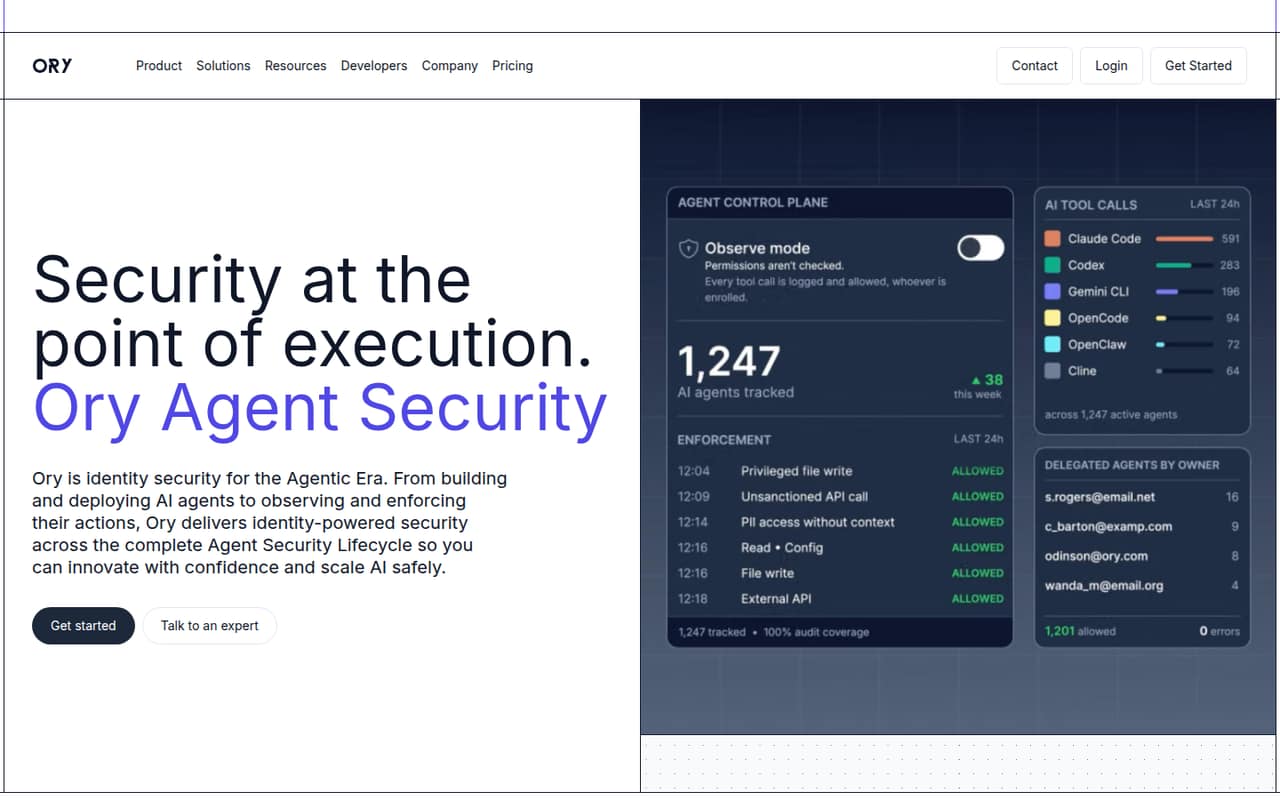
Ory Network is a managed, API-first IAM option for customer identity, B2B SSO and SCIM, with agent identity also among its use cases. Its free tier is for development only, and production is billed by usage; the listed starting price is $64.17. Budget against expected production activity rather than treating the development tier as a production allowance.
What works
- Managed cloud IAM avoids running identity infrastructure
- Covers customer, B2B and agent identity
- Developer plan includes two development environments
What doesn't
- Free plan has no production or staging environments
- Production and Growth prices are annual
- Usage charges add to plan costs
- Best for agent identityDescopeDescope
Descope covers customer identity flows, tenant-aware B2B identity, and agent authentication and consent. It is worth evaluating when those flows need to sit under one identity product. The listed starting price is $249 with a free plan. Before adopting it, confirm the pricing model, deployment options and how your team can export or migrate identity data.
What works
- Visual workflows cover signup, login, MFA, SSO and step-up journeys
- Supports passwords, passkeys, social login and passwordless options
- Offers RBAC, ReBAC and ABAC capabilities
What doesn't
- SDK languages and API protocols are not named on the homepage
- Rate limits and reliability commitments are not published here
- Self-hosting, open-source licensing and data export need confirmation
- Best for B2B agentsStytchStytch
Stytch provides hosted identity APIs for B2B applications and AI agent identity, with SSO and SCIM among its stated use cases. A free plan is listed, but the starting price is not published. Ask for a cost estimate based on your expected tenants and usage, and establish migration options before making it part of your authentication path.
What works
- Native organization-level authentication settings
- SAML and OIDC SSO support
- Embeddable customer admin portal
What doesn't
- Additional MAU and M2M token rates are not published
- Extra SSO or SCIM connections cost $125 each
- No published self-hosting option
- Best for Indian KYCDeepvueDeepvue
Deepvue focuses on India-specific checks for digital lenders, KYC platforms and marketplaces verifying Indian sellers. Its API-based checks suit teams whose identity requirements are tied to that market, rather than apps seeking general-purpose login. Pricing is not published. Ask about integration requirements, production limits and the exact checks available for your onboarding flow before selecting it.
What works
- Combines identity, face, banking and document checks
- Includes Indian business and employment verification
- Credit bureau and bank statement tools support underwriting
What doesn't
- SDKs and supported languages are not named
- API protocol and integration patterns need confirmation
- Rate limits and service commitments are not published
- Best for OTPTwilio VerifyTwilio Verify
Twilio Verify is a hosted verification API for account verification and pay-as-you-go OTP workloads, particularly for teams already using Twilio. The listed starting price is $0.05 per verification, with a free plan. Treat delivery and fallback behavior as design questions: confirm how the verification flow handles failed delivery and what costs apply to your expected volume.
What works
- Starts at $0.05 per verification
- Usage-based pricing with volume discounts
- Free trial requires no credit card
What doesn't
- International OTP delivery can vary
- Automatic WhatsApp-to-SMS fallback may need setup
- Rate limits are not published on the homepage
- Best for KYC and KYBTruliooTrulioo
Trulioo targets identity and risk checks across KYC, KYB, business ownership and screening users or merchants. It is a specialist fit for platforms with those verification needs, not a default choice for application login. Pricing is not published, and the vendor’s API details and operating limits need a sales discussion. Ask for coverage, costs and production constraints for your target markets.
What works
- Covers identity, fraud, AML and business risk
- Supports document checks, biometrics and digital IDs
- Business Graph maps ownership across jurisdictions
What doesn't
- Pricing is custom quote with no published starting price
- SDKs and supported programming languages are not named
- Rate limits and usage allowances are not published
- Best for identity checksProveProve
Prove focuses on identity checks in onboarding, reducing reliance on SMS OTP, and verifying people and agents. Its broad identity coverage may fit flows that need more than a one-time code, but custom pricing and limited published integration details make evaluation harder. Ask the vendor for implementation specifics, production costs and the checks available for your user population.
What works
- Covers people, businesses and AI agents
- Pre-Fill can populate forms with verified identity data
- Offers human verification to help limit bot abuse
What doesn't
- Pricing is custom and negotiated individually
- Seat and usage limits are unpublished
- No free plan or free trial is listed

03How we chose
We ranked these products for developer and technical-team fit: the kind of API or identity service they provide, the integration and documentation questions teams need answered, free-tier scope and pricing at production usage, and whether self-hosting or an open-source option is available. We gave more weight to vendor-published details than to anecdotal Reddit sentiment; community reports can surface operational questions, but do not establish a product’s limits. Where pricing or deployment details need confirmation, we call that out rather than infer them.
04Choose the identity boundary before choosing an API
Start by defining whether you need full user authentication, an enterprise identity layer, a one-time verification step or identity checks for KYC/KYB. These solve different problems. A verification API does not automatically replace session management, user records or account recovery. Likewise, adding a hosted login product can make it the source of truth for identities and organizations. Map the flows your application owns—signup, login, MFA, account recovery, SSO, provisioning and agent authorization—and decide which system owns each state transition. Then check the API and SDK coverage against your languages and frameworks, and read the integration docs for the paths you actually need. For B2B, include tenant boundaries, directory provisioning and organization lifecycle. For agents, define how identity and consent are represented. Keep the application’s authorization rules explicit even when a provider handles authentication.
05Model production cost and the exit path
Do not compare providers using a free plan or a single starting price alone. Work out what the bill depends on: users, verifications, enterprise connections, usage or add-ons. Ask vendors for an estimate using your expected active users, login volume, customer SSO connections and verification mix. Confirm which free-tier limits apply in production; Ory Network’s free tier, for example, is development-only. Next, evaluate operations and portability. If self-hosting matters, confirm the license and what your team must operate. If the service is hosted, ask how identity data can be exported, what happens to sessions during a migration, and whether identifiers can be preserved. Document rate limits, retry behavior and provider outages as integration requirements, not details to discover after launch.
Questions people ask
What is the difference between an authentication API and a verification API?
An authentication API supports proving a user’s identity to an application, often as part of a broader login and identity layer. A verification API handles a narrower check, such as confirming an account with an OTP. Confirm whether your chosen product also covers sessions, recovery and user management.
Which authentication APIs can be self-hosted?
Logto is listed as open source and self-hostable. FusionAuth is also self-hostable, though its source is closed. If self-hosting is a requirement, check the applicable license, production terms and operating responsibilities before choosing a deployment.
How should I compare authentication API pricing?
Compare the pricing unit with your expected production use, not just the entry price or free plan. Costs may depend on usage, enterprise connections, verifications or add-ons. Ask for a quote against your projected traffic and confirm any development-only free-tier limits.
Do I need a separate API for enterprise SSO?
Not always. WorkOS targets B2B apps adding enterprise SSO and directory provisioning; Ory Network, Stytch and other identity products also list B2B SSO use cases. Compare the required protocols and provisioning flows with your app’s needs, then verify the pricing model for customer connections.