We may earn a commission if you buy through links on this page. It never changes a score or a ranking. How we make money
The best API development tool depends on which part of the stack you need to improve. DreamFactory generates REST and MCP APIs from enterprise data sources and can be self-hosted, while Yaak is a local API client built around Git workflows. Apollo GraphOS focuses on federated APIs; Hookdeck and Webhook.site handle different parts of webhook delivery and debugging. We rank DreamFactory first for API creation, but its listed starting price is substantial. Check the price model, deployment options and request limits against your workload before choosing.
Quick picksThe shortlist
 DreamFactoryDreamFactoryBest for API generation · $1,500/mo
 YaakYaakBest API client · $6.58/mo
 Apollo GraphOSApollo GraphOSBest for federated APIs · $5/mo
 HookdeckHookdeckBest for webhook delivery · $39/mo
 Webhook.siteWebhook.siteBest for webhook debugging · $7.50/mo
01Compared at a glance
| Tool | Score | From | Free plan | Trial |
|---|---|---|---|---|
| DreamFactoryDreamFactory | 7.0 | $1,500/mo | Yes | — |
| YaakYaak | 7.6 | $6.58/mo | Yes | 30 days |
| Apollo GraphOSApollo GraphOS | 7.2 | $5/mo | Yes | — |
| HookdeckHookdeck | 7.4 | $39/mo | Yes | 14 days |
| Webhook.siteWebhook.site | 7.2 | $7.50/mo | Yes | — |
02The picks, in detail
- Best for API generationDreamFactoryDreamFactory
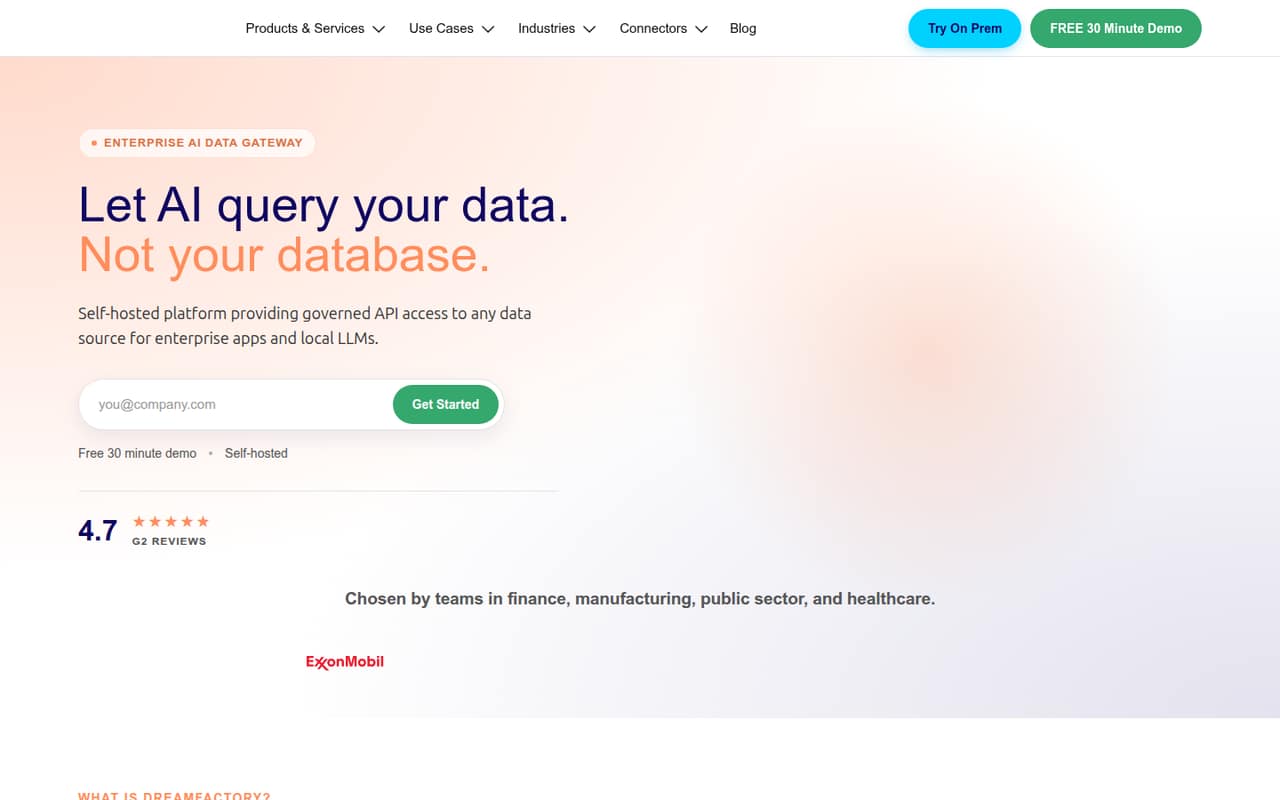
DreamFactory turns enterprise data sources and legacy systems into governed REST and MCP APIs. Its open-source and self-hostable options make it the strongest fit here for teams that need to build APIs around existing data and identity controls. The listed starting price is $1,500, even with a free plan, so confirm production costs and deployment terms before making it a standard platform.
What works
- Generates REST APIs across databases, files, SaaS and legacy systems
- Provides REST and MCP access with policy controls
- Supports on-prem, private cloud, edge and hybrid deployment
What doesn't
- Free Open Source plan includes only a PostgreSQL connector
- Paid plans start at $1,500/month, billed annually
- Vendor does not publish separate month-to-month prices
- Best API clientYaakYaak
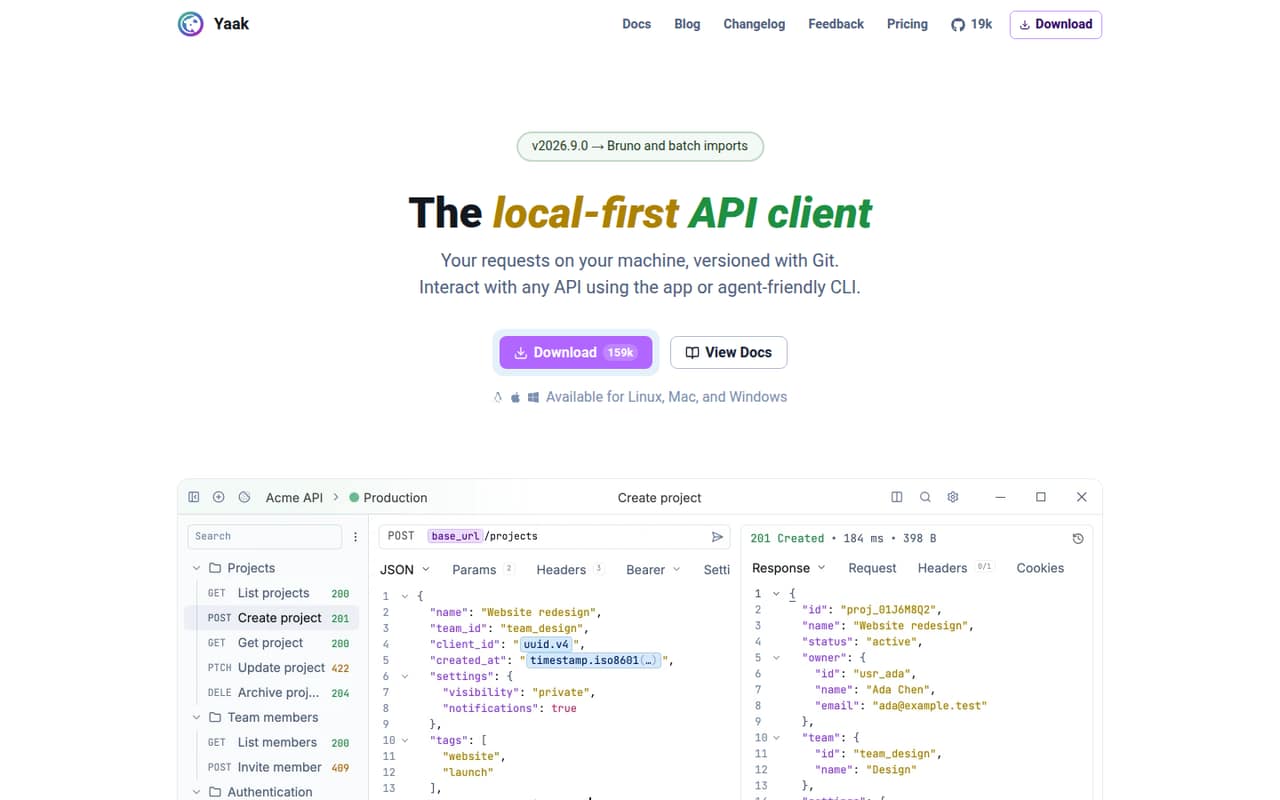
Yaak is an open-source desktop API client for developers who want to keep requests in Git and reuse them in agent workflows. It is a practical fit when the job is making and managing API requests rather than generating an API server. The listed starting price is $6.58, with a free plan; check what that plan includes and how team workflows work without hosted workspace sync.
What works
- Supports HTTP, GraphQL, gRPC, WebSocket, and SSE
- Stores work locally without requiring an account
- Git UI supports branching, commits, and diffs
What doesn't
- Commercial use requires a paid license after 30 days
- No hosted workspace sync is included
- No SDK languages are named on the homepage
- Best for federated APIsApollo GraphOSApollo GraphOS
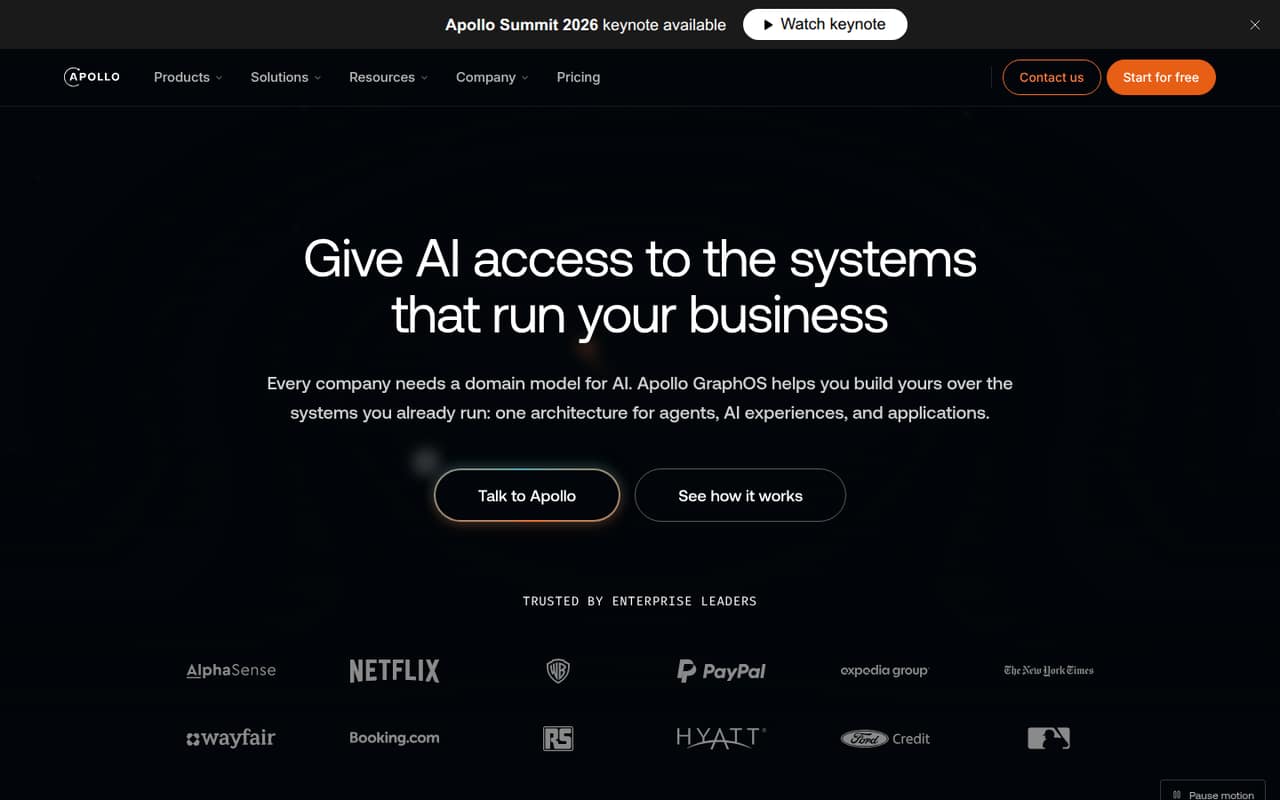
Apollo GraphOS is aimed at teams federating business APIs and standardizing service access, with governed API discovery for agents. Its request-based pricing makes usage an important part of the buying decision. The listed starting price is $5 with a free plan, but confirm how production requests are counted and what costs apply as usage grows.
What works
- Federates business APIs into a shared graph
- Describes data and operations with domain semantics
- Enforces access policies across services
What doesn't
- Free Router limit is 60 requests per minute
- Developer plan retains data for seven days
- Standard and Enterprise pricing is custom
- Best for webhook deliveryHookdeckHookdeck
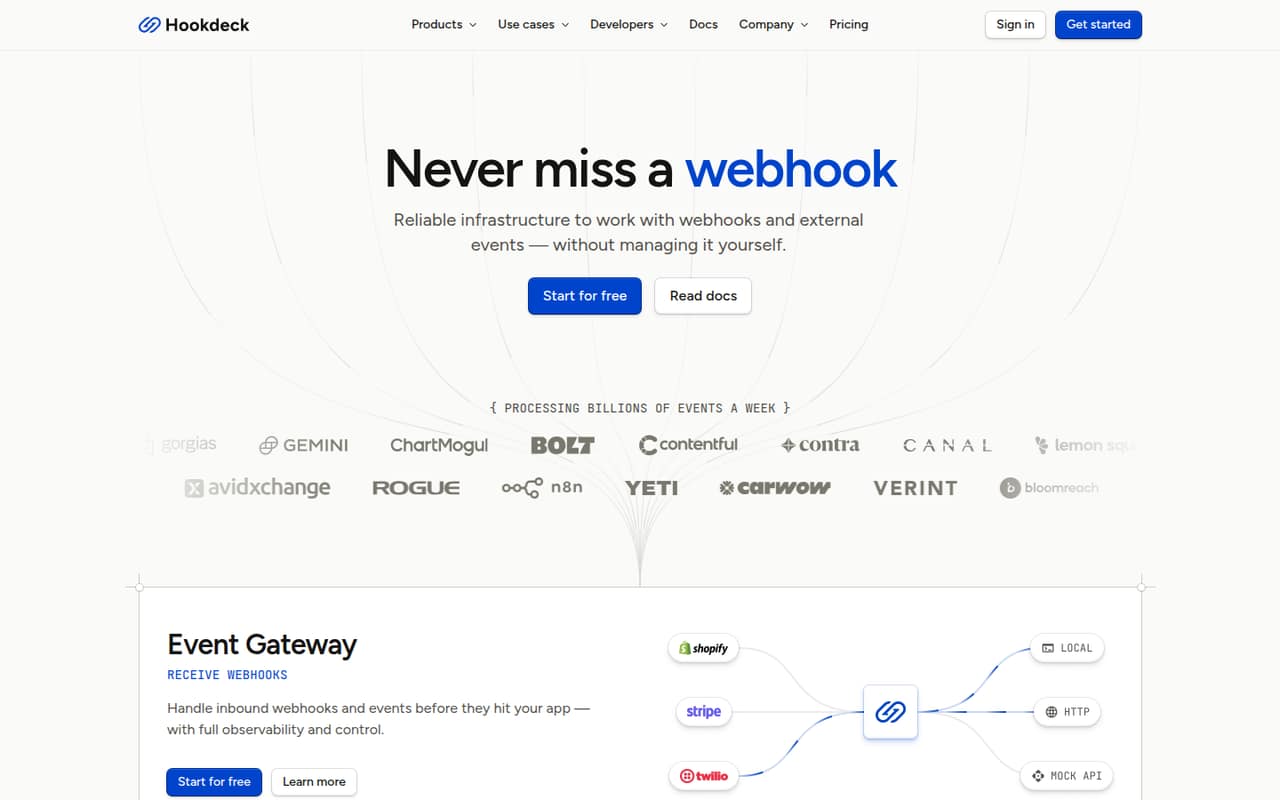
Hookdeck is a webhook gateway for routing, queues, replay and delivery visibility. It fits teams handling many inbound webhooks or sending webhooks to customers, where tracking delivery matters beyond inspecting a single request. The product is listed as self-hostable, and its starting price is $39 with a free plan. Confirm the deployment model and plan limits for your traffic.
What works
- Routes, filters, queues and rate controls inbound events
- Replay and issue detection support delivery operations
- Outpost covers outbound delivery and tenant management
What doesn't
- Event overage examples on the pricing page conflict
- SDK languages and library support need confirmation
- Source licence and availability are not published
- Best for webhook debuggingWebhook.siteWebhook.site
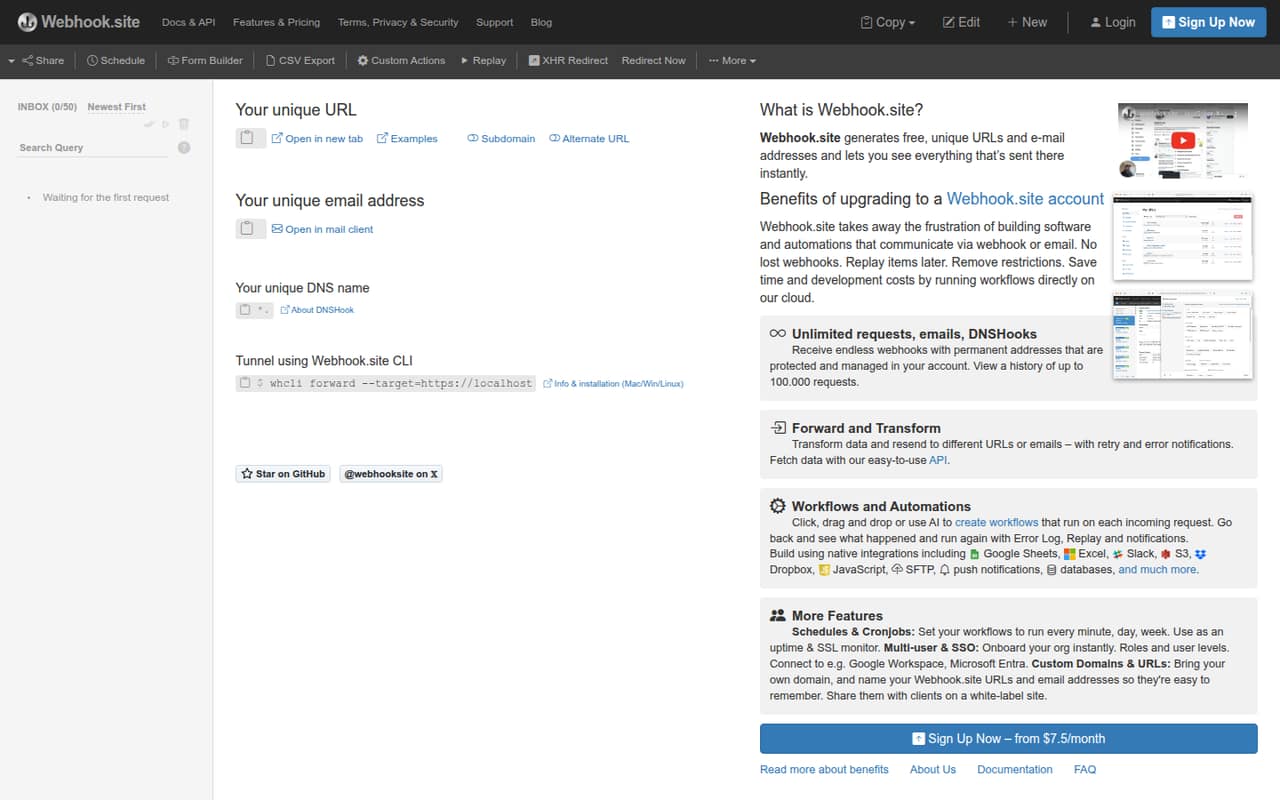
Webhook.site is a hosted inspector for inbound webhooks, with workflows for testing email and DNS integrations and automating request forwarding and responses. Its free plan is capped at 50 requests, which makes that limit central to evaluation. The listed starting price is $7.50. Choose it for quick inspection and integration testing, not as a replacement for a production webhook gateway.
What works
- Capture requests without signup or setup
- Inspect headers, query strings and bodies in real time
- Capture email messages and DNS lookups
What doesn't
- Free URLs expire after one week
- Free tier retains up to 50 requests
- Paid request-history limits vary by plan
03How we chose
We ranked tools by how directly they support API work: building or governing APIs, managing requests, and handling webhook traffic. We considered stated API capabilities, developer workflows, free-plan terms, listed starting prices, usage-based pricing, open-source status and self-hosting. Reddit sentiment is a secondary signal for spotting reported friction, not a substitute for vendor documentation or published limits. The ranking favors clear architectural fit; it does not assume that a low entry price predicts production cost. Check current plan terms and deployment requirements before adopting a tool.
04Match the tool to the API work
Start with the part of the API lifecycle you need to own. If you need to expose data sources as APIs, DreamFactory generates REST and MCP APIs from enterprise data sources. If your team mainly sends requests and tracks them in Git, Yaak is a desktop client built for that workflow. Apollo GraphOS targets federation and governed service access. For webhook infrastructure, Hookdeck covers routing, queues, replay and delivery visibility; Webhook.site is for inspecting inbound requests and testing integrations.
These products are not interchangeable. A request client does not replace an API platform, and a webhook inspector is not a delivery gateway. Map each tool to the services it will sit between, then check its protocols, SDKs, authentication options and documentation against your stack. Ask vendors for details where a required integration or limit is not stated.
05Price the production path, not the entry plan
Treat a listed starting price and free plan as a starting point for evaluation, not a production estimate. Webhook.site caps its free plan at 50 requests. Apollo GraphOS uses request-based pricing, so forecast how requests are counted and how costs change with traffic. DreamFactory lists a $1,500 starting price; clarify which deployment and production features that covers. The other listed starting prices are $6.58 for Yaak and $39 for Hookdeck.
Before committing, ask about rate limits, retention, overages, plan-specific features and support. For self-hosting, confirm what you operate and what remains vendor-managed. For open-source tools, check the licence and release terms; for hosted tools, check how to export requests, schemas and operational data. These details determine how much work a migration or traffic increase will create.
Questions people ask
What is the best API to learn?
There is no single best API for every learner. Choose one with clear documentation and an endpoint related to a project you want to build, then practice making requests, handling responses and managing errors. Yaak can serve as a desktop client for working with requests, but it is not itself an API to learn.
Is Netflix an API?
Netflix is a streaming service, not an API. An API is an interface that software can use to request data or actions from another system. A company may expose APIs for its services, but that does not make the service itself an API. Check the provider's documentation for supported access.
Is using an API legal?
Using an API is not automatically legal or illegal; it depends on the provider's terms, the data involved and the laws that apply. Read the API terms and privacy requirements, follow authentication and rate limits, and get legal advice for sensitive or commercial use. Do not assume public access means unrestricted permission.
What is the best API testing tool?
It depends on what you are testing. Yaak is a desktop client for managing API requests, while Webhook.site is built for inspecting inbound webhooks and testing email and DNS integrations. Hookdeck is aimed at routing and monitoring webhook delivery. Choose based on the protocol and workflow under test.