
We may earn a commission if you buy through links on this page. It never changes a score or a ranking. How we make money
The bottom line
Fast path from code to deployment, with usage costs and platform dependence to manage.
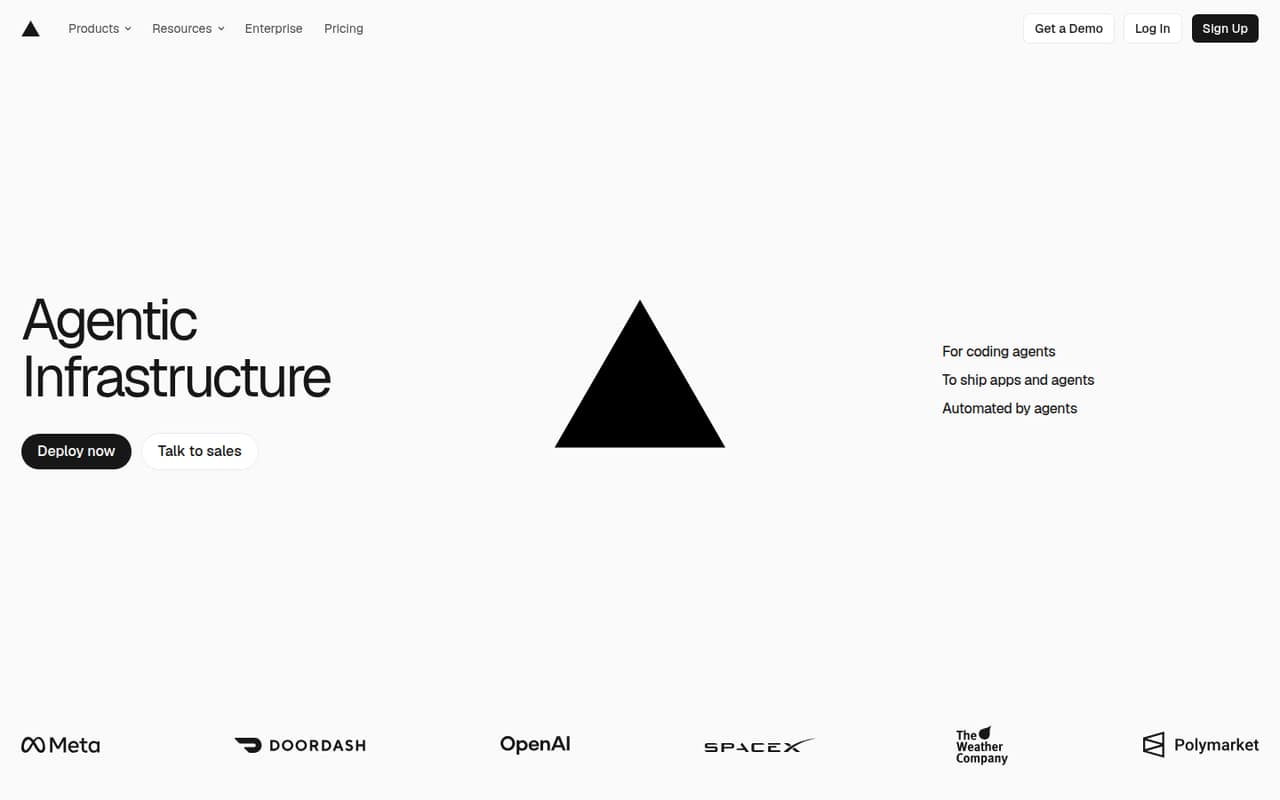
Vercel is a hosted cloud platform for deploying apps and AI agents, with global delivery, deployment environments, sandboxed VMs, durable backends and access to models. Its API, CLI, MCP and Skills give coding agents ways to work with the deployment platform.
The Hobby plan is free for personal, non-commercial projects. Pro starts at $20 per month, but usage-priced compute, builds, storage and other features can add to the bill. Reddit sentiment is divided: developers value the deployment experience, while some report unexpectedly high costs.
Good fit if
- Teams prioritizing managed deployments
- Apps using Vercel's AI infrastructure
- Projects that benefit from previews
Skip it if
- Commercial projects requiring fixed hosting costs
- Teams needing self-hosted Vercel infrastructure
- Apps with costly migration paths
ScoresHow it rates
What works
- Hosted deployment platform with global delivery
- API, CLI, MCP and Skills for coding agents
- Hobby plan is free for non-commercial projects
- Pro includes $20 monthly usage credit
- Enterprise plan lists a 99.99% SLA
What doesn't
- Usage-priced services can add costs beyond the plan
- Hobby is limited to personal, non-commercial projects
- SDK and language support needs confirmation in docs
- Vendor does not publish a self-hosting path
- Migration may be costly for platform-dependent apps
01What Vercel is, technically
Vercel is a hosted cloud platform for building and deploying apps and AI agents. It sits between a codebase and the infrastructure that serves the running application: teams deploy to Vercel, which provides deployment environments, global delivery and infrastructure features including Fluid Compute. Its AI offering adds sandboxed environments, durable orchestration and access to models through AI Model Gateway.
This is a managed platform, not a library or a self-hosted server. The homepage also positions Vercel as a deployment target for coding agents, with an API, CLI, MCP and Skills. That puts it in the delivery and runtime layer of a stack, while an application still needs its own code, data sources and model or agent logic. Vercel says apps and agents can run in sandboxed VMs with durable backends, and highlights hosting for platforms serving customers. It is broader than static frontend hosting, but teams should map each required backend service and its usage charge before moving production workloads.
02Vercel API, SDKs and docs
Vercel names four integration surfaces for coding agents: its API, CLI, MCP and Skills. The homepage says agents can deploy in their native language, but does not name particular programming languages or SDKs. Before choosing an SDK or building a language-specific workflow, confirm current support and examples in Vercel's docs.
The CLI is a direct route into deployment workflows, while the API, MCP and Skills provide other ways for agents to interact with Vercel. The homepage does not describe API conventions, authentication details, webhooks or specific framework integrations, so check the docs for the endpoints and lifecycle events your pipeline needs. The product also offers deployment environments, preview URLs, custom domains and serverless functions as platform features. That can reduce the work of wiring deployment and delivery infrastructure, but teams should verify how their repository, build process and runtime fit Vercel's supported workflow. Documentation depth and SDK coverage matter if you need more than the named integration surfaces.
03Vercel pricing for developers
Hobby is $0 per month for personal, non-commercial projects. Its listed allowances include 1M CDN requests, 100 GB data transfer, up to 3 custom firewall rules, up to 10 IP blocks and 1M ISR reads per month. Pro costs $20 per month for professional developers and teams, includes a $20 monthly usage credit, and lists Flat Rate CDN, up to 40 custom firewall rules, unlimited viewer seats and a free custom domain. Enterprise pricing is custom and includes a 99.99% SLA.
The base plan is only part of the cost when usage-priced features apply. The pricing page lists Fluid Active CPU starting at $0.128 per hour, function invocations starting at $0.60 per 1M, and basic build minutes at $0.007 per minute. AI Gateway token requests cost $3 per 1,000; Vercel Agent is $0.25 per 1M tokens plus pass-through token cost. Storage, image processing, observability and security features also have separate charges. Prices are monthly; annual rates are not listed.
04Vercel: open source, self-hosting and lock-in
Vercel is presented as a hosted cloud platform, not as a self-hosted server. The vendor doesn't publish a licence or self-hosting path on its product page. Teams considering it should confirm whether any components they depend on are open source and what licence applies before building around them.
The product page also doesn't establish a data-export process. Ask Vercel how to export application data, deployment configuration, logs and any platform-specific state you need to retain. Migration effort will depend on how much of the application uses Vercel-specific deployment environments, serverless functions, Fluid Compute, AI Gateway or other platform services. Some Reddit commenters describe moving away as costly, though those reports are individual experiences rather than a measure of what a migration will cost your team. Keep application logic and data portable where practical, and document dependencies before committing production traffic.
05Vercel in production
Vercel's global delivery and deployment environments target apps that need managed deployment and hosting. The Enterprise plan lists a 99.99% SLA; teams on other plans should check what service commitments apply to their workload. The pricing page lists security-related options including SAML SSO at $300 per month and a HIPAA BAA at $350 per month. It also lists paid firewall and rate-limit request charges, so confirm how rules and request billing map to your traffic.
The usage model deserves attention in production: compute, function invocations, builds, transfer, storage and observability can all affect the bill. Vercel's pricing page lists individual rates, but teams should model their own traffic and build cadence. Reddit reports range from developers who say Pro works well for small SaaS products to reports of large bills tied to build time or usage. Those are anecdotes, not a forecast. Set billing alerts and review usage before scaling. Ask Vercel about rate limits, incident handling and the exact SLA for your plan.
From the threadsWhat users say
Developers often praise Vercel's deployment experience and simplicity, especially for teams shipping commercial apps. Others criticize costs that can climb with usage, and some describe migration as expensive; the Reddit discussion reflects different workloads rather than a single consensus.
Because the features of Vercel are useful and simple to use
It has one of the best Developer experience to deploy, and it just works
We racked up a 250 USD bill last billing period for *one* project just in build time
I have 300 users on a saas and I only paid 20 bucks a month no problem
Questions people ask
What does Vercel do?
Vercel is a hosted cloud platform for deploying and delivering apps and AI agents. It provides deployment environments, global delivery, sandboxed environments, durable orchestration, Fluid Compute and access to models through AI Model Gateway. Teams use it as managed deployment and runtime infrastructure rather than running a Vercel server themselves.
How do I deploy with Vercel?
Vercel lists an API, CLI, MCP and Skills as integration surfaces for coding agents. The homepage does not specify a particular deployment workflow or repository setup. Check Vercel's docs for the current steps and confirm that your build process and runtime are supported before deploying a production app.
Is Vercel free?
Vercel's Hobby plan costs $0 per month for personal, non-commercial projects. It includes listed monthly allowances such as 1M CDN requests, 100 GB data transfer and 1M ISR reads. Professional developers and teams have the $20-per-month Pro plan, which includes a $20 monthly usage credit.
Is Vercel only for frontend apps?
No. Vercel describes infrastructure for apps and AI agents, including sandboxed environments, durable backends, Fluid Compute and serverless functions. It also offers global delivery and deployment environments. Check the docs and plan pricing to confirm that a specific backend workload and its resource needs fit the platform.
Can I self-host Vercel?
Vercel is presented as a hosted cloud platform, and the vendor does not publish a self-hosting path on its product page. If running infrastructure yourself is a requirement, ask Vercel about supported deployment options and confirm the licence for any components you plan to use.