
We may earn a commission if you buy through links on this page. It never changes a score or a ranking. How we make money
The bottom line
A flexible internal-app platform with self-hosting, but verify limits and exit paths before production.
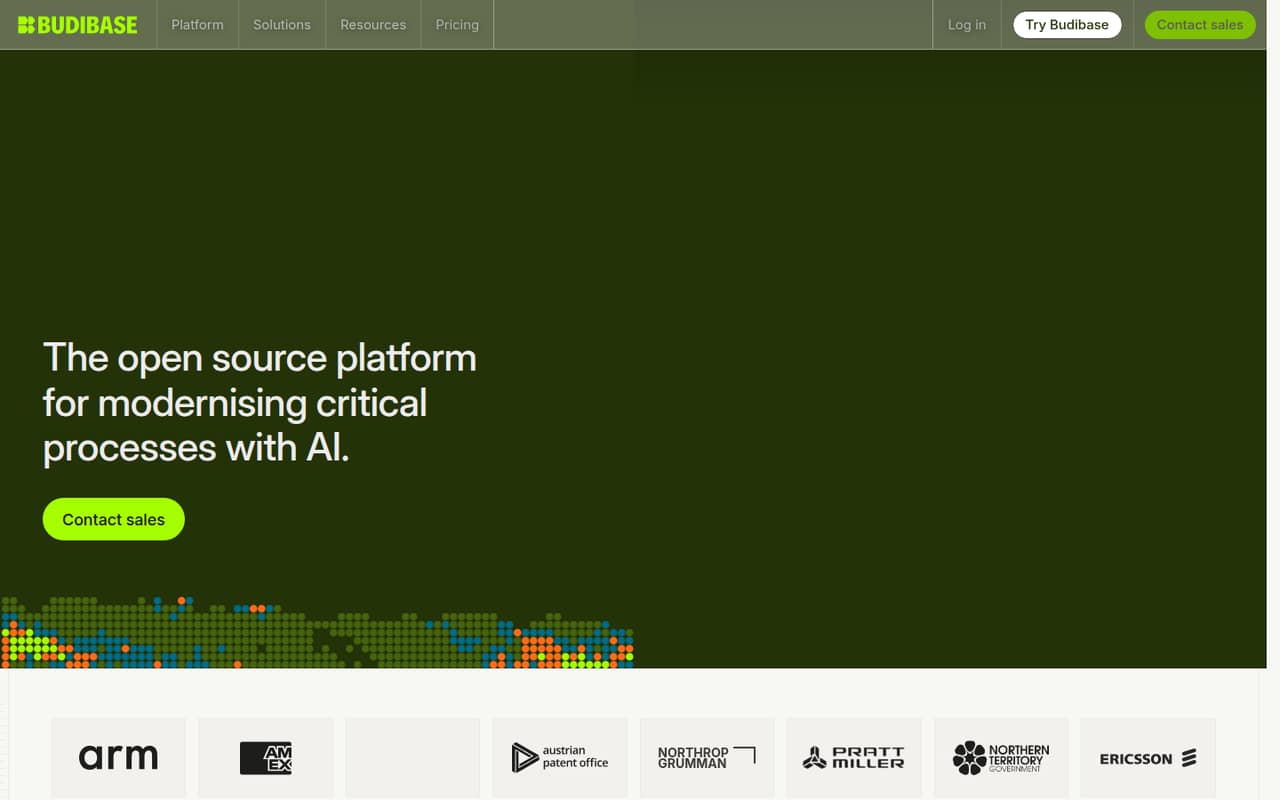
Budibase is a platform for building internal apps, agents, automations and service portals around existing systems. It runs as a managed Cloud service or can be self-hosted, including on-premise and air-gapped deployments.
The free Community plan and deployment flexibility make it worth evaluating for internal workflows. For production, check the API and integration surface, confirm your current user limits, and plan how you would export data and migrate apps.
Good fit if
- Teams replacing spreadsheet workflows
- Self-hosted internal app projects
- Approval and inspection processes
Skip it if
- Projects requiring a named SDK
- Teams needing published API limits
- Volunteer apps with uncertain user caps
ScoresHow it rates
What works
- Community plan lists unlimited users and apps
- Self-hosting supports private and air-gapped environments
- Apps, agents and automations share one platform
- API explorer configures and tests API actions
- Cloud plan includes 250K monthly actions
What doesn't
- SDKs, languages and API rate limits are not published
- Cloud action limits are hard limits
- Enterprise pricing is not listed
- Data export and migration paths need verification
- Reddit users raised concerns about self-hosted user limits
01What Budibase is, technically
Budibase is an app-building platform that can run as a managed Cloud service or as software you self-host. It sits between your users and the systems that hold operational data: teams use it to build custom interfaces, route requests for approval, run automations and expose a service portal for work processes.
The platform includes apps, AI agents, automations, a service portal, data tables and API actions. That makes it a candidate for internal tools such as purchase approvals, inspection forms and case management, rather than a general-purpose website builder. The homepage also describes agents that use data, tools and approval rules to handle requests.
Budibase can be deployed on private cloud, on-premise or in air-gapped environments, as well as through Budibase Cloud. It therefore occupies a different part of the stack from a standalone API library: you build the application and workflow layer in Budibase, then connect it to existing systems. The vendor also offers a source-code repository and an API reference.
02Budibase API, SDKs and docs
The homepage links to an API reference and an API explorer for configuring and testing API actions. It also lists integrations, data tables for connecting and storing data, marketplace connections and plugins. Functions are marked Alpha and are described as reusable workflow logic. The vendor presents these surfaces as ways to connect existing systems and build workflows around them.
The homepage does not name programming languages, SDKs, a CLI or a specific API protocol. Confirm SDK and protocol support in Budibase’s docs before committing to an integration that depends on a particular client library. The site links to installation instructions, docs, source code, a community forum and a support area; it also has a marketplace for templates, connections and plugins.
This is a visual platform with extension points, not a documented language-specific development framework. That can reduce boilerplate for internal tools, but teams should prototype their most important data and API actions before assuming every integration fits. Budibase does not publish API rate limits on its homepage, so ask the vendor about limits and operational behavior for your expected traffic.
03Budibase pricing for developers
The Community plan is free for teams self-hosting their own infrastructure. Its listed inclusions are unlimited users, apps, agents, automations and requests, plus standard SSO. The Enterprise plan is for organizations needing governance and dedicated support; pricing is not listed. It adds extended activity, audit logs and backups, enterprise identity controls, air-gapped deployment options, and support, onboarding, training and SLAs.
Budibase Cloud is listed at $299 per month and includes two creators, 20 end users, 250K monthly actions and 50K monthly AI credits, as well as unlimited apps, agents, automations and requests. Extra creators cost $50 each per month with annual billing or $60 with monthly billing. Extra end users cost $5 or $6, respectively. AI credit packs range from $20 for 10,000 credits to $2,000 for 1,000,000. Monthly action limits are hard limits; contact sales about higher-capacity packages and pricing. The Cloud billing cadence is not specified, so confirm it before budgeting.
04Budibase: open source, self-hosting and lock-in
Budibase describes itself as open source and links to its source code. Its Community plan is for teams running their own infrastructure, and the homepage lists private cloud, on-premise and air-gapped deployment options. A Budibase co-founder wrote on Reddit that two packages in the repository are licensed under MPL and said the company was committed to keeping Budibase open source. Check the repository’s current licence files for the terms that apply to the version and components you deploy.
Self-hosting gives teams control over where the platform runs, but it does not by itself settle how data or apps can be moved elsewhere. The homepage does not explain a data-export workflow. Before relying on Budibase, verify export formats for your tables and records, and test how to extract app and automation definitions. Migration may also require rebuilding interfaces and workflows in another system, so treat those as separate exit-path checks.
05Budibase in production
For Cloud deployments, track action and AI-credit consumption against the plan’s monthly allowances. The 250K monthly action allowance is a hard limit, and the listed Cloud plan includes 50K monthly AI credits. Ask the vendor how higher-capacity packages work and what happens when a project approaches a limit. For self-hosted deployments, budget for your own infrastructure and validate the operational requirements against your deployment environment.
The homepage lists enterprise identity controls, audit logs, backups and SLAs as Enterprise features. Teams with security, compliance or recovery requirements should confirm the exact controls, retention policies and service commitments with Budibase before making the platform critical to a process.
Reddit sentiment is mixed. One self-hosting thread reported an announced 20-user limit for the open-source version, while the current Community pricing lists unlimited users. That discrepancy makes it important to confirm the terms that apply to your version and deployment. Other commenters welcomed open source and self-hosting but raised concerns about future licensing and documentation changes.
From the threadsWhat users say
Reddit comments show interest in self-hosting and open-source access, alongside concern about changing limits, licensing and documentation. The current Community plan’s unlimited-user listing conflicts with a Reddit report about a planned 20-user limit, so buyers should confirm applicable terms.
The fact you open sourced it and made it self-hosted means a world to people like me who are trying to make side-projects stick and have zero income from them
This is very unfortunate for me because I was running a bunch of volunteer community projects on there and really liked how they didn't hide SSO behind a paywall
I don't respect companies that intentionally start open source to build them close it up for the release
Questions people ask
What does Budibase do?
Budibase is a platform for building internal apps, AI agents, automations and service portals. Teams can use it to create interfaces for requests and approvals, connect to existing systems, store data and configure API actions. It can run in Budibase Cloud or be self-hosted.
Is Budibase free?
The Community plan is free for teams that self-host. It lists unlimited users, apps, agents, automations and requests, plus standard SSO. Budibase Cloud is listed at $299 per month. Enterprise pricing is not listed, so ask Budibase for a quote if you need its governance and support features.
Can I self-host Budibase?
Yes. Budibase lists self-hosting for private cloud, on-premise and air-gapped infrastructure. The free Community plan is for teams self-hosting their own infrastructure. Confirm deployment requirements and the terms that apply to your version before rolling it out.
Does Budibase provide an API or SDK?
Budibase links to an API reference and provides an API explorer for configuring and testing API actions. Its homepage also lists integrations, data tables and plugins. It does not name SDKs, programming languages or a specific API protocol there; confirm the support you need in the vendor’s docs.
Can Budibase build a website?
Budibase is positioned around internal apps, service portals and work processes, not as a general-purpose website builder. Its tools focus on interfaces for requests, approvals and operational workflows. If you need a public marketing site, confirm that Budibase supports your requirements before choosing it.
Sources
- Budibase homepage
- Budibase pricing page
- Reddit: Budibase Will Soon Limit Users on OSS Self Hosted Version
- Reddit: Budibase - build modern web apps on your own infrastructure in minutes
- Reddit: Budibase limitless open source alternative
- Reddit: Budibase - An open-source low code platform for creating business apps (alternative to PowerApps, Mendix, Retool) is now out of beta. Connect to SQL/NoSQL and build apps in minutes. Deploy via K8s, Docker, Digital Ocean.