We may earn a commission if you buy through links on this page. It never changes a score or a ranking. How we make money
Payment API platforms sit between your application and the payment methods, processors or payout rails your business needs. The right choice depends on whether you’re collecting payments, routing transactions across providers, billing for usage or paying recipients. Polar stands out for software teams combining usage billing and subscriptions; Braintree offers a sandbox and transaction-based pricing; Dots focuses on global payouts and recipient workflows. Before building, verify the API and SDK coverage for your stack, full transaction costs, operational limits and what happens if you need to move providers.
Quick picksThe shortlist
 PolarPolarBest overall · $20/mo
 BraintreeBraintreeBest for payment coverage · Free
 DotsDotsBest for global payouts · $19/mo
 DwollaDwollaBest for bank payments · Custom
- YunoYunoBest for payment routing · Custom
 PaddlePaddleBest for SaaS operations · Free
 OnramperOnramperBest for fiat ramps · $150/mo
 FinixFinixBest for embedded payments · $250/mo
 Checkout.comCheckout.comBest for market expansion · Free
01Compared at a glance
02The picks, in detail
- Best overallPolarPolar
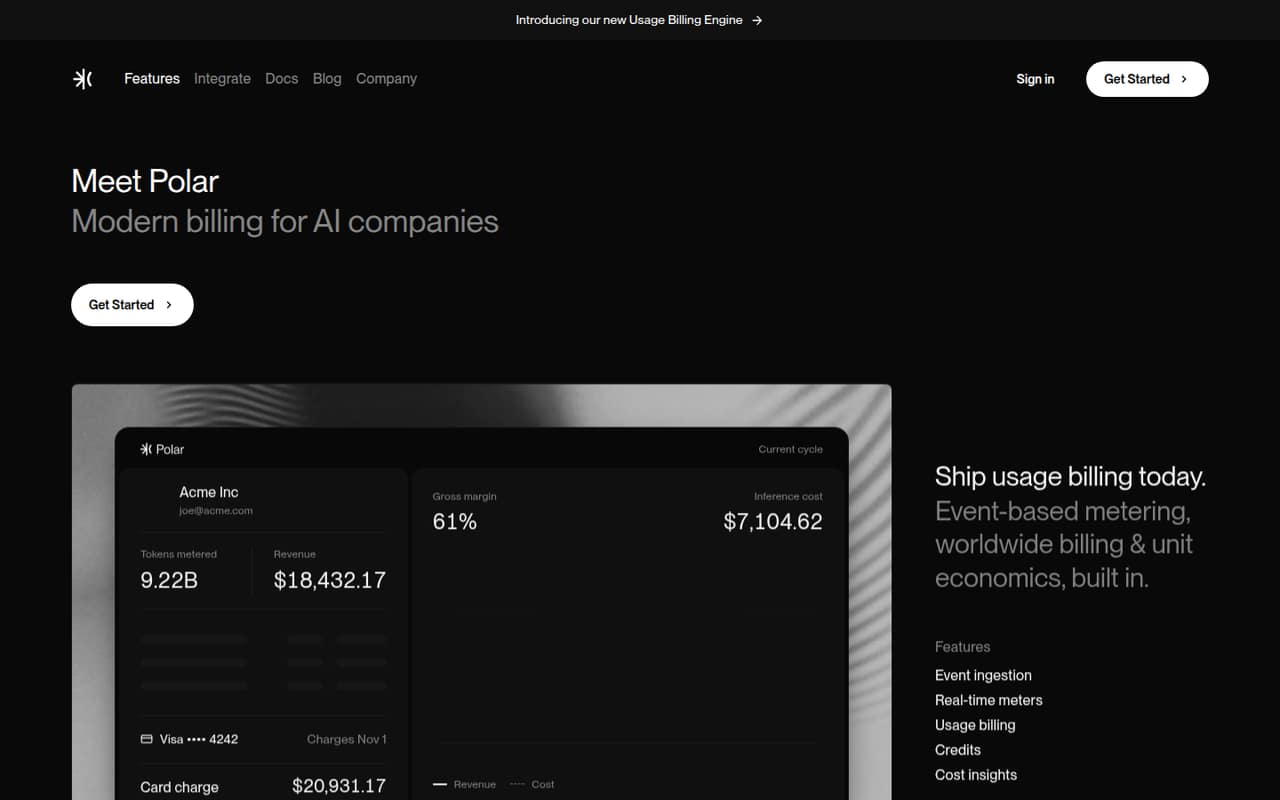
Polar is the strongest fit here for AI and software products that combine usage billing, credits and subscriptions. Its listed starting price is $20, with a free plan, and it also offers merchant-of-record services. Model transaction and payout fees against your billing pattern before launch; the listed starting price alone won’t tell you what high-volume or usage-heavy billing will cost.
What works
- Meters calls, tokens and GPU seconds as events arrive
- Combines plans, prepaid credits and metered usage
- Shows inference costs and margin by customer
What doesn't
- Transaction fees apply even on the free plan
- Payout and dispute fees add to processing costs
- Rate limits and uptime commitments aren't published
- Best for payment coverageBraintreeBraintree
Braintree suits teams that want to accept several payment methods through a hosted processor. It has a sandbox and transaction-based pricing, with a listed starting price of $0. That gives developers a clear place to evaluate an integration before production, but confirm the applicable transaction rates, supported methods in your markets and any operational limits with the vendor.
What works
- Accepts cards, PayPal, Venmo in the US and digital wallets
- Mobile SDKs support checkout experiences
- Sandbox supports sample transactions, subscriptions and API testing
What doesn't
- Standard transaction fees vary by payment method
- Custom pricing applies to some established businesses
- Additional charges apply to non-USD and international cards

- Best for global payoutsDotsDots
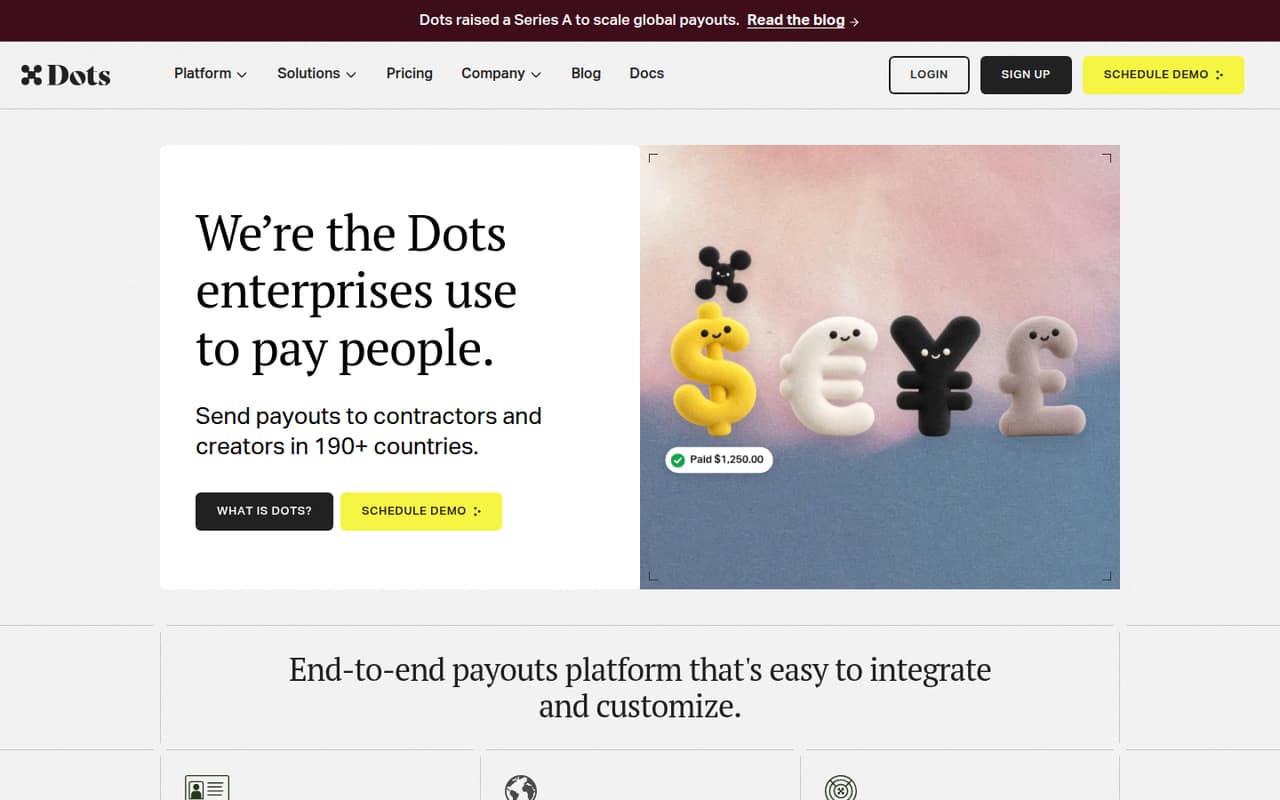
Dots puts global payouts, recipient onboarding and tax workflows behind a hosted API. It is a fit for platforms that need to pay recipients internationally and want branded onboarding rather than building every payee workflow themselves. The listed starting price is $19. Confirm payout methods, country coverage, tax responsibilities and transaction fees for your recipients before designing around it.
What works
- Coverage across 190+ countries and 300+ rails
- Payouts, onboarding and tax workflows in one platform
- White-labeled recipient onboarding and payout options
What doesn't
- Core and Scale require monthly plan payments
- Transaction fees add to plan costs
- Enterprise transaction fees require a sales quote
- Best for bank paymentsDwollaDwolla
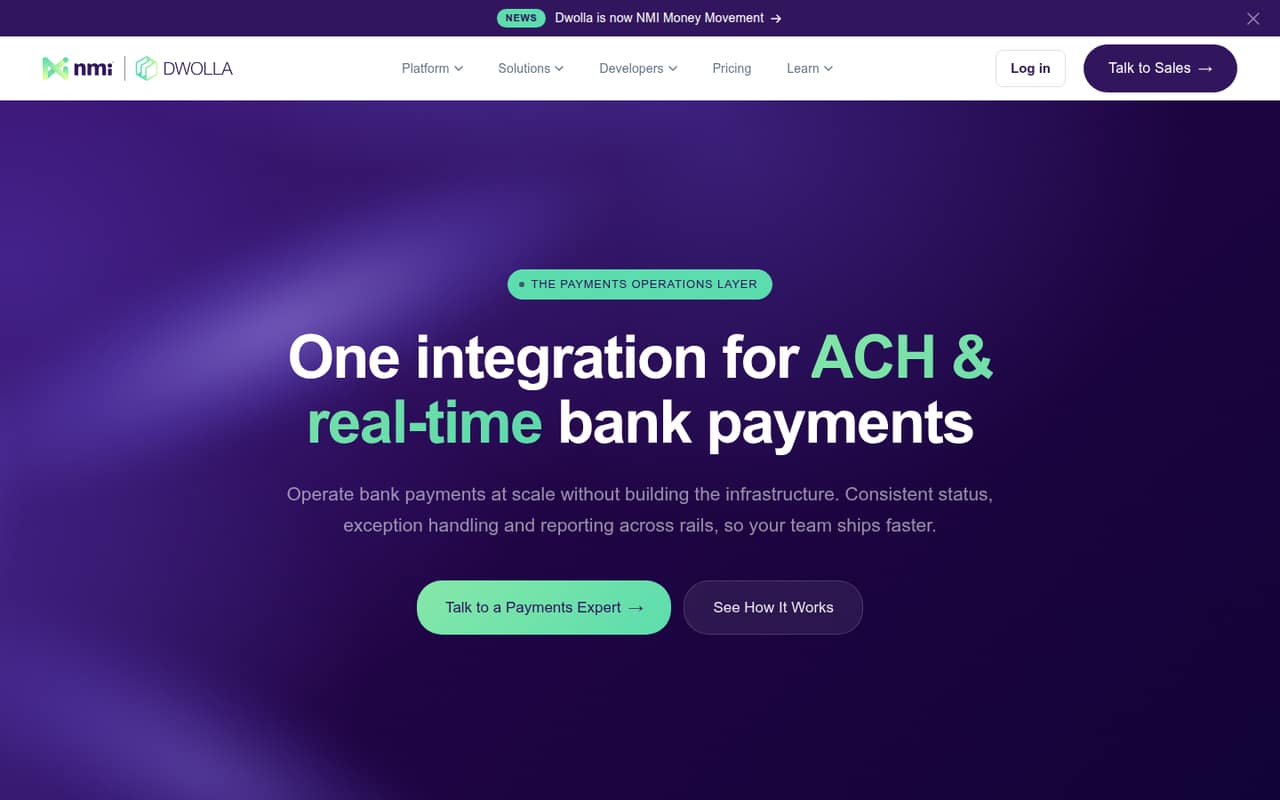
Dwolla is aimed at platforms embedding bank payments and automating collections or payouts across ACH and real-time rails. That makes it worth evaluating when bank transfers are central to the product rather than an add-on to card acceptance. Pricing is custom, so ask for transaction costs, production limits and the rails available to your business before committing.
What works
- One API across ACH and real-time rails
- Supports Standard ACH and Same Day ACH
- Access to RTP Network and FedNow Service
What doesn't
- Custom pricing has no published starting figure
- No free plan is listed
- SDK languages and CLI support need confirmation
- Best for payment routing
YunoYuno
Yuno centralizes payment routing, reporting and local payment method coverage for global merchants using multiple providers. It can fit a team trying to manage payment workflows through one integration rather than maintain separate provider connections. Pricing is custom and the platform is SaaS-only, so assess total cost and whether hosted deployment meets your data and infrastructure requirements.
What works
- Routes using cost, approval probability, BIN, geography, and availability
- Client SDKs for JavaScript, iOS, Android, React Native, and Flutter
- Supports REST APIs, webhooks, and an MCP server
What doesn't
- Enterprise pricing requires a custom quote
- Plan, seat, and usage limits are not published
- No free plan or trial is listed
- Best for SaaS operationsPaddlePaddle
Paddle is designed for digital products and subscription businesses that want a provider to handle global payment operations, tax and compliance. Its listed starting price is $0. That can reduce the number of payment operations your team builds, but review the integration path and plan how to export customer, subscription and transaction data if you later change providers.
What works
- Merchant of Record coverage across 300+ markets
- Payments, tax, compliance and billing in one platform
- Localized checkout for digital products
What doesn't
- API protocols, SDKs and languages need confirmation
- No monthly fee still means a per-transaction charge
- Under-$10 products may need bespoke pricing

- Best for fiat rampsOnramperOnramper
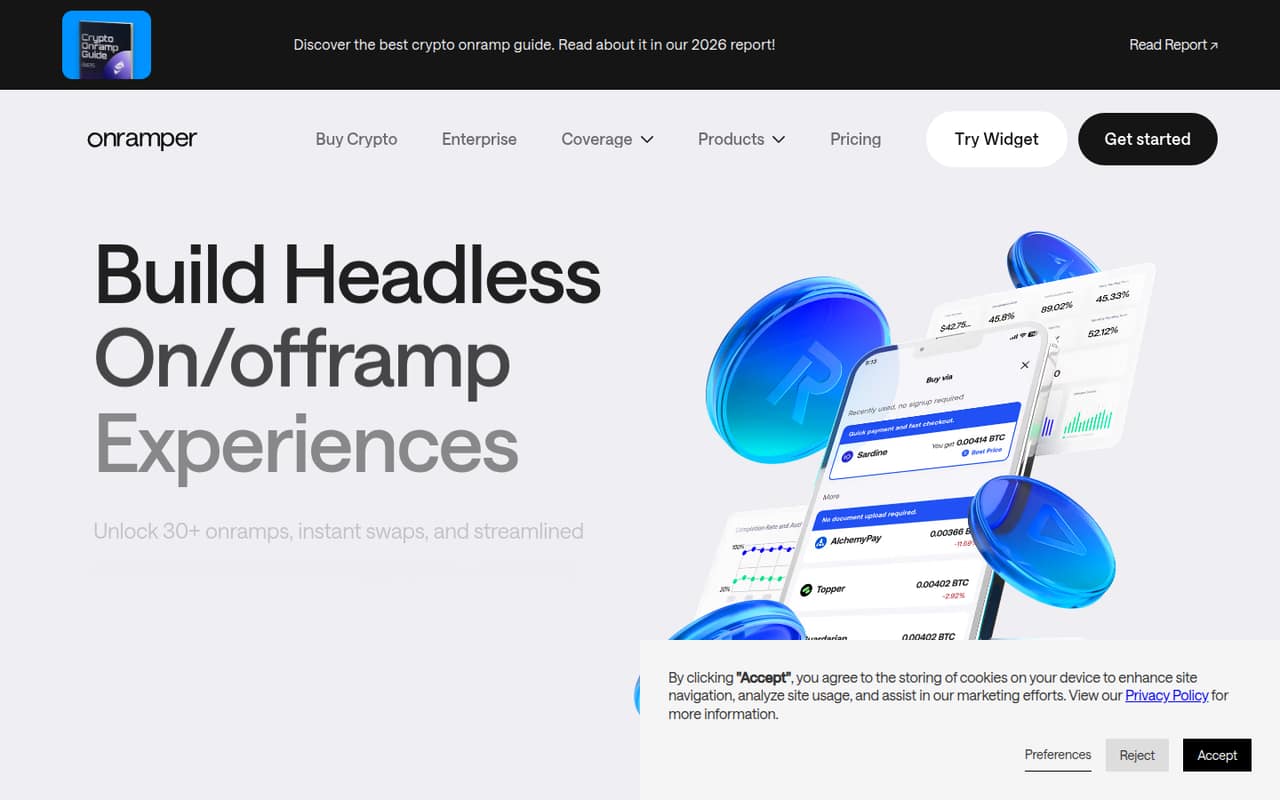
Onramper gives wallets and apps one integration for multiple fiat ramps, including offramps and swaps. It is a focused option for teams building those flows across multiple countries, not a general-purpose payment processor. The listed starting price is $150; compare that with provider-level fees and confirm country and payment-method coverage for your target users.
What works
- One integration connects to 30+ onramps
- Offers widget and headless ramp flows
- Includes offramps and cross-chain swaps
What doesn't
- No free plan; trial lasts 14 days
- Essentials covers six onramps, not the full network
- No published per-request pricing or overage schedule
- Best for embedded paymentsFinixFinix
Finix combines payment acceptance with tools for platforms managing sub-merchants and payouts, as well as billing tools. It is relevant to software teams embedding payments rather than only accepting payments for their own business. The listed starting price is $250. Ask how its monthly minimum and transaction costs apply to your expected volume and product model.
What works
- Accepts payments online, in person, by phone and by payment link
- Combines sales, fees, payouts and settlements in one place
- Offers invoicing, subscriptions and usage-based billing
What doesn't
- Direct Merchants - Standard starts at $250 monthly
- Free plan and free trial are not listed
- SDKs, languages and API protocol need confirmation
- Best for market expansionCheckout.comCheckout.com
Checkout.com offers a unified payments API with multiple checkout options and payment operations beyond card acceptance. It is suited to businesses expanding across markets and teams that need more than a basic card flow. Pricing is not listed as a free plan, and marketplace capabilities need investigation; confirm commercial terms and the exact workflows your platform requires.
What works
- Unified API for processing payments
- Hosted Payment Page offers a low-code integration
- Mobile SDK supports native mobile checkouts
What doesn't
- Pricing amounts and billing terms are not published
- SDK languages and API protocols need confirmation
- Marketplace onboarding may require custom work
03How we chose
We ranked these platforms for engineering fit: the role of the API in the product, the integration surface and documentation teams should verify, and whether pricing gives a team a practical way to model costs. We considered listed free plans and starting prices, while treating custom pricing as a reason to request a volume-based quote. We also weigh licensing and self-hosting options, and treat Reddit sentiment as a secondary signal rather than proof of reliability. No pick earns an open-source label without a documented license and self-hosting path.
04Check the integration and operating model
Start with the payment flow you need: accepting a customer payment, routing it among providers, billing for usage or sending payouts. These are different jobs, even when vendors use similar API language. Confirm that the API supports your flow and that the vendor documents SDKs for your language, authentication, webhooks, idempotency and error handling. Ask for sandbox access and a clear path from test credentials to production.
Then check the operating model. A hosted API can reduce infrastructure work, but it also makes the vendor part of your production path. Ask how rate limits, retries, outages and settlement delays are handled. For marketplaces and payout products, confirm recipient onboarding, country coverage and who handles tax workflows. If self-hosting or a particular license is a requirement, get the license and deployment options in writing before implementation.
05Model the full cost and the exit
A starting price or free plan is not a complete cost estimate. Model processing, payout and provider fees against your transaction size, payment mix, countries and monthly volume. Ask whether there are monthly minimums, fixed fees, currency conversion costs or separate charges for platform features. For custom pricing, request the rate card and worked examples for your expected usage before you build your unit economics around a quote.
Also plan for change. Confirm what data you can export, in what format, and whether you can retrieve payment, customer, subscription and payout records without vendor assistance. Check which parts of your integration are provider-specific and how you would migrate stored payment credentials or recurring billing. Keep payment orchestration and business logic separate where practical, and document the fallback behavior your application needs when a provider times out or declines a request.
Questions people ask
Which payment API is best for a SaaS product?
For usage billing, credits and subscriptions, Polar is the closest fit in this ranking. Paddle is aimed at digital products and subscription businesses that want help with global payment operations, tax and compliance. Compare their fees, billing workflows and data export options against your product’s requirements.
Which payment API has a free plan?
The listed starting prices include free plans for Polar and Braintree; Paddle and Braintree are also listed from $0. A free plan does not establish that processing is free. Confirm transaction rates, plan limits and any charges that apply when you move from testing to production.
Are any of these payment APIs open source or self-hosted?
This ranking does not label a platform open source or self-hosted without a documented license and deployment path. Ask vendors for the license, hosting options, data export formats and any restrictions on moving payment records or application logic to another provider.
What production limits should I ask about?
Ask for API rate limits, webhook retry behavior, request timeouts, payout and settlement timing, supported countries and payment methods, and the process for handling outages. Also confirm when limits change between sandbox and production, and whether your expected transaction volume requires approval or a custom agreement.