We may earn a commission if you buy through links on this page. It never changes a score or a ranking. How we make money
SnapTrade ranks first for its brokerage focus, free tier and clear starting price. Teller, Twelve Data and Finnhub also score well for specific integration needs, while Plaid, MX, Yodlee and Finicity target bank-account connectivity. These hosted APIs are not interchangeable: compare data coverage, connection or feed behavior, pricing units and rate limits against your workload. The listed entry prices are starting points, not a production cost estimate. Confirm plan terms, licensing, data export and support with each vendor before you design around an API.
Quick picksThe shortlist
 SnapTradeSnapTradeBest overall · $100/mo
 TellerTellerBest for bank data · Free
 Twelve DataTwelve DataBest for asset breadth · $79/mo
 FinnhubFinnhubBest for fundamentals · $3,500/mo
 AlpacaAlpacaBest for trading · $99/mo
 Polygon.ioPolygon.ioBest for WebSockets · $23.20/mo
 Financial Modeling PrepFinancial Modeling PrepBest for research data · $19/mo
 Alpha VantageAlpha VantageBest for prototyping · $41.58/mo
 TradierTradierBest for options · $10/mo
 PlaidPlaidBest for account linking · Free
 Salt EdgeSalt EdgeBest for open banking · Free
 dxFeeddxFeedBest for tick data · Custom
 YodleeYodleeBest for institutions · Free
 MXMXBest for banking analytics · Custom
 FinicityFinicityBest for lending flows · Custom
01Compared at a glance
| Tool | Score | From | Free plan | Trial |
|---|---|---|---|---|
| SnapTradeSnapTrade | 7.2 | $100/mo | Yes | — |
| TellerTeller | 7.1 | Free | Yes | — |
| Twelve DataTwelve Data | 7.0 | $79/mo | Yes | — |
| FinnhubFinnhub | 7.0 | $3,500/mo | Yes | — |
| AlpacaAlpaca | 6.9 | $99/mo | Yes | — |
| Polygon.ioPolygon.io | 6.8 | $23.20/mo | No | — |
| Financial Modeling PrepFinancial Modeling Prep | 6.8 | $19/mo | Yes | — |
| Alpha VantageAlpha Vantage | 6.6 | $41.58/mo | Yes | — |
| TradierTradier | 6.6 | $10/mo | Yes | 2 months |
| PlaidPlaid | 6.5 | Free | Yes | — |
| Salt EdgeSalt Edge | 6.5 | Free | Yes | — |
| dxFeeddxFeed | 6.3 | Custom | No | — |
| YodleeYodlee | 6.2 | Free | Yes | — |
| MXMX | 5.8 | Custom | No | — |
| FinicityFinicity | 5.8 | Custom | No | — |
02The picks, in detail
- Best overallSnapTradeSnapTrade
SnapTrade is a unified brokerage API for investment tracking, supported trades and portfolio sharing. Its free plan and listed starting price of $100 make it easier to scope than vendors with custom or unpublished pricing. Brokerage support and production constraints can vary, so check the brokers and workflows your product needs before committing to the integration.
What works
- One API connects to 40+ brokerages
- Balances, holdings, orders and transactions
- Normalized tickers, currencies and exchanges
What doesn't
- Trading availability depends on the brokerage
- Build is limited to five brokerage connections
- Launch adds per-user and sync charges
- Best for bank dataTellerTeller
Teller provides bank data and payment APIs for fintech apps, including ACH verification. Its fit is strongest for prototypes under 100 live connections. Production charges accrue by account, call and enrollment, so model all three against expected usage rather than treating the free plan as a production budget. Confirm connection reliability for the institutions your users rely on.
What works
- Connects to more than 7,000 financial institutions
- Free Developer tier includes 100 live connections
- Published per-account and per-call prices
What doesn't
- Production charges vary with usage
- Rate limits are not published
- License and self-hosting options are not published
- Best for asset breadthTwelve DataTwelve Data
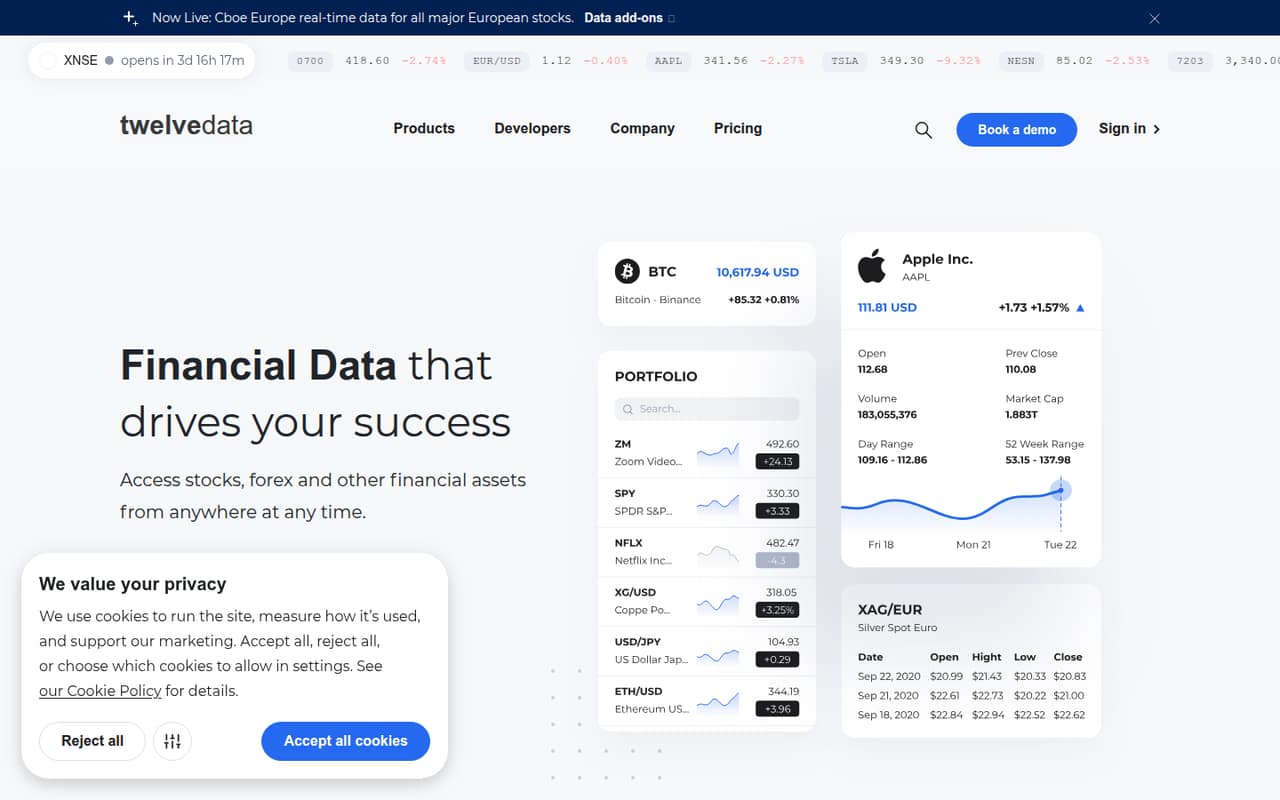
Twelve Data offers hosted market data through REST and WebSockets, with use cases spanning several asset classes and spreadsheet workflows. The listed entry price is $79, and a free plan is available. Before selecting it for a live application, verify instrument coverage, plan limits and how credits are consumed across the endpoints and update frequencies you need.
What works
- One API platform covers multiple asset classes
- REST API and WebSocket feeds share structure
- Free Basic plan includes 800 daily requests
What doesn't
- API credit definitions and cap behavior need confirmation
- Free plan covers only three markets
- SDK languages beyond the Python example need checking
- Best for fundamentalsFinnhubFinnhub
Finnhub combines US market data, global company fundamentals and alternative data for research applications. It has a free plan, but global access starts at $3,500 per month with annual billing, according to the listed pricing. That price makes coverage and required markets key early checks. Confirm the exact plan needed for your geography and endpoints.
What works
- REST API and WebSocket market-data access
- Free plan includes 60 API calls per minute
- Company financial statements extend back 30+ years
What doesn't
- All-In-One costs $3,500/month with annual billing
- Monthly billing for All-In-One is not listed
- Free plan is limited to US coverage
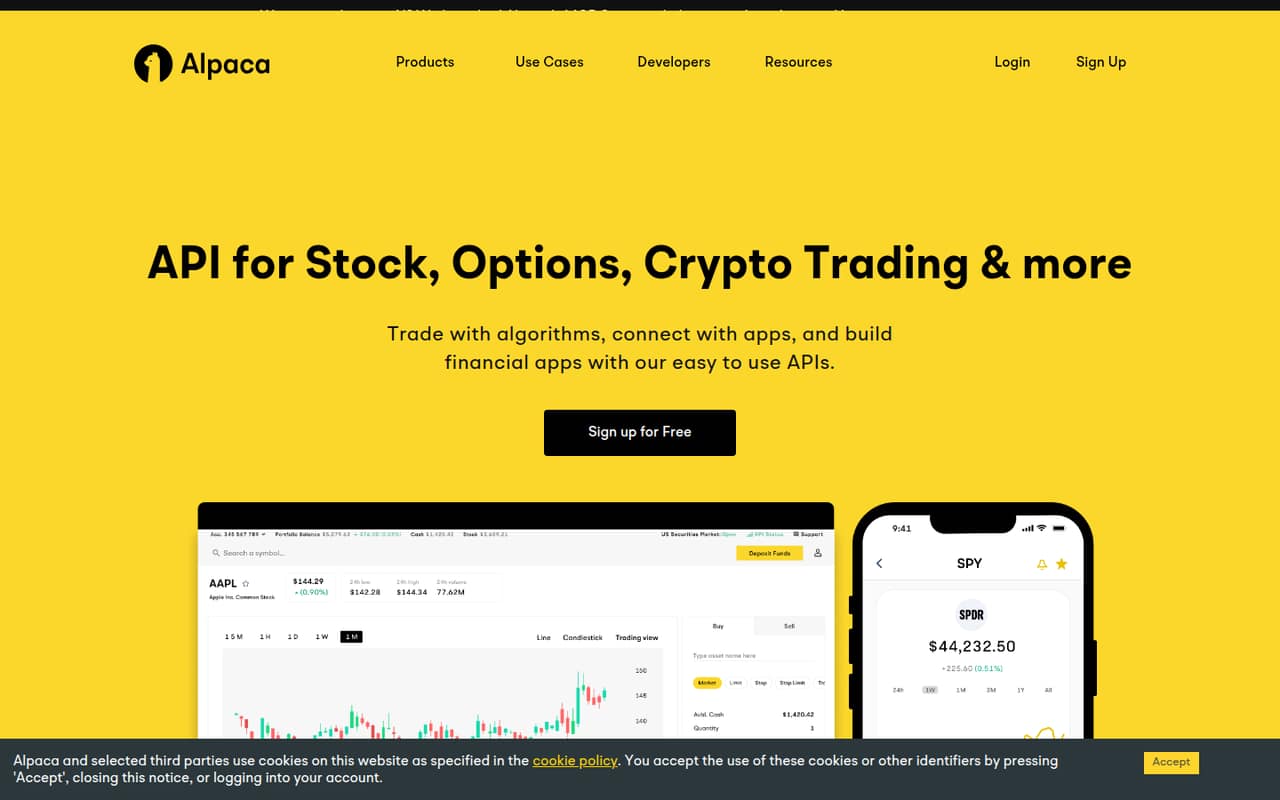
- Best for tradingAlpacaAlpaca
Alpaca is a hosted API for algorithmic trading, embedded brokerage and multi-leg options workflows. It has a free plan and a listed starting price of $99. Free access comes with data and rate limits, so establish whether those constraints match your strategy, test environment and production needs. Confirm execution behavior and applicable plan terms before building trading logic around it.
What works
- Trading and Broker APIs cover distinct developer use cases
- Free Basic tier supports initial API development
- SDKs listed for Python, .NET/C#, Go and Node
What doesn't
- Free market-data access has feed and request limits
- Algo Trader Plus is $99 per month
- Paid Broker API tiers reach $2,000 per month
- Best for WebSocketsPolygon.ioPolygon.io
Polygon.io supports REST, WebSockets, historical market data and flat-file access, making it a fit for applications and research workflows with different delivery needs. The listed starting price is $23.2. Check that its coverage and data quality suit the instruments and historical depth you require, then verify plan limits before relying on it for production feeds.
What works
- REST and WebSocket access for real-time and historical data
- S3 interface for flat-file datasets
- SQL queries are available by request
What doesn't
- Listed subscription plans are for individual use only
- No free plan is listed in the pricing snapshot
- Rate limits and overage costs are not published
- Best for research dataFinancial Modeling PrepFinancial Modeling Prep
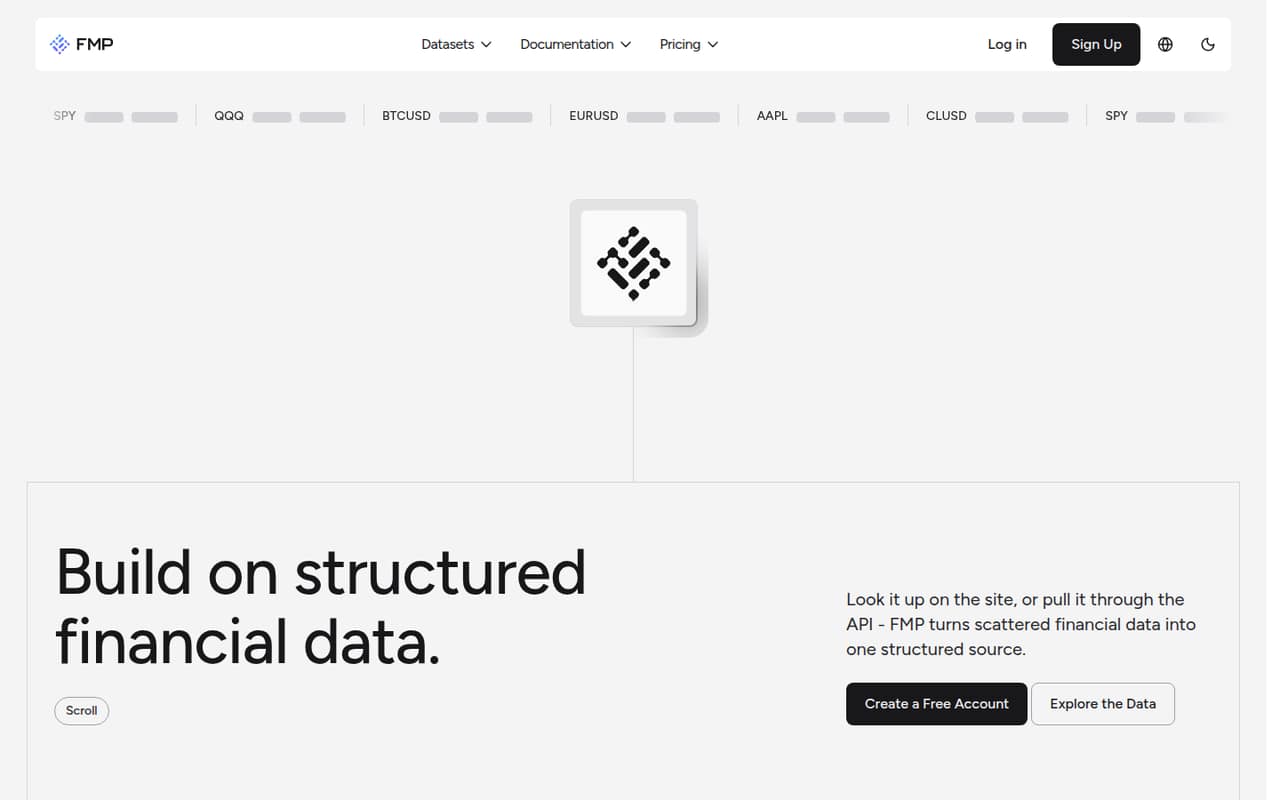
Financial Modeling Prep offers structured market datasets and multiple delivery options for research, screening and prototype applications. A free plan is available, and the listed starting price is $19. Before adopting it, confirm that its coverage and reliability meet your use case. Map the endpoints your application will call to plan limits and production requirements.
What works
- More than 100 API endpoints
- API, WebSocket and bulk delivery
- JSON and CSV formats
What doesn't
- Basic is limited to 250 calls daily
- Paid tiers have bandwidth caps
- Coverage varies by plan
- Best for prototypingAlpha VantageAlpha Vantage
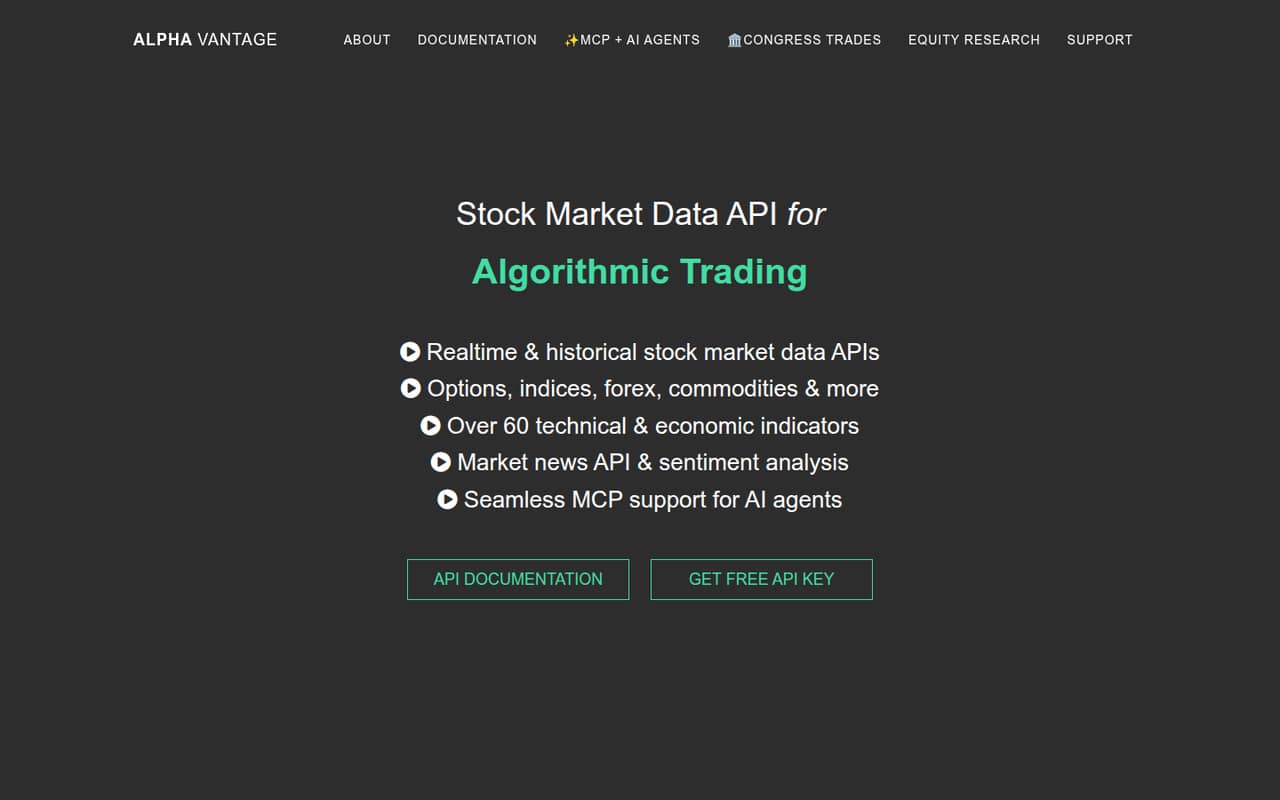
Alpha Vantage offers varied asset coverage, a free API key and MCP data access, making it useful for developers exploring market-data integrations. Its listed starting price is $41.58. The key production checks are rate limits and data quality: validate both for the endpoints and update frequency your application needs before treating it as a dependency.
What works
- Covers stocks, ETFs, mutual funds, and market indices
- Includes economic indicators, forex, and commodities
- Offers fundamentals and technical indicators
What doesn't
- Free Plan is limited to 25 API requests per day
- No open-source licence or self-hosting option is published
- SDK and language support needs confirmation in the docs
- Best for optionsTradierTradier
Tradier combines brokerage integration with broad trading coverage, including use cases for automated options trading. It has a free plan and a listed starting price of $10. Compare the monthly plan costs against your expected usage, and verify rate limits, execution behavior and developer support before you make it part of an order workflow.
What works
- API access is included with Lite
- Supports stocks, options, futures, forex and crypto
- MCP Server works with Claude Code, Cursor and Gemini CLI
What doesn't
- API rate limits and usage charges need confirmation
- SDK languages and protocols are not listed on the homepage
- No open-source licence or self-hosting option is published
- Best for account linkingPlaidPlaid
Plaid is a hosted financial data API for bank-account connections, payments and underwriting workflows. It suits teams that want a hosted network rather than a self-managed connectivity layer. A free plan is listed, but confirm pricing before production and assess the institution coverage, connection behavior and data access your application requires.
What works
- One API network supports several financial product use cases
- Homepage lists 12,000 institutions across 20 countries
- Limited Production includes up to 200 calls per available product
What doesn't
- Starting prices and product rates are not published
- Product charges can use different billing units
- Growth requires a 12-month commitment

- Best for open bankingSalt EdgeSalt Edge
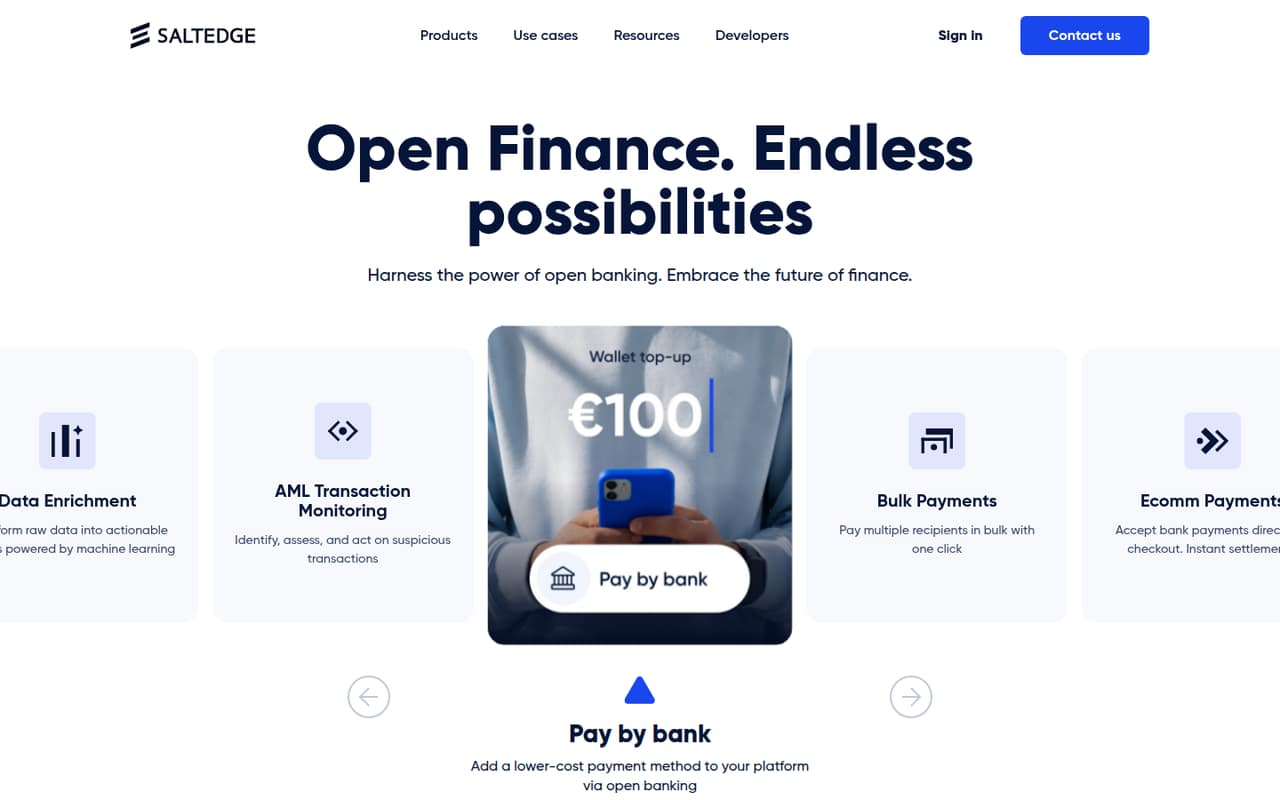
Salt Edge provides an open-banking API surface for data access, payments and compliance services, aimed at fintechs, banks and EMIs. A free plan is listed, while production pricing is custom. Validate bank-connection reliability for your target markets and ask the vendor to scope costs, integration requirements and support for your intended use.
What works
- One API provides access to thousands of banks globally
- Covers aggregation, enrichment, payments and compliance
- Free sandbox includes simulated bank fixtures
What doesn't
- Production pricing is custom
- Public overview does not identify SDKs or languages
- Production rate limits are not published
- Best for tick datadxFeeddxFeed
dxFeed targets trading and research applications, historical tick-data workflows and market-data platform partners. Its market-data coverage is broad, but pricing is not listed and feed-specific integration details require vendor due diligence. Ask which feeds cover your instruments, how historical access is provisioned and what the production terms are before planning the integration.
What works
- Historical, real-time and delayed data offerings
- Options records include Greeks and TheoPrice
- Calculated indices and indicators are available
What doesn't
- Pricing and usage limits need vendor confirmation
- Public SDK and language details are limited
- No public self-hosting or license details
- Best for institutionsYodleeYodlee
Yodlee is a financial-data API for institutions connecting accounts, fintechs building finance features and lenders using alternative data. A free plan is listed, but pricing is custom and integration details need confirmation. Establish which account-data workflows are supported, how access is provisioned and what production costs and operational requirements apply.
What works
- Products span personal finance, lending and wealth
- Supports permissioned financial-data access through APIs
- Payment product verifies accounts
What doesn't
- Enterprise pricing is custom and unpublished
- API specifications and SDK support need confirmation
- No public rate limits are stated
- Best for banking analyticsMXMX
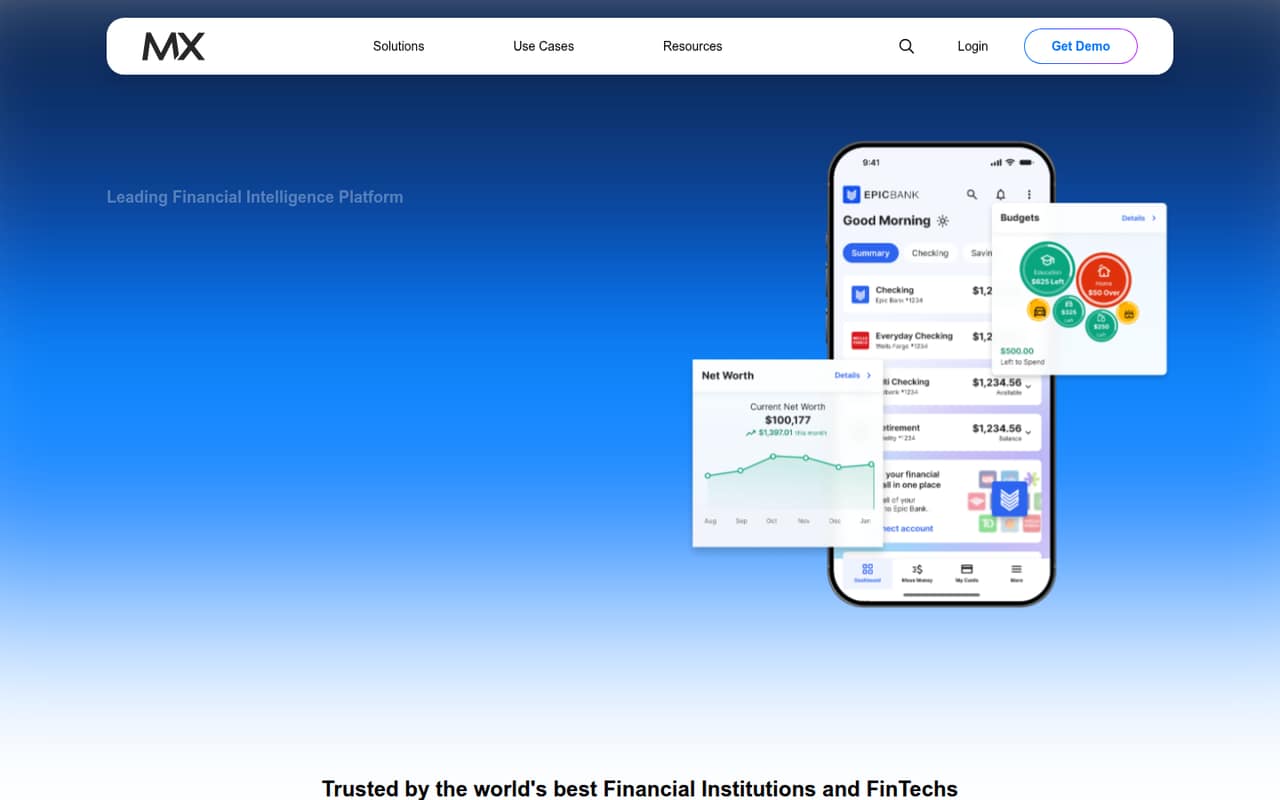
MX combines financial data access with analytics for institutions building digital banking tools, fintechs using permissioned account data and teams analyzing transactions. Pricing is custom, and public integration details are sparse. Ask for a technical walkthrough of the required data flows and a production quote based on your connection volume and analytics use case.
What works
- Combines account aggregation and transaction-data enhancement
- Supports consumer-permissioned account connections
- Includes account detail, ownership and balance verification
What doesn't
- Pricing is custom and not published
- No free plan or trial is listed
- SDK and language support are not named
- Best for lending flowsFinicityFinicity
Finicity provides financial-data APIs for account linking, permissioned data used by lenders and account-to-account payments. Its fit depends on the bank-linking flow and institutions your application needs. Pricing is custom, so request a quote and validate reliability with the target accounts before choosing it for a user-facing onboarding or underwriting path.
What works
- Supports account verification and financial data connections
- Covers payments, lending and consumer insights
- Vendor reports 15b+ API calls serviced globally each year
What doesn't
- Production pricing is custom and not published
- Rate limits and usage thresholds are not published
- SDKs and supported languages need confirmation

03How we chose
We ranked these APIs by fit for developers and technical teams: integration shape, API and documentation clarity, use cases, free access and published entry pricing. We gave weight to whether a team can estimate production costs and identify operational constraints such as rate limits, data limits, connection reliability and feed-specific requirements. Reddit sentiment can flag practical issues that vendor pages may not cover, but it is a secondary diligence signal, not a substitute for confirming plan terms, coverage and support directly with a vendor.
04Match the API to the data path
Start with the system your application needs to connect to. Bank-account APIs such as Plaid, MX, Yodlee, Salt Edge, Finicity and Teller serve account-data, payment or financial-workflow use cases; brokerage APIs such as SnapTrade and Alpaca address investment accounts, trading or embedded brokerage. Market-data APIs such as Twelve Data, Finnhub, Polygon.io, Alpha Vantage, dxFeed, Tradier and Financial Modeling Prep focus on market information or trading. Those categories overlap, but they are not substitutes for one another.
Write down required institutions, brokers, markets, instruments, history and delivery method before comparing vendors. For live data, check whether REST, WebSockets or another feed fits your application. Ask about connection or feed reliability, data quality, rate limits and plan-specific restrictions. Get a production quote based on expected calls, accounts, instruments and update frequency—not just a prototype's traffic.
05Price the production path
A free plan helps with evaluation but does not establish production cost. Published starting prices vary: the listed entry price is $100 for SnapTrade, $79 for Twelve Data, $99 for Alpaca and $23.2 for Polygon.io. Finnhub lists global access from $3,500 per month with annual billing. Teller's production charges accrue by account, call and enrollment, while Plaid, MX, Yodlee, Salt Edge and Finicity require pricing confirmation or custom quotes. Confirm billing units, limits, overages and any contract terms with the vendor.
Also ask about API versioning, SDK languages, examples, error handling, support escalation and data export. Review the license and terms governing storage, redistribution and retention. If open-source code or self-hosting matters, ask directly whether either is available and what components remain vendor-managed. Treat Reddit reports as leads to investigate, then verify operational concerns in writing before launch.
Questions people ask
Which financial data API is best for developers?
For a general-purpose shortlist, SnapTrade ranks first here because it focuses on brokerage data and workflows, offers a free plan and lists a $100 starting price. The best fit still depends on whether you need brokerage, bank-account or market data. Confirm supported providers, plan limits and production costs for your use case.
Are financial data APIs free?
Several listed vendors offer free plans, including Plaid, Yodlee, Alpha Vantage, SnapTrade, Alpaca and Twelve Data. Free access does not necessarily cover production needs. Check usage limits, data access, rate limits and what triggers charges; Teller, for example, says production charges accrue by account, call and enrollment.
How should I compare financial data API pricing?
Compare the billing unit with your expected workload: accounts, API calls, enrollments, data access or required market coverage. Treat a listed starting price as an entry point, not a forecast. Ask vendors with custom pricing for a quote based on production usage, and confirm limits, overages and contract terms before implementation.
Can I self-host a financial data API?
The APIs in this guide are presented as hosted services, and self-hosting or open-source availability is not established for them. If control over deployment or data handling is a requirement, ask each vendor about source availability, hosting options, data export, retention and which parts of the integration remain vendor-managed.