We may earn a commission if you buy through links on this page. It never changes a score or a ranking. How we make money
Dremio is our best overall pick for teams building around Apache Iceberg: it offers managed or self-hosted deployment and a free plan, with costs tied to DCU use. Oxla is a closer fit for Redpanda streams and PostgreSQL-client workflows; Apache Pinot suits teams prepared to operate an open-source real-time analytics system. Vertica targets large MPP workloads and on-premises deployments, while Cloudera Data Platform fits hybrid, governed estates. Compare the integration path and operating model before committing; these platforms solve different workloads.
Quick picksThe shortlist
 DremioDremioBest overall · Free
 Apache PinotApache PinotBest open source · Free
 OxlaOxlaBest for live streams · $50/mo
 VerticaVerticaBest for on-prem analytics · Free
 Cloudera Data PlatformCloudera Data PlatformBest for hybrid estates · $6.67/mo
01Compared at a glance
| Tool | Score | From | Free plan | Trial |
|---|---|---|---|---|
| DremioDremio | 7.2 | Free | Yes | 30 days |
| Apache PinotApache Pinot | 6.3 | Free | Yes | — |
| OxlaOxla | 7.1 | $50/mo | Yes | — |
| VerticaVertica | 7.2 | Free | Yes | 30 days |
| Cloudera Data PlatformCloudera Data Platform | 5.8 | $6.67/mo | No | — |
02The picks, in detail
- Best overallDremioDremio
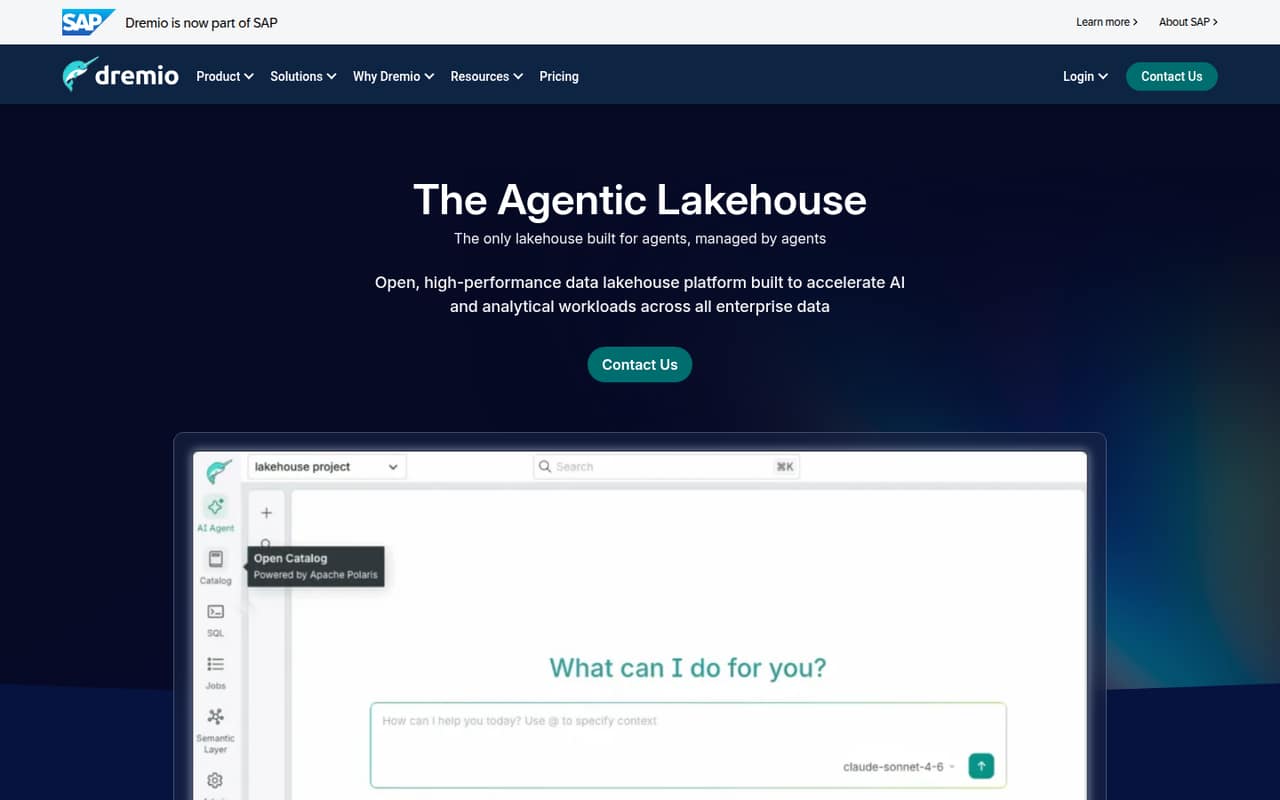
Dremio combines managed and self-hosted deployment with an Apache Iceberg focus and a free plan. That makes it a flexible starting point for teams that want deployment control without committing to a single operating model. Budget around DCU use: the pricing basis matters, but teams should confirm current rates and expected usage before sizing production workloads.
What works
- Queries Iceberg data without format conversion
- Apache Polaris supports Iceberg REST engines
- MCP connects named AI agents
What doesn't
- Enterprise consumption rate is not published
- Cloud pricing is tied to DCU consumption
- Self-managed upgrades and scaling are manual
- Best open sourceApache PinotApache Pinot
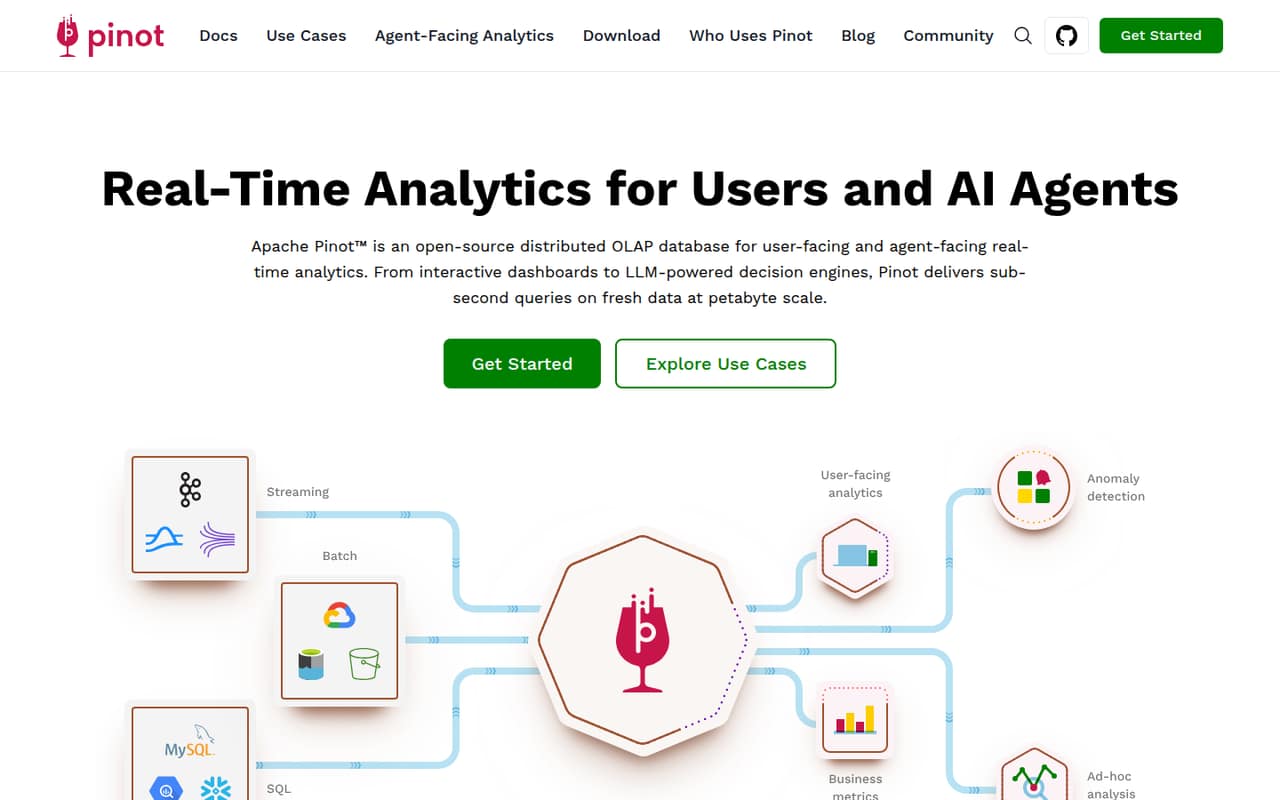
Apache Pinot is an open-source choice for user-facing, real-time analytics on fresh data, with SQL access and self-hosting. It is a better fit when the team can take on distributed-system operations than when it needs a managed warehouse with minimal upkeep. Confirm the applicable license and operational requirements before adopting or distributing it.
What works
- Open-source Apache License 2.0
- SQL access through a query editor and REST API
- Streaming ingestion from Kafka, Pulsar and AWS Kinesis
What doesn't
- Self-hosting requires operating a distributed system
- No published monthly or annual rates
- Seat and usage limits are not published
- Best for live streamsOxlaOxla
Oxla can query live Redpanda topics and Iceberg history through PostgreSQL clients, a specific integration path for teams working across streams and lake data. It has a free plan and starts at $50, giving buyers a published entry price to evaluate. Check how that price scales with production usage and whether its Redpanda focus matches your stack.
What works
- Queries live Redpanda topics and Iceberg history together
- PostgreSQL dialect and wire protocol
- Connects with psql, DBeaver and DataGrip
What doesn't
- Seat, data and usage limits are unpublished
- No SDK, language or CLI is named
- Open-source license and source availability are unclear
- Best for on-prem analyticsVerticaVertica
Vertica targets large analytical workloads, on-premises deployment, and in-database machine learning. Its MPP architecture suits teams with those requirements and the capacity to manage deployment. A free plan is listed, but commercial licensing and deployment work belong in the production budget; confirm licensing terms and expected costs before selecting it.
What works
- MPP architecture distributes queries across nodes
- Columnar storage targets complex analytical queries
- Runs on-premises, cloud, hybrid, and Kubernetes
What doesn't
- Commercial rates require a quote
- Community Edition stops at three nodes
- Client SDK and language support need verification
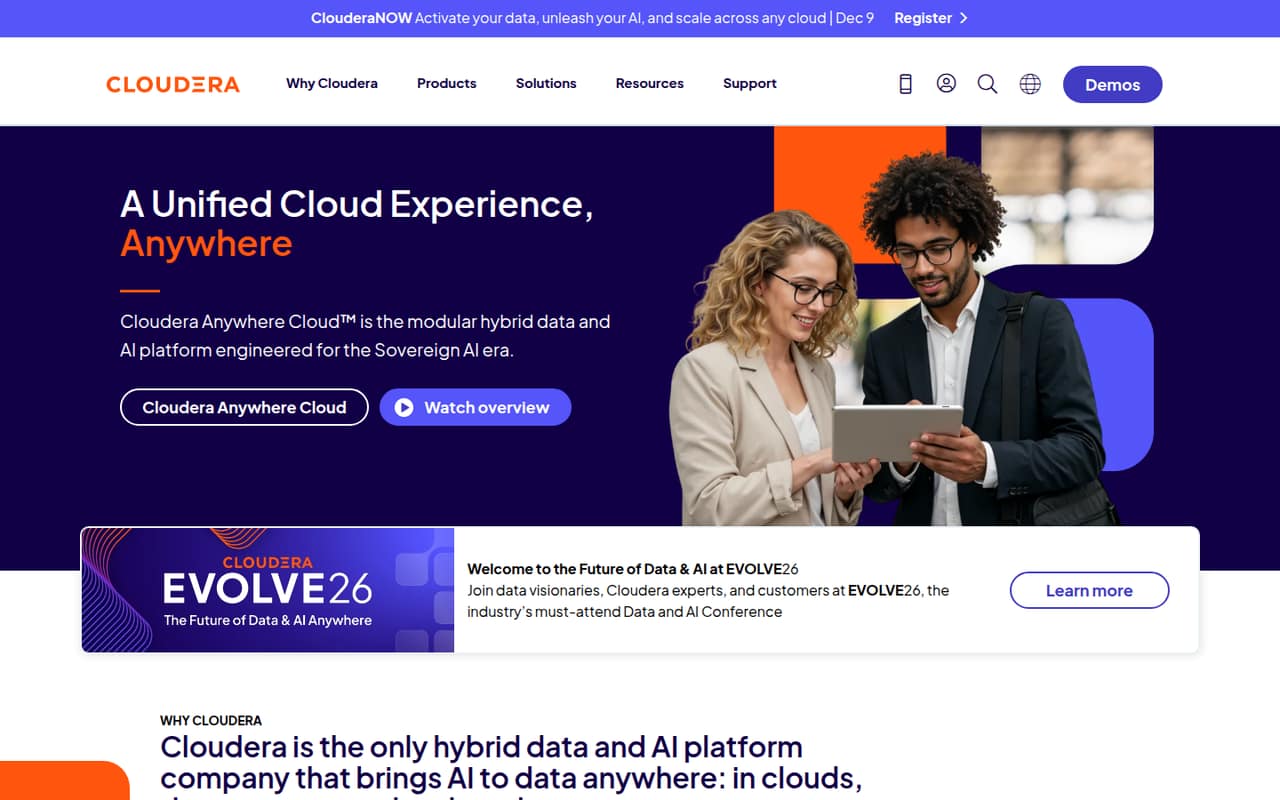
- Best for hybrid estatesCloudera Data PlatformCloudera Data Platform
Cloudera Data Platform is aimed at teams operating across cloud and data centers, with governed data estates and Apache Iceberg adoption. It is self-hostable and uses usage-based rates. Public integration details are limited, so teams should validate the APIs, connectors, and deployment model they need with Cloudera before designing around the platform.
What works
- Targets public cloud, data centers and edge
- Uses Apache Iceberg for its open lakehouse
- Combines data, analytics and AI capabilities
What doesn't
- No free plan or trial is listed
- Monthly totals are not published for cloud rates
- Seat and usage limits are not published
03How we chose
We ranked these platforms for technical teams by workload fit, deployment control, and the information developers need before integration: API and SDK coverage, documentation, free-tier availability, usage pricing, and licensing. We distinguish an open-source, self-hosted system from a commercial platform that can also be self-hosted. We also treat Reddit sentiment as a secondary signal, not a substitute for vendor documentation or published terms. Where prices or integration specifics are unclear, the ranking favors asking vendors for a workload-specific quote or deployment confirmation over assuming a cost or capability.
04Match the query path to your data
Start with the data your application needs to query and how fresh it must be. For Iceberg-centered analytics, Dremio is explicitly positioned as an Iceberg query platform; Cloudera also targets teams adopting Iceberg, and Oxla can query Iceberg history. For live Redpanda topics accessed through PostgreSQL clients, Oxla has the clearest stated fit. Apache Pinot targets SQL analytics on fresh data for user-facing applications. Vertica is aimed at large analytical workloads and in-database ML. These are different integration shapes, not interchangeable feature checklists. Before committing, ask for the exact connector, protocol, SDK, and authentication support your codebase requires. Confirm how schema changes, late-arriving data, and query failures behave in your intended pipeline; do not infer those details from a workload label.
05Price the operating model, not just the entry tier
A free plan is a starting point, not a production cost estimate. Oxla lists a $50 starting price and a free plan; Dremio has a free plan and costs tied to DCU use. Vertica lists a free plan, but commercial licensing and deployment work can affect its total cost. Cloudera uses usage-based rates, while Apache Pinot is open source and self-hostable, with operations still part of the budget. Ask vendors how the bill changes with stored data, query volume, concurrency, and deployment size; confirm those metrics against your workload. For self-hosted systems, include infrastructure, upgrades, monitoring, and on-call ownership. Check data export and migration paths before loading production data, and get licensing terms in writing if you plan to modify or redistribute software.
Questions people ask
Which platform should I choose for Apache Iceberg?
Dremio is the most direct fit here: it is positioned as an Iceberg query platform and supports managed or self-hosted deployment. Cloudera targets Iceberg adoption, while Oxla can query Iceberg history. Compare the exact query and catalog integrations your pipeline requires before choosing.
Which option is open source?
Apache Pinot is the open-source option in this group and can be self-hosted. Check its applicable license and operational requirements before adopting it, especially if you plan to modify or redistribute the software.
How should I compare pricing?
Oxla lists a $50 starting price and a free plan. Dremio also has a free plan, with costs tied to DCU use; Cloudera uses usage-based rates. Vertica lists a free plan but also requires budgeting for commercial licensing and deployment.
Can I self-host these platforms?
All five are marked self-hostable. That does not make their operating costs or deployment work equivalent: Apache Pinot carries a substantial operations commitment, and Vertica calls for deployment planning. Confirm support, upgrade responsibilities, and infrastructure requirements with each vendor.