
We may earn a commission if you buy through links on this page. It never changes a score or a ranking. How we make money
The bottom line
Spreedly connects payment providers and stores portable tokens, with a $750/month vault entry point.
Spreedly is a payment-orchestration platform built around a vault for payment credentials, connections to payment and fraud providers, and routing workflows. Its feature list is broad, but buyers should confirm the API surface, implementation requirements, and full cost with the vendor.
The Independent Vault starts at $750 per month, with unlimited storage listed. Performance Optimization pricing, free access, and trial terms are not published. Reddit discussion raises general questions about PCI scope and orchestration complexity, but offers little direct evidence about Spreedly itself.
Good fit if
- Teams that need token portability
- Businesses connecting multiple payment providers
- Payment teams building routing workflows
Skip it if
- Projects seeking a free tier
- Teams requiring self-hosted software
- Developers needing published SDK details
ScoresHow it rates
What works
- Vault plan includes unlimited storage
- 150+ gateway connections listed
- 60+ supported payment methods listed
- Routing, retries, and account updater included
- Fraud, risk, and 3DS workflows
What doesn't
- Independent Vault starts at $750 monthly
- Performance Optimization price is not published
- No free plan or trial listed
- SDKs, languages, and API protocols need confirmation
- Open-source license and self-hosting are not documented
01What Spreedly is, technically
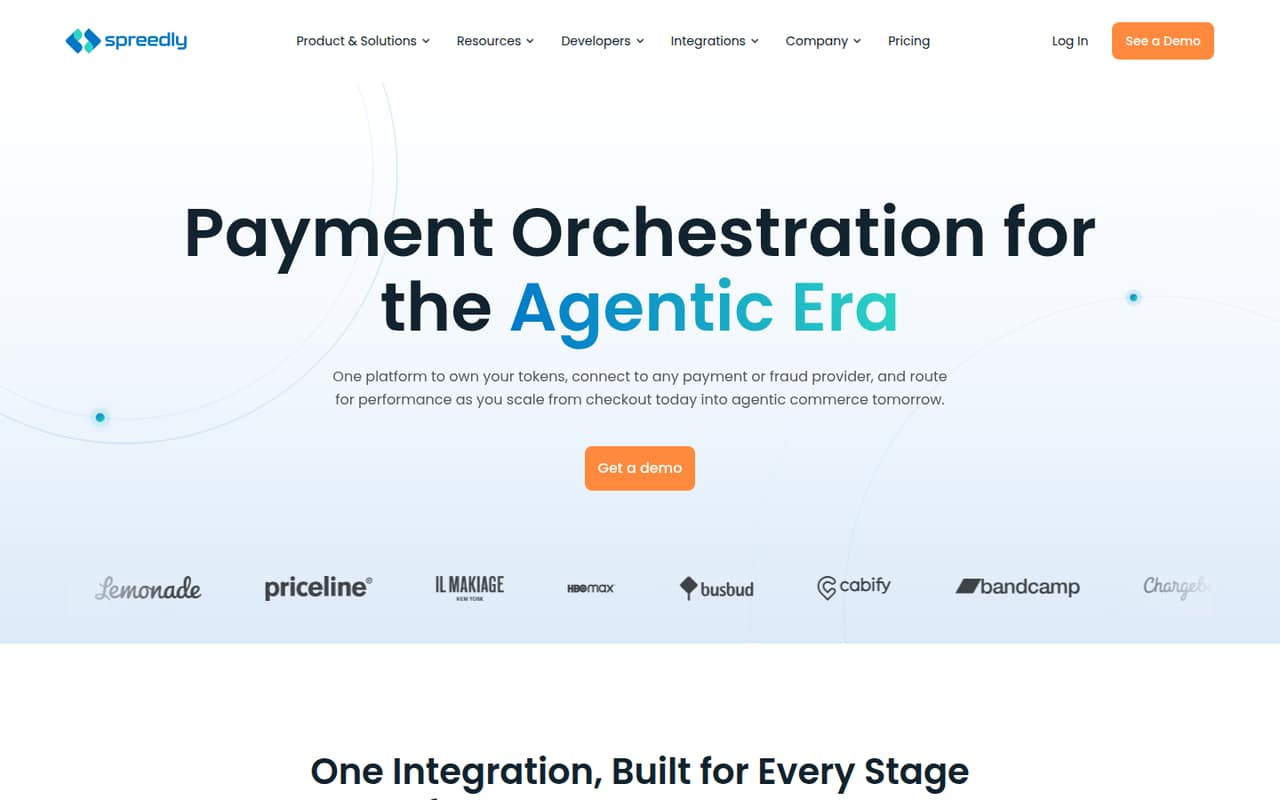
Spreedly is a vendor-operated payment-orchestration platform: a service that sits between a business's checkout or payments system and external payment, fraud, and authentication providers. Its Vault stores payment credentials, while its Connect, Optimize, and Protect capabilities cover provider connectivity, routing, and fraud and authentication workflows. This is infrastructure for a payments stack, not a payment gateway that replaces every processor.
The practical aim is to keep payment credentials portable while connecting multiple providers through one platform integration. Spreedly lists routing, retries, and account updater capabilities, and describes Composer as a visual workflow builder for fraud, identity, and payment routing. Its agentic-commerce positioning is a further integration target, with the homepage naming ChatGPT and Gemini. The homepage describes a platform and a secure repository for payment methods; it does not present Spreedly as a library, CLI, or self-hosted server. Buyers should treat it as a managed service and confirm deployment and data-flow details with the vendor.
02Spreedly API, SDKs and docs
Spreedly directs developers to a Developer Portal, Developer Guides, and Documentation, alongside its integrations ecosystem. The product is organized around provider connections and a unified orchestration layer; Composer is described as a visual workflow builder for linking fraud, identity, and payment routing. The homepage also positions one integration as a way to sell across agentic platforms.
Before choosing an implementation path, confirm the API protocol, request and response formats, authentication method, webhook support, and SDK availability in the vendor's docs. The homepage does not name SDKs or programming languages, so confirm SDK support for your language with Spreedly rather than assuming an official client exists. It also does not name a CLI or specific plugin framework. The listed integration counts—150+ gateway connections, 60+ payment methods, and 32+ fraud and risk solutions on Performance Optimization—are useful starting points, but verify that your exact providers and workflows are supported.
03Spreedly pricing for developers
The Independent Vault plan is listed at $750 per month. It includes a PCI-1 compliant vault, unlimited storage, vault-health insights, and support for reducing vendor lock-in. The published pricing details do not list annual billing or discounts. There is no free plan or free trial listed.
Performance Optimization has no published price. Its listed capabilities include 150+ gateway connections, 60+ supported payment methods, 32+ fraud and risk solutions, routing, retries, and account updater. The starting price is therefore $750 per month for the vault plan, not a published price for the full orchestration stack.
Spreedly does not publish a per-transaction, request, seat, or usage rate in the pricing details available here. Overages and add-on fees are also not published. Ask the vendor for a quote that covers your provider mix, transaction volume, environments, and required features. Confirm whether the vault subscription is separate from Performance Optimization and whether any implementation, support, or provider-specific charges apply before estimating production cost.
04Spreedly: open source, self-hosting and lock-in
Spreedly calls itself an open payments platform, but that refers to connecting payment providers; it does not establish an open-source license. The vendor's product pages do not identify a source-code license or offer a self-hosted deployment option. Treat the service as vendor-managed unless Spreedly confirms otherwise in writing.
The Independent Vault is positioned around token ownership and portability, and its plan includes unlimited storage. Those features can reduce reliance on a single payment provider, but token ownership does not by itself guarantee that every token can be exported or used with every destination. Ask which credential types are portable, what export formats and fees apply, and how migration works if you leave. Also confirm what happens to stored credentials and transaction data at contract end. Without those terms, portability is a product capability to validate, not a complete exit plan.
05Spreedly in production
Before routing production payments through Spreedly, confirm provider-specific limits, retry behavior, timeout handling, idempotency, and how the platform behaves when Spreedly or a connected provider is unavailable. The pricing information does not publish request limits, rate limits, or service-level targets, so ask the vendor for those details and for incident and status procedures. Validate credential export and recovery, too, rather than treating token portability as automatic.
The platform lists a PCI-1 compliant vault, but that does not establish your application's compliance scope. In one Reddit thread about Spreedly or a similar service, commenters discuss how card-data capture and transmission can keep systems in scope, while a hosted iframe may reduce scope under specific assumptions. That exchange is general guidance, not a Spreedly assessment; confirm your architecture with your acquirer or a qualified assessor. Reddit discussion also points to the operational work behind orchestration—routing, retries, reporting, and portability—not just adding provider connections.
From the threadsWhat users say
The Reddit material is mixed but sparse on Spreedly itself. It highlights the value and complexity of orchestration, while PCI comments are general and should not be read as product-specific guidance.
At the end of the day, scope comes down to the people, processes and technologies that store/process/transmit cardholder data
Using an iframe to a pci complaint 3rd party reduces your scope to SAQ A
Adding more payment providers wasn't really the difficult part, it was managing everything between them
Routing rules, retries, reporting, and keeping payments portable started going complicated pretty quickly
Questions people ask
What does Spreedly do?
Spreedly is a payment-orchestration platform for storing payment credentials in a vault and connecting businesses to payment, fraud, and authentication providers. It also lists routing, retries, account updater, and workflow tools. The platform is intended to let businesses manage multiple payment connections without building each provider integration as a separate orchestration layer.
How much does Spreedly cost?
The Independent Vault is listed at $750 per month and includes unlimited storage. Performance Optimization has no published price. No free plan or free trial is listed, and annual billing, usage rates, overages, and add-on charges are not published. Ask Spreedly for a quote based on your providers, expected volume, and required features.
Does Spreedly let businesses own and move payment tokens?
Spreedly positions token ownership and portability as core capabilities, and the Independent Vault plan includes unlimited storage. However, portability can depend on credential type and destination provider. Confirm which tokens can be exported or reused, the available formats, any fees, and the migration process before relying on it as an exit strategy.
Does Spreedly provide SDKs or a CLI?
Spreedly points developers to its Developer Portal, Developer Guides, and Documentation. Its homepage does not name specific SDKs, languages, or a CLI. Check the vendor's docs for the API protocol, supported client libraries, authentication, webhook support, and examples that match your stack before estimating integration effort.
Does using Spreedly remove PCI compliance obligations?
Do not assume that it does. PCI scope depends on how your checkout captures, processes, or transmits cardholder data and on the surrounding systems. A Reddit discussion makes general points about hosted payment forms and scope, but it is not a Spreedly-specific compliance determination. Review your design with your acquirer or a qualified assessor.