
We may earn a commission if you buy through links on this page. It never changes a score or a ranking. How we make money
The bottom line
A capable load-testing suite, but you need a vendor quote to judge its production cost.
LoadRunner is a performance-testing product family for generating virtual-user load, with Community, Professional, Enterprise and Cloud editions. Community includes 50 virtual users for proof-of-concept and non-production testing; paid editions scale by protocol bundle, shared pools or cloud VUs and VUH.
The main buying risk is commercial and integration uncertainty: the vendor does not publish prices, and the homepage does not establish API, SDK, CLI or deployment details. Reddit comments are mixed, with users citing enterprise fit and continued use alongside complaints about licensing and support.
Good fit if
- Teams already using LoadRunner
- Enterprise protocol-based performance testing
- Proof-of-concept testing with 50 VUsers
Skip it if
- Teams requiring transparent list pricing
- Small projects needing broad free capacity
- Developers seeking a documented public API
ScoresHow it rates
What works
- Community edition includes a perpetual free license
- Community supports 50 virtual users
- Professional licensing spans protocol bundles
- Enterprise offers shared VUser pools
- Cloud scales to 5,000,000+ virtual users
What doesn't
- Paid plan prices are not published
- Professional VUFD limits and costs are unclear
- Cloud VUH overage rate is not published
- Homepage does not establish API or SDK details
- Reddit users report licensing and support problems
01What LoadRunner is, technically
LoadRunner is a performance-testing product family for generating virtual-user load against applications and services. It sits in a test workflow: teams use it to model demand, exercise systems under load and assess performance before or during releases. It is not presented as an application API, SDK or general-purpose load-generation library.
The published editions are Community, Professional, Enterprise and Cloud. Community supports 50 virtual users for proof-of-concept and non-production testing. Professional licensing is based on concurrent VUser capacity by protocol bundle, with Virtual User Flex Days also available. Enterprise uses shared VUser pools, instances and protocol suites. Cloud offers fixed VUs or Virtual User Hours (VUH), with published scale up to 5,000,000+ virtual users.
The product family spans different licensing models, but the vendor does not establish deployment-platform details on its homepage. Confirm where each edition runs, how load generators are deployed and what controller components your architecture needs before choosing an edition.
02LoadRunner API, SDKs and docs
LoadRunner is a testing product rather than a developer-facing hosted API. The vendor homepage text identifies OpenText Support and regional sites, but it does not name a REST API, webhooks, CLI, plugins, SDKs or programming languages. The product facts identify protocol support and licensing bundles, not the mechanics for authoring, launching or automating tests.
That leaves an integration question for teams planning CI/CD use: confirm the supported automation interfaces, scripting languages, version-control workflow and report export options in the current LoadRunner product documentation. Ask the vendor which interfaces work across Community, Professional, Enterprise and Cloud; do not assume an integration feature in one edition is available in another.
Community supports listed protocols, excluding COM/DCOM, Templates and GUI bundles. Professional protocol capacity and additional bundles vary by protocol. Those distinctions affect what tests you can run, so validate protocol coverage against the application stack before committing to a license.
03LoadRunner pricing for developers
The pricing page does not publish monthly or annual prices, and no starting price is listed. LoadRunner Community is the clear low-cost entry point: it includes a perpetual free license and 50 virtual users for proof-of-concept and non-production testing. Its listed protocol support excludes COM/DCOM, Templates and GUI bundles.
Professional licensing is based on concurrent VUser capacity by protocol bundle. Virtual User Flex Days (VUFD) and additional Web, Web 2.0, SAP and Database protocol bundles are available, but their costs and exact Flex Day limits are not published. A free trial is listed; its duration and limits are not published.
Enterprise uses shared VUser pools, instances and protocol suites. Additional load generators and multi-project controller capacity are available, with costs not published. Cloud can be licensed by fixed VUs or VUH and is described as pay-per-use based on consumed VUH, scaling up to 5,000,000+ virtual users. Additional VUH and cloud load injector regions are listed, but their costs and the VUH overage rate are not published. Request a quote that covers peak load, protocol needs and schedule changes.
04LoadRunner: open source, self-hosting and lock-in
The vendor homepage does not state an open-source licence or make source-availability terms clear. It also does not establish which editions can be self-hosted or where their components run. Ask OpenText for the licence terms, supported deployment models and any data residency options before placing tests or results in a production workflow.
LoadRunner Cloud's VU and VUH licensing indicates a cloud offering, but it does not settle how test scripts, results or configurations can be exported. The published materials do not describe data export or migration tools. Confirm script portability, report formats and access to historical test data in writing.
Lock-in will depend on the protocols, scripting model and reporting your team adopts. Before expanding usage, validate whether scripts can be reused outside LoadRunner and what would need rewriting if you later change test runners.
05LoadRunner in production
LoadRunner's published scale ranges from 50 Community virtual users to 5,000,000+ virtual users in Cloud. That makes the editions relevant to different testing sizes, but capacity is not the same as a production plan: verify protocol coverage, load-generator placement, controller capacity, concurrency rules and Cloud VUH overages with the vendor. The vendor does not publish prices, so model costs against realistic test schedules before relying on pay-per-use capacity.
Security and compliance requirements also need a vendor review. Confirm data handling, region availability, retention, access controls and the deployment model for your chosen edition; the homepage does not establish those details.
Reddit feedback is mixed. One r/QualityAssurance commenter said LoadRunner made sense where a company already used it, while another reported license-date problems, slow support responses and frustration with fixed license periods. Those are individual reports, not service guarantees, but they make support hours, renewal terms and license flexibility worth checking before a large rollout.
From the threadsWhat users say
Reddit sentiment is mixed: some users see value in keeping LoadRunner where it is already deployed, while others criticize cost, licensing and vendor support. The comments are anecdotal and include retrospective opinions.
as LR is already in use it makes sense to keep going with it
LoadRunner used to be king, but it is so expensive that I wouldn't recommend anyone learn it unless you are already at a company that's roped into a large contract and has licenses
My interactions with Opentext have been consistently very poor
LR seems just as comprehensive (or clunky!)
Questions people ask
What is LoadRunner used for?
LoadRunner is performance-testing software for virtual-user load testing. Teams use it to exercise applications and services under simulated demand. Its editions cover proof-of-concept and non-production testing through enterprise and cloud-scale testing, with protocol support and licensing capacity varying by edition.
How much does LoadRunner cost?
The vendor does not publish monthly or annual prices or a starting price. Community includes a perpetual free license for 50 virtual users. Professional, Enterprise and Cloud pricing depends on VUser capacity, protocol bundles, shared pools or consumed VUH. Request a quote that includes add-ons, overages and license dates.
What is LoadRunner called now?
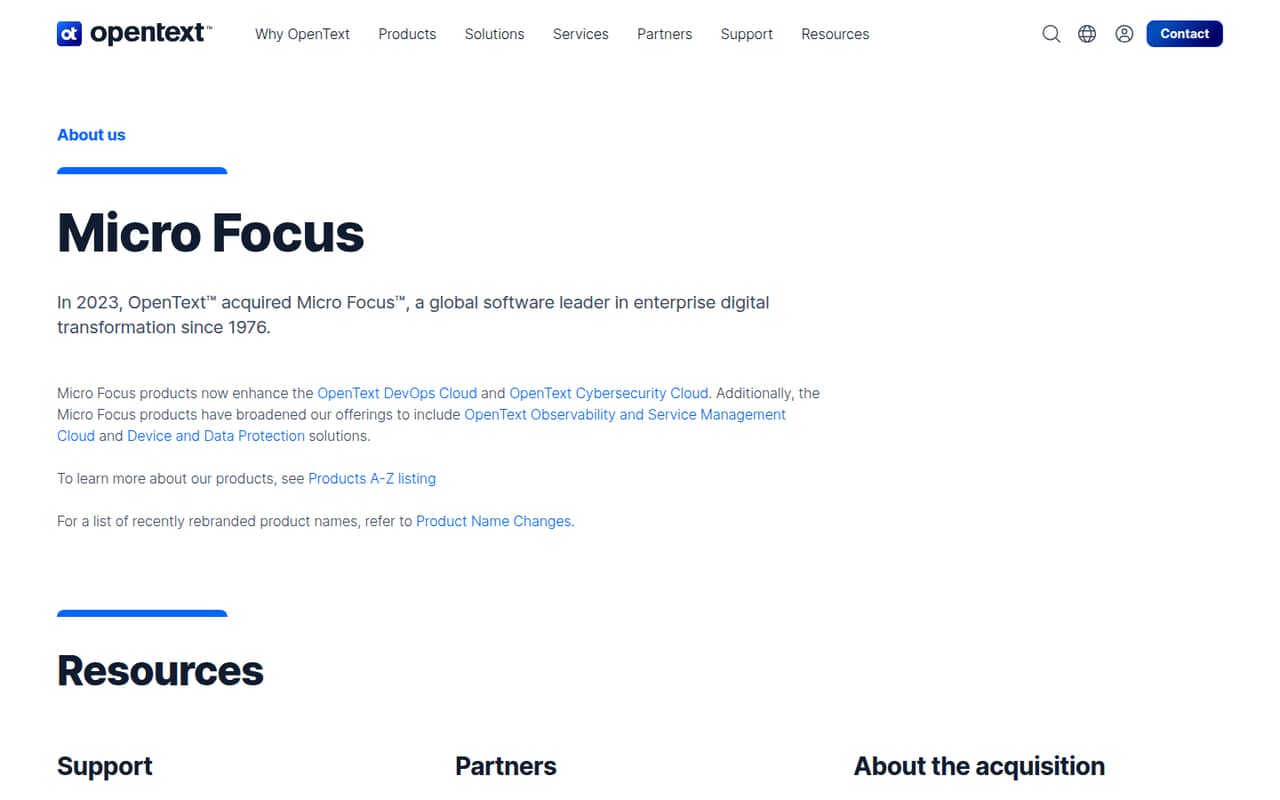
The product is still called LoadRunner. The vendor homepage references Micro Focus's acquisition by OpenText, so current product and support information sits in the OpenText context. Confirm the exact product edition and support channel when reviewing older Micro Focus documentation.
How do I download LoadRunner?
The Community edition's terms say its free license is included with product installation. The vendor homepage links to OpenText Support, but the current download route and installer requirements should be confirmed through OpenText's LoadRunner product or support channels before installation.
What does the LoadRunner Community edition include?
Community includes a perpetual free license and 50 virtual users for proof-of-concept and non-production testing. It supports listed protocols, with COM/DCOM, Templates and GUI bundles excluded. Check the current protocol list and licensing terms against the applications you need to test.
Sources
- LoadRunner homepage
- LoadRunner pricing, compiled via web search from automation-consultants.com, qable.io, trustradius.com, loadfocus.com, cdw.com, peerspot.com, jmeter.ai
- Reddit: Good learning resources for Performance Testing (LoadRunner / JMeter)?
- Reddit: Honest opinions on Loadrunner?
- Reddit: 4 YOE in Performance Testing — Considering SRE. How is the career really in terms of pressure, growth, salary and AI?