
We may earn a commission if you buy through links on this page. It never changes a score or a ranking. How we make money
The bottom line
A flexible self-managed scheduler, with production support and pricing details to confirm.
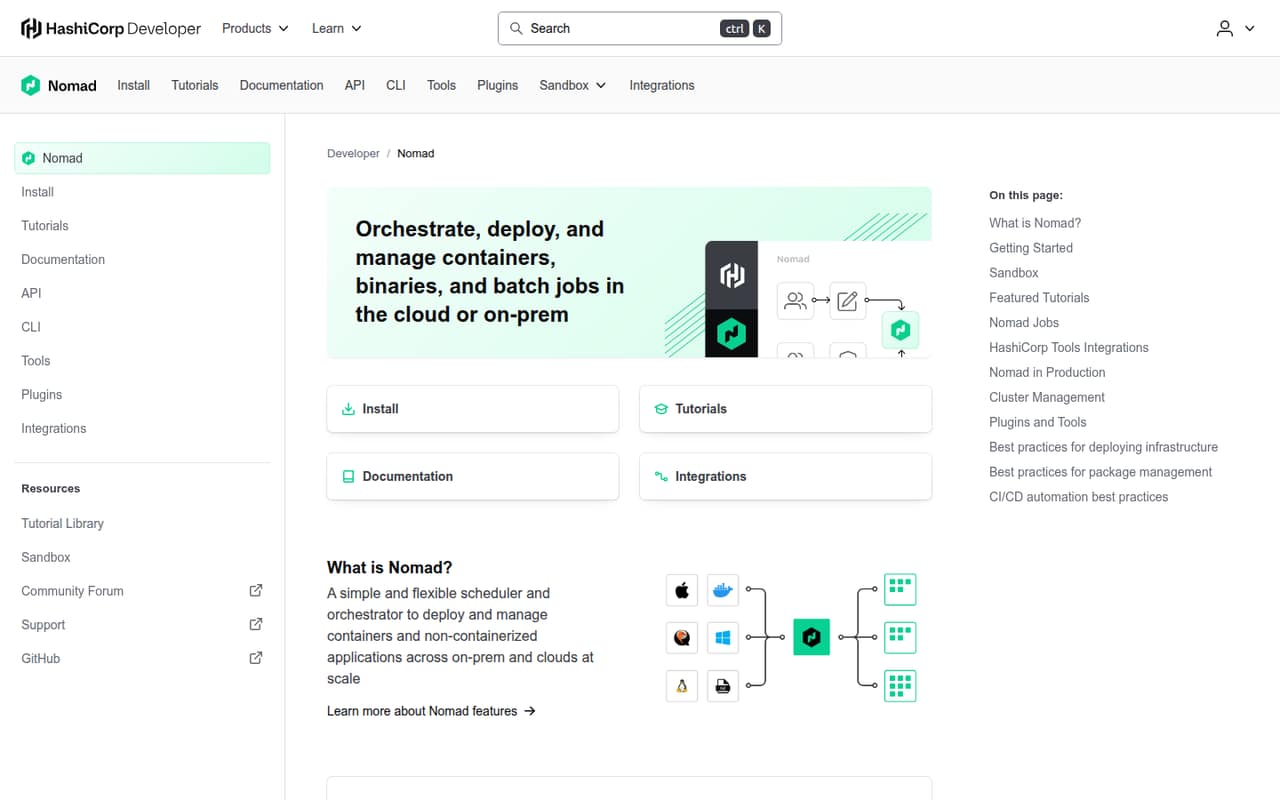
Nomad is a self-managed scheduler and orchestrator for containers, binaries, batch jobs and other applications across cloud and on-premises environments. It is a good fit for teams that want one job-based system for mixed workloads and are prepared to operate the cluster.
Reddit users often praise its simpler setup and job specs, but some report outages, bugs and difficulty getting help. The free Community edition is attractive; paid prices, usage limits and license terms need checking before a production commitment.
Good fit if
- Teams scheduling mixed workload types
- Self-hosted and on-premises deployments
- Organizations using HashiCorp tools
Skip it if
- Teams needing published paid pricing
- Workloads requiring guaranteed support response
- Teams seeking Kubernetes-level ecosystem breadth
ScoresHow it rates
What works
- Schedules containers and non-containerized applications
- Runs cloud and on-premises workloads
- Supports batch and parameterized jobs
- Nomad Pack provides reusable job templates
- Task drivers extend workload support
What doesn't
- Paid plan prices are not published
- Vendor does not state usage limits
- License terms need confirmation
- Reddit users report production bugs and outages
- Community support may be difficult to find
01What HashiCorp Nomad is, technically
Nomad is a scheduler and orchestrator that runs as software you deploy and operate, rather than a hosted SaaS control plane. It places and manages workloads across on-premises environments and clouds. Its workload model covers containers, binaries, batch jobs and other applications, so it can schedule more than container images alone.
Teams describe workloads as Nomad jobs. Parameterized jobs let a team vary runtime behavior from one job specification, while Nomad Pack supports creating and reusing job templates. On client machines, task drivers execute tasks and extend the workload types Nomad can support. That puts Nomad between workload definitions and the compute environments where those workloads run: it handles scheduling and orchestration, while integrations and external tools can add capabilities around it. The vendor presents cluster building, upgrades, access control, traffic encryption and job resiliency as operational topics for production deployments.
02HashiCorp Nomad API, SDKs and docs
The vendor provides documentation, tutorials, an API entry point, a CLI quick start, tools, plugins and integration guidance. The homepage does not name API protocols, SDK packages or supported programming languages, so confirm SDK support and API details in the vendor's documentation before choosing how to automate job submission. The documented integration surface includes the API, CLI, task drivers, plugins and external tools.
You express workloads as Nomad jobs, with tutorials for creating and deploying jobs and for parameterized jobs. Nomad Pack is the named option for creating and reusing job templates. Integration tutorials cover Consul for health checking, service discovery and service mesh capabilities, and Vault for obtaining workload secrets. HashiCorp also documents ACLs, traffic encryption, retries, node rescheduling, quotas and Sentinel integration. Those guides give operators a path from initial job definitions to cluster management, but teams should verify how the API and their chosen drivers fit existing deployment pipelines.
03HashiCorp Nomad pricing for developers
The pricing page lists a free Community edition for individuals and teams. It does not publish a starting price, paid monthly or annual prices, or Community usage limits, so confirm the edition's limits and feature boundaries before estimating production cost.
The listed paid options are Enterprise (IBM Nomad Enterprise / Enterprise Self-Managed), Pay-as-You-Go (PAYG) for teams using IBM HashiCorp Cloud Platform, and Flex, a sales-led cloud plan. Prices and billing units are not published. The PAYG offer lists a $500 credit to get started across the platform; the vendor does not state how Nomad usage is metered, what happens when the credit runs out, or whether overages apply. There are no listed add-on prices. We therefore can't calculate a cost per node, workload, request or seat from the published figures. Ask sales for a written estimate that covers your deployment model, usage assumptions, support needs and any enterprise features before planning a bill.
04HashiCorp Nomad: open source, self-hosting and lock-in
Nomad supports workloads across on-premises environments and clouds, and the pricing information distinguishes a Community edition from Enterprise Self-Managed. That supports a self-managed deployment option, rather than requiring every cluster to run on a HashiCorp-hosted service. The vendor's homepage does not state Nomad's license, so confirm the current license and any feature restrictions before treating it as an open-source dependency.
Nomad jobs and task drivers define how workloads are scheduled and executed. Consul and Vault integrations can add service discovery, health checking and secrets handling, so adopting the wider HashiCorp stack may create dependencies beyond the scheduler itself. The vendor does not publish a data-export or migration procedure in the homepage text. Before committing, test how your team would preserve job definitions, secrets references, service-discovery configuration and operational data if it moved to another scheduler. The more workload-specific your drivers and integrations become, the more migration work you should expect.
05HashiCorp Nomad in production
Nomad's production guidance covers ACLs, encrypted UDP gossip and TCP API/RPC traffic, retries, node rescheduling, resource quotas and Sentinel policy integration. The homepage also points operators to cluster-building and upgrade guidance. These are useful areas to evaluate, but the vendor does not publish performance or cluster-size limits in the homepage text. Test your own workload mix, failure modes, storage design and upgrade process, and confirm support terms for the plan you choose.
Reddit reports are mixed. Some operators describe Nomad as easier to set up and manage than Kubernetes, while others report shared-storage deadlocks, outages, services that fail to deregister, firewall rules left behind and Vault secrets that do not update as expected. One commenter also describes cluster and client disruption during Consul gossip storms. These are user reports, not guaranteed failure modes, but they make shared storage, Consul operations, recovery procedures and support escalation important parts of a production evaluation.
From the threadsWhat users say
Reddit sentiment is positive about Nomad's approachability and simpler job specs, especially among users who also run Consul and Vault. Reports from some production operators are sharply negative about bugs, outages and the effort required to get help.
I run a 1 node cluster at home and have found it really approachable
If you just look at container orchestration, then yes, nomad is way simpler
Nomad is very rough at the edges, and I had multiple outages caused by nomad + shared storage deadlocks
Getting help externally, be it from Hashi or the community, is basically impossible
Questions people ask
What workloads can HashiCorp Nomad schedule?
Nomad schedules and manages containers, binaries, batch jobs and other applications. Its task drivers execute tasks and extend support for different workload types. The vendor also documents parameterized jobs for dynamic runtime behavior and Nomad Pack for creating and reusing job templates. Check driver support for your specific workload before deployment.
Does HashiCorp Nomad require Consul or Vault?
The vendor presents Consul and Vault as integrations, not as prerequisites in its homepage guidance. Consul can provide health checking, service discovery and service mesh capabilities; Vault can provide secrets to workloads. Review the integration documentation and decide which capabilities your architecture needs before adding those dependencies.
Can HashiCorp Nomad be self-hosted?
Yes. Nomad is described as running workloads across on-premises environments and clouds, and the pricing information names an Enterprise Self-Managed option. The vendor does not publish paid prices in the available pricing details. Confirm the Community edition's license, feature boundaries and support terms before selecting a self-managed deployment.
How much does HashiCorp Nomad cost?
The pricing page lists a free Community edition, but does not publish its usage limits. It also lists Enterprise, PAYG on IBM HashiCorp Cloud Platform and Flex, without monthly or annual prices. PAYG includes a listed $500 platform credit. Ask the vendor how usage is metered and what charges apply after credits are used.
Is HashiCorp Nomad a good fit for production?
It can be, but production suitability depends on workload mix, integrations and operational requirements. The vendor documents ACLs, traffic encryption, resiliency, quotas and policy controls. Reddit operators report both successful deployments and issues such as outages and bugs. Validate failure recovery, shared storage behavior and support escalation with your own requirements.