
We may earn a commission if you buy through links on this page. It never changes a score or a ranking. How we make money
The bottom line
Adyen bundles payments and financial products behind one API, with pricing and integration better suited to scale.
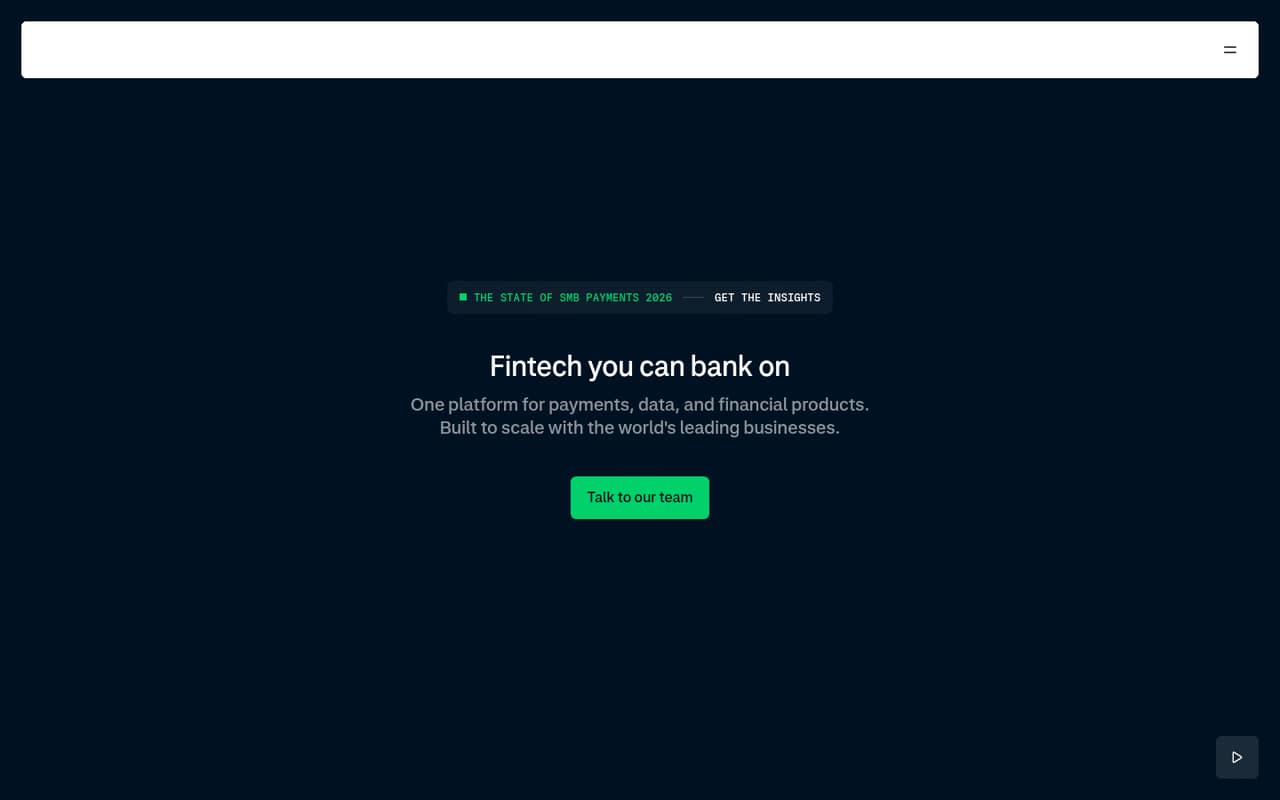
Adyen is a payments platform built around one API for acceptance, payouts, payment data and embedded financial products. Its breadth and global payment coverage make it worth considering for businesses with multiple channels or markets.
The trade-off is a transaction-based bill with method-dependent fees and no listed free plan, plus an integration that Reddit users describe as demanding. Smaller shops should confirm pricing and implementation requirements with Adyen before choosing it.
Good fit if
- Businesses operating across markets
- Platforms embedding financial products
- Teams consolidating payment channels
Skip it if
- Low-volume shops seeking simple setup
- Teams needing a free tier
- Projects requiring self-hosted payments
ScoresHow it rates
What works
- One API covers multiple use cases and channels
- Payments, payouts and financial products share a platform
- Supports 150+ currencies, per Adyen
- Offers 200+ local payment methods, per Adyen
- No setup fee or monthly fee listed
What doesn't
- Payment-method fees vary
- A minimum invoice may apply
- Other products have separate pricing
- SDK and language support need confirmation
- Reddit users describe setup as demanding
01What Adyen is, technically
Adyen is a payments platform that businesses integrate with through one API. It is not presented as a library or CLI to run inside an application; the platform provides payment acceptance, payouts, payment data insights and financial products. In a typical stack, it sits between a business’s checkout or payments service and the payment methods and money movement that service needs to support.
The same platform is intended to cover online and in-person payments, payouts, and embedded products such as accounts, card issuing and capital. Adyen says these products can be offered under a business’s brand through a single integration. That puts it beyond a payment form alone: teams may use it to consolidate payment flows and financial capabilities across channels. The homepage describes the platform as built for businesses operating at scale, so teams should assess its commercial fit and integration scope before adopting it for a small, simple checkout.
02Adyen API, SDKs and docs
Adyen identifies a single API that supports multiple use cases and channels. The homepage’s integration surface is that API and a single integration; it does not name a protocol, programming language, SDK, CLI, webhook or plugin in the integration text. Confirm SDK availability, supported languages and the relevant API flows in Adyen’s developer documentation before choosing a stack or estimating implementation work.
The API’s stated scope spans payment acceptance, payouts and embedded finance, including accounts, card issuing and capital. That breadth may reduce the number of payment systems a business has to connect, but it also means teams should map the product they need to the specific integration path and commercial terms. Adyen describes built-in optimizations for conversion, fraud and payment costs, but teams should ask how those apply to their payment methods and setup. Reddit users comparing Adyen with Stripe report that Adyen can take more effort to set up, particularly for simpler shops.
03Adyen pricing for developers
Adyen lists a Pay per transaction model for businesses accepting customer payments. The listed charge is $0.13 per transaction plus a payment-method fee. Some methods use Interchange++ plus 0.60%. The pricing page lists no setup fee and no monthly fee, and there is no free plan listed.
That means the transaction bill grows with payment volume and depends on the methods customers use; the final method fees are not a single published rate. Custom pricing is available through sales. Adyen also says a minimum invoice may apply depending on industry or business model, but does not publish the amount. Other Adyen products are priced separately, with prices not published on the pricing page. Teams budgeting for a production integration should ask for a quote that covers their expected mix of payment methods, volumes and products, and confirm whether a minimum invoice applies. The stated fees do not establish the total cost for every payment flow.
04Adyen: open source, self-hosting and lock-in
Adyen is presented as a commercial payments platform accessed through an integration, not as a server customers install in their own infrastructure. Its homepage does not publish a source license or a self-hosting path. Teams that require open-source software or control of the payment-processing infrastructure should ask Adyen directly whether those requirements can be met.
The platform’s role in accepting and moving payments can make migration more involved than replacing a UI component. A Reddit commenter specifically warns that recurring payments can be painful to move. Before building subscription flows or embedding financial products, plan for how you would move customer payment references, transaction records and payout workflows. Ask Adyen what data can be exported, in which formats, and what remains subject to provider or payment-method constraints. Confirm these points in the contract and implementation plan rather than assuming a single API makes a later switch straightforward.
05Adyen in production
Adyen states that its platform has 99.999% historical uptime and says it is backed by US, UK and EU banking licenses. It also lists support for 150+ currencies and 200+ local payment methods. These are vendor claims, not a substitute for checking contractual uptime commitments, geographic availability, settlement timing, incident processes and the specific methods your business plans to use.
Scale and breadth do not remove integration risks. Confirm how your flows handle payment failures, payout exceptions and changes to payment-method availability before relying on them in production. Reddit users report that Adyen requires higher volume and can be harder to set up than simpler alternatives; these are individual opinions, not universal requirements. One commenter says Adyen can be cheaper in the long run but describes setup as difficult. Ask sales about commercial fit and ask the implementation team to clarify technical requirements before committing.
From the threadsWhat users say
Reddit discussion is mixed and largely compares Adyen with simpler alternatives. Commenters cite its potential value at higher volume, but also warn about setup effort and the pain of switching recurring payments.
Adyen requires a much higher volume
Adyen is cheaper in the long run but can be a pain in the ass to properly setup
Once you go recurring it is a pain to change
If you're just processing simple transactions for your customers, go with Stripe
Questions people ask
Is Adyen a legitimate payment processing service?
Adyen describes itself as a payments platform for businesses and says it is backed by US, UK and EU banking licenses. It also reports 99.999% historical platform uptime. Those are Adyen’s own claims; businesses should verify licensing, coverage, contractual commitments and service fit for the markets where they operate.
Is Adyen suitable for a small online shop?
It may be, but Adyen positions its platform for businesses operating at scale. Its transaction pricing includes a fixed fee plus a payment-method fee, and a minimum invoice may apply. Reddit commenters caution that Adyen can require higher volume and take more setup effort than simpler options, so ask sales about fit before building.
How does Adyen charge for payment processing?
Adyen lists a $0.13 fixed processing fee per transaction plus a payment-method fee. Some methods use Interchange++ plus 0.60%. The pricing page lists no setup fee or monthly fee, but says a minimum invoice may apply depending on industry or business model.
Can Adyen handle payments and payouts?
Yes. Adyen describes payment acceptance and payouts on one platform, including accepting payments online and in person and sending payouts globally. The exact methods, markets and commercial terms depend on the business’s requirements, so confirm availability and pricing with Adyen before designing those flows.
Can a business offer financial products with Adyen?
Adyen says businesses can embed accounts, card issuing and capital under their own brand through a single integration. These are separate products with separate pricing, and the pricing page does not list their costs. Ask Adyen which products are available for your business model and markets.